
Game Based and Adaptive Learning Strategies
Computer ScienceTextbook
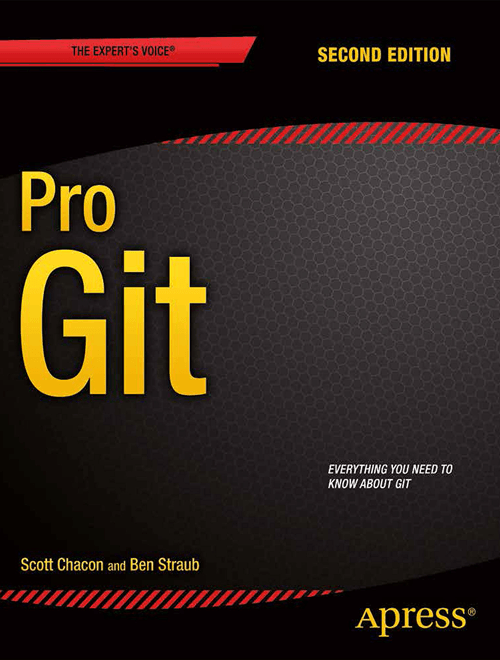
Pro Git: Everything You Need to Know About Git (English)
Not rated yetRate this bookScott Chacon and Ben Straub’s Pro Git introduces version control and develops Git concepts from basic use toward collaboration and internal mechanisms. The reviewed opening explains why recording project history is useful before introducing specific commands.
Read on the publisher’s website. Opens in a new tab.
 Free
About this book
About this book
This is the English second-edition resource, originally published in 2014 and maintained through an open source repository. The linked PDF identifies version 2.1.359-2-g27002dd and a 2022 build date; that date should not replace the edition’s original publication year. The prefaces explain the second edition’s broader treatment of Git’s ecosystem. This page reviews those prefaces and the opening account of version control. It does not test every command, hosting interface, or advanced workflow against a current installation.
Sources and reading coverage
Title and licence information, the two prefaces on PDF sheets 8–9, and selected version-control discussion on sheet 16 were reviewed. Later commands and workflows were not comprehensively tested.
Consult the official source for the available edition and publication details. The external PDF provides the source file.
The consulted PDF contains 505 sheets, including preliminary material. PDF sheet numbers can differ from printed pagination.
Begin with the official online version-control introduction.
Book summary
Guide to the reviewed opening
The opening describes version control as recording changes so that earlier states can be recalled and compared. Although the examples use source code, the underlying purpose applies to other project files as well. A history is more useful than a collection of vaguely named copies because it supports questions about what changed and when.
The prefaces explain why a new edition was needed even though core concepts remained relevant. Changes in adoption, tooling, and collaboration created new teaching needs. This distinction helps readers separate stable concepts from interfaces or practices that may change.
The later chapter sequence develops repositories, branches, distributed work, tools, customization, and internals. Those topics are a verified map of the book rather than detailed chapter summaries on this page.
How to study this book
Use a disposable practice repository for assigned exercises. Before running a command, explain the state you expect it to change and what you expect to observe afterward. Compare that expectation with the repository’s actual state.
Keep notes about working files, recorded history, and collaboration rather than memorizing commands without context. Use the official documentation when a command’s behaviour or an interface differs from the edition. Do not practise destructive history changes on shared work.
Questions for reflection
- What question can a recorded history answer that a folder of copies cannot?
- Which state is a command expected to change?
- Which parts of the reading depend on software version?
The study suggestions and questions are independent Academic Master editorial material.
About access & copyright
This page provides book information and study material. Full-text access is provided by the original publisher or authorised source; a listing does not grant permission to republish the book.
Read our Library Access & Copyright policyHistory
Explain the purpose of version control.
Concepts
Connect commands with repository state.
Collaboration
Distinguish local work and shared history.
Versions
Check changing interfaces and behaviour.
Reader ratings & reviews
Share your thoughts
Your review helps other students choose the right resources.
KEEP LEARNING
Your next great read
Computer Science
 Computer Science
The Shallow and the Deep: A biased introduction to neural networks and old school machine learning
View The Shallow and the Deep: A biased introduction to neural networks and old school machine learning — book Curriculum & Instruction
Technology in Schools
View Technology in Schools — bookComputer Systems Security: Planning for Success
Computer Systems Security: Planning for Success
View Computer Systems Security: Planning for Success — book Computer Science
Building User Interfaces for Modern Web Applications: React Programming
View Building User Interfaces for Modern Web Applications: React Programming — book Computer Science
Introduction to Data Science Using Python
View Introduction to Data Science Using Python — book Computer Science
Programming with Java
View Programming with Java — book Computer Science
Operating Systems and Infrastructure in Data Science
View Operating Systems and Infrastructure in Data Science — book Computer Science
Introduction to Computer Programming with Python
View Introduction to Computer Programming with Python — book Computer Science



