
 Ethics
Academic Book
The Prince
Not rated yetRate this bookNiccolò Machiavelli examines the conduct of rulers through distinctions between reputation, qualities, and political preservation. This Gutenberg edition uses Luigi Ricci’s English translation. The guide reviews Chapters XV and XVIII, analysing the author’s reasoning about necessity, appearances, law, force, and keeping promises in its historical political context.
Read on the publisher’s website. Opens in a new tab.
 Free
About this book
The Prince presents arguments about acquiring and maintaining rule through distinctions, examples, and judgments about conduct. The selected chapters are especially useful for examining the relationship between qualities admired in a person and actions the author considers politically effective. Their claims can be reconstructed and challenged without treating the treatise as current professional advice or endorsing its conclusions.
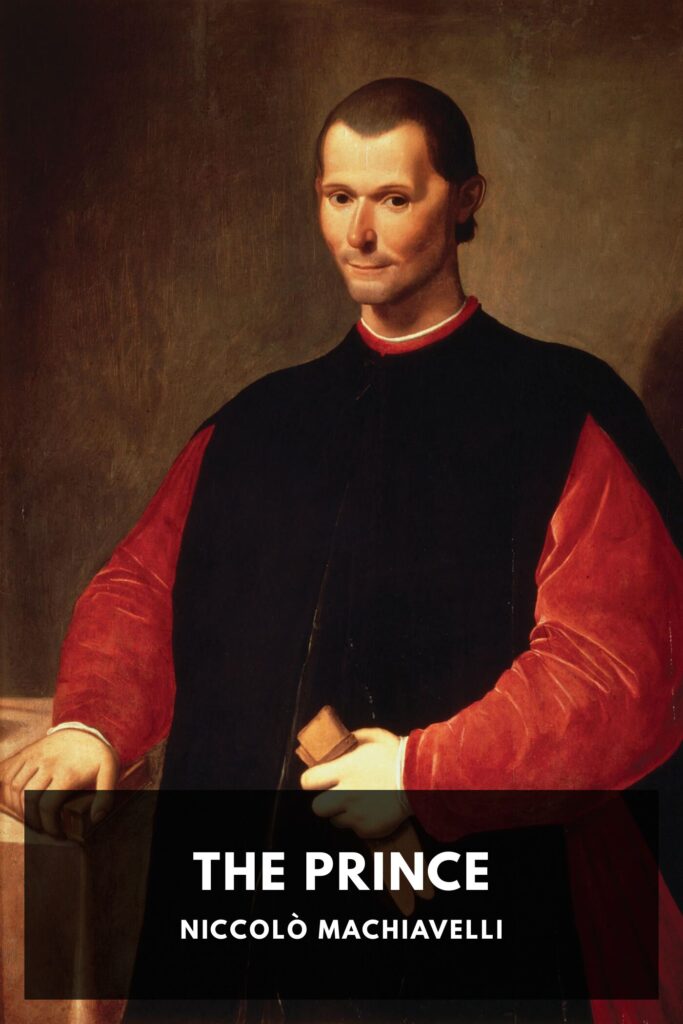
This page links to Project Gutenberg eBook 57037, released electronically on 23 April 2018. The text identifies Luigi Ricci as translator and has a title page dated 1909 naming Humphrey Milford and Oxford University Press. The digital publication year and HTML ISBN are recorded here, while the edition statement preserves those source details. Its contents include a dedication and 26 chapters. The cover uses the source title-page image supplied with the Gutenberg edition.
MIT’s undergraduate Literature and Ethical Values course lists an excerpt from the work. That confirms academic use without specifying this translation or electronic file. The guide reviews Chapters XV and XVIII in full and uses their headings from Ricci’s version. Other chapters are listed for navigation but are not supplied with unreviewed explanations.
Book contents
View the verified contents
- Dedication to Lorenzo the Magnificent
- Chapter 1. THE VARIOUS KINDS OF GOVERNMENT AND THE WAYS BY WHICH THEY ARE ESTABLISHED
- Chapter 2. OF HEREDITARY MONARCHIES
- Chapter 3. OF MIXED MONARCHIES
- Chapter 4. WHY THE KINGDOM OF DARIUS, OCCUPIED BY ALEXANDER, DID NOT REBEL AGAINST THE SUCCESSORS OF THE LATTER AFTER HIS DEATH.
- Chapter 5. THE WAY TO GOVERN CITIES OR DOMINIONS THAT, PREVIOUS TO BEING OCCUPIED, LIVED UNDER THEIR OWN LAWS.
- Chapter 6. OF NEW DOMINIONS WHICH HAVE BEEN ACQUIRED BY ONE'S OWN ARMS AND POWERS
- Chapter 7. OF NEW DOMINIONS ACQUIRED BY THE POWER OF OTHERS OR BY FORTUNE
- Chapter 8. OF THOSE WHO HAVE ATTAINED THE POSITION OF PRINCE BY VILLAINY
- Chapter 9. OF THE CIVIC PRINCIPALITY
- Chapter 10. HOW THE STRENGTH OF ALL STATES SHOULD BE MEASURED
- Chapter 11. OF ECCLESIASTICAL PRINCIPALITIES
- Chapter 12. THE DIFFERENT KINDS OF MILITIA AND MERCENARY SOLDIERS
- Chapter 13. OF AUXILIARY, MIXED, AND NATIVE TROOPS
- Chapter 14. WHAT THE DUTIES OF A PRINCE ARE WITH REGARD TO THE MILITIA
- Chapter 15. OF THE THINGS FOR WHICH MEN, AND ESPECIALLY PRINCES, ARE PRAISED OR BLAMED
- Chapter 16. OF LIBERALITY AND NIGGARDLINESS
- Chapter 17. OF CRUELTY AND CLEMENCY, AND WHETHER IT IS BETTER TO BE LOVED OR FEARED
- Chapter 18. IN WHAT WAY PRINCES MUST KEEP FAITH
- Chapter 19. THAT WE MUST AVOID BEING DESPISED AND HATED
- Chapter 20. WHETHER FORTRESSES AND OTHER THINGS WHICH PRINCES OFTEN MAKE ARE USEFUL OR INJURIOUS
- Chapter 21. HOW A PRINCE MUST ACT IN ORDER TO GAIN REPUTATION
- Chapter 22. OF THE SECRETARIES OF PRINCES
- Chapter 23. HOW FLATTERERS MUST BE SHUNNED
- Chapter 24. WHY THE PRINCES OF ITALY HAVE LOST THEIR STATES
- Chapter 25. HOW MUCH FORTUNE CAN DO IN HUMAN AFFAIRS AND HOW IT MAY BE OPPOSED
- Chapter 26. EXHORTATION TO LIBERATE ITALY FROM THE BARBARIANS
Read the full text at Project Gutenberg
Cover image: Standard Ebooks edition. The hosted PDF remains the edition described above.
Book summary
Study overview of reviewed passages
Chapter XV distinguishes political conduct as the author observes it from idealized accounts of how people ought to behave. Machiavelli presents usefulness to an informed reader as a reason to concentrate on the former. His claim is not simply that good qualities are worthless. Rather, he argues that a ruler cannot possess and exercise every quality regarded as good under all conditions, so judgment must consider the consequences for maintaining rule.
The chapter arranges qualities in opposed pairs and asks which faults would endanger the state. Machiavelli then challenges the assumption that a favourable name guarantees a favourable outcome: a quality described as a virtue may, he argues, lead to ruin, while a condemned quality may contribute to security. Students should identify that proposed change of standard rather than treating a list of qualities as the whole argument.
Chapter XVIII extends the account to promises. It distinguishes fighting through law from resorting to force and uses the fox and lion as an image for combining different capacities. Machiavelli argues that keeping faith can become disadvantageous under conditions he specifies, and he bases part of that argument on his view of how others behave. The conclusion therefore depends on assumptions about the political situation as well as on a desired result.
Appearances receive further importance because, in the author’s account, many people see a ruler’s public presentation while few experience the person closely. He connects reputation with outcomes and the preservation of authority. An effective reading should distinguish description, prediction, and recommendation within this reasoning. Explaining the argument faithfully does not require agreement with its assumptions about people or with its proposed departures from ordinary standards of conduct.
Selected chapter and passage summaries
Chapter XV. Of the Things for Which Men, and Especially Princes, Are Praised or Blamed
Machiavelli announces his preference for examining actual political conduct over imagined arrangements. He argues that a ruler who tries to act well in every circumstance may be ruined among people who do not share that commitment. Qualities commonly praised or blamed are then evaluated by their effect on maintaining the state. The chapter provides the framework for analysing his separation of a quality’s reputation from its proposed political consequences.
Chapter XVIII. In What Way Princes Must Keep Faith
The chapter begins by acknowledging the praise attached to integrity, then sets that praise beside examples of successful astuteness. Its law-and-force distinction leads into the fox-and-lion comparison. Machiavelli argues for flexibility about promises under changed conditions and emphasizes presenting admired qualities to observers. These are the author’s recommendations within his account of rule. The guide does not turn them into an instruction manual for contemporary conduct.
Further analysis — Academic Master
A change of evaluative standard
Track the move from whether a quality receives praise to whether it helps preserve authority. The two questions need not produce the same answer. A critical response can first state the standard Machiavelli applies, then assess whether the standard is adequate.
The assumptions behind necessity
Identify the conditions used to justify departure from keeping faith: disadvantage, changed reasons for agreement, and expected conduct by others. Ask how the conclusion would change if those assumptions were disputed. This separates the argument from a universal claim about every promise.
Image and explanation
The fox and lion illustrate capacities the author wants combined, while the later account of spectators explains why appearances matter. Consider how the analogy and the social claim do different work. Neither should be treated as a substitute for reconstructing the reasoning surrounding it.
Questions for discussion and written work
These questions are Academic Master study prompts.
- How does Chapter XV distinguish actual conduct from an imagined ideal?
- What standard is used to assess praised and blamed qualities?
- Which assumptions support the recommendation about keeping faith?
- How does the difference between seeing and closely experiencing a ruler affect reputation?
Sources and coverage
Chapters XV and XVIII were reviewed in full in Luigi Ricci’s translation. The 1909 source title page and all 26 chapter headings were checked. The remaining chapters and dedication are not summarized. No verified page count for this electronic edition is supplied.
Source text and contents · Edition catalogue · Academic-use evidence
About access & copyright
This page provides book information and study material. Full-text access is provided by the original publisher or authorised source; a listing does not grant permission to republish the book.
Read our Library Access & Copyright policyPolitical argument
Reconstruct the author’s reasoning without endorsing it.
Reputation and consequence
Distinguish a quality’s public name from its proposed effects.
Conditional claims
Identify the assumptions attached to political necessity.
Historical translation
Follow Ricci’s headings and wording for this source edition.
Reader ratings & reviews
Share your thoughts
Your review helps other students choose the right resources.
KEEP LEARNING
Your next great read
Ethics Ethics
The Secret Sharer
View The Secret Sharer — book Ethics
Julius Caesar
View Julius Caesar — book Ethics
Utilitarianism
View Utilitarianism — book Ethics
The Republic
View The Republic — book Ethics
Leviathan
View Leviathan — book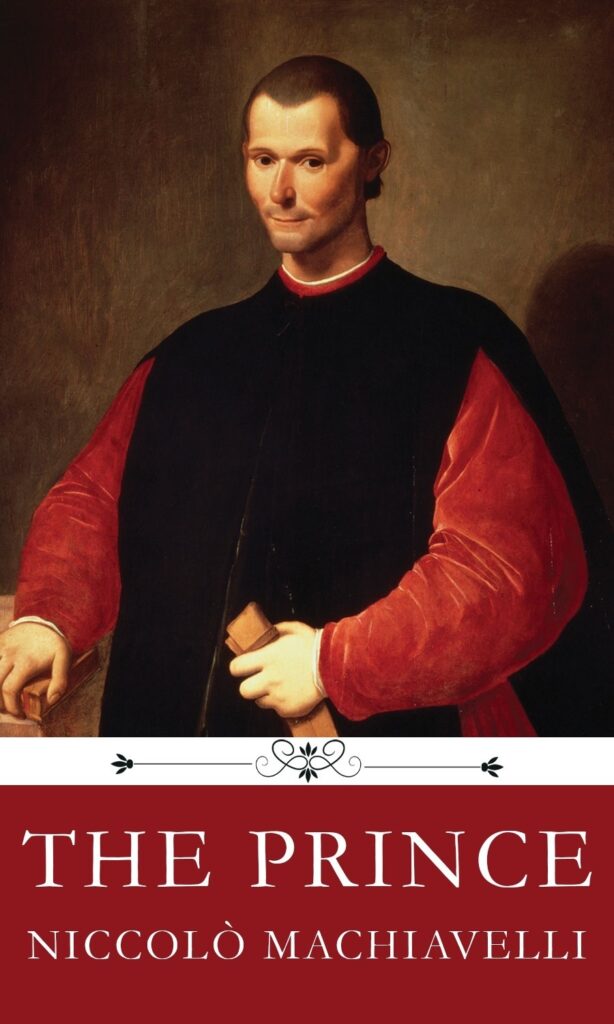 Ethics
The Prince
View The Prince — book Ethics
Crime and Punishment
View Crime and Punishment — bookResearch Methods in Psychology
Research Methods in Psychology
View Research Methods in Psychology — bookWetlands Law: A Course Source



