
 Ethics
Academic Book
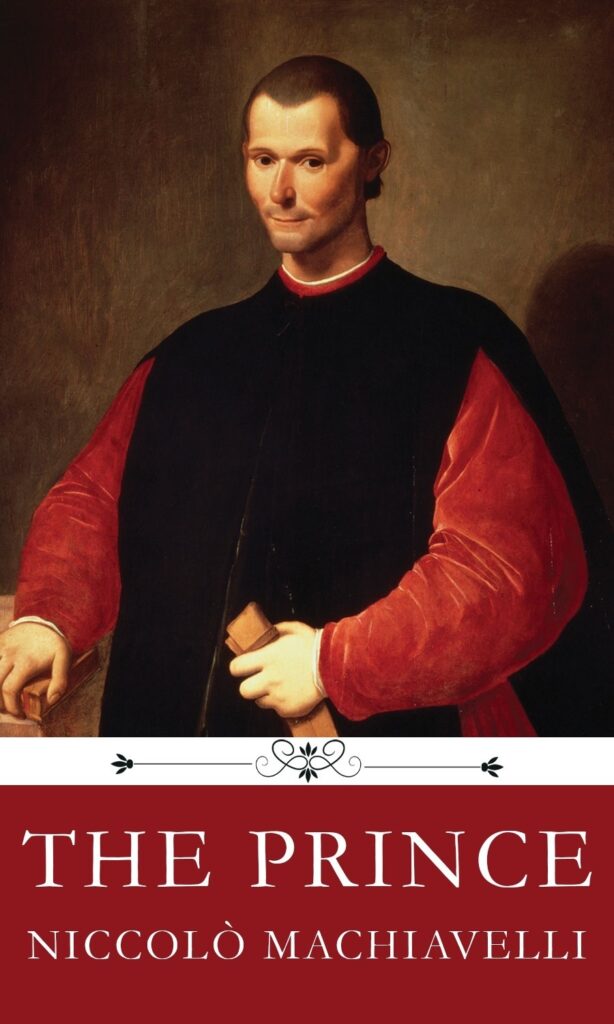
The Prince (W. K. Marriott Translation)
Not rated yetRate this bookThis page uses W. K. Marriott's translation of The Prince. The translator's biographical and interpretive material precedes Machiavelli's dedication and twenty-six chapters and should be attributed separately. The guide follows the complete argument while emphasizing its conditional reasoning: a policy's effect depends on institutions, resources, alliances, and the people's response. Its account of maintaining dominion should be analyzed critically rather than converted into a general permission to harm.
Read on the publisher’s website. Opens in a new tab.
 Free
About this book
This page uses W. K. Marriott's translation of The Prince. The translator's biographical and interpretive material precedes Machiavelli's dedication and twenty-six chapters and should be attributed separately. The guide follows the complete argument while emphasizing its conditional reasoning: a policy's effect depends on institutions, resources, alliances, and the people's response. Its account of maintaining dominion should be analyzed critically rather than converted into a general permission to harm.
The work was composed in 1513 and first published in 1532. This record follows Project Gutenberg eBook 1232, digitally released in 2006, in W. K. Marriott’s English translation. Alongside the 26 chapters of The Prince, the source contains introductory material, a dedication, an account of Duke Valentino’s methods, and The Life of Castruccio Castracani of Lucca. Those additional pieces should not be mistaken for extra chapters of the treatise.
MIT OpenCourseWare assigns an excerpt from The Prince in its undergraduate Literature and Ethical Values course. The selected-chapter guide below concentrates on classification, political necessity, keeping faith, and the selection and use of advisers. The recorded HTML ISBN identifies this Gutenberg format; no unrelated modern translation’s ISBN or page count is supplied.
Book contents
Introductory sections and dedication; the 26 chapters of The Prince; and two additional works listed separately after the treatise.
View the verified contents
- Introduction
- Youth — Æt. 1–25 — 1469–94
- Office — Æt. 25–43 — 1494–1512
- Literature and Death — Æt. 43–58 — 1512–27
- The Man and His Works
- Dedication
- CHAPTER I. HOW MANY KINDS OF PRINCIPALITIES THERE ARE, AND BY WHAT MEANS THEY ARE ACQUIRED
- CHAPTER II. CONCERNING HEREDITARY PRINCIPALITIES
- CHAPTER III. CONCERNING MIXED PRINCIPALITIES
- CHAPTER IV. WHY THE KINGDOM OF DARIUS, CONQUERED BY ALEXANDER, DID NOT REBEL AGAINST THE SUCCESSORS OF ALEXANDER AT HIS DEATH
- CHAPTER V. CONCERNING THE WAY TO GOVERN CITIES OR PRINCIPALITIES WHICH LIVED UNDER THEIR OWN LAWS BEFORE THEY WERE ANNEXED
- CHAPTER VI. CONCERNING NEW PRINCIPALITIES WHICH ARE ACQUIRED BY ONE’S OWN ARMS AND ABILITY
- CHAPTER VII. CONCERNING NEW PRINCIPALITIES WHICH ARE ACQUIRED EITHER BY THE ARMS OF OTHERS OR BY GOOD FORTUNE
- CHAPTER VIII. CONCERNING THOSE WHO HAVE OBTAINED A PRINCIPALITY BY WICKEDNESS
- CHAPTER IX. CONCERNING A CIVIL PRINCIPALITY
- CHAPTER X. CONCERNING THE WAY IN WHICH THE STRENGTH OF ALL PRINCIPALITIES OUGHT TO BE MEASURED
- CHAPTER XI. CONCERNING ECCLESIASTICAL PRINCIPALITIES
- CHAPTER XII. HOW MANY KINDS OF SOLDIERY THERE ARE, AND CONCERNING MERCENARIES
- CHAPTER XIII. CONCERNING AUXILIARIES, MIXED SOLDIERY, AND ONE’S OWN
- CHAPTER XIV. THAT WHICH CONCERNS A PRINCE ON THE SUBJECT OF THE ART OF WAR
- CHAPTER XV. CONCERNING THINGS FOR WHICH MEN, AND ESPECIALLY PRINCES, ARE PRAISED OR BLAMED
- CHAPTER XVI. CONCERNING LIBERALITY AND MEANNESS
- CHAPTER XVII. CONCERNING CRUELTY AND CLEMENCY, AND WHETHER IT IS BETTER TO BE LOVED THAN FEARED
- CHAPTER XVIII. CONCERNING THE WAY IN WHICH PRINCES SHOULD KEEP FAITH
- CHAPTER XIX. THAT ONE SHOULD AVOID BEING DESPISED AND HATED
- CHAPTER XX. ARE FORTRESSES, AND MANY OTHER THINGS TO WHICH PRINCES OFTEN RESORT, ADVANTAGEOUS OR HURTFUL?
- CHAPTER XXI. HOW A PRINCE SHOULD CONDUCT HIMSELF SO AS TO GAIN RENOWN
- CHAPTER XXII. CONCERNING THE SECRETARIES OF PRINCES
- CHAPTER XXIII. HOW FLATTERERS SHOULD BE AVOIDED
- CHAPTER XXIV. WHY THE PRINCES OF ITALY HAVE LOST THEIR STATES
- CHAPTER XXV. WHAT FORTUNE CAN EFFECT IN HUMAN AFFAIRS AND HOW TO WITHSTAND HER
- CHAPTER XXVI. AN EXHORTATION TO LIBERATE ITALY FROM THE BARBARIANS
- DESCRIPTION OF THE METHODS ADOPTED BY THE DUKE VALENTINO WHEN MURDERING VITELLOZZO VITELLI, OLIVEROTTO DA FERMO, THE SIGNOR PAGOLO, AND THE DUKE DI GRAVINA ORSINI
- THE LIFE OF CASTRUCCIO CASTRACANI OF LUCCA
Book summary
This page uses W. K. Marriott's translation of The Prince. The translator's biographical and interpretive material precedes Machiavelli's dedication and twenty-six chapters and should be attributed separately. The guide follows the complete argument while emphasizing its conditional reasoning: a policy's effect depends on institutions, resources, alliances, and the people's response. Its account of maintaining dominion should be analyzed critically rather than converted into a general permission to harm.
Chapter-by-chapter summaries
Chapter 1 — Classification
The distinction between republics and principalities leads to inherited and newly acquired rule. Routes through one's own or another's forces, fortune, and capacity establish categories the later examples test. Begin by identifying the political problem before assuming a recommendation applies universally.
Chapter 2 — Inherited states
Familiar institutions and dynastic habit reduce the difficulty of rule. Avoiding extraordinary injury may preserve authority without exceptional ability. Stability here depends partly on accumulated recognition rather than the personal brilliance emphasized in stories of founders.
Chapter 3 — Mixed states
Annexation creates beneficiaries, injured groups, disappointed allies, and competing foreign interests. Residence, colonies, and military presence have different costs. The French examples show how a series of apparently manageable choices can combine into strategic dependence.
Chapter 4 — Structures of command
A centralized state and a monarchy with powerful nobles present different problems of conquest and retention. Potential internal allies can help an invasion while remaining sources of resistance afterward. Winning and securely governing are therefore distinct achievements.
Chapter 5 — Formerly free communities
A community accustomed to its own laws retains a political memory that conquest cannot easily cancel. The severe options discussed expose the coercion involved in domination. The ruler's security is not equivalent to the justice of the arrangement imposed on the city.
Chapter 6 — Foundations and one's own arms
Founders encounter determined opponents and uncertain supporters when introducing a new order. Ability must work through an opportunity and sufficient enforcement. The argument treats institutional creation as harder than announcing attractive principles, without making every successful innovation admirable.
Chapter 7 — Fortune and borrowed power
Rapid advancement through another's support may lack independent foundations. Cesare Borgia's attempts to consolidate power become a case in both strategic intelligence and vulnerability. The analysis asks what preparation can accomplish when illness, succession, and adverse circumstances converge.
Chapter 8 — Crime and distinction
Violence can obtain rule without earning glory. The comparison of concentrated and repeated cruelty evaluates political consequences while preserving a difference between security and honor. Do not flatten these separate judgments into a claim that effectiveness receives unconditional praise.
Chapter 9 — Civic rule
The people and nobles seek different relations of domination and protection. A ruler supported by the people faces a different problem from one elevated by ambitious peers. Popular allegiance becomes a practical condition that cannot be replaced by title alone.
Chapter 10 — Defensive capacity
Independent defense requires arms, resources, fortifications, and a population with reason to endure hardship. A siege tests the relation between preparation and allegiance. Buildings can assist security but cannot by themselves create a committed political community.
Chapter 11 — Ecclesiastical rule
Religious principalities are described as unusually supported, yet their growth is still examined through conflict and political action. The category's apparent exception does not remove the institutional history through which authority expanded.
Chapter 12 — Mercenaries
Paid troops may preserve their own interests at the employer's expense. The critique connects military weakness with the absence of reliable allegiance and command. Hiring a force does not necessarily give the purchaser effective control of its conduct.
Chapter 13 — Auxiliaries
Borrowed soldiers can make a victory dangerous because another ruler owns the power producing it. Immediate military success and long-term independence may therefore conflict. The chapter judges an alliance by what follows success as well as by whether it wins.
Chapter 14 — Preparation
Military study includes terrain, exercise, and historical comparison during peace. Habitual attention prepares judgment before an emergency. The ruler's task is learning how to recognize circumstances, not merely accumulating stories of celebrated victories.
Chapter 15 — Effective conduct
The announced attention to political reality questions whether conventional virtues always preserve a state. The controversial demand to learn when not to be good introduces a conflict between ordinary moral evaluation and claimed public necessity that later chapters must specify.
Chapter 16 — Generosity's costs
A conspicuously generous ruler may impose burdensome taxes to sustain the image. Apparent parsimony can produce less injury. Evaluate the source and distribution of expenditure rather than accepting the favorable label attached to a gift.
Chapter 17 — Fear and hatred
Mercy that allows destructive disorder is contrasted with harshness presented as stabilizing. Fear is preferred to insecure affection when both cannot be secured, but hatred remains a danger. The distinction is essential to the argument and does not make every coercive act prudent.
Chapter 18 — Faith and appearance
The fox and lion represent different responses to traps and force. Public reputation can diverge from actual conduct, especially where observers see outcomes more easily than intentions. The chapter makes both strategic deception and the audience's evidential limitations central.
Chapter 19 — Contempt, hatred, and conspiracy
Injury, weakness, and conflicting constituencies make rulers vulnerable. Roman imperial examples show the difficulty of satisfying soldiers and people simultaneously. The chapter's length undermines the hope that one uncomplicated personality trait can ensure survival in every institutional setting.
Chapter 20 — Conditional remedies
Fortresses, faction, disarmament, and other devices are judged by circumstances. The same measure can secure one ruler and imperil another. The underlying lesson is to explain a causal relation rather than recite a prestigious policy without its conditions.
Chapter 21 — Reputation and commitment
Enterprises and clear alliances make a ruler's position legible. Neutrality may forfeit support from either victor. Encouragement of work and civic activity connects reputation with subjects' practical confidence, not only spectacular acts abroad.
Chapter 22 — Ministers
Appointments reveal the ruler's judgment, while faithful service depends on incentives and the management of trust. Ability must include recognizing another's capacity. A government cannot be explained solely through the personality of the person at its head.
Chapter 23 — Candid advice
A ruler needs truth without surrendering decision to every competing voice. Controlled opportunities for frank counsel are proposed against flattery. The difficulty is organizational: unwelcome information must reach someone able and willing to evaluate it.
Chapter 24 — Lost states
Italian rulers' failures are attributed to weak foundations and neglected preparation rather than fortune alone. The chapter gathers the preceding tests into an account of avoidable exposure. An emergency does not excuse the earlier refusal to prepare for change.
Chapter 25 — Fortune and adaptation
The flood image gives preparation a role without pretending contingency disappears. Successful habits can become liabilities when conditions alter. The chapter's gendered imagery requires scrutiny, while its central analytical question concerns the capacity to change one's mode of action.
Chapter 26 — Exhortation
The work ends by asking for leadership against foreign domination in Italy. Its emotional and poetic appeal changes the mode from diagnosis to recruitment. Readers should ask whether the hoped-for intervention meets the material conditions the earlier chapters insisted upon.
Study instructions
- Separate Marriott's introductory judgments from Machiavelli's text.
- For each recommendation, identify the circumstances and the mechanism supposed to make it effective.
- Compare success, security, popular support, and glory as distinct evaluations.
- Track resources controlled directly against those borrowed from allies.
- Read Chapters 15-19 as connected qualifications rather than isolated maxims.
- Compare the argument about fortune with the confidence of the final appeal.
Questions for reflection
- Can a tactic preserve a ruler while weakening the community he claims to protect?
- What does the distinction between conquest and retention explain?
- How does the final exhortation change the reader's role?
Sources and coverage
This original study guide follows the complete work and includes its conclusion. Numbered chapters or books follow the linked edition. Where the work has no chapters, the reading movements are editorial aids. Interpretive questions and practice tasks are supplied for study rather than quoted from the author. Read the source edition. Consult its full text, examples, and references when developing an essay or solving a problem.
About access & copyright
This page provides book information and study material. Full-text access is provided by the original publisher or authorised source; a listing does not grant permission to republish the book.
Read our Library Access & Copyright policyPolitical classification
Distinguish hereditary rule from different forms of new acquisition.
Effectiveness and ethics
Evaluate Machiavelli’s argument about conduct, reputation, and preservation of power.
Appearance and knowledge
Analyse how public judgment may differ from knowledge of a ruler’s actions.
Counsel and judgment
Connect advisers, incentives, and flattery with political decision-making.
Reader ratings & reviews
Share your thoughts
Your review helps other students choose the right resources.
KEEP LEARNING
Your next great read
Ethics Ethics
Regulating the new: Regulation, ethics, acceptance, legitimacy in the governance of technology
View Regulating the new: Regulation, ethics, acceptance, legitimacy in the governance of technology — book Ethics
The Republic (Jowett Translation, Gutenberg eBook 150)
View The Republic (Jowett Translation, Gutenberg eBook 150) — book Ethics
The Secret Sharer
View The Secret Sharer — book Ethics
The Prince (Luigi Ricci Translation, 1909 Edition)
View The Prince (Luigi Ricci Translation, 1909 Edition) — book Ethics
Julius Caesar
View Julius Caesar — book Ethics
Utilitarianism
View Utilitarianism — book Ethics
The Republic (Jowett Translation, Gutenberg eBook 1497)
View The Republic (Jowett Translation, Gutenberg eBook 1497) — book Ethics
Leviathan
View Leviathan — book Ethics



