
Ethical Explorations: Moral Dilemmas in a Universe of Possibilities
EthicsAcademic Book
Julius Caesar
Not rated yetRate this bookJulius Caesar examines a political killing intended to preserve liberty and the struggle to control its meaning afterward. Caesar's assassination occurs midway through a tragedy whose later acts test the conspirators' judgment and the durability of their alliance. This complete five-act guide distinguishes republican arguments, personal motives, public persuasion, and the violence that exceeds their authors' intentions.
Read on the publisher’s website. Opens in a new tab.
 Free
About this book
Julius Caesar examines a political killing intended to preserve liberty and the struggle to control its meaning afterward. Caesar's assassination occurs midway through a tragedy whose later acts test the conspirators' judgment and the durability of their alliance. This complete five-act guide distinguishes republican arguments, personal motives, public persuasion, and the violence that exceeds their authors' intentions.
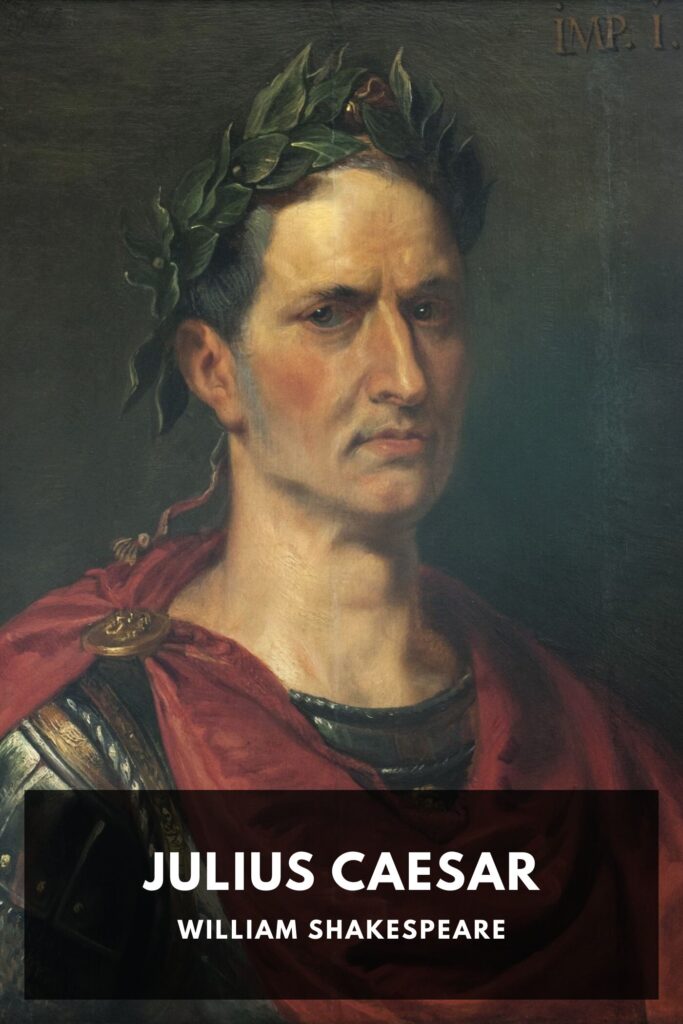
The linked resource is Project Gutenberg eBook 1522, released electronically on 1 November 1998. Its text gives the fuller title The Tragedy of Julius Caesar and is arranged in five acts containing 18 scenes. The page records the Gutenberg publication year and HTML ISBN. The cover belongs to this electronic presentation; it does not establish that the reader is a facsimile of the historical volume pictured on it.
MIT’s undergraduate Literature and Ethical Values course includes the play. That confirms academic use without specifying this Gutenberg edition. The guide reviews Act I, Scene I and Act III, Scene II in full. It contains substantial spoilers for the funeral scene, while leaving the intervening conspiracy and subsequent events to the original play.
Book contents
View the verified contents
- ACT I — SCENE I. Rome. A street.
- ACT I — SCENE II. The same. A public place.
- ACT I — SCENE III. The same. A street.
- ACT II — SCENE I. Rome. Brutus’ orchard.
- ACT II — SCENE II. A room in Caesar’s palace.
- ACT II — SCENE III. A street near the Capitol.
- ACT II — SCENE IV. Another part of the same street, before the house of Brutus.
- ACT III — SCENE I. Rome. Before the Capitol; the Senate sitting.
- ACT III — SCENE II. The same. The Forum.
- ACT III — SCENE III. The same. A street.
- ACT IV — SCENE I. Rome. A room in Antony’s house.
- ACT IV — SCENE II. Before Brutus’ tent, in the camp near Sardis.
- ACT IV — SCENE III. Within the tent of Brutus.
- ACT V — SCENE I. The plains of Philippi.
- ACT V — SCENE II. The same. The field of battle.
- ACT V — SCENE III. Another part of the field.
- ACT V — SCENE IV. Another part of the field.
- ACT V — SCENE V. Another part of the field.
Read the full text at Project Gutenberg
Cover image: Standard Ebooks edition. The hosted PDF remains the edition described above.
Book summary
About this work
Julius Caesar examines a political killing intended to preserve liberty and the struggle to control its meaning afterward. Caesar's assassination occurs midway through a tragedy whose later acts test the conspirators' judgment and the durability of their alliance. This complete five-act guide distinguishes republican arguments, personal motives, public persuasion, and the violence that exceeds their authors' intentions.
Act-by-act summaries
Act I — Public celebration and a campaign of persuasion
Tribunes challenge citizens celebrating Caesar's return, introducing conflict over the meaning of popular support. At the festival of Lupercal, a soothsayer warns Caesar about the Ides of March. Cassius works on Brutus by invoking family reputation, equality, and the danger of one man's elevation. Reports of Caesar's rejection of a crown remain mediated through Casca's skeptical account rather than a full spectacle directly shown to the audience. A storm becomes another field of interpretation: characters read its signs according to different fears and political purposes. Cassius arranges forged letters that will appear to express a public demand for Brutus's action. The act shows persuasion manufacturing the constituency it claims merely to represent.
Act II — A decision made before the feared act
Brutus reasons that Caesar might become dangerous if crowned and compares him to a creature that should be destroyed before its future threat develops. The reasoning concerns anticipated conduct rather than an established plan Caesar has disclosed to him. The conspirators meet, and Brutus rejects both an oath and Cassius's proposal to kill Antony, hoping to distinguish principled sacrifice from indiscriminate murder. Portia challenges the exclusion that makes her marriage a relationship without shared confidence. Elsewhere, Calpurnia's dream and reported prodigies initially persuade Caesar to stay home. Decius reinterprets the dream through flattery and promises of honor, drawing him back toward the Senate. Artemidorus prepares a written warning, while Portia's anxiety reveals the costs of being partly informed but unable to control events.
Act III — Assassination and the loss of the public narrative
At the Capitol, Caesar resists the petition staged as the occasion for the conspirators' approach and is killed. Brutus attempts to organize the act as a restoration of freedom, but the public meaning remains unsettled. Antony obtains permission to speak after him, accepting restrictions he can work around. Brutus addresses the crowd through his account of honorable motive; Antony answers through repeated professions of restraint, reminders of Caesar's conduct, the body and wounds, and the promise of the will. The crowd turns toward revenge. Its killing of Cinna the poet because of his name demonstrates how violence escapes the distinctions invoked to justify the original act. A political argument has become a mechanism that no speaker fully controls once released.
Act IV — Allies calculate losses and dispute principles
Antony, Octavius, and Lepidus draw up lists of people to be killed, showing that the emerging regime's violence is organized rather than simply spontaneous popular anger. Antony's attitude toward Lepidus also exposes rivalry within their alliance. At Sardis, Brutus and Cassius quarrel over money, corrupt officeholding, and the management of their military cause. Brutus's principles meet the resource demands of an army, while each man interprets the other's conduct through wounded trust. They reconcile, but news of Portia's death and disagreement over strategy reveal continuing strain. Brutus decides to move toward Philippi despite Cassius's advice. The Ghost of Caesar appears to him and names the place of their future encounter, allowing the dead ruler's presence to exceed the bodily removal the conspirators once imagined sufficient.
Act V — Misread signs and the victors' settlement
The armies confront one another at Philippi. Brutus's forces gain an initial advantage, but Cassius misinterprets what he sees and hears about Titinius, believing that a friend has been captured. He orders Pindarus to kill him before the error is corrected. Titinius then kills himself in grief. The military position collapses, and Brutus eventually asks Strato to hold a sword on which he falls. Antony praises him as the conspirator motivated by a general political purpose rather than envy, while Octavius orders honorable burial and divides the benefits of victory. That praise is a surviving character's retrospective judgment, not a requirement to endorse every earlier decision. The ending establishes a new distribution of power without demonstrating that the political fears that began the play have disappeared.
Liberty, evidence, and rhetorical responsibility
Compare Brutus's imagined future Caesar with Cassius's manufactured letters and Antony's handling of the dead body. Each involves a claim about what an audience should infer from evidence. The tragedy does not make principled intention irrelevant, but repeatedly shows that intention cannot guarantee an action's consequences. Brutus's desire to limit violence shapes his decisions and leaves him vulnerable to an opponent whose rhetorical skill he underestimates. Cassius can correctly identify practical dangers while acting manipulatively himself. The crowd likewise changes its judgment through forms of attention the speeches organize. A developed interpretation asks not only whether a speaker is sincere, but what procedures allow a community to question, verify, and resist the account being offered.
Study instructions
- Separate Caesar's actions shown onstage from reports about him and Brutus's predictions of his future conduct.
- Track Cassius's persuasive methods, including the letters, before evaluating the claim that Brutus answers a clear popular demand.
- Compare the funeral speeches in sequence, noting appeals to honor, emotion, material evidence, and the listeners' participation.
- Analyze the killing of Cinna as a consequence of naming and collective judgment rather than a detachable comic episode.
- Read the quarrel at Sardis beside the conspirators' earlier claims about purity of motive.
- Compare Cassius's fatal misinterpretation at Philippi with earlier scenes where characters assign meanings to signs.
Questions for reflection
- What would count as adequate grounds for acting against a danger that remains a prediction?
- Why does Brutus mistake a permission to speak for an ability to control speech's effects?
- Does the final praise of Brutus resolve the judgment of the assassination or preserve its difficulty?
Sources and coverage
This original study guide follows the complete work in the linked Project Gutenberg edition and includes the ending. Poem numbers and act divisions follow that source; thematic reading groups are editorial aids, not additional chapters of the original. Plot summary and interpretation are distinguished through the reading questions. Historical title-page attributions do not by themselves settle authorship. Read the source text; Edition details.
About access & copyright
This page provides book information and study material. Full-text access is provided by the original publisher or authorised source; a listing does not grant permission to republish the book.
Read our Library Access & Copyright policyDramatic language
Relate wordplay and rhetoric to action on stage.
Competing justifications
Distinguish claims about honour, ambition, and public duty.
Performance and persuasion
Analyse pauses, objects, movement, and audience responses.
Public interpretation
Trace how recollection shapes changing political allegiance.
Reader ratings & reviews
Share your thoughts
Your review helps other students choose the right resources.
KEEP LEARNING
Your next great read
Ethics
 Ethics
Foundations for Moral Relativism: Second Expanded Edition
View Foundations for Moral Relativism: Second Expanded Edition — book Ethics
Regulating the new: Regulation, ethics, acceptance, legitimacy in the governance of technology
View Regulating the new: Regulation, ethics, acceptance, legitimacy in the governance of technology — book Ethics
The Republic (Jowett Translation, Gutenberg eBook 150)
View The Republic (Jowett Translation, Gutenberg eBook 150) — book Ethics
The Secret Sharer
View The Secret Sharer — book Ethics
The Prince (Luigi Ricci Translation, 1909 Edition)
View The Prince (Luigi Ricci Translation, 1909 Edition) — book Ethics
Utilitarianism
View Utilitarianism — book Ethics
The Republic (Jowett Translation, Gutenberg eBook 1497)
View The Republic (Jowett Translation, Gutenberg eBook 1497) — book Ethics
Leviathan
View Leviathan — book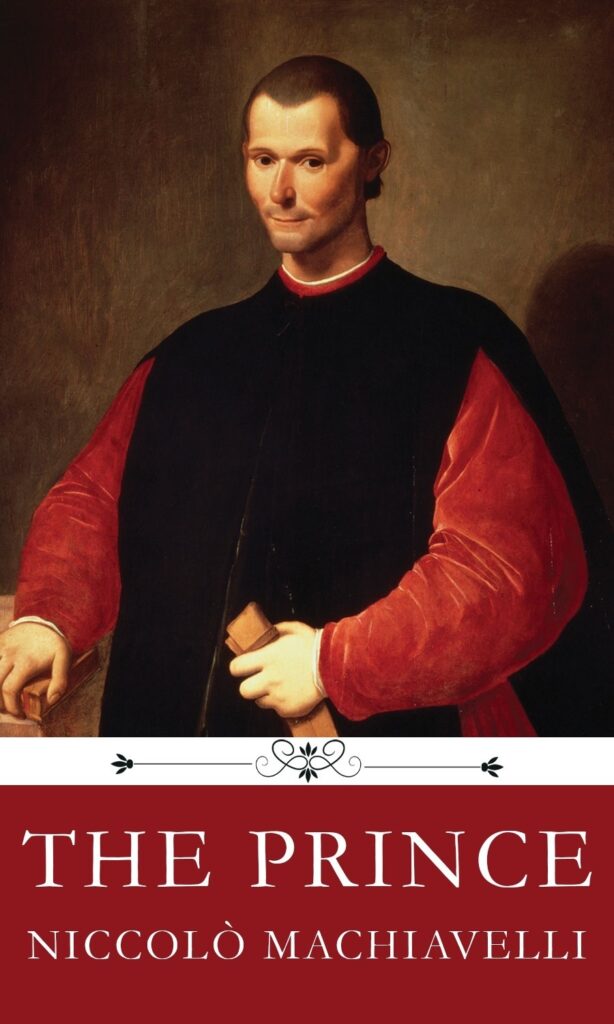 Ethics



