
 Ethics
Academic Book
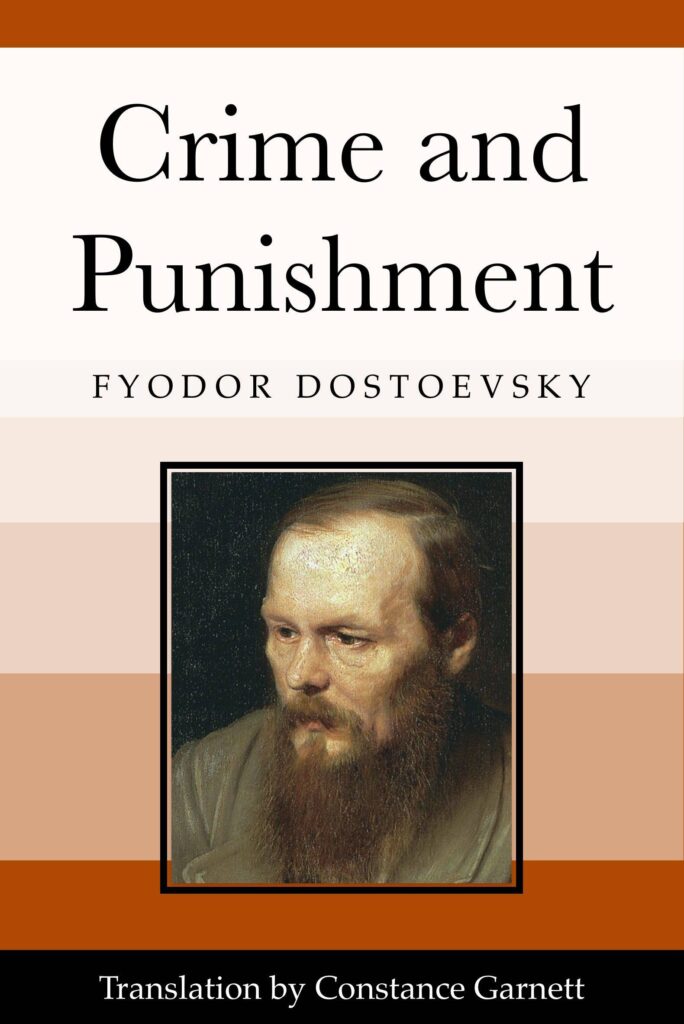
Crime and Punishment
Not rated yetRate this bookFyodor Dostoyevsky’s novel examines an isolated former student’s attempt to justify moral transgression and the consequences of that reasoning. This English text uses Constance Garnett’s translation. The guide focuses on selected chapters about poverty, self-exemption, psychological suspicion, and the possibility of renewal.
Read on the publisher’s website. Opens in a new tab.
 Free
About this book
Crime and Punishment combines a closely observed account of urban hardship with a sustained debate about responsibility. Raskolnikov’s reasoning repeatedly meets resistance from other people, his own bodily distress, and the demands of ordinary human relationships. Dialogue and access to his thoughts make interpretation depend on both what he argues and how he experiences the consequences.
This page follows Project Gutenberg eBook 2554, digitally released in 2006, in Constance Garnett’s English translation. It includes a translator’s preface, six parts, and a two-section epilogue. The author and translator have distinct roles: Garnett provides the English rendering of Dostoyevsky’s novel. The HTML ISBN and publication year recorded here identify Gutenberg’s digital edition, not the original Russian publication or a modern print edition.
MIT OpenCourseWare’s undergraduate Literature and Ethical Values course assigns all six parts and the epilogue of the work. The study guide below offers selective close-reading coverage of Part I, Chapter I; Part III, Chapter V; and Epilogue II. It emphasizes the tension between a theory of exceptional individuals, conscience, and human connection.
Book contents
Translator’s Preface; six parts containing 39 chapters in total; and an epilogue with two sections. Chapter numbering restarts within each part.
View the verified contents
- Translator’s Preface
- Part I
- Part I — Chapter I
- Part I — Chapter Ii
- Part I — Chapter Iii
- Part I — Chapter Iv
- Part I — Chapter V
- Part I — Chapter Vi
- Part I — Chapter Vii
- Part Ii
- Part Ii — Chapter I
- Part Ii — Chapter Ii
- Part Ii — Chapter Iii
- Part Ii — Chapter Iv
- Part Ii — Chapter V
- Part Ii — Chapter Vi
- Part Ii — Chapter Vii
- Part Iii
- Part Iii — Chapter I
- Part Iii — Chapter Ii
- Part Iii — Chapter Iii
- Part Iii — Chapter Iv
- Part Iii — Chapter V
- Part Iii — Chapter Vi
- Part Iv
- Part Iv — Chapter I
- Part Iv — Chapter Ii
- Part Iv — Chapter Iii
- Part Iv — Chapter Iv
- Part Iv — Chapter V
- Part Iv — Chapter Vi
- Part V
- Part V — Chapter I
- Part V — Chapter Ii
- Part V — Chapter Iii
- Part V — Chapter Iv
- Part V — Chapter V
- Part Vi
- Part Vi — Chapter I
- Part Vi — Chapter Ii
- Part Vi — Chapter Iii
- Part Vi — Chapter Iv
- Part Vi — Chapter V
- Part Vi — Chapter Vi
- Part Vi — Chapter Vii
- Part Vi — Chapter Viii
- Epilogue
- Epilogue — I
- Epilogue — II
Book summary
Spoiler notice: The selected-chapter guide discusses important events and, where covered, the ending.
Study overview of selected chapters
The opening chapter presents Raskolnikov’s isolation through debt, hunger, oppressive streets, and his anxious attention to minor details. His visit to the pawnbroker has both an ordinary financial purpose and a concealed purpose he can scarcely make coherent to himself. The narrator moves between outward action and a mind that alternates between confidence, disgust, fear, and attempts to explain its own instability.
Part III, Chapter V brings these pressures into a conversation with Porfiry. A seemingly manageable matter about pawned possessions becomes a test of Raskolnikov’s composure. Discussion turns to his published argument that exceptional people may authorize themselves to cross moral and legal boundaries in pursuit of an important idea. Raskolnikov distinguishes this claimed inner permission from a legal right, while Razumihin and Porfiry press the dangers and practical consequences of the distinction.
The exchange is also a scene of uncertain interpretation. Raskolnikov continually asks whether a glance, tone, or question proves that Porfiry knows more than he says. His philosophical explanation therefore unfolds within a personal struggle over suspicion and self-control. Students can examine how the dialogue tests an idea without treating every speaker’s statement as the author’s own position.
Epilogue II separates imprisonment from genuine change. Raskolnikov initially sees his failure more readily than the wrongness of his reasoning. Sonia’s continuing presence, his isolation among prisoners, and a disturbing dream challenge that outlook. The ending opens the possibility of a different relationship to life rather than narrating a completed transformation. Academic Master’s interpretation of these selected sections highlights the distinction between receiving a sentence, defending oneself intellectually, and beginning to acknowledge another person.
Selected chapter summaries
Part I — Chapter I
Raskolnikov leaves his cramped lodging and visits Alyona Ivanovna to pawn a watch while observing her rooms and routines. Hunger, debt, shame, and a concealed intention shape the encounter. His thoughts swing between daring and repulsion, and his sense of temporary relief remains uncertain. The chapter establishes psychological conflict through ordinary details rather than presenting a stable explanation of his motives.
Part III — Chapter V
Raskolnikov discusses his pawned belongings with Porfiry before the conversation turns to his theory of ordinary and extraordinary people. Questions about authority, conscience, and permitted transgression become inseparable from a possible investigation. Razumihin challenges the moral danger of private permission to shed blood. The chapter shows an argument being tested through dialogue while Raskolnikov interprets every change of tone as a possible trap.
Epilogue — II
Imprisonment initially leaves Raskolnikov’s pride and justification largely intact. Sonia’s care and his changing response to her open a possibility that abstract reasoning alone has not supplied. The final movement presents renewal as a beginning that will require further struggle. Students should distinguish the narrative’s promise of future change from a claim that punishment has already produced complete repentance.
How to study this book
Academic Master suggests keeping a short reading log of the narrator, the evidence a character uses, and any change in that character’s judgment. Treat these prompts as editorial study suggestions and return to the original text for context.
Further analysis and study — Academic Master
An argument tested through dialogue
The reviewed exchange with Porfiry turns Raskolnikov’s theory into a contested conversation. A useful reading identifies the exact distinction he makes between ordinary and extraordinary people, then examines how questions expose the consequences of allowing an exception to common restraints. Keep a philosophical assertion separate from a legal entitlement: the theory concerns a claimed permission of conscience, not an established right under law. Dialogue also makes the argument inseparable from pressure, interpretation, and suspicion. Pay attention to how a proposition changes when another person asks who would qualify for its exception.
Renewal and the limits of a final scene
The opening presents isolation and mental strain through Raskolnikov’s movements and attention. The reviewed epilogue introduces the prospect of moral renewal within a different setting and relationship. Compare these moments without treating the conclusion as a complete account of recovery. Academic Master suggests identifying what has changed in action, what has changed in feeling, and what remains a future possibility. This produces a more precise discussion than a simple claim that punishment cures him. The ending’s emphasis on a beginning also places a limit on how much a summary can claim to know about his subsequent life.
Questions for discussion and written work
- Who could determine that a person qualifies for the proposed exception?
- How does Porfiry’s questioning change the theory’s presentation?
- Why is renewal in the epilogue a prospect rather than a fully narrated outcome?
Sources and coverage
Selected-chapter guide based on Part I, Chapter I; Part III, Chapter V; and Epilogue II in Constance Garnett’s translation, Project Gutenberg eBook 2554. The translator credit and full contents structure were checked. The remaining chapters and translator’s preface were not reviewed in full; this is not an exhaustive account of all six parts.
Read the source text · Edition and format details · Course reading list
About access & copyright
This page provides book information and study material. Full-text access is provided by the original publisher or authorised source; a listing does not grant permission to republish the book.
Read our Library Access & Copyright policyMoral self-exemption
Analyse the distinction Raskolnikov draws between legal rules and an alleged inner right.
Psychological narration
Track the movement between action, suspicion, bodily distress, and thought.
Dialogue and argument
Compare a character’s theory with the objections it receives.
Punishment and renewal
Distinguish legal consequences from the beginning of personal change.
Reader ratings & reviews
Share your thoughts
Your review helps other students choose the right resources.
KEEP LEARNING
Your next great read
Ethics Ethics
The Secret Sharer
View The Secret Sharer — book Ethics
The Prince
View The Prince — book Ethics
Julius Caesar
View Julius Caesar — book Ethics
Utilitarianism
View Utilitarianism — book Ethics
The Republic
View The Republic — book Ethics
Leviathan
View Leviathan — book Ethics
The Prince
View The Prince — bookResearch Methods in Psychology
Research Methods in Psychology
View Research Methods in Psychology — bookWetlands Law: A Course Source



