
Programming for Computations – Python: A Gentle Introduction to Numerical Simulations with Python 3.6
AlgebraTextbook
Introduction to GNU Octave: A brief tutorial for linear algebra and calculus students
Not rated yetRate this bookIntroduction to GNU Octave is Jason Lachniet’s applied tutorial for calculus and linear algebra students. It combines computational examples, exercises and projects with numerical and symbolic work. The hosted file is the third edition, published in 2020.
 Free
About this book
The tutorial uses Octave as a tool for understanding mathematics rather than attempting to document every software feature. Its preface recommends following the examples with an open Octave session and using paper, pencil and mathematics texts alongside it. The first chapter supplies the basic working skills needed to explore later topics. The contents extend from matrices and linear systems through calculus, eigenvalue problems, differential equations and applied projects. Most examples assume familiarity with the underlying mathematics. The author also marks an important limit: numerical accuracy and machine round-off are not treated in detail.
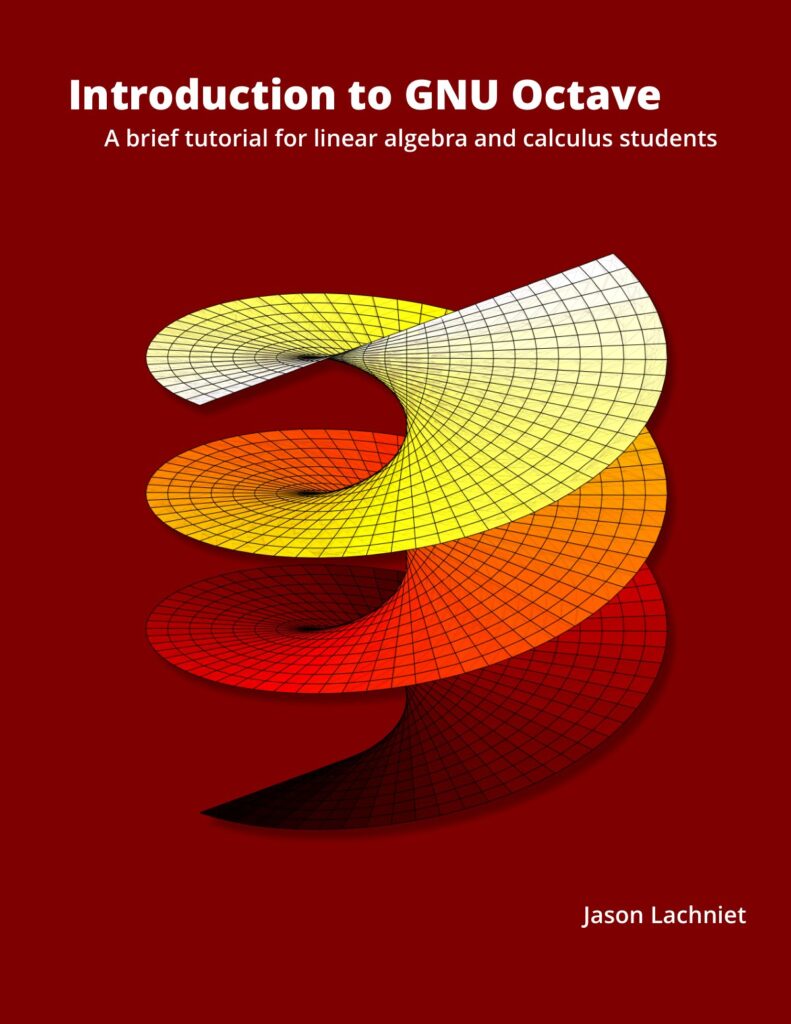
The attached edition contains 182 PDF pages, including front matter. Cover: source edition cover rendered from the PDF. The textbook and its original notices are retained; Academic Master’s study material is separate from the source text.
Book summary
Study overview of the reviewed opening
Lachniet’s preface makes the relationship between mathematical understanding and computation explicit. Octave is introduced as a practical means of exploring calculus and linear algebra, with programming skills developed through the same work. The text is therefore a companion to mathematical study rather than a replacement for the relevant theory courses.
The recommended approach is active. A reader follows computations in an Octave window while keeping conventional written work and mathematical references available. Chapter 1 establishes enough familiarity with the environment to allow later chapters to be selected according to interest. Exercises conclude each chapter, and a later section collects more substantial applied projects.
The verified contents cover matrices, curve fitting, transformations, calculus, eigenvalue problems and multivariable topics before the project sequence. An appendix addresses MATLAB compatibility, but compatibility should not be assumed for every command or environment. The preface expressly limits its treatment of numerical accuracy and round-off. Students should therefore separate learning to perform a computation from evaluating its numerical reliability. This overview covers the preface and verified structure; the detailed mathematical examples have not been individually summarised.
Book contents
- Getting started
- Matrices and linear systems
- Single variable calculus
- Miscellaneous topics
- Eigenvalue problems
- Multivariable calculus and differential equations
- Applied projects
- MATLAB compatibility
- Octave command glossary
- References
Questions for study
The following prompts are Academic Master’s editorial material.
- How can a computation deepen understanding rather than replace written reasoning?
- Why does the tutorial ask readers to know the underlying mathematics?
- Which questions about numerical reliability fall outside its stated scope?
Sources and coverage
Preface read in full (PDF pages 9–10); third-edition copyright page and contents checked.
About access & copyright
Check this edition’s source and licence before reusing its files or content. A library listing does not grant additional rights.
Read our Library Access & Copyright policyComputational practice
Use Octave alongside mathematical reasoning.
Selective study
Understand the route from basic skills to later topics.
Mathematical prerequisites
Distinguish software instruction from theory development.
Numerical limits
Recognise the preface’s exclusions on accuracy and round-off.
Reader ratings & reviews
Share your thoughts
Your review helps other students choose the right resources.
KEEP LEARNING
Your next great read
Computer Science
 Mathematics
MGF 1131: Mathematics in Context
View MGF 1131: Mathematics in Context — book Applied
COMPUTATIONAL PHYSICS: A Practical Introduction to Computational Physics and Scientific Computing (using C++)
View COMPUTATIONAL PHYSICS: A Practical Introduction to Computational Physics and Scientific Computing (using C++) — book Algebra
Advanced Algebra
View Advanced Algebra — book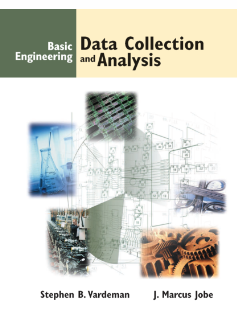 Analysis
Basic Engineering Data Collection and Analysis
View Basic Engineering Data Collection and Analysis — book Mathematics
Data Analysis in the Psychological Sciences: A Practical, Applied, Multimedia Approach
View Data Analysis in the Psychological Sciences: A Practical, Applied, Multimedia Approach — book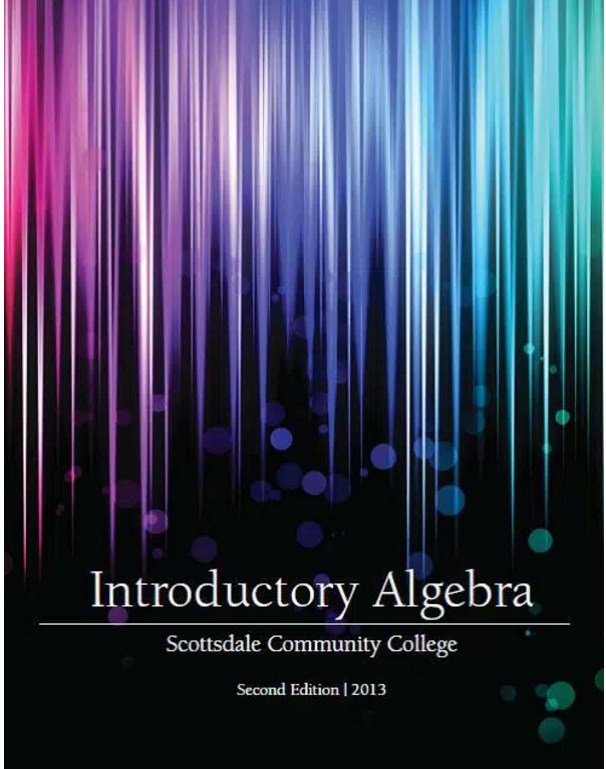 Mathematics
Introductory Algebra
View Introductory Algebra — bookAn Intuitive, Interactive, Introduction to Biostatistics
An Intuitive, Interactive, Introduction to Biostatistics
View An Intuitive, Interactive, Introduction to Biostatistics — book Business
 Calculus with Excel
View Business Calculus with Excel — book Algebra



