
 Mathematics
AlgebraTextbook
Advanced Algebra
Not rated yetRate this bookAdvanced Algebra reviews algebraic foundations before developing functions, equations, and graphical reasoning. The reviewed opening connects symbolic notation with number sets and their representation on a number line.
Free reading is available at the official source. Opens in a new tab.
 Free
About this book
About this book
The consulted archived PDF identifies itself as version 1.0 and records preservation in December 2012. Its author page names John Redden, while its licensing page explains that some customary publisher attribution was removed at the publisher’s request. The preface refers to an intermediate-algebra course and describes a combination of traditional and graphical approaches. This page retains the archived book’s title while explaining that context. The guide covers the preface and opening review, not the full 2,094-sheet file or its exercise sets.
Sources and reading coverage
Archived title and licensing information, the preface on PDF sheet 8, and selected opening review passages on sheet 10 were consulted. This is limited opening coverage, not a review of the entire textbook.
Consult the official source for the available edition and publication details.
The consulted PDF contains 2094 sheets, including preliminary material. PDF sheet numbers can differ from printed pagination.
Book summary
Guide to the reviewed opening
The preface describes a progression that builds on earlier algebra and introduces functions early. Graphical interpretation is intended to support symbolic work, so an equation is not treated only as a sequence of manipulations.
The opening review begins with sets of real numbers and their relationships. It introduces notation for sets and subsets and then distinguishes familiar number categories. This vocabulary makes later statements more precise: knowing what values a symbol may represent is part of understanding an algebraic claim.
The text’s broad contents extend well beyond that review. The present guide does not imply that all later examples, solutions, or mathematical formatting have been checked. Use the source chapters and your course sequence for the detailed learning route.
How to study this book
Make a diagram showing relationships among the number sets discussed in the opening. Add an example and a non-example for each category, then explain the notation in words.
For later work, connect a symbolic result with a graph or a substituted value where appropriate. Keep an error log that distinguishes a notation error, an invalid algebraic step, and a mistaken interpretation. Use assigned exercises for practice without treating a copied solution as evidence of understanding.
Questions for reflection
- How does a subset differ from an individual element?
- Which values are allowed in the statement you are using?
- How could a graph help check an algebraic interpretation?
The study suggestions and questions are independent Academic Master editorial material.
About access & copyright
This page provides book information and study material. Full-text access is provided by the original publisher or authorised source; a listing does not grant permission to republish the book.
Read our Library Access & Copyright policyNotation
Translate symbols into precise statements.
Number sets
Explain category relationships.
Representations
Connect symbolic and graphical reasoning.
Checking
Identify the type of error in a solution.
Reader ratings & reviews
Share your thoughts
Your review helps other students choose the right resources.
KEEP LEARNING
Your next great read
Mathematics Applied
COMPUTATIONAL PHYSICS: A Practical Introduction to Computational Physics and Scientific Computing (using C++)
View COMPUTATIONAL PHYSICS: A Practical Introduction to Computational Physics and Scientific Computing (using C++) — book Analysis
Basic Engineering Data Collection and Analysis
View Basic Engineering Data Collection and Analysis — book Mathematics
Data Analysis in the Psychological Sciences: A Practical, Applied, Multimedia Approach
View Data Analysis in the Psychological Sciences: A Practical, Applied, Multimedia Approach — book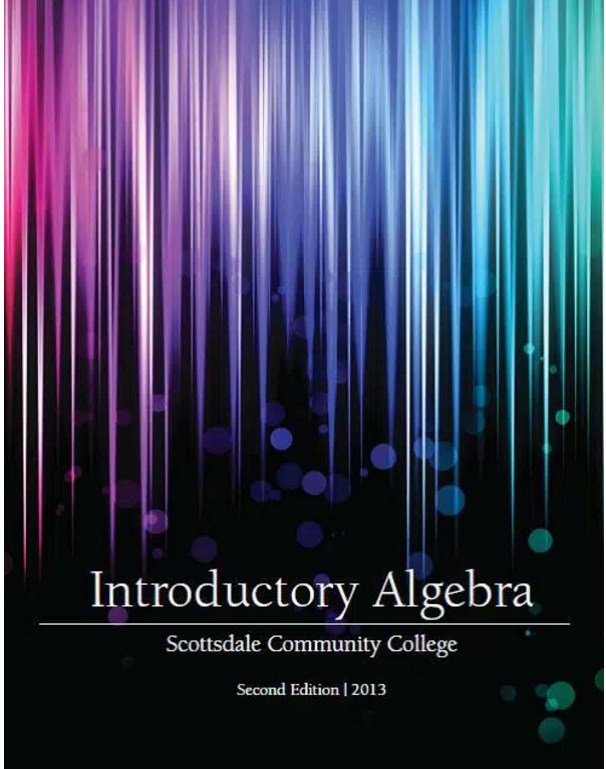 Mathematics
Introductory Algebra
View Introductory Algebra — bookAn Intuitive, Interactive, Introduction to Biostatistics
An Intuitive, Interactive, Introduction to Biostatistics
View An Intuitive, Interactive, Introduction to Biostatistics — book Business
 Calculus with Excel
View Business Calculus with Excel — book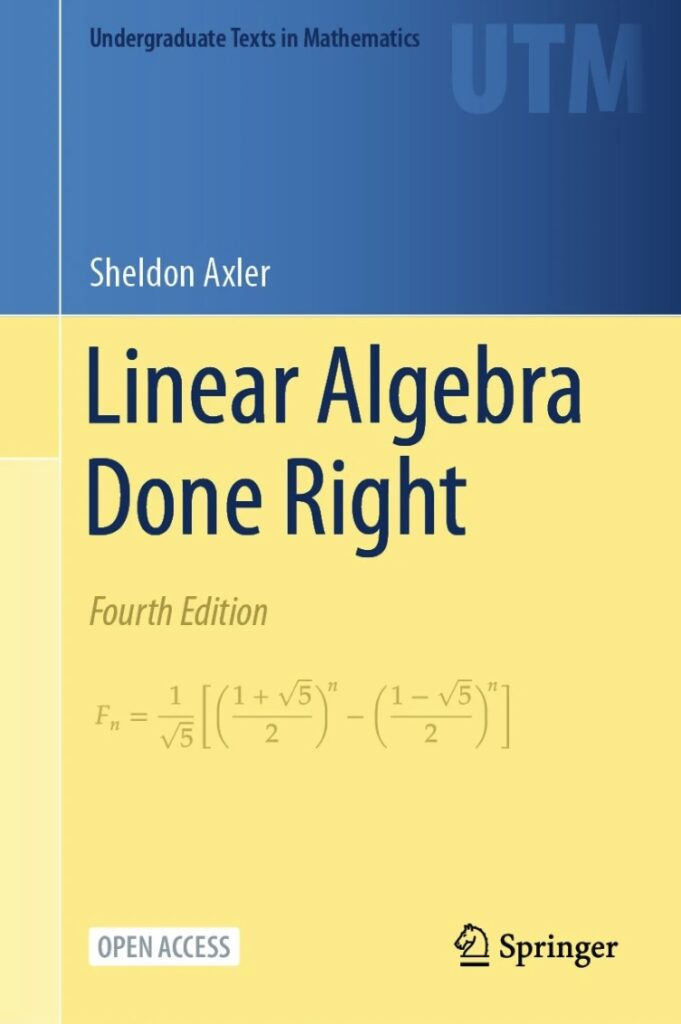 Algebra
Linear Algebra Done Right
View Linear Algebra Done Right — book Applied
Learning Statistics with R: A tutorial for psychology students and other beginners
View Learning Statistics with R: A tutorial for psychology students and other beginners — book Algebra



