
Introduction to Sustainability
Curriculum & InstructionTextbook
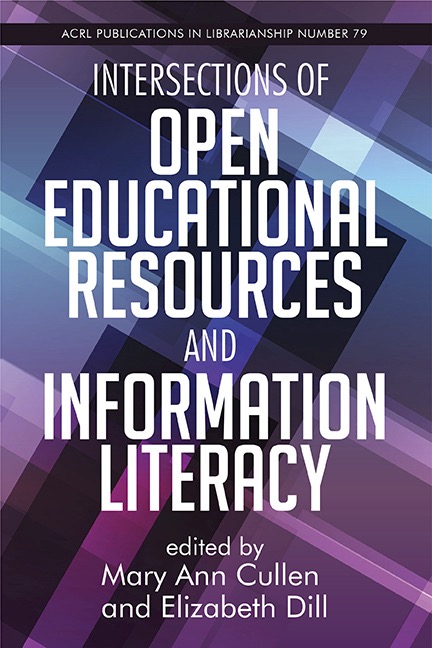
Intersections of Open Educational Resources and Information Literacy
Not rated yetRate this bookThis collection examines relationships between open educational resources and information literacy. Its introduction uses a classroom example to connect the choice of learning materials with students’ evaluation and creation of information.
Free reading is available at the official source. Opens in a new tab.
 Free
About this book
About this book
Mary Ann Cullen and Elizabeth Dill edited this 2022 ACRL Publications in Librarianship volume. Its contributions bring together open education, open pedagogy, and information-literacy teaching. In the introduction, the editors explain how their project developed and describe an example in which students evaluated an open theatre text and participated in teaching. This page considers that introductory account and the book’s collaborative organization. It does not evaluate every later model or imply that one classroom example establishes a generally effective method.
Sources and reading coverage
Title, copyright, contents, and selected introduction passages on PDF sheets 20–21 were reviewed. Later chapters were not comprehensively assessed.
Consult the official source for the available edition and publication details.
The consulted PDF contains 417 sheets, including preliminary material. PDF sheet numbers can differ from printed pagination.
Book summary
Guide to the reviewed opening
The introduction makes the connection between resources and teaching practices concrete. Choosing an open text is part of a wider set of decisions about how students encounter, assess, and contribute to information.
In the reviewed classroom account, students were asked to consider the authority and credibility of assigned material rather than receive it as unquestioned content. Their participation in presenting chapters and creating work connects information literacy with learning activity. This is an illustrative account, not a controlled demonstration of a universal outcome.
The collection’s later contributions explore related intersections from other perspectives. Readers should distinguish the editors’ framing, a contributor’s proposal, and evidence from a particular setting when comparing them.
How to study this book
Choose a learning resource and list the questions students would need to ask about its authority, purpose, evidence, and suitability. Then distinguish access to that resource from the activities through which students use it.
When studying a case chapter, identify its class, constraints, and intended outcome. Ask what evidence would be needed to judge whether the activity helped students evaluate information. Follow the original chapter and local teaching requirements before adapting an assignment.
Questions for reflection
- What changes when students evaluate the text itself?
- How does access differ from participation?
- Which parts of a classroom example depend on its setting?
The study suggestions and questions are independent Academic Master editorial material.
About access & copyright
This page provides book information and study material. Full-text access is provided by the original publisher or authorised source; a listing does not grant permission to republish the book.
Read our Library Access & Copyright policyEvaluation
Question authority and evidence.
Openness
Distinguish a resource from its teaching use.
Participation
Notice students’ roles as contributors.
Context
Assess a case before generalizing.
Reader ratings & reviews
Share your thoughts
Your review helps other students choose the right resources.
KEEP LEARNING
Your next great read
Social Sciences
Teaching Early and Elementary STEM
Teaching Early and Elementary STEM
View Teaching Early and Elementary STEM — bookGame Based and Adaptive Learning Strategies
Game Based and Adaptive Learning Strategies
View Game Based and Adaptive Learning Strategies — book Humanities
Reading Social Science Methods
View Reading Social Science Methods — book Engineering & Technology
Ethics in Technology
View Ethics in Technology — book Curriculum & Instruction
The Asynchronous Cookbook
View The Asynchronous Cookbook — book Curriculum & Instruction
Technology in Schools
View Technology in Schools — book Curriculum & Instruction
Using Open Educational Resources to Promote Social Justice
View Using Open Educational Resources to Promote Social Justice — book Social Sciences
Practicing and Presenting Social Research
View Practicing and Presenting Social Research — book Political Science



