
 Literature
Academic Book
The Odyssey
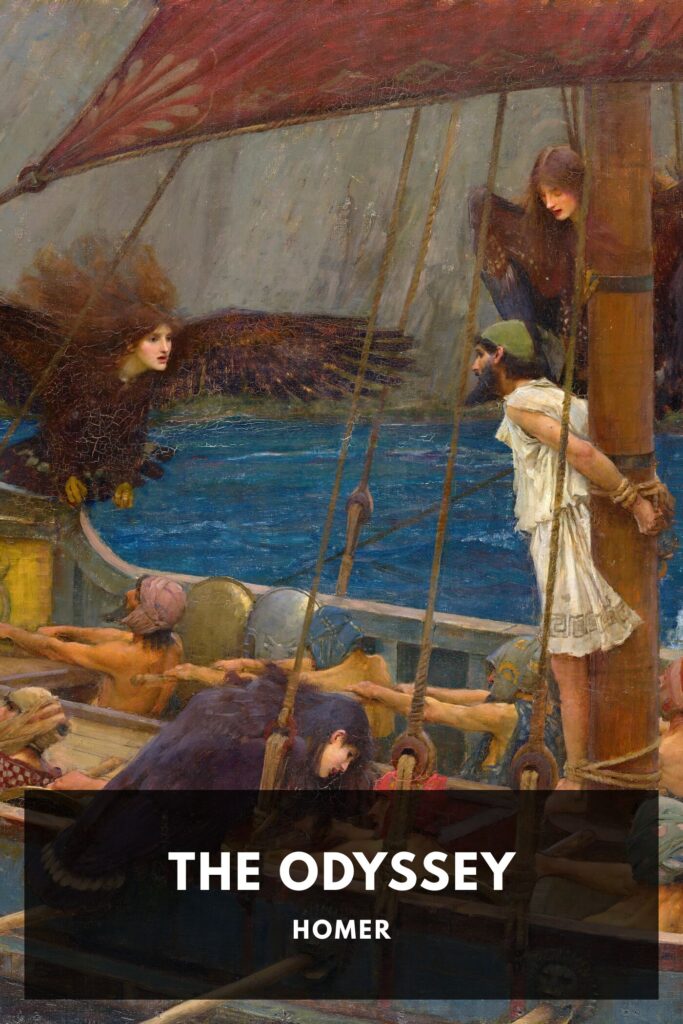
Not rated yetRate this bookHomer’s epic appears here in Alexander Pope’s English verse translation, using names such as Ulysses and Minerva. The Gutenberg text has 24 books. The guide reviews opening passages from Books I and IX, analysing homecoming, responsibility, hospitality, remembered experience, and the relationship between a story and the person telling it.
Read on the publisher’s website. Opens in a new tab.
 Free
About this book
The Odyssey links a desire for home with travel, loss, divine involvement, and the telling of experience. In the passages reviewed here, the poem first presents a divine discussion of human suffering, then lets Ulysses introduce himself and recount earlier journeys. The change in voice asks students to attend to who supplies an explanation as well as to the events being explained.
The linked resource is Project Gutenberg eBook 3160, released electronically on 1 April 2002. It identifies Alexander Pope as translator and presents the English poem in 24 books, with an introduction and prefatory arguments for the books. Its names and verse wording belong to that translation: Ulysses corresponds to Odysseus, while Minerva corresponds to Athena. Book at a glance records the electronic year and HTML ISBN, without assigning an unverified print-edition date or page count.
MIT’s undergraduate Reading Fiction: Imaginary Journeys course assigns selections from the work in Richmond Lattimore’s translation. This is academic-use evidence for the epic, rather than adoption of Pope’s version. The guide covers the opening passages of Books I and IX only, includes spoilers within those passages, and distinguishes the prefatory arguments from the verse actually reviewed.
Book contents
View the verified contents
- Introduction
- BOOK I.
- BOOK II.
- BOOK III.
- BOOK IV.
- BOOK V.
- BOOK VI.
- BOOK VII.
- BOOK VIII.
- BOOK IX.
- BOOK X.
- BOOK XI.
- BOOK XII.
- BOOK XIII.
- BOOK XIV.
- BOOK XV.
- BOOK XVI.
- BOOK XVII.
- BOOK XVIII.
- BOOK XIX.
- BOOK XX.
- BOOK XXI.
- BOOK XXII.
- BOOK XXIII.
- BOOK XXIV.
Read the full text at Project Gutenberg
Cover image: Standard Ebooks edition. The hosted PDF remains the edition described above.
Book summary
Study overview of reviewed passages
Book I’s opening invokes the Muse and introduces a traveller whose intended return has been obstructed. The narration connects suffering with choices made by companions and with the action of divine powers. A council of gods develops the question of responsibility: Jove rejects the claim that every human wrong should be attributed to fate, while Minerva draws attention to Ulysses’s prolonged separation from home. These explanations are voiced within the poem rather than offered as a single undifferentiated account.
Minerva’s plan connects the absent father with the situation of Telemachus. When she arrives in disguise, the suitors’ display contrasts with the young man’s attention to a guest who has been left waiting. His welcome shows hospitality through movement and conduct before the guest’s purpose is known. The passage makes the household’s condition part of the problem of return, rather than treating home simply as a destination on a map.
The opening of Book IX changes the relation between narrator and experience. Ulysses responds to a ruler who wishes to hear his story, acknowledges the pain of recollection, and identifies himself through both reputation and native place. His praise of social pleasure precedes an account of violence, loss, storms, and difficulty departing from attractive surroundings. The contrast gives his narrative an immediate emotional and ethical setting.
The reviewed verse recounts the Cicons and Lotus-eaters before describing the Cyclops’ country. Ulysses attributes losses to the crew’s delay after a raid and describes forcibly recovering men whose desire to return has been weakened by lotus. Students can examine how he presents his own warnings and decisions alongside those of his companions. The opening does not include the later encounter inside Polyphemus’s cave, which appears in the book’s prefatory argument but is outside the verse coverage used here.
Selected chapter and passage summaries
Book I — opening passage
The invocation introduces Ulysses’s difficult return, and a divine assembly considers responsibility for human suffering. Minerva seeks help for the absent traveller and proposes attention to Telemachus’s situation. Her disguised arrival in Ithaca sets the suitors’ behaviour beside the young man’s prompt welcome of a waiting stranger. The reviewed opening ends during the reception of the guest, before the complete conversation and later household exchanges.
Book IX — opening passage
Ulysses begins his account by praising the pleasure of a peaceful gathering, explaining the pain of remembering, naming himself, and describing Ithaca. He recounts a raid on the Cicons, the losses that follow delay, storms, and arrival among the Lotus-eaters. He then describes the country of the Cyclops and a nearby island. The reviewed passage stops before the cave encounter; the guide does not summarize that episode from the prefatory argument alone.
Further analysis — Academic Master
A story with a speaker
Compare the external narration in Book I with Ulysses’s first-person account in Book IX. His claims about warnings, companions, and loss are part of how he presents experience to a listener. An analysis can acknowledge his suffering while still examining the arrangement of responsibility in his story.
Home as a relationship
Ithaca matters as a remembered place and as a household with obligations. Telemachus’s reception of a stranger gives one of those obligations a visible form. Compare this conduct with Ulysses’s account of losing the desire to return among the Lotus-eaters.
Translation and reading evidence
Pope’s elevated vocabulary, rhyme, and chosen names affect the English experience of the epic. Distinguish the prefatory prose arguments from the poem’s narrated actions. When comparing another translation, use book numbers to locate a passage rather than assuming identical wording or lineation.
Questions for discussion and written work
These questions are Academic Master study prompts.
- How does Jove’s account of responsibility differ from simply blaming fate?
- What does Telemachus’s welcome reveal about his response to a stranger?
- How does Ulysses introduce himself before recounting his travels?
- Why should a book’s prefatory argument be distinguished from the verse actually reviewed?
Sources and coverage
Reviewed material: approximately the first 1,400 words of Books I and IX, including their prefatory arguments. Detailed discussion is restricted to the verse within those passages. The complete 24-book sequence and translator credit were verified. Neither book was read in full; remaining passages and books are not summarized. The later Cyclops cave episode is outside this guide’s coverage.
Source text and contents · Edition catalogue · Academic-use evidence
About access & copyright
This page provides book information and study material. Full-text access is provided by the original publisher or authorised source; a listing does not grant permission to republish the book.
Read our Library Access & Copyright policyNarrative voice
Compare external narration with Ulysses’s account of his own experience.
Responsibility
Analyse how divine and human speakers explain suffering and choice.
Hospitality and home
Relate conduct toward guests to the meaning of return.
Edition awareness
Follow Pope’s names and distinguish prose arguments from verse.
Reader ratings & reviews
Share your thoughts
Your review helps other students choose the right resources.
KEEP LEARNING
Your next great read
Literature Literature
Adam Bede
View Adam Bede — book Literature
Tess of the d'Urbervilles: A Pure Woman
View Tess of the d'Urbervilles: A Pure Woman — book Literature
Lady Audley's Secret
View Lady Audley's Secret — book Literature
Mrs. Dalloway
View Mrs. Dalloway — book Literature
Don Quixote
View Don Quixote — book Literature
Heart of Darkness
View Heart of Darkness — book Literature
Frankenstein; or, the Modern Prometheus
View Frankenstein; or, the Modern Prometheus — book Literature
Pride and Prejudice
View Pride and Prejudice — book Literature



