
 Literature
Academic Book
Tess of the d'Urbervilles: A Pure Woman
Not rated yetRate this bookThomas Hardy introduces Tess through her family’s uncertain social standing, a rural celebration, and the difference between being noticed and being understood. This English Gutenberg edition contains seven phases and 59 chapters. The guide examines the prefatory material and Chapters I–II, with attention to ancestry, landscape, narrative perspective, and social encounters.
Read on the publisher’s website. Opens in a new tab.
 Free
About this book
Tess of the d’Urbervilles introduces its heroine within a community shaped by inherited names, economic circumstances, local customs, and the judgments of other people. The opening chapters contrast John Durbeyfield’s delight in a distinguished ancestry with Tess’s much more immediate experience of embarrassment and missed attention. Rural description is closely connected with these social encounters, inviting students to consider how a setting can organize a narrative rather than merely decorate it.
This page links to Project Gutenberg eBook 110, electronically released on 1 February 1994. The resource includes Hardy’s explanatory note dated November 1891 and later prefatory material extending through March 1912. Those documents discuss publication, reception, and revisions; their presence does not establish a numbered print edition for the transcription. The year and HTML ISBN recorded here identify the Gutenberg resource. Its verified structure is seven named phases with 59 continuously numbered chapters.
MIT’s undergraduate Major English Novels course assigns the work across its seven phases, specifying a Penguin Classics edition. That course supports academic use of the work, rather than adoption of this exact Gutenberg text. The guide reviews the prefatory documents and Chapters I–II only. It contains opening-chapter spoilers and uses later phase titles for contents, without supplying unreviewed plot explanations.
Book contents
View the verified contents
- Phase the First: The Maiden
- Chapter I
- Chapter II
- Chapter III
- Chapter IV
- Chapter V
- Chapter VI
- Chapter VII
- Chapter VIII
- Chapter IX
- Chapter X
- Chapter XI
- Phase the Second: Maiden No More
- Chapter XII
- Chapter XIII
- Chapter XIV
- Chapter XV
- Phase the Third: The Rally
- Chapter XVI
- Chapter XVII
- Chapter XVIII
- Chapter XIX
- Chapter XX
- Chapter XXI
- Chapter XXII
- Chapter XXIII
- Chapter XXIV
- Phase the Fourth: The Consequence
- Chapter XXV
- Chapter XXVI
- Chapter XXVII
- Chapter XXVIII
- Chapter XXIX
- Chapter XXX
- Chapter XXXI
- Chapter XXXII
- Chapter XXXIII
- Chapter XXXIV
- Phase the Fifth: The Woman Pays
- Chapter XXXV
- Chapter XXXVI
- Chapter XXXVII
- Chapter XXXVIII
- Chapter XXXIX
- Chapter XL
- Chapter XLI
- Chapter XLII
- Chapter XLIII
- Chapter XLIV
- Phase the Sixth: The Convert
- Chapter XLV
- Chapter XLVI
- Chapter XLVII
- Chapter XLVIII
- Chapter XLIX
- Chapter L
- Chapter LI
- Chapter LII
- Phase the Seventh: Fulfilment
- Chapter LIII
- Chapter LIV
- Chapter LV
- Chapter LVI
- Chapter LVII
- Chapter LVIII
- Chapter LIX
Read the full text at Project Gutenberg
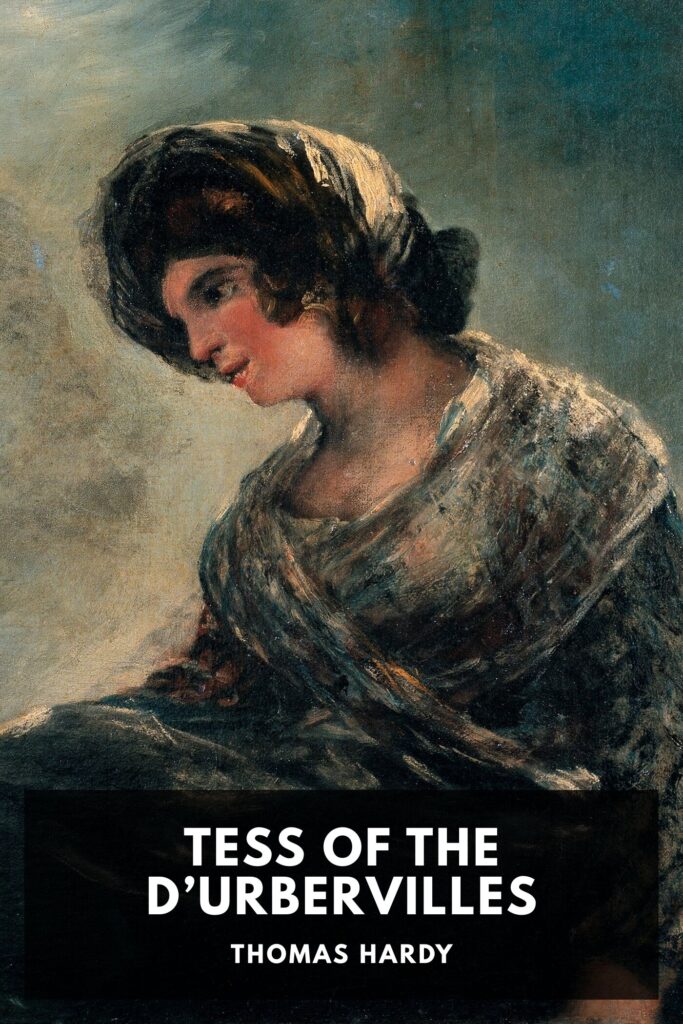
Cover image: Standard Ebooks edition. The hosted PDF remains the edition described above.
Book summary
Study overview of selected chapters
The reviewed opening establishes a gap between inherited prestige and present circumstances. Parson Tringham tells John Durbeyfield that his family descends from the d’Urbervilles, but also makes clear that the discovery brings no estates or practical restoration of rank. John responds as though the information has already changed his social position. The contrast creates humour while exposing the force a name can exert on self-understanding.
Tess first appears during the women’s club-walking celebration. Her father’s conspicuous journey home becomes a source of teasing, and she defends him before recovering enough composure to rejoin the event. The narration gives attention both to her visible appearance and to the young emotional life that other observers largely overlook. That difference between an outward image and an inward experience supplies a useful focus for close reading.
The arrival of three brothers introduces another social contrast. Angel chooses to join the dancing while his older brothers continue their walk, but he does not select Tess as a partner. Only as he leaves does he recognize her disappointment and regret his oversight. The scene is a small event with an unequal emotional weight: what can be dismissed as a brief delay by one person may matter considerably to another.
The prefatory material asks readers to attend to how the novel was presented and judged. Hardy describes its assembly from periodical publication and responds to objections about its subject matter and subtitle. He presents fiction as an impression rather than a straightforward argument. This is his account of his purposes and reception, not a reason to stop questioning the narrative’s choices. Read alongside the opening, the prefatory statements encourage students to distinguish a character’s reputation, a narrator’s representation, and an author’s defence of the work.
Selected chapter summaries
Chapter I
John Durbeyfield encounters Parson Tringham, whose genealogical research identifies a connection to an old knightly family. The parson describes former distinction but confirms that John has neither the ancestral mansions nor their lands. John nevertheless begins to act as though he has acquired a new rank, ordering an errand and arranging a carriage home. The episode contrasts historical information with its practical significance and with the meaning John chooses to give it.
The chapter’s comedy depends partly on the distance between the parson’s cautious explanation and John’s increasingly expansive interpretation. His limited money and ordinary basket remain visible alongside his grand claims. A close reading can follow how forms of address, payment, and imagined status alter the conversation without changing the material facts.
Chapter II
A detailed description of the Vale of Blackmoor leads into the Marlott women’s club celebration, connecting landscape, local history, and a surviving custom. Tess is distinguished by a red ribbon among the white dresses, then by her distress when companions mock her father. The narration also stresses the traces of childhood still present in her appearance, complicating a viewer’s simple impression of an attractive country girl.
Three brothers pause at the dance. Angel remains to participate, selects another girl, and notices Tess too late. He regrets the missed opportunity as he leaves, then turns back toward his journey. The scene places different perspectives beside one another: spectators see an event, Tess experiences exposure and disappointment, and Angel encounters a moment he can move away from.
Prefatory material
The first explanatory note describes Hardy’s effort to bring previously separated publication material into a complete novel. The later preface discusses criticism and the disputed subtitle, while subsequent additions reflect on the earlier response and identify pages restored in Chapter X. These statements document Hardy’s presentation of the text. The guide does not summarize Chapter X, which has not been reviewed.
Further analysis — Academic Master
Ancestry without property
Compare what the parson says with what John repeats. The genealogical connection is presented as a historical finding, but John converts it into a claim about present importance. Analyse the resulting irony without assuming that inherited distinction guarantees money, authority, or recognition.
Landscape and social visibility
Chapter II moves from an elevated view of the valley to a public ceremony and then to individual feeling. Track that change of scale. The description of a picturesque community does not give observers complete knowledge of any person within it, and the narration explicitly calls attention to what is missed.
The significance of a missed encounter
Angel’s choice of a partner offers a manageable example of unequal perspective. Compare his later regret with Tess’s disappointment, paying attention to the brevity of his stay and his ability to continue travelling. The passage supports analysis of attention and social position without requiring assumptions about the unreviewed later plot.
Questions for discussion and written work
These questions are Academic Master study prompts.
- What material consequences follow from John’s discovery, and what consequences does he merely imagine?
- How do names and forms of address create irony in Chapter I?
- How does Chapter II move between a view of the landscape and an account of Tess’s feelings?
- What does the missed dance reveal about the difference between a public event and a private experience?
Sources and coverage
This guide reviews the explanatory note, the later authorial preface and its additions, and Chapters I–II of Project Gutenberg eBook 110. Chapters III–LIX have not been reviewed for summaries here. The full phase and chapter sequence is verified against the same electronic text. No page count or numbered print edition has been inferred from the presence of dated prefaces.
Source text and contents · Edition catalogue · Academic-use evidence
About access & copyright
This page provides book information and study material. Full-text access is provided by the original publisher or authorised source; a listing does not grant permission to republish the book.
Read our Library Access & Copyright policyStatus and material conditions
Compare inherited prestige with the resources actually available to the Durbeyfields.
Narrative perspective
Distinguish Tess’s feelings from the impressions formed by other characters.
Setting and custom
Analyse how landscape description leads into the village celebration.
Prefaces and interpretation
Separate Hardy’s explanations of his purpose from evidence within the narrative.
Reader ratings & reviews
Share your thoughts
Your review helps other students choose the right resources.
KEEP LEARNING
Your next great read
Literature Literature
Adam Bede
View Adam Bede — book Literature
The Odyssey
View The Odyssey — book Literature
Lady Audley's Secret
View Lady Audley's Secret — book Literature
Mrs. Dalloway
View Mrs. Dalloway — book Literature
Don Quixote
View Don Quixote — book Literature
Heart of Darkness
View Heart of Darkness — book Literature
Frankenstein; or, the Modern Prometheus
View Frankenstein; or, the Modern Prometheus — book Literature
Pride and Prejudice
View Pride and Prejudice — book Literature



