
 college
LiteratureAcademic Book
Don Quixote
Not rated yetRate this bookMiguel de Cervantes's Don Quixote, in John Ormsby's translation, develops through two volumes of fifty-two and seventy-four chapters. The later volume makes the publication of the earlier adventures part of the characters' world. This complete guide follows all 126 chapters, including embedded stories, Sancho's government, and the final return. The text's illustrations, translator's introduction, and layers of fictional authorship should be distinguished from the events each narrator claims to report.
Read on the publisher’s website. Opens in a new tab.
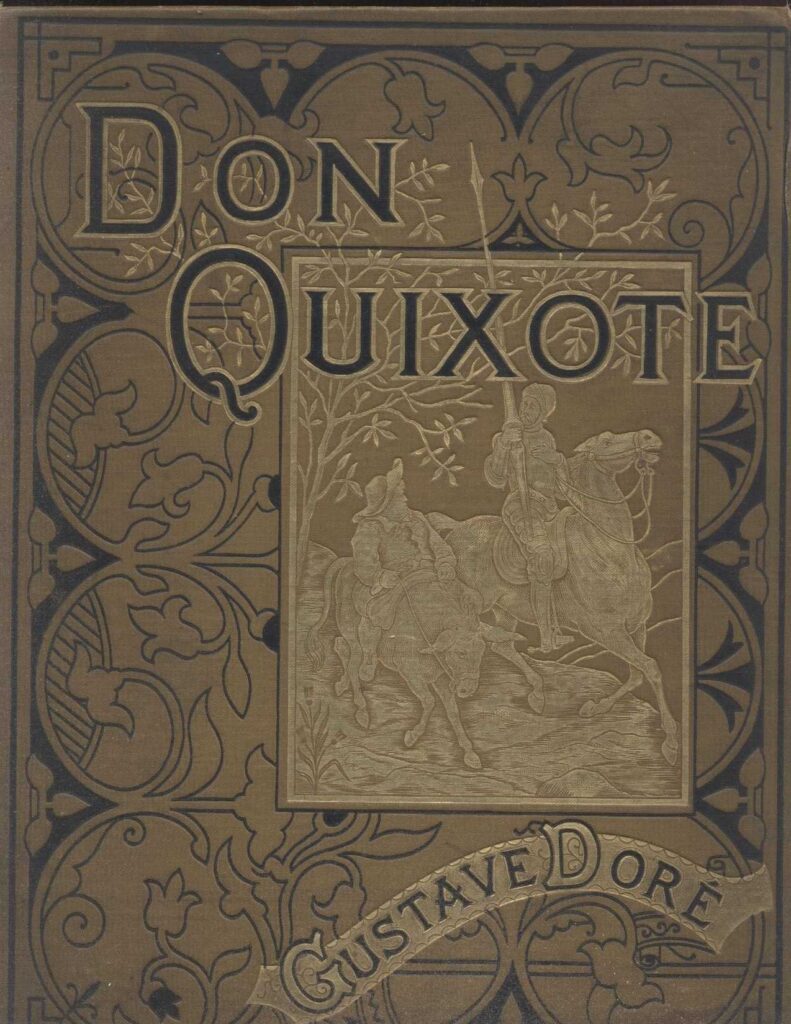 Free
About this book
Miguel de Cervantes's Don Quixote, in John Ormsby's translation, develops through two volumes of fifty-two and seventy-four chapters. The later volume makes the publication of the earlier adventures part of the characters' world. This complete guide follows all 126 chapters, including embedded stories, Sancho's government, and the final return. The text's illustrations, translator's introduction, and layers of fictional authorship should be distinguished from the events each narrator claims to report.
The linked resource is Project Gutenberg eBook 996, electronically released on 27 July 2004, in John Ormsby’s English translation. It contains 52 chapters in Volume I and 74 in Volume II, with numbering restarted in the second volume. The eBook editor explains that its cover and Gustave Doré images were taken from an 1880 J. W. Clark edition and attached to the Ormsby translation. They are therefore features of this Gutenberg presentation, not evidence of the original Ormsby edition’s cover. Book at a glance identifies the digital year and HTML ISBN.
MIT’s undergraduate Reading Fiction: Imaginary Journeys course assigns selections from the work in John Rutherford’s translation. That supports academic use of the work, while this page retains Ormsby’s wording and chapter structure. The expanded guide below follows the complete work and includes its conclusion.
Book contents
View the verified contents
- Introduction
- The Author’s Preface — Volume I
- Some Commendatory Verses
- Dedication of Part I
- Volume I — CHAPTER I. WHICH TREATS OF THE CHARACTER AND PURSUITS OF THE FAMOUS GENTLEMAN DON QUIXOTE OF LA MANCHA
- Volume I — CHAPTER II. WHICH TREATS OF THE FIRST SALLY THE INGENIOUS DON QUIXOTE MADE FROM HOME
- Volume I — CHAPTER III. WHEREIN IS RELATED THE DROLL WAY IN WHICH DON QUIXOTE HAD HIMSELF DUBBED A KNIGHT
- Volume I — CHAPTER IV. OF WHAT HAPPENED TO OUR KNIGHT WHEN HE LEFT THE INN
- Volume I — CHAPTER V. IN WHICH THE NARRATIVE OF OUR KNIGHT’S MISHAP IS CONTINUED
- Volume I — CHAPTER VI. OF THE DIVERTING AND IMPORTANT SCRUTINY WHICH THE CURATE AND THE BARBER MADE IN THE LIBRARY OF OUR INGENIOUS GENTLEMAN
- Volume I — CHAPTER VII. OF THE SECOND SALLY OF OUR WORTHY KNIGHT DON QUIXOTE OF LA MANCHA
- Volume I — CHAPTER VIII. OF THE GOOD FORTUNE WHICH THE VALIANT DON QUIXOTE HAD IN THE TERRIBLE AND UNDREAMT-OF ADVENTURE OF THE WINDMILLS, WITH OTHER OCCURRENCES WORTHY TO BE FITLY RECORDED
- Volume I — CHAPTER IX. IN WHICH IS CONCLUDED AND FINISHED THE TERRIFIC BATTLE BETWEEN THE GALLANT BISCAYAN AND THE VALIANT MANCHEGAN
- Volume I — CHAPTER X. OF THE PLEASANT DISCOURSE THAT PASSED BETWEEN DON QUIXOTE AND HIS SQUIRE SANCHO PANZA
- Volume I — CHAPTER XI. WHAT BEFELL DON QUIXOTE WITH CERTAIN GOATHERDS
- Volume I — CHAPTER XII. OF WHAT A GOATHERD RELATED TO THOSE WITH DON QUIXOTE
- Volume I — CHAPTER XIII. IN WHICH IS ENDED THE STORY OF THE SHEPHERDESS MARCELA, WITH OTHER INCIDENTS
- Volume I — CHAPTER XIV. WHEREIN ARE INSERTED THE DESPAIRING VERSES OF THE DEAD SHEPHERD, TOGETHER WITH OTHER INCIDENTS NOT LOOKED FOR
- Volume I — CHAPTER XV. IN WHICH IS RELATED THE UNFORTUNATE ADVENTURE THAT DON QUIXOTE FELL IN WITH WHEN HE FELL OUT WITH CERTAIN HEARTLESS YANGUESANS
- Volume I — CHAPTER XVI. OF WHAT HAPPENED TO THE INGENIOUS GENTLEMAN IN THE INN WHICH HE TOOK TO BE A CASTLE
- Volume I — CHAPTER XVII. IN WHICH ARE CONTAINED THE INNUMERABLE TROUBLES WHICH THE BRAVE DON QUIXOTE AND HIS GOOD SQUIRE SANCHO PANZA ENDURED IN THE INN, WHICH TO HIS MISFORTUNE HE TOOK TO BE A CASTLE
- Volume I — CHAPTER XVIII. IN WHICH IS RELATED THE DISCOURSE SANCHO PANZA HELD WITH HIS MASTER, DON QUIXOTE, AND OTHER ADVENTURES WORTH RELATING
- Volume I — CHAPTER XIX. OF THE SHREWD DISCOURSE WHICH SANCHO HELD WITH HIS MASTER, AND OF THE ADVENTURE THAT BEFELL HIM WITH A DEAD BODY, TOGETHER WITH OTHER NOTABLE OCCURRENCES
- Volume I — CHAPTER XX. OF THE UNEXAMPLED AND UNHEARD-OF ADVENTURE WHICH WAS ACHIEVED BY THE VALIANT DON QUIXOTE OF LA MANCHA WITH LESS PERIL THAN ANY EVER ACHIEVED BY ANY FAMOUS KNIGHT IN THE WORLD
- Volume I — CHAPTER XXI. WHICH TREATS OF THE EXALTED ADVENTURE AND RICH PRIZE OF MAMBRINO’S HELMET, TOGETHER WITH OTHER THINGS THAT HAPPENED TO OUR INVINCIBLE KNIGHT
- Volume I — CHAPTER XXII. OF THE FREEDOM DON QUIXOTE CONFERRED ON SEVERAL UNFORTUNATES WHO AGAINST THEIR WILL WERE BEING CARRIED WHERE THEY HAD NO WISH TO GO
- Volume I — CHAPTER XXIII. OF WHAT BEFELL DON QUIXOTE IN THE SIERRA MORENA, WHICH WAS ONE OF THE RAREST ADVENTURES RELATED IN THIS VERACIOUS HISTORY
- Volume I — CHAPTER XXIV. IN WHICH IS CONTINUED THE ADVENTURE OF THE SIERRA MORENA
- Volume I — CHAPTER XXV. WHICH TREATS OF THE STRANGE THINGS THAT HAPPENED TO THE STOUT KNIGHT OF LA MANCHA IN THE SIERRA MORENA, AND OF HIS IMITATION OF THE PENANCE OF BELTENEBROS
- Volume I — CHAPTER XXVI. IN WHICH ARE CONTINUED THE REFINEMENTS WHEREWITH DON QUIXOTE PLAYED THE PART OF A LOVER IN THE SIERRA MORENA
- Volume I — CHAPTER XXVII. OF HOW THE CURATE AND THE BARBER PROCEEDED WITH THEIR SCHEME; TOGETHER WITH OTHER MATTERS WORTHY OF RECORD IN THIS GREAT HISTORY
- Volume I — CHAPTER XXVIII. WHICH TREATS OF THE STRANGE AND DELIGHTFUL ADVENTURE THAT BEFELL THE CURATE AND THE BARBER IN THE SAME SIERRA
- Volume I — CHAPTER XXIX. WHICH TREATS OF THE DROLL DEVICE AND METHOD ADOPTED TO EXTRICATE OUR LOVE-STRICKEN KNIGHT FROM THE SEVERE PENANCE HE HAD IMPOSED UPON HIMSELF
- Volume I — CHAPTER XXX. WHICH TREATS OF ADDRESS DISPLAYED BY THE FAIR DOROTHEA, WITH OTHER MATTERS PLEASANT AND AMUSING
- Volume I — CHAPTER XXXI. OF THE DELECTABLE DISCUSSION BETWEEN DON QUIXOTE AND SANCHO PANZA, HIS SQUIRE, TOGETHER WITH OTHER INCIDENTS
- Volume I — CHAPTER XXXII. WHICH TREATS OF WHAT BEFELL DON QUIXOTE’S PARTY AT THE INN
- Volume I — CHAPTER XXXIII. IN WHICH IS RELATED THE NOVEL OF “THE ILL-ADVISED CURIOSITY”
- Volume I — CHAPTER XXXIV. IN WHICH IS CONTINUED THE NOVEL OF “THE ILL-ADVISED CURIOSITY”
- Volume I — CHAPTER XXXV. WHICH TREATS OF THE HEROIC AND PRODIGIOUS BATTLE DON QUIXOTE HAD WITH CERTAIN SKINS OF RED WINE, AND BRINGS THE NOVEL OF “THE ILL-ADVISED CURIOSITY” TO A CLOSE
- Volume I — CHAPTER XXXVI. WHICH TREATS OF MORE CURIOUS INCIDENTS THAT OCCURRED AT THE INN
- Volume I — CHAPTER XXXVII. IN WHICH IS CONTINUED THE STORY OF THE FAMOUS PRINCESS MICOMICONA, WITH OTHER DROLL ADVENTURES
- Volume I — CHAPTER XXXVIII. WHICH TREATS OF THE CURIOUS DISCOURSE DON QUIXOTE DELIVERED ON ARMS AND LETTERS
- Volume I — CHAPTER XXXIX. WHEREIN THE CAPTIVE RELATES HIS LIFE AND ADVENTURES
- Volume I — CHAPTER XL. IN WHICH THE STORY OF THE CAPTIVE IS CONTINUED.
- Volume I — CHAPTER XLI. IN WHICH THE CAPTIVE STILL CONTINUES HIS ADVENTURES
- Volume I — CHAPTER XLII. WHICH TREATS OF WHAT FURTHER TOOK PLACE IN THE INN, AND OF SEVERAL OTHER THINGS WORTH KNOWING
- Volume I — CHAPTER XLIII. WHEREIN IS RELATED THE PLEASANT STORY OF THE MULETEER, TOGETHER WITH OTHER STRANGE THINGS THAT CAME TO PASS IN THE INN
- Volume I — CHAPTER XLIV. IN WHICH ARE CONTINUED THE UNHEARD-OF ADVENTURES OF THE INN
- Volume I — CHAPTER XLV. IN WHICH THE DOUBTFUL QUESTION OF MAMBRINO’S HELMET AND THE PACK-SADDLE IS FINALLY SETTLED, WITH OTHER ADVENTURES THAT OCCURRED IN TRUTH AND EARNEST
- Volume I — CHAPTER XLVI. OF THE END OF THE NOTABLE ADVENTURE OF THE OFFICERS OF THE HOLY BROTHERHOOD; AND OF THE GREAT FEROCITY OF OUR WORTHY KNIGHT, DON QUIXOTE
- Volume I — CHAPTER XLVII. OF THE STRANGE MANNER IN WHICH DON QUIXOTE OF LA MANCHA WAS CARRIED AWAY ENCHANTED, TOGETHER WITH OTHER REMARKABLE INCIDENTS
- Volume I — CHAPTER XLVIII. IN WHICH THE CANON PURSUES THE SUBJECT OF THE BOOKS OF CHIVALRY, WITH OTHER MATTERS WORTHY OF HIS WIT
- Volume I — CHAPTER XLIX. WHICH TREATS OF THE SHREWD CONVERSATION WHICH SANCHO PANZA HELD WITH HIS MASTER DON QUIXOTE
- Volume I — CHAPTER L. OF THE SHREWD CONTROVERSY WHICH DON QUIXOTE AND THE CANON HELD, TOGETHER WITH OTHER INCIDENTS
- Volume I — CHAPTER LI. WHICH DEALS WITH WHAT THE GOATHERD TOLD THOSE WHO WERE CARRYING OFF DON QUIXOTE
- Volume I — CHAPTER LII. OF THE QUARREL THAT DON QUIXOTE HAD WITH THE GOATHERD, TOGETHER WITH THE RARE ADVENTURE OF THE PENITENTS, WHICH WITH AN EXPENDITURE OF SWEAT HE BROUGHT TO A HAPPY CONCLUSION
- Dedication of Volume II
- The Author’s Preface — Volume II
- Volume II — CHAPTER I. OF THE INTERVIEW THE CURATE AND THE BARBER HAD WITH DON QUIXOTE ABOUT HIS MALADY
- Volume II — CHAPTER II. WHICH TREATS OF THE NOTABLE ALTERCATION WHICH SANCHO PANZA HAD WITH DON QUIXOTE’S NIECE, AND HOUSEKEEPER, TOGETHER WITH OTHER DROLL MATTERS
- Volume II — CHAPTER III. OF THE LAUGHABLE CONVERSATION THAT PASSED BETWEEN DON QUIXOTE, SANCHO PANZA, AND THE BACHELOR SAMSON CARRASCO
- Volume II — CHAPTER IV. IN WHICH SANCHO PANZA GIVES A SATISFACTORY REPLY TO THE DOUBTS AND QUESTIONS OF THE BACHELOR SAMSON CARRASCO, TOGETHER WITH OTHER MATTERS WORTH KNOWING AND TELLING
- Volume II — CHAPTER V. OF THE SHREWD AND DROLL CONVERSATION THAT PASSED BETWEEN SANCHO PANZA AND HIS WIFE TERESA PANZA, AND OTHER MATTERS WORTHY OF BEING DULY RECORDED
- Volume II — CHAPTER VI. OF WHAT TOOK PLACE BETWEEN DON QUIXOTE AND HIS NIECE AND HOUSEKEEPER; ONE OF THE MOST IMPORTANT CHAPTERS IN THE WHOLE HISTORY
- Volume II — CHAPTER VII. OF WHAT PASSED BETWEEN DON QUIXOTE AND HIS SQUIRE, TOGETHER WITH OTHER VERY NOTABLE INCIDENTS
- Volume II — CHAPTER VIII. WHEREIN IS RELATED WHAT BEFELL DON QUIXOTE ON HIS WAY TO SEE HIS LADY DULCINEA DEL TOBOSO
- Volume II — CHAPTER IX. WHEREIN IS RELATED WHAT WILL BE SEEN THERE
- Volume II — CHAPTER X. WHEREIN IS RELATED THE CRAFTY DEVICE SANCHO ADOPTED TO ENCHANT THE LADY DULCINEA, AND OTHER INCIDENTS AS LUDICROUS AS THEY ARE TRUE
- Volume II — CHAPTER XI. OF THE STRANGE ADVENTURE WHICH THE VALIANT DON QUIXOTE HAD WITH THE CAR OR CART OF “THE CORTES OF DEATH”
- Volume II — CHAPTER XII. OF THE STRANGE ADVENTURE WHICH BEFELL THE VALIANT DON QUIXOTE WITH THE BOLD KNIGHT OF THE MIRRORS
- Volume II — CHAPTER XIII. IN WHICH IS CONTINUED THE ADVENTURE OF THE KNIGHT OF THE GROVE, TOGETHER WITH THE SENSIBLE, ORIGINAL, AND TRANQUIL COLLOQUY THAT PASSED BETWEEN THE TWO SQUIRES
- Volume II — CHAPTER XIV. WHEREIN IS CONTINUED THE ADVENTURE OF THE KNIGHT OF THE GROVE
- Volume II — CHAPTER XV. WHEREIN IT IS TOLD AND KNOWN WHO THE KNIGHT OF THE MIRRORS AND HIS SQUIRE WERE
- Volume II — CHAPTER XVI. OF WHAT BEFELL DON QUIXOTE WITH A DISCREET GENTLEMAN OF LA MANCHA
- Volume II — CHAPTER XVII. WHEREIN IS SHOWN THE FURTHEST AND HIGHEST POINT WHICH THE UNEXAMPLED COURAGE OF DON QUIXOTE REACHED OR COULD REACH; TOGETHER WITH THE HAPPILY ACHIEVED ADVENTURE OF THE LIONS
- Volume II — CHAPTER XVIII. OF WHAT HAPPENED DON QUIXOTE IN THE CASTLE OR HOUSE OF THE KNIGHT OF THE GREEN GABAN, TOGETHER WITH OTHER MATTERS OUT OF THE COMMON
- Volume II — CHAPTER XIX. IN WHICH IS RELATED THE ADVENTURE OF THE ENAMOURED SHEPHERD, TOGETHER WITH OTHER TRULY DROLL INCIDENTS
- Volume II — CHAPTER XX. WHEREIN AN ACCOUNT IS GIVEN OF THE WEDDING OF CAMACHO THE RICH, TOGETHER WITH THE INCIDENT OF BASILIO THE POOR
- Volume II — CHAPTER XXI. IN WHICH CAMACHO’S WEDDING IS CONTINUED, WITH OTHER DELIGHTFUL INCIDENTS
- Volume II — CHAPTER XXII. WHEREIN IS RELATED THE GRAND ADVENTURE OF THE CAVE OF MONTESINOS IN THE HEART OF LA MANCHA, WHICH THE VALIANT DON QUIXOTE BROUGHT TO A HAPPY TERMINATION
- Volume II — CHAPTER XXIII. OF THE WONDERFUL THINGS THE INCOMPARABLE DON QUIXOTE SAID HE SAW IN THE PROFOUND CAVE OF MONTESINOS, THE IMPOSSIBILITY AND MAGNITUDE OF WHICH CAUSE THIS ADVENTURE TO BE DEEMED APOCRYPHAL
- Volume II — CHAPTER XXIV. WHEREIN ARE RELATED A THOUSAND TRIFLING MATTERS, AS TRIVIAL AS THEY ARE NECESSARY TO THE RIGHT UNDERSTANDING OF THIS GREAT HISTORY
- Volume II — CHAPTER XXV. WHEREIN IS SET DOWN THE BRAYING ADVENTURE, AND THE DROLL ONE OF THE PUPPET-SHOWMAN, TOGETHER WITH THE MEMORABLE DIVINATIONS OF THE DIVINING APE
- Volume II — CHAPTER XXVI. WHEREIN IS CONTINUED THE DROLL ADVENTURE OF THE PUPPET-SHOWMAN, TOGETHER WITH OTHER THINGS IN TRUTH RIGHT GOOD
- Volume II — CHAPTER XXVII. WHEREIN IT IS SHOWN WHO MASTER PEDRO AND HIS APE WERE, TOGETHER WITH THE MISHAP DON QUIXOTE HAD IN THE BRAYING ADVENTURE, WHICH HE DID NOT CONCLUDE AS HE WOULD HAVE LIKED OR AS HE HAD EXPECTED
- Volume II — CHAPTER XXVIII. OF MATTERS THAT BENENGELI SAYS HE WHO READS THEM WILL KNOW, IF HE READS THEM WITH ATTENTION
- Volume II — CHAPTER XXIX. OF THE FAMOUS ADVENTURE OF THE ENCHANTED BARK
- Volume II — CHAPTER XXX. OF DON QUIXOTE’S ADVENTURE WITH A FAIR HUNTRESS
- Volume II — CHAPTER XXXI. WHICH TREATS OF MANY AND GREAT MATTERS
- Volume II — CHAPTER XXXII. OF THE REPLY DON QUIXOTE GAVE HIS CENSURER, WITH OTHER INCIDENTS, GRAVE AND DROLL
- Volume II — CHAPTER XXXIII. OF THE DELECTABLE DISCOURSE WHICH THE DUCHESS AND HER DAMSELS HELD WITH SANCHO PANZA, WELL WORTH READING AND NOTING
- Volume II — CHAPTER XXXIV. WHICH RELATES HOW THEY LEARNED THE WAY IN WHICH THEY WERE TO DISENCHANT THE PEERLESS DULCINEA DEL TOBOSO, WHICH IS ONE OF THE RAREST ADVENTURES IN THIS BOOK
- Volume II — CHAPTER XXXV. WHEREIN IS CONTINUED THE INSTRUCTION GIVEN TO DON QUIXOTE TOUCHING THE DISENCHANTMENT OF DULCINEA, TOGETHER WITH OTHER MARVELLOUS INCIDENTS
- Volume II — CHAPTER XXXVI. WHEREIN IS RELATED THE STRANGE AND UNDREAMT-OF ADVENTURE OF THE DISTRESSED DUENNA, ALIAS THE COUNTESS TRIFALDI, TOGETHER WITH A LETTER WHICH SANCHO PANZA WROTE TO HIS WIFE, TERESA PANZA
- Volume II — CHAPTER XXXVII. WHEREIN IS CONTINUED THE NOTABLE ADVENTURE OF THE DISTRESSED DUENNA
- Volume II — CHAPTER XXXVIII. WHEREIN IS TOLD THE DISTRESSED DUENNA’S TALE OF HER MISFORTUNES
- Volume II — CHAPTER XXXIX. IN WHICH THE TRIFALDI CONTINUES HER MARVELLOUS AND MEMORABLE STORY
- Volume II — CHAPTER XL. OF MATTERS RELATING AND BELONGING TO THIS ADVENTURE AND TO THIS MEMORABLE HISTORY
- Volume II — CHAPTER XLI. OF THE ARRIVAL OF CLAVILEÑO AND THE END OF THIS PROTRACTED ADVENTURE
- Volume II — CHAPTER XLII. OF THE COUNSELS WHICH DON QUIXOTE GAVE SANCHO PANZA BEFORE HE SET OUT TO GOVERN THE ISLAND, TOGETHER WITH OTHER WELL-CONSIDERED MATTERS
- Volume II — CHAPTER XLIII. OF THE SECOND SET OF COUNSELS DON QUIXOTE GAVE SANCHO PANZA
- Volume II — CHAPTER XLIV. HOW SANCHO PANZA WAS CONDUCTED TO HIS GOVERNMENT, AND OF THE STRANGE ADVENTURE THAT BEFELL DON QUIXOTE IN THE CASTLE
- Volume II — CHAPTER XLV. OF HOW THE GREAT SANCHO PANZA TOOK POSSESSION OF HIS ISLAND, AND OF HOW HE MADE A BEGINNING IN GOVERNING
- Volume II — CHAPTER XLVI. OF THE TERRIBLE BELL AND CAT FRIGHT THAT DON QUIXOTE GOT IN THE COURSE OF THE ENAMOURED ALTISIDORA’S WOOING
- Volume II — CHAPTER XLVII. WHEREIN IS CONTINUED THE ACCOUNT OF HOW SANCHO PANZA CONDUCTED HIMSELF IN HIS GOVERNMENT
- Volume II — CHAPTER XLVIII. OF WHAT BEFELL DON QUIXOTE WITH DOÑA RODRIGUEZ, THE DUCHESS’S DUENNA, TOGETHER WITH OTHER OCCURRENCES WORTHY OF RECORD AND ETERNAL REMEMBRANCE
- Volume II — CHAPTER XLIX. OF WHAT HAPPENED SANCHO IN MAKING THE ROUND OF HIS ISLAND
- Volume II — CHAPTER L. WHEREIN IS SET FORTH WHO THE ENCHANTERS AND EXECUTIONERS WERE WHO FLOGGED THE DUENNA AND PINCHED DON QUIXOTE, AND ALSO WHAT BEFELL THE PAGE WHO CARRIED THE LETTER TO TERESA PANZA, SANCHO PANZA’S WIFE
- Volume II — CHAPTER LI. OF THE PROGRESS OF SANCHO’S GOVERNMENT, AND OTHER SUCH ENTERTAINING MATTERS
- Volume II — CHAPTER LII. WHEREIN IS RELATED THE ADVENTURE OF THE SECOND DISTRESSED OR AFFLICTED DUENNA, OTHERWISE CALLED DOÑA RODRIGUEZ
- Volume II — CHAPTER LIII. OF THE TROUBLOUS END AND TERMINATION SANCHO PANZA’S GOVERNMENT CAME TO
- Volume II — CHAPTER LIV. WHICH DEALS WITH MATTERS RELATING TO THIS HISTORY AND NO OTHER
- Volume II — CHAPTER LV. OF WHAT BEFELL SANCHO ON THE ROAD, AND OTHER THINGS THAT CANNOT BE SURPASSED
- Volume II — CHAPTER LVI. OF THE PRODIGIOUS AND UNPARALLELED BATTLE THAT TOOK PLACE BETWEEN DON QUIXOTE OF LA MANCHA AND THE LACQUEY TOSILOS IN DEFENCE OF THE DAUGHTER OF DOÑA RODRIGUEZ
- Volume II — CHAPTER LVII. WHICH TREATS OF HOW DON QUIXOTE TOOK LEAVE OF THE DUKE, AND OF WHAT FOLLOWED WITH THE WITTY AND IMPUDENT ALTISIDORA, ONE OF THE DUCHESS’S DAMSELS
- Volume II — CHAPTER LVIII. WHICH TELLS HOW ADVENTURES CAME CROWDING ON DON QUIXOTE IN SUCH NUMBERS THAT THEY GAVE ONE ANOTHER NO BREATHING-TIME
- Volume II — CHAPTER LIX. WHEREIN IS RELATED THE STRANGE THING, WHICH MAY BE REGARDED AS AN ADVENTURE, THAT HAPPENED DON QUIXOTE
- Volume II — CHAPTER LX. OF WHAT HAPPENED DON QUIXOTE ON HIS WAY TO BARCELONA
- Volume II — CHAPTER LXI. OF WHAT HAPPENED DON QUIXOTE ON ENTERING BARCELONA, TOGETHER WITH OTHER MATTERS THAT PARTAKE OF THE TRUE RATHER THAN OF THE INGENIOUS
- Volume II — CHAPTER LXII. WHICH DEALS WITH THE ADVENTURE OF THE ENCHANTED HEAD, TOGETHER WITH OTHER TRIVIAL MATTERS WHICH CANNOT BE LEFT UNTOLD
- Volume II — CHAPTER LXIII. OF THE MISHAP THAT BEFELL SANCHO PANZA THROUGH THE VISIT TO THE GALLEYS, AND THE STRANGE ADVENTURE OF THE FAIR MORISCO
- Volume II — CHAPTER LXIV. TREATING OF THE ADVENTURE WHICH GAVE DON QUIXOTE MORE UNHAPPINESS THAN ALL THAT HAD HITHERTO BEFALLEN HIM
- Volume II — CHAPTER LXV. WHEREIN IS MADE KNOWN WHO THE KNIGHT OF THE WHITE MOON WAS; LIKEWISE DON GREGORIO’S RELEASE, AND OTHER EVENTS
- Volume II — CHAPTER LXVI. WHICH TREATS OF WHAT HE WHO READS WILL SEE, OR WHAT HE WHO HAS IT READ TO HIM WILL HEAR
- Volume II — CHAPTER LXVII. OF THE RESOLUTION DON QUIXOTE FORMED TO TURN SHEPHERD AND TAKE TO A LIFE IN THE FIELDS WHILE THE YEAR FOR WHICH HE HAD GIVEN HIS WORD WAS RUNNING ITS COURSE; WITH OTHER EVENTS TRULY DELECTABLE AND HAPPY
- Volume II — CHAPTER LXVIII. OF THE BRISTLY ADVENTURE THAT BEFELL DON QUIXOTE
- Volume II — CHAPTER LXIX. OF THE STRANGEST AND MOST EXTRAORDINARY ADVENTURE THAT BEFELL DON QUIXOTE IN THE WHOLE COURSE OF THIS GREAT HISTORY
- Volume II — CHAPTER LXX. WHICH FOLLOWS SIXTY-NINE AND DEALS WITH MATTERS INDISPENSABLE FOR THE CLEAR COMPREHENSION OF THIS HISTORY
- Volume II — CHAPTER LXXI. OF WHAT PASSED BETWEEN DON QUIXOTE AND HIS SQUIRE SANCHO ON THE WAY TO THEIR VILLAGE
- Volume II — CHAPTER LXXII. OF HOW DON QUIXOTE AND SANCHO REACHED THEIR VILLAGE
- Volume II — CHAPTER LXXIII. OF THE OMENS DON QUIXOTE HAD AS HE ENTERED HIS OWN VILLAGE, AND OTHER INCIDENTS THAT EMBELLISH AND GIVE A COLOUR TO THIS GREAT HISTORY
- Volume II — CHAPTER LXXIV. OF HOW DON QUIXOTE FELL SICK, AND OF THE WILL HE MADE, AND HOW HE DIED
Book summary
Miguel de Cervantes's Don Quixote, in John Ormsby's translation, develops through two volumes of fifty-two and seventy-four chapters. The later volume makes the publication of the earlier adventures part of the characters' world. This complete guide follows all 126 chapters, including embedded stories, Sancho's government, and the final return. The text's illustrations, translator's introduction, and layers of fictional authorship should be distinguished from the events each narrator claims to report.
Complete chapter-by-chapter guide
Volume I, Chapter 1
An impoverished gentleman reads chivalric romances until he constructs a knightly identity, horse, and imagined lady. Names become instruments for remaking ordinary circumstances before he has tested whether the world will recognize the transformation.
Volume I, Chapter 2
His first departure brings him to an inn interpreted as a castle. Other people accommodate or exploit the misunderstanding, making the adventure a collaboration between his expectations and their improvisation.
Volume I, Chapter 3
The innkeeper performs a knighting ceremony after the guest's vigil creates trouble. Don Quixote treats the improvised ritual as valid authority. A social performance produces the status that the setting cannot independently supply.
Volume I, Chapter 4
He intervenes in a boy's beating, then demands that merchants recognize Dulcinea's beauty without seeing her. The intervention fails to protect the boy, and the demand leads to injury, testing conviction against practical consequences.
Volume I, Chapter 5
A neighbor finds and returns him home. Don Quixote interprets help through borrowed literary roles, while his household confronts the bodily aftermath. The difference between remembered story and actual care becomes visible.
Volume I, Chapter 6
The priest and barber inspect the library and select books for destruction. Their judgments mix criticism and comedy. Attempting to cure misreading through censorship makes the supposed rescuers participants in another questionable exercise of authority.
Volume I, Chapter 7
Don Quixote recruits Sancho with a promise of government and leaves again. Their unequal expectations create a partnership: material hope accompanies knightly fantasy, and neither person's motive is adequately described by simple foolishness.
Volume I, Chapter 8
Windmills become giants, and defeat is explained through enchantment. A confrontation with a Biscayan then breaks off as the narrator claims the source is incomplete, making the reader's access to adventure depend on textual mediation.
Volume I, Chapter 9
An Arabic manuscript attributed to Cide Hamete Benengeli supplies the interrupted story through translation. The recovered fight is therefore also a joke about authorship, prejudice, and the unstable authority of a supposedly true history.
Volume I, Chapter 10
Sancho measures the victory against the promised island while Don Quixote supplies chivalric explanations. Conversation reveals different standards of success. The squire's practical questions persist even when he accepts the general adventure.
Volume I, Chapter 11
Goatherds offer hospitality, and Don Quixote delivers a speech about a lost golden age. The idealized account of common abundance is heard within a concrete community whose generosity does not require agreement with his historical fantasy.
Volume I, Chapter 12
News of Grisostomo's death introduces a pastoral story involving Marcela. Other people's accounts prepare a judgment of a woman before she speaks, extending the novel's concern with the authority claimed by narrated desire.
Volume I, Chapter 13
Travel toward the funeral allows competing descriptions of love and honor. Don Quixote's defense of knight-errantry joins a community already inclined to make literary roles govern the interpretation of actual lives.
Volume I, Chapter 14
Marcela rejects responsibility for a love she never promised to return. Her defense distinguishes attractiveness from obligation. The episode challenges the claim that another person's suffering automatically creates a duty to reciprocate desire.
Volume I, Chapter 15
Rocinante's encounter with mares leads to a beating by the carriers. The bodily aftermath resists heroic interpretation, though explanation quickly tries to absorb it. Animals and ordinary travel continually disrupt the imagined scale of adventure.
Volume I, Chapter 16
At the inn, confused nighttime approaches involve Maritornes and several incompatible expectations. A comic collision exposes the danger of treating a stranger's movement as confirmation of a privately desired story.
Volume I, Chapter 17
The promised healing balm produces unpleasant effects, and Sancho is tossed in a blanket after the pair refuse payment. Noble claims cannot eliminate the inn's economic terms, while the squire bears consequences his master cannot simply explain away.
Volume I, Chapter 18
Two flocks are interpreted as opposing armies. Don Quixote attacks and is injured by the shepherds. His detailed imaginative population of the scene demonstrates inventive power while making the material harm of imposed interpretation unmistakable.
Volume I, Chapter 19
A funeral procession becomes another occasion for intervention. Don Quixote imposes a hostile explanation before learning its purpose, then receives a new title from Sancho. Naming partly repairs dignity after bodily and interpretive failure.
Volume I, Chapter 20
Terrifying night sounds prove to be fulling hammers. Suspense depends on incomplete sensory knowledge, while Sancho's bodily needs complicate heroic endurance. The revelation tests whether laughter can alter the master's preferred account of courage.
Volume I, Chapter 21
A barber's basin becomes Mambrino's helmet, and acquisition is narrated as a victory. The practical object remains capable of supporting another owner's claim. Possession and interpretation do not make its previous history disappear.
Volume I, Chapter 22
Don Quixote frees galley prisoners, treating coerced movement as sufficient evidence of injustice. Their response defeats his expectation of gratitude and service. Liberation becomes ethically complicated when it ignores particular acts and substitutes another command.
Volume I, Chapter 23
In the Sierra Morena, abandoned possessions lead toward Cardenio's story. The landscape shelters people displaced by passion, disgrace, and pursuit, broadening the novel beyond the pair's inventions.
Volume I, Chapter 24
Cardenio recounts betrayal involving Luscinda and Don Fernando. Don Quixote's interruptions expose the difficulty of listening when literary associations continually displace the speaker's specific experience. Another person's grief cannot remain merely an example.
Volume I, Chapter 25
Don Quixote chooses a model of romantic penance and sends Sancho toward Dulcinea. The lady's identity is connected to an ordinary woman, revealing the labor of elevation through which the master makes her fit his chosen story.
Volume I, Chapter 26
Sancho meets the priest and barber, who develop a plan to bring the knight home. His account of the errand begins to mix practical evasion with invented fulfillment. The squire increasingly becomes an author within the shared fiction.
Volume I, Chapter 27
The rescuers encounter Cardenio and learn more of his interrupted history. Their own disguises make deception a proposed cure for delusion, complicating any simple distinction between sane truth-tellers and an imaginative patient.
Volume I, Chapter 28
Dorothea tells how Don Fernando's promises exposed her to abandonment. Her practical intelligence and social vulnerability prepare her participation in the rescue scheme. The narrative gives her purposes that exceed the role others assign her.
Volume I, Chapter 29
Dorothea becomes the distressed Princess Micomicona to redirect Don Quixote. The invented quest works because it respects his interpretive framework while concealing another goal. Successful persuasion here depends on entering a fiction rather than disproving it.
Volume I, Chapter 30
Dorothea sustains the performance under questioning, while Don Quixote organizes the supposed obligation. The chapter shows improvisational skill across several participants, making the adventure visibly collective rather than the product of one imagination.
Volume I, Chapter 31
Sancho supplies a fabricated report of Dulcinea. The return of the boy earlier defended by Don Quixote exposes the damage caused by that failed intervention. A claimed good intention must face testimony about what followed.
Volume I, Chapter 32
At the inn, readers dispute the value and truth of romances. A manuscript supplies another story, and the audience becomes part of the novel's action. Different levels of literacy do not produce a simple division between credulous and discerning people.
Volume I, Chapter 33
The embedded story of Anselmo, Lotario, and Camila begins with a husband's desire to test fidelity. His experiment requires other people to enter danger for the sake of his certainty, turning insecurity into an imposed moral trial.
Volume I, Chapter 34
The test produces the betrayal it claimed merely to investigate. Performances and concealments multiply as the participants manage competing knowledge. The story exposes the destructive assumption that trust can be secured through unlimited verification.
Volume I, Chapter 35
Don Quixote attacks wineskins while imagining a giant. The destruction interrupts the inset narrative, whose conclusion also reveals the costs of engineered suspicion. Material damage and narrative design become parallel forms of misplaced intervention.
Volume I, Chapter 36
Arrivals at the inn bring Cardenio, Dorothea, Luscinda, and Don Fernando into recognition. The reunion allows claims previously told separately to confront one another. Resolution depends on listening publicly to relationships concealed through rank and evasion.
Volume I, Chapter 37
The Micomicona performance continues while additional travelers enlarge the inn's narrative community. Don Quixote's discourse on arms and learning asks how suffering and public service should be valued beyond the ordinary distinction between fantasy and fact.
Volume I, Chapter 38
The comparison of arms and letters gives soldierly labor a serious claim despite its delivery by the comic knight. The chapter resists assuming that a speaker mistaken in one sphere can offer no insight in another.
Volume I, Chapter 39
The captive begins a history involving family resources, military service, and imprisonment. The narration connects private fortune with Mediterranean conflict. These events require a register different from invented enchantment while still reaching the reader through retrospective storytelling.
Volume I, Chapter 40
The captive continues with Zoraida's assistance and plans for escape. Communication crosses religious and linguistic boundaries, exposing dependence on intermediaries and the unequal risks undertaken by different participants.
Volume I, Chapter 41
Escape involves danger, family rupture, and Zoraida's separation from her father. Arrival does not erase what the rescue costs. The story complicates a simple triumphal account of conversion, freedom, and Christian reunion.
Volume I, Chapter 42
The captive recognizes his brother, now a judge. Family reunion occurs through another coincidence at the inn, making the setting a place where dispersed histories become mutually legible rather than merely a stage for Don Quixote's errors.
Volume I, Chapter 43
The young singer's attachment to Clara introduces another conflict between affection and parental expectation. Meanwhile, Don Quixote is suspended through a nighttime trick. Romance and bodily humiliation occupy the same narrative space without canceling each other.
Volume I, Chapter 44
Pursuit and misunderstanding continue among the inn's guests. Don Quixote's predicament and the young lovers' difficulties expose how authority operates through access, reputation, and the control of movement rather than through one uniform standard of reason.
Volume I, Chapter 45
The basin and saddle dispute draws different witnesses into declaring what objects are. Comic agreement becomes unstable when social pressure replaces inspection. Officers of the Holy Brotherhood then bring a separate legal history into the room.
Volume I, Chapter 46
The priest helps manage the threat of arrest, and the group arranges to transport Don Quixote in a cage. The supposed enchantment makes coercive care acceptable to its subject, while leaving the reader to judge its ethical terms.
Volume I, Chapter 47
The caged journey encounters a canon who discusses romance and credibility. The conversation tests whether imaginative literature must be rejected or can be remade through plausible structure and responsible invention.
Volume I, Chapter 48
The canon and priest extend the discussion to theater and public taste. Literary judgment becomes connected with commercial demand and institutional control, preventing the debate from remaining only a criticism of one reader's habits.
Volume I, Chapter 49
Sancho questions the enchantment through bodily facts, challenging the explanation from within shared experience. Don Quixote resists the inference, revealing how a theory can absorb contrary evidence rather than expose itself to revision.
Volume I, Chapter 50
Don Quixote defends the imaginative world of chivalry with eloquence. The debate does not erase his errors, but it gives fantasy an account of pleasure, moral aspiration, and narrative possibility that a merely dismissive response cannot fully answer.
Volume I, Chapter 51
A goatherd tells Leandra's story, introducing another woman judged through male disappointment. The embedded account invites comparison with Marcela's earlier defense, especially where the speaker's hurt is treated as authority over another person's character.
Volume I, Chapter 52
A quarrel and an encounter with penitents produce further injury before the return home. The first volume closes with provisional recovery and textual claims about continuation, leaving both the household's care and the history's authority unfinished.
Volume II, Chapter 1
The priest and barber test Don Quixote's apparent recovery, but conversation revives chivalric explanations. A calm manner cannot by itself establish that the underlying interpretive commitments have changed.
Volume II, Chapter 2
Sancho reports the public reputation created by the first printed history. The characters must now respond to readers who know an account of them, making fame a new material condition of their adventures.
Volume II, Chapter 3
Samson Carrasco discusses the published book, its successes, and disputed details. The narrative turns criticism of its first part into action inside its second, blurring the boundary between represented people and their textual images.
Volume II, Chapter 4
Sancho answers questions about omissions and incidents in the earlier account. Correction and comic self-defense reveal that the supposedly finished history remains open to competing recollections and editorial explanations.
Volume II, Chapter 5
Sancho and Teresa discuss advancement, marriage, and their daughter's future. His promised status invites aspiration while her skepticism recalls the household from which the fantasy draws its practical costs.
Volume II, Chapter 6
Don Quixote's niece and housekeeper oppose another departure. Their arguments expose the tension between protective responsibility and his claim to choose a life organized around public service as he understands it.
Volume II, Chapter 7
Knight and squire negotiate terms before leaving. Sancho asks about wages as well as rewards, making their dependence on one another more explicit than the glamorous promise of an island alone.
Volume II, Chapter 8
The journey toward Toboso joins reflective conversation with the need to encounter Dulcinea. Sancho must manage the consequences of a report he invented, while his master expects an external confirmation that cannot straightforwardly appear.
Volume II, Chapter 9
The nighttime search in Toboso makes the imagined palace difficult to locate. Ordinary buildings resist the descriptions supplied by literary expectation, and Sancho's earlier evasion requires a new invention.
Volume II, Chapter 10
Sancho presents peasant women as Dulcinea and attendants, attributing the discrepancy to enchantment. His manipulation makes the knight's interpretive habit a means of deceiving him, reversing their usual distribution of apparent knowledge.
Volume II, Chapter 11
A theatrical cart produces an encounter with people dressed as Death and other figures. Costumes are real but their represented identities are not, supplying a comic model for the novel's continual negotiation between role and person.
Volume II, Chapter 12
The Knight of the Mirrors appears with a rival claim to prowess and romantic service. Don Quixote encounters a performance designed to control him through the rules he recognizes.
Volume II, Chapter 13
The squires talk with a practical candor different from their masters' formal rivalry. Their conversation exposes interests in food, work, and reputation that heroic display does not contain.
Volume II, Chapter 14
Don Quixote wins the encounter and resists the recognition that might explain his opponent. Victory allows the planned cure to fail because the framework can reinterpret an inconvenient familiar face as enchantment.
Volume II, Chapter 15
The defeated knight is revealed as Carrasco, whose benevolent project turns toward personal resentment. The would-be corrector becomes emotionally implicated, making intervention less disinterested than its initial explanation suggested.
Volume II, Chapter 16
Don Diego de Miranda meets the travelers and observes a mixture of reasonable conversation and extraordinary claims. His uncertainty encourages readers to assess particular acts rather than assign one label to the whole person.
Volume II, Chapter 17
Don Quixote faces lions that decline the proposed confrontation. The absence of combat can still be narrated as courage, exposing the difference between danger accepted and victory manufactured through the behavior of another creature.
Volume II, Chapter 18
Hospitality in Don Diego's home joins poetry, conversation, and domestic judgment. The chapter gives the knight a social place beyond public ridicule, while preserving the host's difficulty in reconciling insight with delusion.
Volume II, Chapter 19
The approach to Camacho's wedding introduces a conflict between wealth and an earlier attachment. Public celebration surrounds an unsettled question of who can claim a bride and on what grounds.
Volume II, Chapter 20
The wedding's abundance makes economic inequality visible through spectacle and food. Sancho's pleasure and Don Quixote's reflection offer different but connected responses to the material resources supporting ceremony.
Volume II, Chapter 21
Basilio's staged injury secures a marriage to Quiteria before its deception is revealed. A performance overrides the wealthy suitor's expectations, raising questions about consent, ingenuity, and the use of apparent mortal danger as leverage.
Volume II, Chapter 22
Don Quixote descends into the cave of Montesinos. The physical descent can be observed, but the experience reported afterward cannot be similarly verified, preparing a new problem of narrative authority.
Volume II, Chapter 23
His account of the cave combines chivalric figures with details connected to Sancho's earlier invention. The story's uncertainty is acknowledged within the narration, making doubt part of the represented history rather than an external objection.
Volume II, Chapter 24
The travelers move among minor encounters that refuse a single heroic scale. Conversation about knowledge and storytelling continues, showing how the connective episodes shape interpretation even when they do not supply a spectacular adventure.
Volume II, Chapter 25
A braying dispute and Master Pedro's ape introduce reputations founded on resemblance and supposed hidden knowledge. The promised puppet show adds another layer in which performance may be mistaken for immediate action.
Volume II, Chapter 26
Don Quixote intervenes in the puppet story, destroying figures to rescue represented characters. His response takes art's emotional invitation as a practical command, making the boundary between sympathy and damaging action especially concrete.
Volume II, Chapter 27
Master Pedro's identity and the ape's supposed powers receive an explanation. Another encounter with the braying community ends badly, revealing how collective honor can turn minor ridicule into a readiness for violence.
Volume II, Chapter 28
Sancho complains after the beating, and the pair reassess service and payment. Their partnership survives through argument and need, not a permanently harmonious distribution of roles.
Volume II, Chapter 29
An unmanned boat becomes an enchanted conveyance until a mill threatens their lives. Rescue requires the work of people treated within the fantasy as enemies. Assistance and interpretation once again point in opposite directions.
Volume II, Chapter 30
A duke and duchess recognize the famous travelers and invite them into their household. Printed reputation supplies the hosts with a script, beginning a period in which powerful readers deliberately manufacture the adventures they expect to enjoy.
Volume II, Chapter 31
Ceremonial welcome flatters the knight while an ecclesiastic challenges the entertainment. The household's sophistication does not ensure ethical superiority; its ability to stage a convincing world depends on resources unavailable to its guests.
Volume II, Chapter 32
Don Quixote defends his vocation and explains Dulcinea. The argument reveals imaginative loyalty while the hosts test how far they can control its circumstances. Polite attention can conceal an exploitative audience.
Volume II, Chapter 33
The duchess questions Sancho about Dulcinea and learns the mechanism of his invention. His private explanation becomes material for a larger deception, showing how unequal access to confidence can extend rather than resolve a misunderstanding.
Volume II, Chapter 34
A staged hunt and supernatural procession transform the hosts' knowledge into spectacle. The guests are required to interpret effects arranged by people who can remain outside the danger and embarrassment they create.
Volume II, Chapter 35
The disenchantment of Dulcinea is made dependent on Sancho's whipping himself. A solution to an invented problem imposes pain on the person who first used the invention, turning narrative authority into a claim over another body.
Volume II, Chapter 36
The Distressed Duenna's arrival begins another elaborate performance, while Sancho writes to Teresa about advancement. Family correspondence carries the effects of the court's entertainment into a household that cannot inspect its origins.
Volume II, Chapter 37
Preparations extend the Duenna's story and the expectation of rescue. The chapter's delay makes the audience aware of the labor and ceremony required to sustain an adventure that its participants are asked to receive as spontaneous.
Volume II, Chapter 38
The Duenna recounts a tale of desire and punishment. Its conventions are recognizable to Don Quixote, making literary familiarity the means through which he can be guided into accepting a fabricated obligation.
Volume II, Chapter 39
The explanation of enchantment continues, concentrating responsibility on an extraordinary remedy. Narrative excess becomes a resource of persuasion: the more elaborate the difficulty, the more apparently necessary the knight's exceptional role.
Volume II, Chapter 40
Plans for the remedy involve Clavileño, the wooden horse. Practical questions about movement and danger are answered by the fiction's rules rather than inspection, preparing a physical experiment whose operators know more than its riders.
Volume II, Chapter 41
Blindfolded riders experience a supposed flight produced through stage effects. Afterward, Sancho's embellishments compete with the official account. The deception generates further authorship instead of one stable interpretation controlled by its planners.
Volume II, Chapter 42
Don Quixote advises Sancho about governing, stressing humility, justice, and attention to the vulnerable. The serious counsel contrasts with the circumstances of the promised office, whose creators regard government as entertainment.
Volume II, Chapter 43
Further advice addresses bodily habits, speech, and self-presentation. Ethical aspiration is mixed with social discipline, inviting readers to distinguish rules that serve subjects from conventions designed chiefly to make a ruler appear respectable.
Volume II, Chapter 44
Sancho departs for the supposed island, and the separated narratives reveal how each companion manages without the other. Don Quixote encounters a staged romantic interest while trying to sustain fidelity to Dulcinea.
Volume II, Chapter 45
Sancho begins judging disputes and displays practical intelligence. The island's artificial foundation does not make every judgment empty. A person introduced as a comic subordinate can act more responsibly than the elite observers expecting him to fail.
Volume II, Chapter 46
Altisidora's supposed courtship is followed by a cruel disturbance involving cats and noise. The knight's bodily injuries expose the cost hidden by a description of the household's performances as harmless amusement.
Volume II, Chapter 47
A physician controls Sancho's food while government presents contradictory demands. His office brings authority without ordinary bodily freedom, complicating the assumption that advancement necessarily grants independence or satisfaction.
Volume II, Chapter 48
Doña Rodriguez seeks the knight's help for a grievance involving her daughter. A genuine request intrudes into a setting dominated by fabricated adventures, making it difficult to distinguish entertainment from an actual claim upon justice.
Volume II, Chapter 49
Sancho's night patrol reveals urban regulations and concealed lives. His responses test prudence beyond the formal puzzle cases, showing government as interpretation of particular circumstances rather than performance of a ready-made rule.
Volume II, Chapter 50
The narration explains parts of the household's concealed machinery and follows the page to Teresa. Different audiences receive different versions of Sancho's success, and the court's ability to distribute information becomes part of its power.
Volume II, Chapter 51
Sancho confronts another judgment problem and receives further advice from Don Quixote. The exchange connects ruler and subject through communication rather than spectacle, while the island's pressures continue to expose the limits of his control.
Volume II, Chapter 52
Doña Rodriguez renews the appeal concerning her daughter. Arrangements for combat promise to translate a domestic grievance into an honorable public procedure, although the institution organizing it retains the ability to alter the outcome.
Volume II, Chapter 53
A staged attack overwhelms Sancho, who resigns. He distinguishes the imagined rewards of government from its actual demands and recovers a claim to ordinary bodily independence. Refusing advancement becomes an act of practical judgment.
Volume II, Chapter 54
Sancho meets Ricote, whose return raises the human consequences of expulsion. Friendship, law, religion, and belonging do not align neatly. The episode broadens displacement beyond the comic consequences of knightly fantasy.
Volume II, Chapter 55
Sancho falls into a pit while returning, and rescue reunites practical dependence with his abandoned governorship. The report of his conduct allows the question of justice to persist after the theatrical office has ended.
Volume II, Chapter 56
Tosilos refuses the expected combat and responds to the woman whose grievance it was meant to settle. The household reinterprets the disrupted plan, exposing the mismatch between a staged institution's script and participants' actual desires.
Volume II, Chapter 57
The pair leave the ducal household amid Altisidora's accusations. Departure offers release from a world whose hospitality depended on manipulation, even though the hosts can continue to influence the travelers through their reputation.
Volume II, Chapter 58
Images, a pastoral performance, and an encounter with bulls provide successive occasions for interpretation. The chapter tests the knight's effort to turn every meeting into a coherent vocation while ordinary forces continue to interrupt him.
Volume II, Chapter 59
The travelers hear readers discussing an unauthorized continuation of their story. Don Quixote changes his route to contradict it, making publication directly alter action. Defending identity now requires resisting another author's claim to represent it.
Volume II, Chapter 60
Near Barcelona, the encounter with Roque Guinart brings organized outlawry and an account of personal conflict into the journey. Moral distinctions become harder to sustain through legal category alone, without making violence itself disappear.
Volume II, Chapter 61
Barcelona receives the famous knight through public recognition. He enters an urban audience already informed about him, where welcome and ridicule can be difficult to separate. Fame gives access while reducing the possibility of arriving unknown.
Volume II, Chapter 62
An apparently speaking head conceals a mechanism, and a printing-house visit exposes the material production of books. Both episodes ask how an authoritative voice is manufactured and how readers might investigate its source.
Volume II, Chapter 63
The galley visit places Sancho's body within military spectacle and introduces Ana Felix's history. Expulsion, rescue, and religious identity become personal problems rather than distant policy, continuing the questions opened by Ricote's appearance.
Volume II, Chapter 64
The Knight of the White Moon defeats Don Quixote and requires his withdrawal from arms. A rule accepted within chivalry becomes the instrument that can finally interrupt the vocation. The defeat changes conduct without immediately extinguishing belief.
Volume II, Chapter 65
Carrasco's identity and plan are explained, while other lives continue toward rescue and reunion. The chapter distinguishes success in forcing a return from the uncertain emotional consequences of doing so.
Volume II, Chapter 66
On the road home, defeat becomes a subject of interpretation rather than merely an event. Don Quixote's reputation persists through encounters with people whose stories do not stop because his chosen career has been suspended.
Volume II, Chapter 67
He imagines becoming a shepherd for the required year. Another literary form offers to replace chivalry without abandoning the desire to organize life through a model, showing that enforced rest does not immediately end imaginative self-making.
Volume II, Chapter 68
A herd of pigs passes over the travelers, reducing heroic expectation to bodily exposure. Their capture by servants redirects them toward another prepared spectacle, revealing the persistence of an audience that will not simply let the story end.
Volume II, Chapter 69
A staged death and revival make Sancho undergo further humiliation. The supposed moral necessity is invented by the entertainers, exposing the coercion that can hide inside demands to help or restore another person.
Volume II, Chapter 70
The arrangement behind the spectacle is disclosed, and Altisidora's account adds another fanciful narrative. Knowing a performance is false does not prevent the powerful from continuing it when amusement depends on others' submission.
Volume II, Chapter 71
Sancho negotiates payment for the promised lashes and substitutes blows against trees. The scene joins economic bargaining with the remnants of the Dulcinea fiction. Both men now accommodate an account whose literal terms are increasingly difficult to sustain.
Volume II, Chapter 72
A figure associated with the unauthorized continuation is asked to verify that these travelers are not the people described there. Identity is defended through testimony, making a fictional rival's witness part of the authorized history's own machinery.
Volume II, Chapter 73
Near home, ordinary signs are interpreted as ominous. The household's return offers care while threatening the imagined future. Sancho tries to sustain hope through another possible story, revealing how far he has become a participant in imaginative consolation.
Volume II, Chapter 74
Don Quixote falls ill, rejects the romances, makes his will as Alonso Quixano, and dies. Sancho urges continued life through pastoral invention. The closing insistence on finality protects the person and the book against another exploitative continuation while leaving the value of the abandoned imagination open to judgment.
Study instructions
- Keep the volume number with every chapter reference.
- Track an object's ordinary identity beside the identity assigned by a character.
- Compare people who correct Don Quixote directly with those who stage a fiction to control him.
- Read Marcela, Dorothea, Zoraida, Teresa, and Ana Felix as agents with purposes beyond the central pair's adventures.
- Compare Sancho's judgments with the duke and duchess's treatment of guests.
- Follow the publication of the first volume and the unauthorized sequel as events that alter the second volume's action.
- Evaluate the ending without assuming that recognizing delusion makes every earlier ideal worthless.
Questions for reflection
- When does entering another person's fiction become care, and when does it become exploitation?
- What distinguishes a deluded intervention from a sophisticated but cruel entertainment?
- How does the novel make the truth of a history depend on readers, translators, witnesses, and rival authors?
Sources and coverage
This original study guide follows the complete work and includes its conclusion. Numbered chapters or books follow the linked edition. Where the work has no chapters, the reading movements are editorial aids. Interpretive questions and practice tasks are supplied for study rather than quoted from the author. Read the source edition. Consult its full text, examples, and references when developing an essay or solving a problem.
About access & copyright
This page provides book information and study material. Full-text access is provided by the original publisher or authorised source; a listing does not grant permission to republish the book.
Read our Library Access & Copyright policyChivalric identity
Analyse how naming and imitation shape the protagonist’s chosen role.
Competing accounts
Compare Don Quixote’s interpretations with Sancho’s observations.
Comic consequences
Connect elevated claims with their bodily and practical effects.
Narrative authority
Explain how the interrupted account complicates claims of historical certainty.
Reader ratings & reviews
Share your thoughts
Your review helps other students choose the right resources.
KEEP LEARNING
Your next great read
college Literature
Mary Barton
View Mary Barton — book Literature
Adam Bede
View Adam Bede — book Literature
The Odyssey
View The Odyssey — book Literature
Tess of the d'Urbervilles: A Pure Woman
View Tess of the d'Urbervilles: A Pure Woman — book Literature
Lady Audley's Secret
View Lady Audley's Secret — book Literature
Mrs. Dalloway
View Mrs. Dalloway — book Literature
Heart of Darkness
View Heart of Darkness — book Literature
Frankenstein; or, the Modern Prometheus (1818 Edition)
View Frankenstein; or, the Modern Prometheus (1818 Edition) — book Literature



