
 Literature
Academic Book
Lady Audley's Secret
Not rated yetRate this bookMary Elizabeth Braddon’s novel invites close reading of appearances, social ambition, and the evidence through which people judge one another. This English Gutenberg edition contains 41 chapters. The reading guide examines the opening chapter and the discovery of hidden objects in Chapter III, with attention to setting, dialogue, and unequal access to information.
Read on the publisher’s website. Opens in a new tab.
 Free
About this book
Lady Audley’s Secret makes the country house a setting in which comfort and uncertainty coexist. The opening description of Audley Court emphasizes age, secluded paths, concealed spaces, and the impression of peace. Lucy Graham’s rise from governess to Sir Michael Audley’s wife brings questions of economic dependence and personal identity into that household. Her popularity is repeatedly presented through the impressions she makes on others, making the difference between admiration and knowledge especially useful for study.
The linked resource is Project Gutenberg eBook 8954, released electronically on 1 September 2005. That date and the HTML ISBN in Book at a glance identify the digital edition. Its chapters are numbered continuously from I to XLI; this page follows that structure. MIT’s Major English Novels course assigns Braddon’s work in an Oxford University Press edition and links an electronic text. This supports undergraduate study of the work without establishing that the course assigns this particular digital edition.
The guide below concentrates on Chapters I and III. These chapters provide a useful foundation for analysing how narrative description plants uncertainty before a mystery is fully explained. They also show how marriage, employment, possessions, and domestic service shape the information available to different characters. The guide contains spoilers for those two chapters, while leaving later revelations to the original text.
Book contents
41 chapters numbered continuously from I to XLI in this digital edition.
View the verified contents
- CHAPTER I. — LUCY.
- CHAPTER II. — ON BOARD THE ARGUS.
- CHAPTER III. — HIDDEN RELICS.
- CHAPTER IV. — IN THE FIRST PAGE OF "THE TIMES."
- CHAPTER V. — THE HEADSTONE AT VENTNOR.
- CHAPTER VI. — ANYWHERE, ANYWHERE OUT OF THE WORLD.
- CHAPTER VII. — AFTER A YEAR.
- CHAPTER VIII. — BEFORE THE STORM.
- CHAPTER IX. — AFTER THE STORM.
- CHAPTER X. — MISSING.
- CHAPTER XI. — THE MARK UPON MY LADY'S WRIST.
- CHAPTER XII. — STILL MISSING.
- CHAPTER XIII. — TROUBLED DREAMS.
- CHAPTER XIV. — PHOEBE'S SUITOR.
- CHAPTER XV. — ON THE WATCH.
- CHAPTER XVI. — ROBERT AUDLEY GETS HIS CONGE.
- CHAPTER XVII. — AT THE CASTLE INN.
- CHAPTER XVIII. — ROBERT RECEIVES A VISITOR WHOM HE HAD SCARCELY EXPECTED.
- CHAPTER XIX. — THE WRITING IN THE BOOK.
- CHAPTER XX. — MRS. PLOWSON.
- CHAPTER XXI. — LITTLE GEORGEY LEAVES HIS OLD HOME.
- CHAPTER XXII. — COMING TO A STANDSTILL.
- CHAPTER XXIII. — CLARA.
- CHAPTER XXIV. — GEORGE'S LETTERS.
- CHAPTER XXV. — RETROGRADE INVESTIGATION.
- CHAPTER XXVI. — SO FAR AND NO FARTHER.
- CHAPTER XXVII. — BEGINNING AT THE OTHER END.
- CHAPTER XXVIII. — HIDDEN IN THE GRAVE.
- CHAPTER XXIX. — IN THE LIME-WALK.
- CHAPTER XXX. — PREPARING THE GROUND.
- CHAPTER XXXI. — PHOEBE'S PETITION.
- CHAPTER XXXII. — THE RED LIGHT IN THE SKY.
- CHAPTER XXXIII. — THE BEARER OF THE TIDINGS.
- CHAPTER XXXIV. — MY LADY TELLS THE TRUTH.
- CHAPTER XXXV. — THE HUSH THAT SUCCEEDS THE TEMPEST.
- CHAPTER XXXVI. — DR. MOSGRAVE'S ADVICE.
- CHAPTER XXXVII. — BURIED ALIVE.
- CHAPTER XXXVIII. — GHOST-HAUNTED.
- CHAPTER XXXIX. — THAT WHICH THE DYING MAN HAD TO TELL.
- CHAPTER XL. — RESTORED.
- CHAPTER XLI. — AT PEACE.
Read the full text at Project Gutenberg
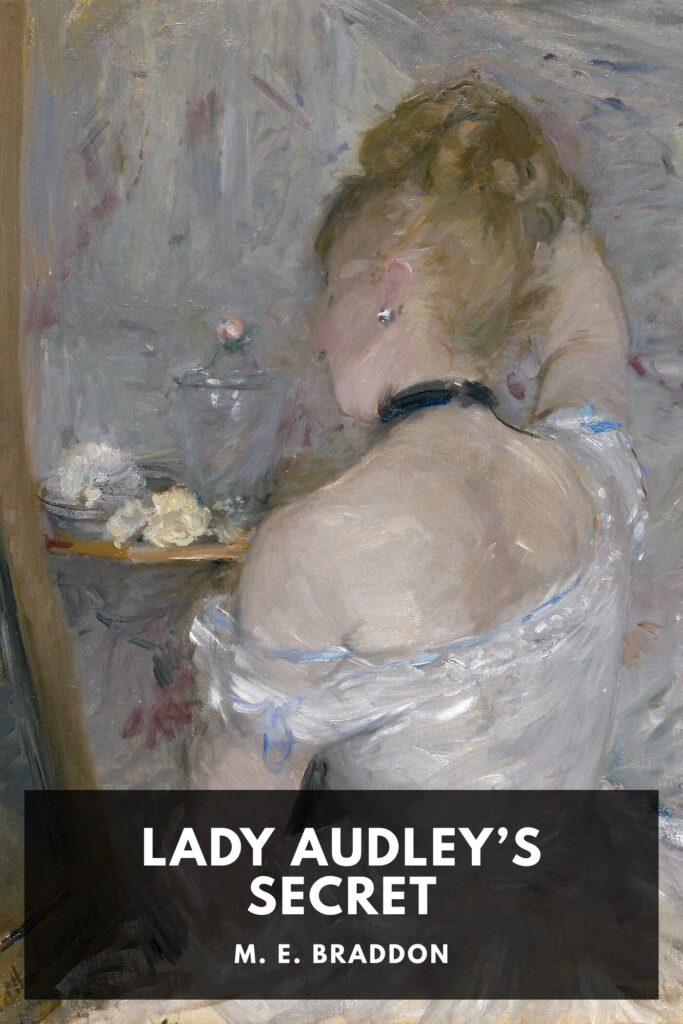
Cover image: Standard Ebooks edition. The hosted PDF remains the edition described above.
Book summary
Spoiler notice: This guide discusses the events in its reviewed passages and, for Mrs. Dalloway, the ending.
Study overview of selected passages
Chapter I presents Audley Court as a place that seems removed from ordinary anxieties. Yet the narrator’s description also makes the house difficult to navigate and the grounds suitable for concealment. The dry moat, sheltered walk, hidden chamber, and neglected well are concrete features of the setting. Their placement beside language of tranquillity invites a reader to test whether a reassuring appearance guarantees security.
Lucy Graham’s reputation is built through repeated admiration. Her accomplishments, attractiveness, and apparent contentment make her accepted within the Dawson household and beyond it. Sir Michael interprets her through his own desire for love and his hope that material advantage will not determine her response. The proposal unsettles that expectation: Lucy speaks openly about poverty and dependence, while the narrator gives the reader access to objects and thoughts that Sir Michael does not see.
Chapter III shifts attention toward Phoebe Marks and Luke. Their conversation compares the wealth Lucy now possesses with the wages and constrained prospects familiar to them. Phoebe’s employment allows her to enter private rooms and handle clothing, though the jewellery remains protected by keys. When the keys are accidentally available, a hidden drawer reveals small personal objects whose significance differs sharply from the monetary value of the jewels.
Academic Master’s interpretation connects these passages through unequal knowledge. Sir Michael’s confidence, Lucy’s guarded history, Phoebe’s observations, and Luke’s interest in money do not form a single reliable perspective. The reader must ask who knows a fact, who only imagines its meaning, and who might gain from holding information. The reviewed chapters establish tensions around identity and evidence; they do not disclose the complete explanation of the title’s secret.
Selected chapter summaries
Chapter I — Lucy
The chapter introduces Audley Court, Sir Michael, his daughter Alicia, and Lucy Graham’s position before and after marriage. Lucy’s popularity contrasts with Alicia’s resentment at losing authority in the household. During the proposal, Lucy emphasizes the hardship of poverty rather than offering the romantic assurance Sir Michael hopes for. Afterward, the narrator reveals a concealed ring and folded paper. The chapter’s suspense depends on the difference between a public reputation and a private history, not on a confirmed explanation of those objects.
Chapter III — Hidden Relics
Phoebe and Luke meet near the neglected well and discuss Lucy’s new wealth. Phoebe leads Luke through the house, showing how service gives her access to luxurious rooms. Keys found in a dress permit them to open the jewellery case. A secret drawer contains a baby’s shoe and a lock of hair. Luke dismisses them as materially worthless; Phoebe takes them and anticipates their usefulness. This disagreement makes the distinction between market value and informational value central to the scene.
Further analysis — Academic Master
Setting as a problem of interpretation
The opening’s peaceful language does not disappear when concealed spaces are described. Both impressions remain available. Academic Master suggests comparing the descriptive words used for shelter with those used for secrecy, then explaining how the same physical space can support either reading. Avoid calling every object a solved clue at this stage. A strong close reading identifies the expectation a detail creates and acknowledges that the reader does not yet possess its final explanation.
Marriage, work, and social position
Lucy and Phoebe can be compared through the opportunities and limits associated with paid work. The first chapter makes economic security explicit in Lucy’s response to marriage, while Chapter III places Phoebe’s wages beside the wealth she helps maintain. The comparison does not make their decisions identical. It provides evidence for asking how status changes the choices available to a woman and how descriptions of gentility depend on employment, clothing, travel, and the household observing her.
Separating an object from an inference
A useful reading log distinguishes the ring and paper, the hidden drawer, and its contents from the conclusions a character draws about them. Record the object, the person who sees it, and the interpretation offered. Phoebe’s preference for the small keepsakes over a bracelet is a judgment about possible leverage. The reviewed chapter shows that judgment occurring; it does not yet establish every event the objects might explain. This distinction helps keep a study response precise.
Questions for discussion and written work
- How does the house’s apparent peace coexist with its concealed spaces?
- Which parts of Lucy’s reputation rest on observation, and which on expectation?
- What changes when Phoebe rather than Luke assesses the hidden keepsakes?
- How does the narrator give the reader information unavailable to Sir Michael?
These questions and analytical suggestions are Academic Master’s editorial material. Support a response with the original text and distinguish a character’s belief from an established event.
Sources and coverage
Based on complete readings of Chapters I and III in Project Gutenberg eBook 8954, together with all 41 chapter headings and the edition catalogue. The intervening Chapter II and Chapters IV–XLI were not reviewed in full. This is a selective chapter guide, not a whole-book or exhaustive chapter-by-chapter summary.
Read the source text · Edition and format details · MIT course reading list
About access & copyright
This page provides book information and study material. Full-text access is provided by the original publisher or authorised source; a listing does not grant permission to republish the book.
Read our Library Access & Copyright policyNarrative evidence
Separate what the narrator reveals from what a character assumes.
Domestic setting
Analyse how shelter and concealment coexist in descriptions of Audley Court.
Economic dependence
Examine how work and marriage affect the choices described in the opening.
Informational value
Compare a keepsake’s monetary worth with its potential significance.
Reader ratings & reviews
Share your thoughts
Your review helps other students choose the right resources.
KEEP LEARNING
Your next great read
Literature Literature
Adam Bede
View Adam Bede — book Literature
The Odyssey
View The Odyssey — book Literature
Tess of the d'Urbervilles: A Pure Woman
View Tess of the d'Urbervilles: A Pure Woman — book Literature
Mrs. Dalloway
View Mrs. Dalloway — book Literature
Don Quixote
View Don Quixote — book Literature
Heart of Darkness
View Heart of Darkness — book Literature
Frankenstein; or, the Modern Prometheus
View Frankenstein; or, the Modern Prometheus — book Literature
Pride and Prejudice
View Pride and Prejudice — book Literature



