
 Ethics
Academic Book
Leviathan
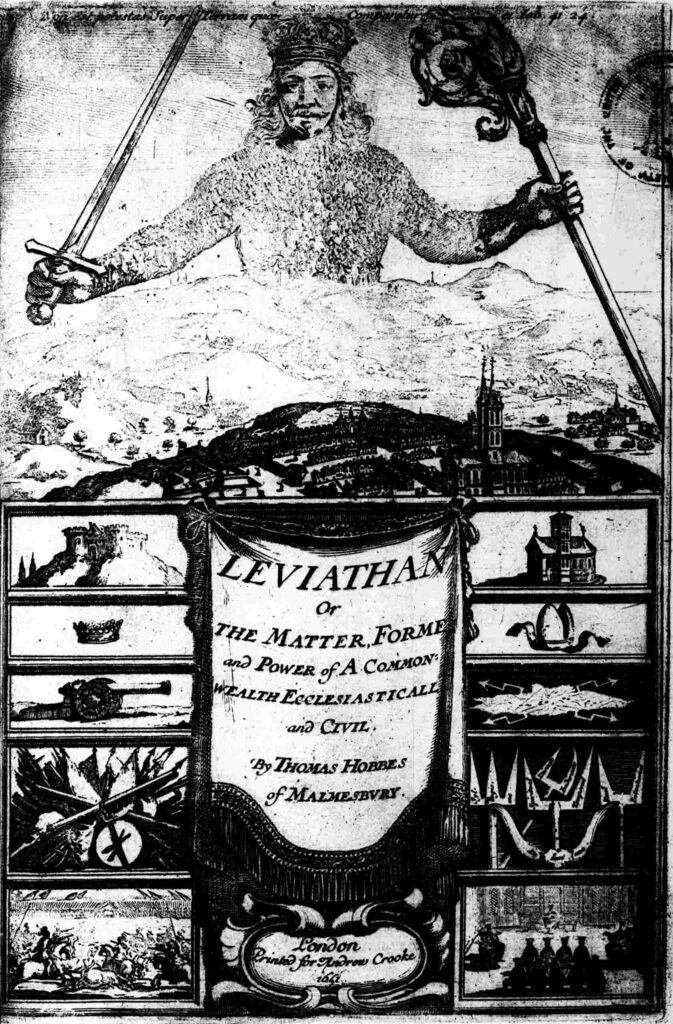
Not rated yetRate this bookThomas Hobbes examines how human vulnerability, conflict, and collective authority shape political life. This English edition preserves historical spelling and follows a transcription derived from the 1651 text. The guide focuses on Chapters XIII and XVII, connecting the insecurity of life without common power to the formation of a commonwealth.
Read on the publisher’s website. Opens in a new tab.
 Free
About this book
Leviathan develops an account of human beings and political authority across four parts: Of Man, Of Common-wealth, Of a Christian Common-wealth, and Of the Kingdome of Darknesse. Definitions and arguments connect questions of perception and conduct with the organization of public power. Its historical language requires patient reading, particularly where ordinary words carry meanings established within Hobbes’s argument. The selected chapters below concentrate on the problem of insecurity and the creation of collective authority.
The title page reproduces a 1651 publication statement. Project Gutenberg released this digital edition in 2002; that date and its HTML ISBN identify the electronic publication. The transcriber explains that the e-text was prepared from Pelican Classics, itself based on the first edition, with adaptations to typography and marginal notes. MIT’s undergraduate Literature and Ethical Values course assigns an excerpt from the work. This supports academic use of Leviathan without establishing adoption of this exact digital edition.
Book contents
Four parts containing 47 chapters, preceded by the introduction and followed by A Review, and Conclusion. Historical spelling is retained in the verified titles.
View the verified contents
- THE INTRODUCTION
- PART I. OF MAN
- CHAPTER I.OF SENSE
- CHAPTER II.OF IMAGINATION
- CHAPTER III.OF THE CONSEQUENCE OR TRAYNE OF IMAGINATIONS
- CHAPTER IV.OF SPEECH
- CHAPTER V.OF REASON, AND SCIENCE.
- CHAPTER VI.OF THE INTERIOUR BEGINNINGS OF VOLUNTARY MOTIONS COMMONLY CALLED THE PASSIONS, AND THE SPEECHES BY WHICH THEY ARE EXPRESSED.
- CHAPTER VII.OF THE ENDS OR RESOLUTIONS OF DISCOURSE
- CHAPTER VIII.OF THE VERTUES COMMONLY CALLED INTELLECTUAL, AND THEIR CONTRARY DEFECTS
- CHAPTER IX.OF THE SEVERALL SUBJECTS OF KNOWLEDGE
- CHAPTER X.OF POWER, WORTH, DIGNITY, HONOUR AND WORTHINESS
- CHAPTER XI.OF THE DIFFERENCE OF MANNERS
- CHAPTER XII.OF RELIGION
- CHAPTER XIII.OF THE NATURALL CONDITION OF MANKIND, AS CONCERNING THEIR FELICITY, AND MISERY
- CHAPTER XIV.OF THE FIRST AND SECOND NATURALL LAWES, AND OF CONTRACTS
- CHAPTER XV.OF OTHER LAWES OF NATURE
- CHAPTER XVI.OF PERSONS, AUTHORS, AND THINGS PERSONATED
- PART II. OF COMMON-WEALTH
- CHAPTER XVII.OF THE CAUSES, GENERATION, AND DEFINITION OF A COMMON-WEALTH
- CHAPTER XVIII.OF THE RIGHTS OF SOVERAIGNES BY INSTITUTION
- CHAPTER XIX.OF THE SEVERALL KINDS OF COMMON-WEALTH BY INSTITUTION, AND OF SUCCESSION TO THE SOVERAIGNE POWER
- CHAPTER XX.OF DOMINION PATERNALL AND DESPOTICALL
- CHAPTER XXI.OF THE LIBERTY OF SUBJECTS
- CHAPTER XXII.OF SYSTEMES SUBJECT, POLITICALL, AND PRIVATE
- CHAPTER XXIII.OF THE PUBLIQUE MINISTERS OF SOVERAIGN POWER
- CHAPTER XXIV.OF THE NUTRITION, AND PROCREATION OF A COMMON-WEALTH
- CHAPTER XXV.OF COUNSELL
- CHAPTER XXVI.OF CIVILL LAWES
- CHAPTER XXVII.OF CRIMES, EXCUSES, AND EXTENUATIONS
- CHAPTER XXVIII.OF PUNISHMENTS, AND REWARDS
- CHAPTER XXIX.OF THOSE THINGS THAT WEAKEN, OR TEND TO THE DISSOLUTION OF A COMMON-WEALTH
- CHAPTER XXX.OF THE OFFICE OF THE SOVERAIGN REPRESENTATIVE
- CHAPTER XXXI.OF THE KINGDOME OF GOD BY NATURE
- PART III. OF A CHRISTIAN COMMON-WEALTH
- CHAPTER XXXII.OF THE PRINCIPLES OF CHRISTIAN POLITIQUES
- CHAPTER XXXIII.OF THE NUMBER, ANTIQUITY, SCOPE, AUTHORITY, AND INTERPRETERS OF THE BOOKS OF HOLY SCRIPTURE
- CHAPTER XXXIV.OF THE SIGNIFICATION OF SPIRIT, ANGEL, AND INSPIRATION IN THE BOOKS OF HOLY SCRIPTURE
- CHAPTER XXXV.OF THE SIGNIFICATION IN SCRIPTURE OF KINGDOME OF GOD, OF HOLY, SACRED, AND SACRAMENT
- CHAPTER XXXVI.OF THE WORD OF GOD, AND OF PROPHETS
- CHAPTER XXXVII.OF MIRACLES, AND THEIR USE
- CHAPTER XXXVIII.OF THE SIGNIFICATION IN SCRIPTURE OF ETERNALL LIFE, HELL, SALVATION, THE WORLD TO COME, AND REDEMPTION
- CHAPTER XXXIX.OF THE SIGNIFICATION IN SCRIPTURE OF THE WORD CHURCH
- CHAPTER XL.OF THE RIGHTS OF THE KINGDOME OF GOD, IN ABRAHAM, MOSES, HIGH PRIESTS, AND THE KINGS OF JUDAH
- CHAPTER XLI.OF THE OFFICE OF OUR BLESSED SAVIOUR
- CHAPTER XLII.OF POWER ECCLESIASTICALL
- CHAPTER XLIII.OF WHAT IS NECESSARY FOR A MANS RECEPTION INTO THE KINGDOME OF HEAVEN
- PART IV. OF THE KINDOME OF DARKNESSE
- CHAPTER XLIV.OF SPIRITUALL DARKNESSE FROM MISINTERPRETATION OF SCRIPTURE
- CHAPTER XLV.OF DAEMONOLOGY, AND OTHER RELIQUES OF THE RELIGION OF THE GENTILES
- CHAPTER XLVI.OF DARKNESSE FROM VAIN PHILOSOPHY, AND FABULOUS TRADITIONS
- A REVIEW, AND CONCLUSION
Book summary
Study overview of selected chapters
Hobbes’s argument in Chapter XIII begins with vulnerability rather than a claim that everyone has identical abilities. Even a physically weaker person can threaten a stronger one through planning or cooperation. Equality in this sense produces competing hopes, while uncertainty about another person’s intentions encourages defensive action. Competition, mistrust, and concern for reputation become three sources of conflict.
War, in Hobbes’s account, includes a continuing disposition to fight when security is absent. It is therefore broader than an uninterrupted series of battles. Without assurance that people can retain the products of their labour, cooperation and long-term activity become precarious. The chapter nevertheless identifies motives for peace, including fear of death and the desire for a more comfortable life. These are Hobbes’s claims about political order, not conclusions readers must accept without examination.
Chapter XVII asks what can make agreement durable. A temporary alliance or a crowd pursuing separate judgments does not provide the lasting protection Hobbes seeks. Promises need an effective common power, and collective strength must be directed toward shared peace and defence. His argument moves from the difficulty of trusting others to the institutional conditions under which trust can become practicable.
The commonwealth is formed when people authorize a person or assembly to represent them through mutual covenants. This distinction matters: Hobbes does not define the sovereign here exclusively as an individual monarch. The chapter also distinguishes authority established through agreement from authority acquired through force. Academic Master suggests testing the steps between insecurity, authorization, and protection, rather than reducing the argument to a slogan about strong government.
Selected chapter summaries
Chapter XIII — The natural condition of mankind
Hobbes connects people’s mutual vulnerability with competition, mistrust, and the pursuit of reputation. Without common power, uncertainty about others creates a condition of war even when fighting is not continuous. He describes the loss of secure cooperation and identifies passions that incline people toward peace. The chapter invites analysis of an argument about insecurity; its historical examples and assumptions should be examined critically rather than treated as neutral observations.
Chapter XVII — The formation of a commonwealth
Hobbes argues that promises, small groups, and temporary cooperation cannot by themselves secure lasting peace. People must authorize a person or assembly to direct their collective power toward protection. Mutual covenants transform a multitude into a commonwealth represented by a sovereign. He distinguishes commonwealths established by agreement from those acquired through force. For close reading, identify who covenants with whom and how representation differs from mere agreement.
How to study this book
Academic Master suggests a reading log that records the speaker or narrator, the evidence offered, and the reasoning behind an interpretation. These are study suggestions; consult the original text for context.
Further analysis and study — Academic Master
Fear as a problem of coordination
Chapter XIII describes conflict as more than a sequence of actual fights. Where people cannot rely on a common authority, uncertainty about another person’s intentions affects what they consider necessary for self-preservation. This makes security a problem of expectations as well as strength. Chapter XVII responds by examining how many individuals can authorize a person or assembly to represent them. Read the transition carefully: the explanation of insecurity and the argument for sovereignty perform different tasks, and agreeing with the diagnosis does not by itself settle every question about the proposed authority.
Reconstructing the argument
Academic Master suggests outlining the reviewed chapters as premises, intermediate conclusions, and a proposed institutional response. Distinguish a description of human conduct from a claim about what people ought to authorize. Identify where Hobbes relies on equality of vulnerability, uncertainty, and the desire for preservation. Then ask what kind of agreement would be needed to change those conditions. Keep the book’s account of political representation separate from a modern assumption that representation necessarily means an elected legislature. The text’s person-or-assembly formulation deserves attention in its own terms.
Questions for discussion and written work
- Why can insecurity exist without an immediate fight?
- What does authorizing a representative add to an agreement?
- Which premise would a critic need to challenge?
Sources and coverage
This selective guide is based on Chapters XIII and XVII in Project Gutenberg eBook 3207. Edition details and the complete chapter structure were also checked. Other chapters were not reviewed in full; this is not an exhaustive chapter-by-chapter account.
Read the source text · Edition and format details · Course reading list
About access & copyright
This page provides book information and study material. Full-text access is provided by the original publisher or authorised source; a listing does not grant permission to republish the book.
Read our Library Access & Copyright policyPolitical insecurity
Trace how vulnerability and mistrust generate conflict in Hobbes’s argument.
War and peace
Distinguish continuing insecurity from the act of fighting.
Authorization
Examine how mutual covenants create a representative common power.
Critical reading
Test each argumentative step and separate Hobbes’s claims from your assessment.
Reader ratings & reviews
Share your thoughts
Your review helps other students choose the right resources.
KEEP LEARNING
Your next great read
Ethics Ethics
The Secret Sharer
View The Secret Sharer — book Ethics
The Prince
View The Prince — book Ethics
Julius Caesar
View Julius Caesar — book Ethics
Utilitarianism
View Utilitarianism — book Ethics
The Republic
View The Republic — book Ethics
The Prince
View The Prince — book Ethics
Crime and Punishment
View Crime and Punishment — bookResearch Methods in Psychology
Research Methods in Psychology
View Research Methods in Psychology — bookWetlands Law: A Course Source



