
 Literature
Academic Book
Frankenstein; or, the Modern Prometheus
Not rated yetRate this bookThis Frankenstein page follows the four opening letters and twenty-four-chapter text in Project Gutenberg 84. Walton's polar voyage frames Victor's account, which contains the creature's own narrative and returns to Walton at the end. The guide follows the complete structure, treating responsibility as a continuing relation rather than a single decision to animate a body. It also distinguishes the creator's fearful interpretations from the testimony he eventually agrees to hear.
Read on the publisher’s website. Opens in a new tab.
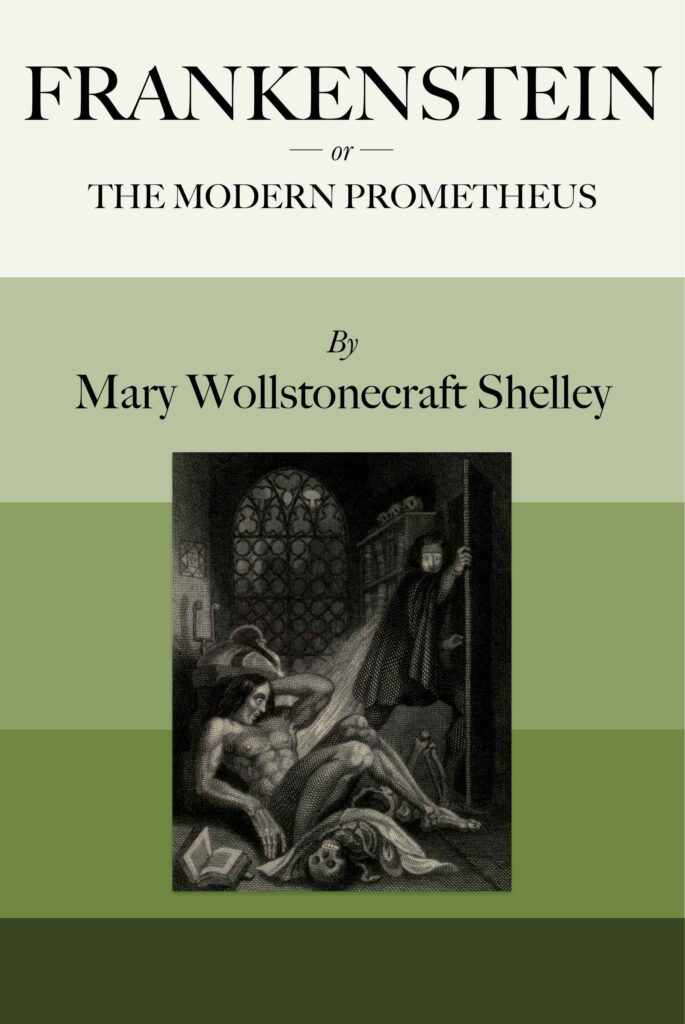 Free
About this book
This Frankenstein page follows the four opening letters and twenty-four-chapter text in Project Gutenberg 84. Walton's polar voyage frames Victor's account, which contains the creature's own narrative and returns to Walton at the end. The guide follows the complete structure, treating responsibility as a continuing relation rather than a single decision to animate a body. It also distinguishes the creator's fearful interpretations from the testimony he eventually agrees to hear.
The linked source is Project Gutenberg eBook 84, released digitally in 1993. It contains four opening letters and 24 numbered chapters. Gutenberg also identifies separate editions of the 1818 and 1831 texts; this record retains the existing eBook 84 source rather than substituting either of those editions. Its HTML ISBN belongs to this digital resource, and the 1993 date records Gutenberg’s release rather than the novel’s original publication.
MIT OpenCourseWare assigns Frankenstein in Reading Fiction: Imaginary Journeys, an undergraduate course. The syllabus specifies a Penguin edition, so its inclusion supports the work’s academic relevance rather than establishing equivalence with this online text. The guide below covers Letter 1 and Chapters 5, 10, and 17, focusing on narrative perspective, ambition, and responsibility.
Book contents
Four opening letters, followed by Chapters 1–24. These are the source’s own numbered headings.
View the verified contents
- Letter 1
- Letter 2
- Letter 3
- Letter 4
- Chapter 1
- Chapter 2
- Chapter 3
- Chapter 4
- Chapter 5
- Chapter 6
- Chapter 7
- Chapter 8
- Chapter 9
- Chapter 10
- Chapter 11
- Chapter 12
- Chapter 13
- Chapter 14
- Chapter 15
- Chapter 16
- Chapter 17
- Chapter 18
- Chapter 19
- Chapter 20
- Chapter 21
- Chapter 22
- Chapter 23
- Chapter 24
Book summary
About this book
This Frankenstein page follows the four opening letters and twenty-four-chapter text in Project Gutenberg 84. Walton's polar voyage frames Victor's account, which contains the creature's own narrative and returns to Walton at the end. The guide follows the complete structure, treating responsibility as a continuing relation rather than a single decision to animate a body. It also distinguishes the creator's fearful interpretations from the testimony he eventually agrees to hear.
Chapter-by-chapter summaries
Letters 1-4 — Walton's desired companion
Walton writes to his sister about exploration, loneliness, and his need for a friend. The rescued Victor seems to answer that need while offering a cautionary history. The letters make the reader dependent on a listener whose ambitions resemble the story he receives.
Chapter 1
Victor recounts his parents' marriage and Elizabeth's entry into the household through adoption. His retrospective story presents childhood as a protected world, while the language of possession already complicates affection.
Chapter 2
Victor's interests in natural philosophy develop beside Elizabeth's and Clerval's different dispositions. Lightning and competing authorities begin to redirect inherited curiosity toward modern science, but his later account makes education appear more unified than its actual sequence.
Chapter 3
His mother's death precedes the move to Ingolstadt. Encounters with Krempe and Waldman expose the influence of a teacher's manner as well as subject matter. Intellectual aspiration develops through grief, ambition, and personal recognition.
Chapter 4
Victor discovers a means of producing life and works in isolation. His attention to technical achievement excludes reflection on the dependent being he plans to create. Neglect of health and relationships accompanies the narrowing of his field of responsibility.
Chapter 5
The creature comes alive, and Victor abandons him in horror. Clerval arrives and nurses Victor through illness without knowing its cause. Creation has therefore produced a relationship that the creator refuses at the moment it becomes practical rather than imagined.
Chapter 6
Elizabeth's letter recalls home and Justine, while Clerval's companionship supports recovery. Ordinary study and walking gradually restore Victor. The apparent renewal rests on silence about the being whose independent experiences continue outside his knowledge.
Chapter 7
News of William's murder summons Victor home. Seeing the creature leads him to infer responsibility, but Justine is accused after evidence is found in her possession. Victor's certainty and inability to disclose its grounds create a fatal gap between private knowledge and public proof.
Chapter 8
Justine's trial ends in conviction, and religious pressure contributes to a false confession. Victor experiences guilt without effectively protecting her. The episode shows how legal and spiritual authority can turn coerced admission into apparent certainty while the actual history remains hidden.
Chapter 9
The family grieves, and Victor seeks relief in the Alpine landscape. Sublime scenery changes feeling temporarily without solving the conditions that produced it. His isolation increasingly becomes a way of avoiding relationships whose injuries he cannot explain.
Chapter 10
The creature confronts Victor on the glacier and demands a hearing. His speech challenges the creator's assumption that appearance decides moral status. Victor agrees to listen, opening the nested narrative through which a supposedly voiceless object becomes an interpreter of his own life.
Chapter 11
The creature describes confused sensations, hunger, fire, and violent rejection by strangers. Finding shelter beside the De Lacey cottage permits observation without the risk of being seen. His learning begins through bodily need and unequal access to social life.
Chapter 12
Watching the cottagers develops language, sympathy, and an understanding of poverty. He stops taking their food and helps secretly. Benevolent conduct arises before acceptance, complicating Victor's later description of a being whose nature is supposedly exhausted by violence.
Chapter 13
Safie's arrival makes language instruction available to the hidden observer. Reading about institutions teaches both social connection and the hierarchies that exclude him. Learning does not simply liberate: it gives a sharper vocabulary for recognizing dispossession.
Chapter 14
The De Laceys' history joins love, political injustice, religion, and exile. The creature acquires an account of human generosity that coexists with evidence of prejudice. His growing knowledge remains mediated through books and observers who do not know they are teaching him.
Chapter 15
Books and Victor's journal supply competing accounts of origins and identity. The creature approaches the blind father hoping for recognition without visual prejudice, but the return of the others ends in rejection. His prepared explanation cannot control the authority of his appearance.
Chapter 16
He burns the abandoned cottage, saves a girl and is shot, then kills William and implicates Justine. These events explain a movement toward retaliation without excusing it. He demands a companion, treating Victor's responsibility as a claim that requires material action.
Chapter 17
Victor debates the request and agrees to create a female being under conditions of withdrawal from human society. The bargain imagines peace through a relationship whose future participants cannot both consent. Its apparent logic rests on uncertain predictions about desire and independence.
Chapter 18
Victor delays, then travels with Clerval toward Britain to obtain knowledge and complete the work. His family interprets the journey through expectations of marriage. Two different futures develop around the same trip because he has concealed its purpose.
Chapter 19
Travel separates Clerval's enjoyment from Victor's dread. Victor eventually isolates himself in the Orkneys to work on the second creature. The remote setting makes visible a project organized around fear rather than the exhilaration of his first experiment.
Chapter 20
Victor destroys the unfinished companion, imagining possible harm and refusing to complete the bargain. The creature promises to attend his wedding night. Disposal of the remains and a drifting boat lead Victor into another situation whose public meaning he does not understand.
Chapter 21
In Ireland, Victor is accused after Clerval's body is discovered. Illness and his father's care accompany eventual release. Legal innocence does not remove his sense of responsibility for the friend's death, nor does it make him willing to explain the whole history.
Chapter 22
Returning home, Victor prepares to marry Elizabeth while interpreting the threat as directed against himself. Her letter attempts to clarify his wishes and apparent withdrawal. His decision to preserve secrecy denies her information necessary to assess the danger.
Chapter 23
The creature kills Elizabeth while Victor watches for an attack on his own life. His father's death compounds the loss. An appeal to official authority fails to secure the response he seeks, and pursuit becomes the purpose replacing family and ordinary work.
Chapter 24
Victor pursues the creature north and reaches Walton's ship. Walton's crew demand return, testing the ambition that made him receptive to Victor's story. Victor dies, and the creature mourns him before announcing his own intended death and disappearing into darkness.
Study instructions
- Draw the narrative frames and identify who can verify each claim.
- Compare technical achievement with care after creation.
- Track what Elizabeth and Clerval know before decisions affect their safety.
- Read the creature's books as different models of identity rather than a single education in wickedness.
- Compare Walton's decision about the crew with Victor's responses to dependence.
- Distinguish the creature's final intention from an observed death.
Questions for reflection
- When does uncertainty justify restraint, and when does it become a reason to withhold necessary care?
- How does being heard change the creature's moral position without erasing his crimes?
- What does Walton learn that Victor has not fully enacted?
Sources and coverage
This original study guide follows the complete work and includes its conclusion. Numbered chapters or books follow the linked edition. Where the work has no chapters, the reading movements are editorial aids. Interpretive questions and practice tasks are supplied for study rather than quoted from the author. Read the source edition. Consult its full text, examples, and references when developing an essay or solving a problem.
About access & copyright
This page provides book information and study material. Full-text access is provided by the original publisher or authorised source; a listing does not grant permission to republish the book.
Read our Library Access & Copyright policyNarrative perspective
Compare Walton’s and Victor’s accounts with the creature’s claims.
Creation and care
Distinguish technical achievement from responsibility for its consequences.
Exclusion and sympathy
Analyse how rejection and appeals for recognition shape the conflict.
Competing obligations
Evaluate the arguments surrounding the request for a companion.
Reader ratings & reviews
Share your thoughts
Your review helps other students choose the right resources.
KEEP LEARNING
Your next great read
Literature Literature
Adam Bede
View Adam Bede — book Literature
The Odyssey
View The Odyssey — book Literature
Tess of the d'Urbervilles: A Pure Woman
View Tess of the d'Urbervilles: A Pure Woman — book Literature
Lady Audley's Secret
View Lady Audley's Secret — book Literature
Mrs. Dalloway
View Mrs. Dalloway — book Literature
Don Quixote
View Don Quixote — book Literature
Heart of Darkness
View Heart of Darkness — book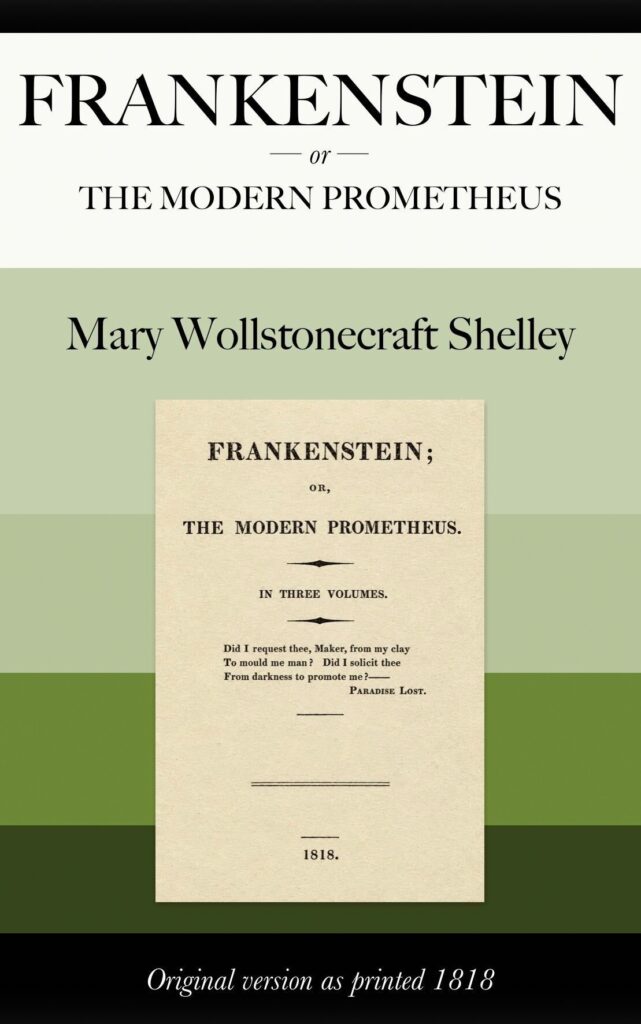 Literature
Frankenstein; or, the Modern Prometheus
View Frankenstein; or, the Modern Prometheus — book Literature



