
 Literature
Academic Book
Pride and Prejudice
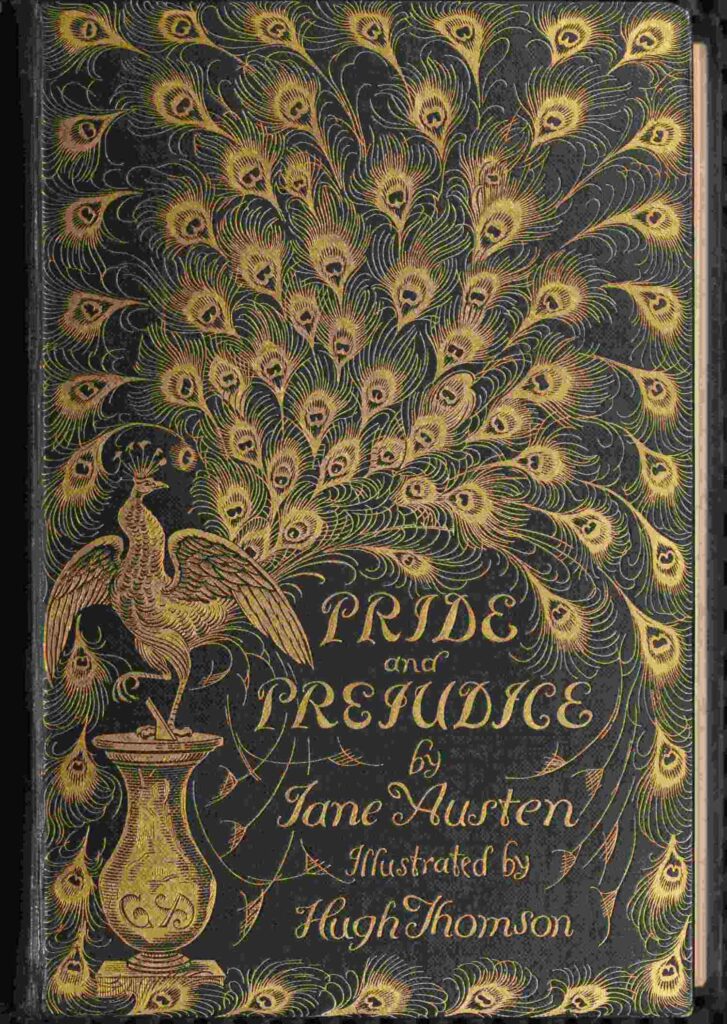
Not rated yetRate this bookThe illustrated George Allen text of Pride and Prejudice presents sixty-one continuously numbered chapters alongside visual interpretations that should be distinguished from Austen's narration. This guide emphasizes how conversations, letters, performances, and acts of listening organize the reader's knowledge. Its chapter entries explain the work each episode does in the novel's education of judgment, while the complete plot develops through two proposals, a damaging elopement, and a revised understanding of social worth.
Read on the publisher’s website. Opens in a new tab.
 Free
About this book
The illustrated George Allen text of Pride and Prejudice presents sixty-one continuously numbered chapters alongside visual interpretations that should be distinguished from Austen's narration. This guide emphasizes how conversations, letters, performances, and acts of listening organize the reader's knowledge. Its chapter entries explain the work each episode does in the novel's education of judgment, while the complete plot develops through two proposals, a damaging elopement, and a revised understanding of social worth.
The novel was first published in 1813. This page links to Project Gutenberg eBook 1342, digitally released in 1998, whose text includes George Saintsbury’s preface and Hugh Thomson’s illustrations from the George Allen publication. The HTML ISBN shown here identifies Gutenberg’s digital format, not an 1813 first edition or a modern course paperback. The text numbers its 61 chapters continuously.
MIT OpenCourseWare lists the novel in its undergraduate Major English Novels course. That reading list establishes use of the work in a course; students should still follow their instructor’s specified edition. The study material below concentrates on four selected chapters and separates interpretation from the novel’s events.
Book contents
Preface, List of Illustrations, and 61 continuously numbered chapters. Chapter names below omit nearby illustration captions.
View the verified contents
- Preface
- List of Illustrations
- Chapter I
- Chapter II
- Chapter III
- Chapter IV
- Chapter V
- Chapter VI
- Chapter VII
- Chapter VIII
- Chapter IX
- Chapter X
- Chapter XI
- Chapter XII
- Chapter XIII
- Chapter XIV
- Chapter XV
- Chapter XVI
- Chapter XVII
- Chapter XVIII
- Chapter XIX
- Chapter XX
- Chapter XXI
- Chapter XXII
- Chapter XXIII
- Chapter XXIV
- Chapter XXV
- Chapter XXVI
- Chapter XXVII
- Chapter XXVIII
- Chapter XXIX
- Chapter XXX
- Chapter XXXI
- Chapter XXXII
- Chapter XXXIII
- Chapter XXXIV
- Chapter XXXV
- Chapter XXXVI
- Chapter XXXVII
- Chapter XXXVIII
- Chapter XXXIX
- Chapter XL
- Chapter XLI
- Chapter XLII
- Chapter XLIII
- Chapter XLIV
- Chapter XLV
- Chapter XLVI
- Chapter XLVII
- Chapter XLVIII
- Chapter XLIX
- Chapter L
- Chapter LI
- Chapter LII
- Chapter LIII
- Chapter LIV
- Chapter LV
- Chapter LVI
- Chapter LVII
- Chapter LVIII
- Chapter LIX
- Chapter LX
- Chapter LXI
Book summary
About this book
The illustrated George Allen text of Pride and Prejudice presents sixty-one continuously numbered chapters alongside visual interpretations that should be distinguished from Austen's narration. This guide emphasizes how conversations, letters, performances, and acts of listening organize the reader's knowledge. Its chapter entries explain the work each episode does in the novel's education of judgment, while the complete plot develops through two proposals, a damaging elopement, and a revised understanding of social worth.
Chapter-by-chapter summaries
Chapter 1
The famous opening proposition is immediately tested by a particular household. Ask who supposedly knows the truth it announces and whose wishes turn a wealthy stranger into a prospective husband.
Chapter 2
The visit demonstrates the power to manage expectations inside a household. Paternal wit can be affectionate while still making the women dependent on an action they cannot independently arrange.
Chapter 3
The dance makes rank legible through manners and access. Darcy's insult matters because it is heard, repeated, and incorporated into a judgment Elizabeth will later regard as her own discernment.
Chapter 4
Sisterly conversation supplies alternatives to the assembly's collective verdict. Distinguish charity that may overlook evidence from skepticism that may be too pleased with its own cleverness.
Chapter 5
Neighborhood talk makes reputation collaborative. A judgment can become familiar enough to feel verified even when everyone is largely repeating the same small set of observations.
Chapter 6
Different people see the same reserve differently. Jane's modesty may be attractive yet fail to disclose a commitment to a suitor whose friend is looking for reasons to doubt it.
Chapter 7
Rain converts matchmaking calculation into bodily consequence. Elizabeth's muddy arrival provides a test of which observers value care and which primarily police the visible signs of gentility.
Chapter 8
The accomplishments debate connects education with display and exclusion. Ask whether its ideal describes real cultivation or a standard so expansive that it licenses disapproval of almost everyone.
Chapter 9
Family belonging complicates individual judgment. Elizabeth can recognize her relatives' conduct as damaging without gaining the power to prevent it or cease being associated with it.
Chapter 10
Reading this exchange as flirtation should not erase its substantive questions about character and judgment. Attraction develops through arguments the participants partly mistake for something more detached.
Chapter 11
Darcy's account of an unforgiving disposition will later matter when conduct seems to contradict it. Record the claim now rather than assuming a first self-description must be a permanent fact.
Chapter 12
A temporary stay leaves unequal kinds of knowledge. Readers know that Elizabeth has affected Darcy, but she cannot yet include that information in her interpretation of his behavior.
Chapter 13
The succession arrangement gives apparently absurd politeness a material foundation. Collins is comic, but the threat to the family's home cannot be dissolved by laughing at him.
Chapter 14
Notice how borrowed prestige works. Collins repeatedly cites another person's rank as though proximity to it could establish the quality of his own judgment.
Chapter 15
The encounter offers evidence of conflict, not its cause. Elizabeth's later confidence will depend on filling that gap with one participant's explanation.
Chapter 16
A story becomes credible partly because it confirms what its listener wants to believe. Separate evidence supplied by Wickham from the social ease through which he delivers it.
Chapter 17
The sisters' disagreement raises an evidential question without settling it. Caution can be mistaken for innocence, just as suspicion can disguise a preference for a satisfying story.
Chapter 18
The ball gathers private grievance, romantic possibility, and family reputation into one public occasion. Each participant interprets behavior through information that others do not possess.
Chapter 19
Read the proposal for its promised benefits and its refusal to listen. Collins has arranged reasons a wife should accept him before asking what this particular woman wants.
Chapter 20
Paternal authority briefly secures a daughter's autonomy. The scene also asks why her plainly expressed decision needs another person's endorsement to become practically effective.
Chapter 21
A letter can be both information and an intervention in another person's expectations. Examine what Caroline establishes as fact and what she merely invites Jane to infer.
Chapter 22
Charlotte's decision is neither identical to Elizabeth's ideals nor unintelligible. Assess the resources, age, and prospects within which she chooses rather than treating practicality as absence of feeling.
Chapter 23
The same marriage appears as rescue, betrayal, embarrassment, or sensible provision depending on the observer. The chapter makes social position part of interpretation.
Chapter 24
Emotional reserve has consequences both for courtship and for reading grief afterward. Jane's reluctance to accuse should not be mistaken for shallow feeling.
Chapter 25
The novel distinguishes manners and judgment from rank. The Gardiners' place in trade does not prevent them from becoming the most dependable guides to conduct.
Chapter 26
Money tests the apparent constancy of attractive manners. Elizabeth notices enough to qualify her admiration while still preserving the larger story in which Wickham is Darcy's victim.
Chapter 27
Leaving Longbourn changes the evidence available without instantly changing the observer. A journey becomes educational because familiar judgments meet different arrangements of ordinary life.
Chapter 28
Charlotte's agency appears in domestic arrangements rather than declarations of romantic fulfillment. Assess what she controls and what she must work around.
Chapter 29
Rank attempts to make private preference into universal law. Elizabeth's resistance matters because it occurs through composed speech rather than possession of comparable social power.
Chapter 30
Repeated encounters permit attention to change, but their meaning is not transparent. Readers must distinguish a behavior from the explanation Elizabeth gives it.
Chapter 31
The conversation tests character through the possibility of practice. A limitation need not be treated either as moral destiny or as an entirely insincere excuse.
Chapter 32
A friend's observation challenges the authority of a first-person interpretation. Elizabeth possesses wit and information, but another observer can still recognize a possibility she has excluded.
Chapter 33
Partial disclosure becomes powerful when it joins an existing grievance. The conversation explains one action while leaving Darcy's evidence, motives, and errors still unexamined.
Chapter 34
The proposal does not fail because feeling is absent. It fails through an assumption that overcoming his own objections should make Elizabeth grateful despite the insults embedded in their recital.
Chapter 35
Written explanation interrupts the live contest of pride. Its value depends on consistency and corroboration, not simply on the authority of a wealthy author.
Chapter 36
The chapter's inward crisis is an education in method: compare accounts, revisit observations, and identify where emotional satisfaction was mistaken for proof.
Chapter 37
Correction becomes uncomfortable when it reaches people one loves. Acknowledging a justified criticism does not require adopting the critic's entire hierarchy of value.
Chapter 38
The journey ends without converting Charlotte's marriage into a simple cautionary example. Different lives remain possible within the novel's critique of limited options.
Chapter 39
What once looked like comic exuberance now carries a risk the informed reader can recognize. Elizabeth's changed understanding makes familiar household behavior newly troubling.
Chapter 40
Possessing corrective knowledge creates a question of action. The sisters cannot treat private disbelief as equivalent to protecting other people from a persuasive false account.
Chapter 41
The chapter reveals a limit of paternal irony. Recognizing folly without accepting the labor of prevention can leave dependents exposed to consequences they do not foresee.
Chapter 42
Tourism becomes inquiry, but wealth is not self-authenticating virtue. The significance of the visit lies in the relation between property, testimony, and observed conduct.
Chapter 43
The chapter adds evidence from service and ordinary relationships to romantic self-description. Elizabeth's revision should be traced through particular encounters rather than reduced to admiration for an impressive house.
Chapter 44
Family resemblance proves less reliable than actual observation. The people Elizabeth once knew through a hostile narrative acquire complexity when encountered independently.
Chapter 45
The scene tests whether Darcy's changed manners survive another person's invitation to resume his former judgments. Conduct under social pressure provides stronger evidence than courtesy in isolation.
Chapter 46
A private scandal changes the meaning of all the earlier withheld knowledge. The reader must distinguish responsibility for prevention from the impossible claim that Elizabeth could have controlled every choice.
Chapter 47
The crisis tests the household's capacity to act together. Habitual forms of blame and self-excuse persist even when their inadequacy has become visible.
Chapter 48
The plot shifts from judgment to organization: letters, money, addresses, and sustained attention determine what rescue may become possible.
Chapter 49
A socially acceptable ending is produced through material negotiation. Marriage changes public status without establishing either partner's good judgment or future happiness.
Chapter 50
The chapter distinguishes relief from learning. An immediate solution can preserve the habits that contributed to danger if its costs remain hidden.
Chapter 51
A casual boast becomes evidence because it contradicts the known account. Detection here depends on listening to someone whose judgment is otherwise unreliable.
Chapter 52
The disclosure contrasts action with self-display. Yet gratitude is not treated as a command to marry; it supplies information relevant to a judgment that remains hers.
Chapter 53
The same visitors now carry very different meanings for Elizabeth than for her mother. Dramatic irony turns ordinary hospitality into a test of knowledge and restraint.
Chapter 54
The novel resists making revised judgment into omniscience. Understanding a person's earlier motives does not give direct access to every present intention.
Chapter 55
Reunion depends partly on allowing the principal participants to judge their own feelings. The correction reverses an intervention made on insufficient evidence.
Chapter 56
The confrontation tests autonomy before a second proposal occurs. Refusing an imposed restriction is not the same as announcing a decision already made.
Chapter 57
Paternal amusement once again rests on incomplete knowledge. The chapter gently reverses the assumption that the household's cleverest observer must understand its most important developments.
Chapter 58
The second proposal makes mutual correction part of intimacy. Neither person's transformation is supplied solely by being loved; each has had to hear criticism and act differently.
Chapter 59
A private change must become communicable to people who did not witness it. The difficulty is evidence of the earlier appearance's force rather than a failure of Elizabeth's present certainty.
Chapter 60
Retrospective explanation does not make the courtship inevitable. It shows how misread actions and unintended consequences became understandable only after decisions were made.
Chapter 61
Domestic happiness does not abolish every difficult relative or economic demand. The concluding distribution of intimacy rewards judgment, generosity, and learning more than inherited social rank.
Study instructions
- Read a chapter before consulting the guide, then identify one sentence whose meaning changes with later knowledge.
- Compare an illustration with the surrounding narration: ask what the image selects and what inward information it cannot supply.
- Keep a list of claims introduced by rumor and note their eventual correction.
- Track the difference between formal status and actual generosity in the Gardiners' conduct.
- Compare Mr. Bennet's amusing observations with his willingness to take preventive action.
- Use the final chapter to test whether every difficulty has been solved by marriage.
Questions for reflection
- How does an illustrated edition direct attention differently from a conversation's free indirect narration?
- Why does discovering an error not guarantee that the next inference will be right?
- What distinguishes protecting a family's reputation from acting responsibly toward its members?
Sources and coverage
This original study guide follows the complete work and includes its conclusion. Numbered chapters or books follow the linked edition. Where the work has no chapters, the reading movements are editorial aids. Interpretive questions and practice tasks are supplied for study rather than quoted from the author. Read the source edition. Consult its full text, examples, and references when developing an essay or solving a problem.
About access & copyright
This page provides book information and study material. Full-text access is provided by the original publisher or authorised source; a listing does not grant permission to republish the book.
Read our Library Access & Copyright policyIrony and voice
Distinguish the narrator’s framing from a character’s confident opinions.
Judging character
Trace how Elizabeth compares attractive appearances with evidence of conduct.
Marriage and society
Connect courtship with money, rank, family expectations, and reputation.
Revision of belief
Analyse how rereading and self-criticism change an interpretation.
Reader ratings & reviews
Share your thoughts
Your review helps other students choose the right resources.
KEEP LEARNING
Your next great read
Literature Literature
Adam Bede
View Adam Bede — book Literature
The Odyssey
View The Odyssey — book Literature
Tess of the d'Urbervilles: A Pure Woman
View Tess of the d'Urbervilles: A Pure Woman — book Literature
Lady Audley's Secret
View Lady Audley's Secret — book Literature
Mrs. Dalloway
View Mrs. Dalloway — book Literature
Don Quixote
View Don Quixote — book Literature
Heart of Darkness
View Heart of Darkness — book Literature
Frankenstein; or, the Modern Prometheus
View Frankenstein; or, the Modern Prometheus — book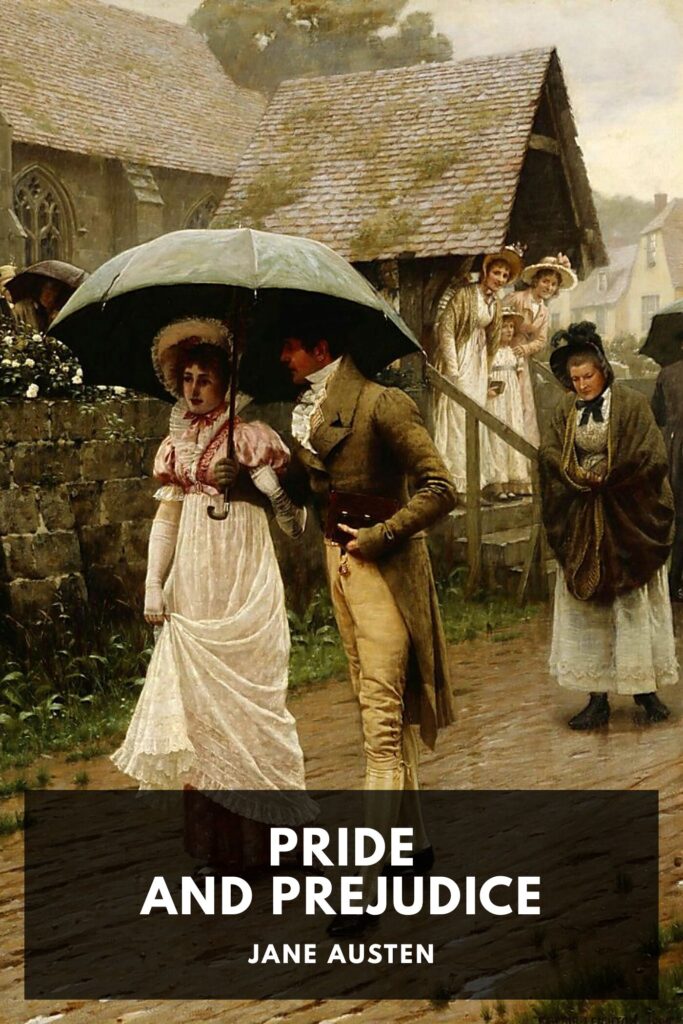 Literature



