
Applying the International Classification of Functioning, Disability & Health: A Team-Based/Project Based Course for Undergraduate Students
MedicineTextbook
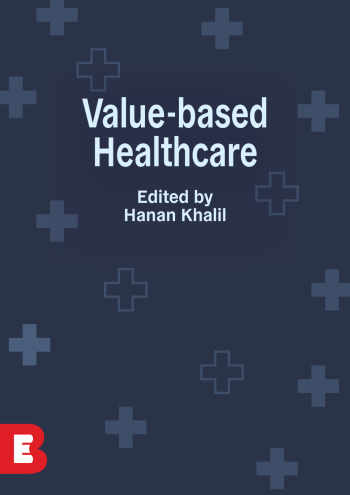
Value-based Healthcare
Not rated yetRate this bookAn edited healthcare management resource introducing value-based care through patient outcomes, resource use, leadership, coordination, and the organisation of services.
Read on the publisher’s website. Opens in a new tab.
 Free
About this book
About this book
An edited healthcare management resource introducing value-based care through patient outcomes, resource use, leadership, coordination, and the organisation of services.
This page introduces the source edition and offers a focused reading route. Use the linked original resource for the complete text, references, activities, and the author’s full explanation. The overview below is limited to the sections identified in the coverage note.
Contents and further reading
Consult the official book or repository page for the resource’s contents and publication information. Open the source PDF to read the complete available edition.
Sources and coverage
This original overview is based on section 1.1, Introducing value-based healthcare (PDF sheet 19), with publisher information and the 2024 edition’s metadata checked. It is not a whole-book review. The verified source PDF contains 281 PDF sheets, including preliminary or repository pages; this may differ from its printed pagination. The source retains its own authorship, rights notices, and any separately credited third-party material.
Book summary
Study overview
The reviewed opening presents value-based healthcare as an approach concerned with outcomes achieved in relation to expenditure. It connects that aim with patient experience and with the work of the professionals delivering care. The discussion emphasises that implementation involves system change, governance, evidence, quality, and safety rather than a simple change of terminology. It also describes coordination across providers and settings as an important part of integrated care. The opening notes that work has often focused on acute settings while other areas raise further implementation questions. This overview reports the chapter’s introductory framing; it is not a clinical recommendation or an assessment of every model in the book. The wider contents extend the discussion to funding, technologies, evaluation, and related management topics.
How to study this book
Select a service example for academic discussion and identify whose outcomes and experience are being considered. Keep outcome measures, costs, and time periods explicit so that a claim about value can be examined. Map the providers and transitions involved in the care pathway, then identify a coordination question. Distinguish the aim of a proposed model from evidence that it has achieved that aim. Use the chapter’s references to investigate the evidence and its setting. For a professional assignment, follow the relevant organisational guidance and current primary sources rather than treating this introductory overview as implementation advice.
These study suggestions and the questions below are independent Academic Master editorial guidance.
Questions for reflection
- Which outcome matters to the people receiving the service?
- What costs and period are included in the comparison?
- How could coordination affect the interpretation of a service outcome?
About access & copyright
This page provides book information and study material. Full-text access is provided by the original publisher or authorised source; a listing does not grant permission to republish the book.
Read our Library Access & Copyright policyOutcomes and resources
Make both sides of a value claim explicit.
Patient experience
Consider the perspective of people receiving care.
Coordination
Examine relationships across providers and settings.
Implementation evidence
Separate a model’s aims from demonstrated results.
Reader ratings & reviews
Share your thoughts
Your review helps other students choose the right resources.
KEEP LEARNING
Your next great read
Medicine
Urinalysis Atlas: A Pictorial Guide to Formed Elements in Urine (Doty and Taylor)
Urinalysis Atlas: A Pictorial Guide to Formed Elements in Urine (Doty and Taylor)
View Urinalysis Atlas: A Pictorial Guide to Formed Elements in Urine (Doty and Taylor) — book Medicine
Drug Use and Misuse: A Community Health Perspective
View Drug Use and Misuse: A Community Health Perspective — book Medicine
Neuroscience for Pre-Clinical Students
View Neuroscience for Pre-Clinical Students — book Medicine
Cardiovascular Pathophysiology for Pre-Clinical Students
View Cardiovascular Pathophysiology for Pre-Clinical Students — book Medicine
Pulmonary Physiology for Pre-Clinical Students
View Pulmonary Physiology for Pre-Clinical Students — book Medicine
Epidemiology
View Epidemiology — book Medicine
Social Determinants of Health in Nursing Education: Integrating Into Curriculum and Practice
View Social Determinants of Health in Nursing Education: Integrating Into Curriculum and Practice — book Medicine
Inclusive Approach to Anthropometric Body Measurement Assessments
View Inclusive Approach to Anthropometric Body Measurement Assessments — book Education



