
 Canada's Food Guide
MedicineTextbook
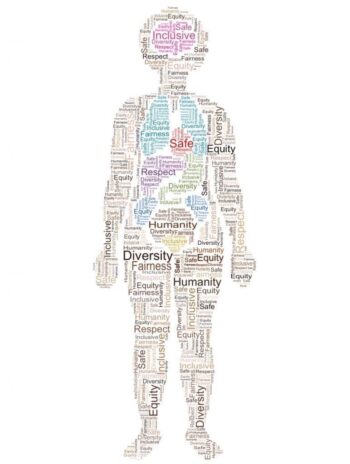
Inclusive Approach to Anthropometric Body Measurement Assessments
Not rated yetRate this bookThis introductory nursing resource examines body measurement through an inclusive assessment framework. Its opening emphasizes that numerical measurements need context and should not be treated as a complete account of a person’s health.
Read on the publisher’s website. Opens in a new tab.
 Free
About this book
Inclusive Approach to Anthropometric Body Measurement Assessments combines instruction about body measurements with a critical examination of how measurements are requested, interpreted, and communicated. Its seven substantive sections address the meaning and limits of anthropometry, inclusive interactions, height and weight, BMI, other measures, and childhood growth. The guide below explains those sections without turning the source’s population indicators into individual diagnoses. Consent, privacy, accessible equipment, cultural context, stigma, and the broader determinants of health are treated as part of measurement quality rather than optional additions to a technical procedure.
The detailed guide below follows the book’s chapter, unit, or section structure. Read it alongside the study instructions and the complete official text.
Book summary
Chapter-by-chapter summaries
Introduction to Anthropometric Body Measurement Assessments
Anthropometry describes measurements related to body size and shape, including height, weight, and ratios or indices derived from them. These observations can contribute to assessment, but they do not capture every aspect of health, body composition, or lived experience. The section introduces the measures and frames their interpretation within an inclusive approach. A number becomes clinically meaningful only through a justified purpose, an appropriate method, and a context for interpretation. The section therefore asks learners to notice both the technical measurement and the assumptions attached to it. An apparently objective record can still be used in a way that obscures structural conditions or reduces a person to one characteristic.
Problematizing Anthropometric Body Measurement Assessments
The source critiques weight-centered assumptions and the idea that body measurements are neutral descriptions of personal responsibility. Social and economic conditions influence access to food, activity, healthcare, safety, and other resources. Stigma can affect how a person experiences care and whether they feel able to participate in it. The section encourages examining the language and categories used in assessment rather than treating them as self-explanatory. Its critical perspective does not mean a measurement can never be useful; it means the purpose and interpretation need justification. Learners should distinguish the measured quantity from a moral judgment, an unsupported explanation of behavior, or a complete account of health.
Inclusive Approaches to Anthropometric Body Measurement Assessments
An inclusive approach explains the purpose of a proposed measurement, seeks consent, protects privacy, and attends to the person's preferences and experience. Trauma-informed communication recognizes that measurement can be uncomfortable or distressing and avoids coercive or shaming language. Accessible equipment and a suitable environment affect whether the procedure can be performed respectfully and consistently. The section also asks learners not to assume that weight is central to every person's understanding of well-being. Population norms vary in their construction and relevance. The practical lesson is to make the interaction collaborative and the interpretation proportionate, while recognizing when another kind of information is more relevant to the assessment question.
Weight and Height
Weight and height require suitable equipment, consistent units, and an accurate record of how the values were obtained. The section explains measurement considerations and the possibility of converting between metric and imperial units. Technique, clothing, positioning, equipment condition, mobility, and the person's ability to use a device can affect comparability. An estimate and a direct measurement should not be recorded as though they were identical observations. The chapter also connects technical practice with dignity: explaining the process and arranging privacy are part of a sound encounter. Changes over time need interpretation in relation to the method and broader context, rather than assuming every numerical difference represents the same biological change. A documented value should retain its unit and source. A patient-reported height, a previous chart entry, and a new direct measurement may be useful in different circumstances, but they should not be silently treated as equivalent. This distinction becomes especially important when a derived index magnifies an error in one input.
Body Mass Index
BMI is calculated as weight in kilograms divided by height in meters squared. It is an index, not a direct measurement of fat tissue or a diagnosis of individual health. The section reviews the categories used in its source context and critiques their limits across age, body composition, sex-related patterns, and population groups. A single threshold can conceal meaningful differences and encourage overconfident labeling. The educational task is to understand both the calculation and what it cannot establish. Interpretation should avoid turning a screening or population-level association into certainty about a particular person. The source's cases encourage discussion of bias and the consequences of how results are communicated. For a mathematical check, doubling height while holding weight fixed reduces BMI to one quarter, because height is squared in the denominator. This illustrates why entering centimeters where meters are expected creates a major calculation error. The arithmetic example explains the formula; it does not assign a health meaning to a hypothetical person.
Other Anthropometric Body Measurement Assessments
Waist and hip circumferences and ratios involving waist, hip, or height provide different descriptions from BMI. Their usefulness depends on consistent anatomical landmarks, technique, units, and an appropriate purpose. A ratio combines measurements and therefore carries uncertainty from both components. The section introduces associations with patterns of body size while retaining attention to inclusivity and trauma-informed interaction. A numerical cut point does not summarize every individual's circumstances or establish a diagnosis. Learners should explain which quantity was measured, why it is relevant, and what additional information would be needed before drawing a broader conclusion about health.
Children and Body Measurements
Children's measurements are interpreted in relation to growth and development rather than by applying adult categories unchanged. Age-related reference distributions and patterns over time become important, and a percentile describes a position within a reference population rather than a percentage of health or a personal grade. The section considers how height, weight, and related measures are used to track development while encouraging sensitivity in communication with children and families. One observation needs context, including the reliability of age and measurement information. The source's growth tables belong to its stated reference framework and should not be treated as a universal substitute for current professional assessment. A growth chart is a reference for a specified population and measurement, not a map of one inevitable developmental path. Comparisons should use the intended chart and accurate age information rather than mixing reference systems without explanation.
Key Takeaways and Glossary
The concluding material brings the technical and critical strands together. Anthropometric measurements are quantitative observations that need thoughtful interpretation, while health equity and inclusive care require attention to access, power, and social context. The glossary clarifies terms used in that discussion rather than providing a complete diagnostic vocabulary. A useful review distinguishes the measurement itself, a derived index, a population association, and an individual conclusion. Those steps are related but not interchangeable. This distinction helps preserve the source's central message: a technically correct measurement can still be communicated or used in a way that is incomplete or harmful.
Supplementary synthesis: Measurement quality includes the encounter
Imagine two records containing the same body measurement. In one, the purpose was explained, consent obtained, units checked, and equipment appropriate. In the other, the value was estimated without documentation and accompanied by assumptions about the person's behavior. The numerical entries may look equally precise, but the quality of evidence and care differs. This additional study example shows why technique, documentation, communication, and interpretation belong together. It does not add a new source chapter or supply a clinical recommendation.
Supplementary synthesis: Distinguishing a calculation from a conclusion
When reviewing an assessment, identify the raw measurements, the formula if one was used, and the reference framework applied. Then ask what conclusion the evidence supports and what it leaves unknown. An index may help describe a pattern without measuring body composition directly. A percentile can locate a measurement within a reference distribution without determining the cause of that position. A change over time may reflect technique as well as biology. These questions encourage accurate interpretation and prevent false certainty while retaining the legitimate educational value of the measurements.
Study instructions
Before studying a measurement technique, record what the measurement can indicate and what it cannot establish alone. Add a separate note about communication, consent, comfort, and the context needed to understand the result. Keep the person’s account distinct from assumptions based only on a numerical category.
Use the online edition’s activities alongside the explanatory text. When considering a case, identify the additional observations that would be needed before drawing a conclusion. Discuss clinical procedures, interpretation, and current standards with your instructor or supervisor; the purpose here is to organize study of the authors’ inclusive framework.
Full-book practice and review: Study the measurement procedure and the interaction with the person as connected parts of quality. In a supervised role-play, explain the purpose, ask permission, discuss options, and record the measurement conditions. Compare the numerical calculation with the broader assessment and state what the number alone cannot establish. Use the inclusion chapters to examine language, assumptions, equipment, and context, then revise the explanation so it remains accurate and respectful.
Questions for reflection
- Why is a body measurement insufficient as a diagnosis?
- How can a trend differ from a single observation?
- What assumptions might a weight-centred discussion overlook?
The study suggestions and questions are independent Academic Master editorial material.
Sources and coverage
Coverage follows the source’s substantive sections and concluding review material. The summaries explain concepts and limitations, not diagnostic thresholds or individual medical advice. These original summaries draw on the source text, including chapter or section introductions and selected explanations, examples, exercises, and review material. They are condensed study guides, not a page-by-page account or a replacement for the complete resource. Additional synthesis sections are identified separately.
About access & copyright
This page provides book information and study material. Full-text access is provided by the original publisher or authorised source; a listing does not grant permission to republish the book.
Read our Library Access & Copyright policyContext
Interpret measurements alongside other assessment information.
Inclusivity
Examine assumptions that can shape an encounter.
Trends
Distinguish one observation from change over time.
Clinical judgment
Identify the limits of a numerical result.
Reader ratings & reviews
Share your thoughts
Your review helps other students choose the right resources.
KEEP LEARNING
Your next great read
Canada's Food Guide complete subjective health assessment
The Complete Subjective Health Assessment
View The Complete Subjective Health Assessment — book Health Sciences (general)
Leadership and Influencing Change in Nursing
View Leadership and Influencing Change in Nursing — book health
Vaccine Practice for Health Professionals, 1st Canadian edition
View Vaccine Practice for Health Professionals, 1st Canadian edition — bookNursing Care at the End of Life : What Every Clinician Should Know
Nursing Care at the End of Life : What Every Clinician Should Know
View Nursing Care at the End of Life : What Every Clinician Should Know — book Health Sciences (general)
The Scholarship of Writing in Nursing Education: 1st Canadian Edition
View The Scholarship of Writing in Nursing Education: 1st Canadian Edition — book Coronavirus
Cancer Care in the Post-COVID World
View Cancer Care in the Post-COVID World — book Body-mind-spirit
Health Promotion in Health Care – Vital Theories and Research
View Health Promotion in Health Care – Vital Theories and Research — book bioinformatics
Bioimage Data Analysis Workflows
View Bioimage Data Analysis Workflows — book Behavioral sciences



