
Hair and Scalp Disorders
Pre-Health MathTextbook
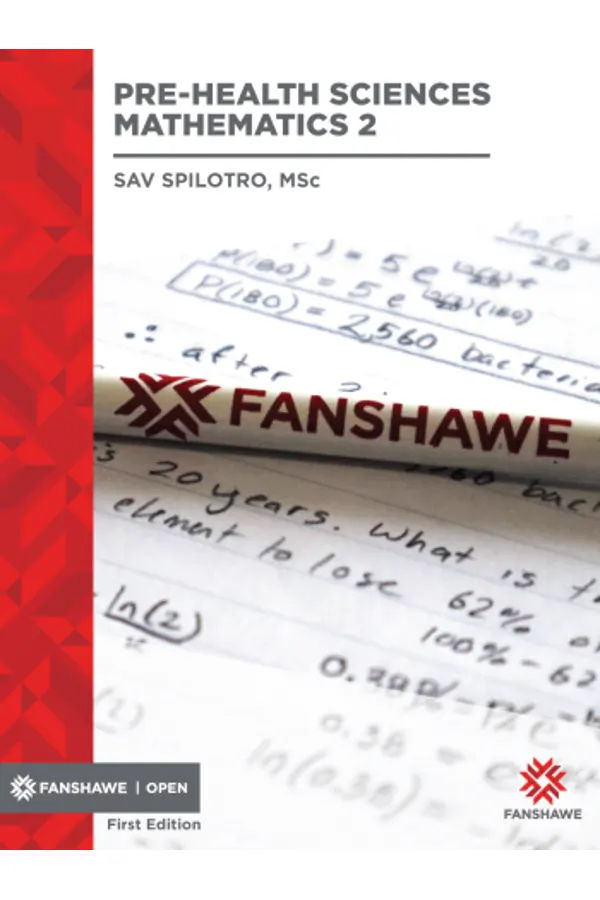
Fanshawe pre-health sciences mathematics 2
Not rated yetRate this bookFanshawe Pre-Health Sciences Mathematics 2, compiled and adapted by Sav Spilotro, develops algebraic reasoning and introductory statistics for the second pre-health term. This guide follows all six units, emphasizing method selection, restrictions, checking, and interpretation rather than answer copying.
Free reading is available at the official source. Opens in a new tab.
 Free
About this book
Fanshawe Pre-Health Sciences Mathematics 2, compiled and adapted by Sav Spilotro, develops algebraic reasoning and introductory statistics for the second pre-health term. This guide follows all six units, emphasizing method selection, restrictions, checking, and interpretation rather than answer copying.
How to study this book
Work examples without viewing the solution, show each transformation, and check candidate answers in the original problem. Keep a separate list of domain restrictions and record why a step is valid. Use mixed review so that recognizing the appropriate method becomes part of practice, not something supplied by the exercise heading.
Chapter-wise explanations and study tasks
Unit 1. Factoring
Factoring rewrites a polynomial as a product and prepares expressions for simplification and equation solving. Start with a greatest common factor, then consider grouping, trinomials, and special products. Applying the zero-product property requires an equation with zero on one side; a factored expression alone is not a list of solutions.
Study task: Factor a mixed set using different methods, multiply every result back out, and solve one polynomial equation after explaining why the zero-product property applies.
Unit 2. Rational Expressions and Functions
Rational expressions require restrictions where a denominator would be zero. Multiplication, division, addition, and complex fractions depend on factoring and common denominators. When solving rational equations, clearing denominators can introduce candidates excluded by the original expression, so preserve restrictions before simplifying.
Study task: Simplify two rational expressions and solve one rational equation, recording restrictions first and checking all candidates in the original equation.
Unit 3. Roots and Radicals
Roots, rational exponents, radical operations, and complex numbers extend the available algebraic representations. Simplification rules depend on the domain and the root involved. Squaring both sides can introduce extraneous candidates, while real-domain assumptions must be distinguished from work in the complex number system.
Study task: Solve a radical equation and check for extraneous solutions, then compare a real-number restriction with a related expression interpreted in the complex system.
Unit 4. Quadratic Equations and Functions
Square roots, completing the square, and the quadratic formula provide different approaches to solving quadratic equations. Graphs reveal vertices, intercepts, transformations, and the relationship between roots and the horizontal axis. Quadratic-form equations and applications require recognizing structure before selecting a method.
Study task: Solve one quadratic by two methods, sketch its graph with key features labelled, and explain how the graph supports the algebraic result.
Unit 5. Exponential and Logarithmic Functions
Exponential and logarithmic functions are inverses within appropriate domains. Their graphs, properties, and equations require attention to bases and restrictions. Logarithm laws describe products, quotients, and powers under stated conditions; they do not turn the logarithm of a sum into a sum of logarithms.
Study task: Solve one exponential and one logarithmic equation, verify the domain and answers, and correct a deliberately false logarithm rule with a numerical counterexample.
Unit 6. Introduction to Statistics
Statistical reasoning begins with the type and source of data before selecting a graph or numerical summary. Centre and spread describe different features, and a z-score expresses position relative to a mean and standard deviation. Normal-distribution probability calculations depend on whether that model is appropriate, not simply on having numerical data.
Study task: Create a small synthetic dataset, choose a graph, compare two measures of centre, calculate a z-score, and explain one assumption needed before applying a normal model.
Applied assignment
Build a mixed-method portfolio containing factoring, a rational equation, a radical equation, a quadratic model, an exponential or logarithmic equation, and a descriptive-statistics analysis. For each item explain the method choice, restrictions, verification, and interpretation. Include corrections of two initial errors.
Suggested reading plan
Review first-term algebra before beginning Unit 1. Give Units 1–2 a connected study block, then separate blocks for radicals, quadratics, and exponential–logarithmic functions. Study statistics as a new reasoning framework and finish with mixed review across all six units.
Questions for reflection
- Which algebraic operations can introduce extraneous solutions?
- How do domain restrictions affect apparently equivalent expressions?
- What evidence would justify using a normal-distribution model?
Edition and source notes
Based on the linked 2023 Fanshawe source for MATH-1028, adapted primarily from open algebra and statistics resources. It contains six units, followed by a glossary and version history. These are mathematical learning tasks using fictional data, not instructions for making clinical decisions.
About access & copyright
This page provides book information and study material. Full-text access is provided by the original publisher or authorised source; a listing does not grant permission to republish the book.
Read our Library Access & Copyright policyExplore the contents
Check the chapters covered in this edition.
Visit the official source
See reading, preview or purchase options.
Save for later
Keep this textbook in your saved collection.
Reader ratings & reviews
Share your thoughts
Your review helps other students choose the right resources.
KEEP LEARNING
Your next great read
alopecia, hair loss, alopecia areata, hair follicle, depression, pathogenesis
 Complex analysis
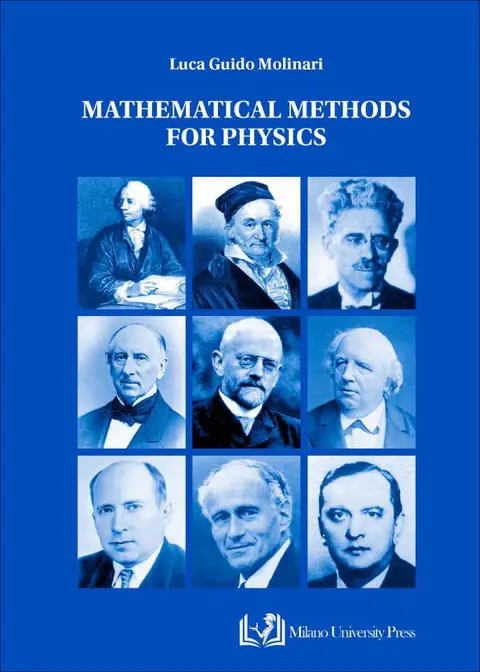
Mathematical Methods for Physics
View Mathematical Methods for Physics — book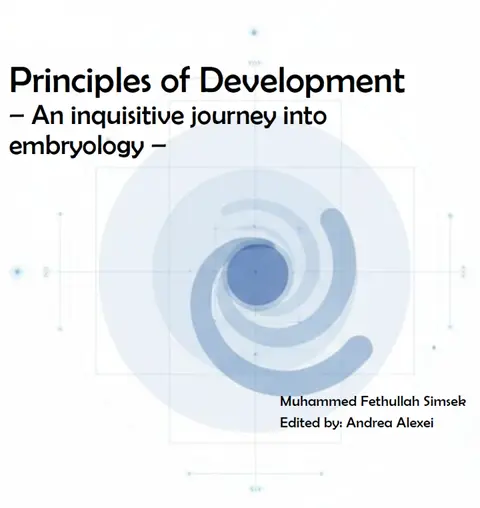 Biophysics
Principles of Development : An Inquisitive Journey into Embryology
View Principles of Development : An Inquisitive Journey into Embryology — book Communication écrite
Le Littéraire dans le quotidien : Resources for a transdisciplinary approach to reading/writing at the first and second year levels of college French
View Le Littéraire dans le quotidien : Resources for a transdisciplinary approach to reading/writing at the first and second year levels of college French — book Operations Management
View Operations Management — book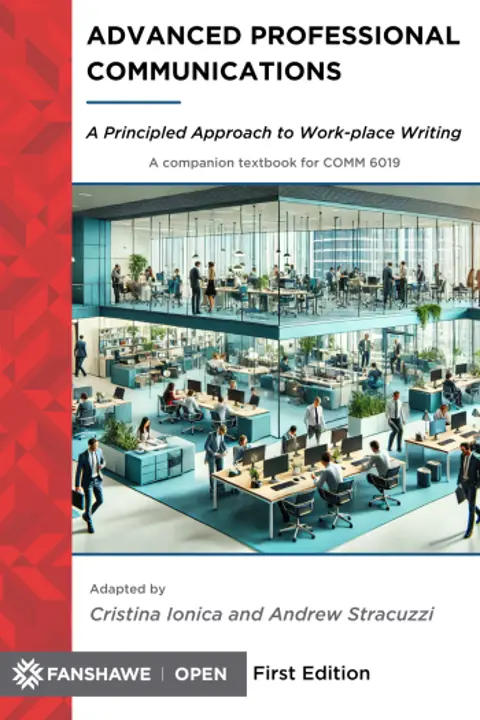 Communication
Advanced professional communication : A principled approach to workplace writing
View Advanced professional communication : A principled approach to workplace writing — book Early Childhood Education
Children's learning through play
View Children's learning through play — book Budgeting and financial management
Financial Empowerment (2nd Edition)
View Financial Empowerment (2nd Edition) — book Conflict management
Navigating HR : The art of problem-solving and conflict resolution
View Navigating HR : The art of problem-solving and conflict resolution — book Algebra



