
 Early childhood care and education
Early Childhood EducationTextbook
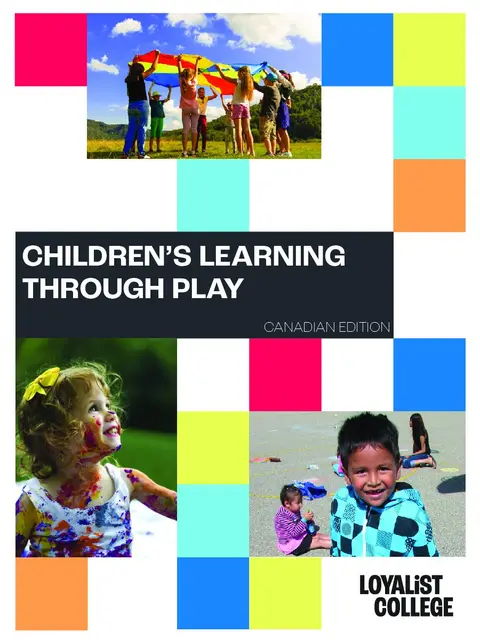
Children's learning through play
Not rated yetRate this bookChildren’s Learning Through Play explores how early childhood educators support learning through responsive, inclusive play experiences. This guide follows the Canadian textbook’s 11 main sections, from play theory and pedagogical models to creative activities, outdoor learning, and the educator’s role.
Free reading is available at the official source. Opens in a new tab.
 Free
About this book
Children’s Learning Through Play explores how early childhood educators support learning through responsive, inclusive play experiences. This guide follows the Canadian textbook’s 11 main sections, from play theory and pedagogical models to creative activities, outdoor learning, and the educator’s role.
How to study this book
Read as an observer and designer of learning environments. Record what children actually do before interpreting it, and connect planned experiences to their interests, abilities, cultures, and choices. Use the book’s reflection prompts to examine your own assumptions about what counts as learning.
Chapter-wise explanations and study tasks
Understanding Play
Play takes different forms and cannot be reduced to a single adult-directed activity. Examine the characteristics of play and how children participate at different developmental stages. Separate an observation of behaviour from an adult’s interpretation of its purpose or value.
Study task: Describe a short play episode using only observable actions, then add a separate paragraph offering two possible interpretations.
The Importance of Play
Play can support relationships, language, movement, problem solving, and emotional development at the same time. Its value is not confined to rehearsing an academic skill. Look for connections among developmental domains while recognizing that children may pursue purposes different from those adults anticipate.
Study task: Analyse one play activity across three developmental domains and identify a learning possibility that an adult might initially overlook.
Pedagogical Foundations and Models
Pedagogical approaches influence the balance between child initiative, educator guidance, materials, and the learning environment. The Canadian context also invites attention to ethical practice and Indigenous perspectives. Compare what a model leads educators to notice and do rather than simply learning its label.
Study task: Compare two approaches discussed in the source in terms of child choice, educator intervention, and environment design.
Role Play
Dramatic play provides opportunities to negotiate roles, communicate intentions, and explore familiar social situations. An educator can extend play by observing children’s themes and providing meaningful materials. Support participation without taking over the storyline or treating one cultural experience as universal.
Study task: Design a role-play area based on an observed interest and specify materials, an inclusion adjustment, and one open question that could extend the play.
Music and Movement
Music and movement connect rhythm, expression, bodily coordination, and social participation. Flexible experiences allow children to explore sound and movement rather than perform a single correct response. Consider sensory preferences, cultural familiarity, and different ways to participate.
Study task: Plan a rhythm-and-movement experience with seated and standing participation options and describe what you would observe to assess engagement.
Visual Arts
Art experiences allow children to investigate materials and communicate ideas. Emphasize exploration and decision-making rather than identical adult-designed products. An educator’s language can draw attention to choices and processes without imposing a fixed interpretation on a child’s work.
Study task: Replace a step-by-step craft with an open-ended materials invitation and write three comments that encourage reflection without prescribing an outcome.
Blocks
Block play combines construction, spatial relationships, planning, negotiation, and revision. A structure’s collapse can be an opportunity for inquiry rather than evidence of failure. Observe how children test stability and communicate ideas before choosing whether and how to intervene.
Study task: Create a block-play observation sheet covering balance, spatial language, collaboration, and redesign, then suggest one material that could extend exploration.
STEM
Science, technology, engineering, and mathematics can emerge from children’s investigations of ordinary materials and problems. Questions, predictions, testing, and revision matter more than an adult explanation delivered too early. The source also introduces Two-Eyed Seeing as a way to value different knowledge traditions.
Study task: Design a simple materials investigation with a question, a way to test predictions, and an opportunity for children to revise their ideas.
Literacy
Literacy develops through meaningful communication, stories, symbols, books, and opportunities to make marks. Play provides reasons to read and write, such as signs, menus, lists, and messages. Include children’s languages and experiences when selecting resources and interpreting participation.
Study task: Add three purposeful literacy materials to a play area and explain what children might use each one to communicate.
Active Outdoor Play
Outdoor environments offer movement, sensory exploration, and encounters with changing natural conditions. Planning involves access, supervision, and thoughtful consideration of risk rather than eliminating all challenge. Distinguish an avoidable hazard from a manageable opportunity to develop judgment and competence.
Study task: Assess an outdoor play space for one hazard, one worthwhile challenge, and one accessibility barrier, proposing a response to each.
The Educator’s Role in Facilitating Play-Based Experiences
Responsive educators observe, document, arrange environments, and decide when to join or step back. Planning should evolve from children’s interests and emerging inquiries. Documentation becomes useful when it informs a next step rather than simply recording that an activity occurred.
Study task: Write an observation-to-planning cycle containing evidence, a tentative interpretation, an environmental adjustment, and a question for follow-up observation.
Applied assignment
Prepare a play-based environment plan for a fictional early learning setting. Include three connected invitations, inclusive participation options, culturally responsive materials, an outdoor element, and an observation strategy. Explain how children’s responses would guide changes to the plan.
Suggested reading plan
Begin with the first three sections to establish a framework for observation and pedagogy. Study role play, music, visual arts, and blocks as varied expressive environments, then STEM, literacy, and outdoor play. Finish by applying the educator-role section to a complete observation and planning cycle.
Questions for reflection
- When does educator guidance extend play, and when does it displace children’s purposes?
- How can observation challenge an initial developmental interpretation?
- Whose experiences and languages are represented in the materials?
Edition and source notes
Based on the linked first Canadian edition from Loyalist College by Jane Krieg, Jennifer Tewathahá:kwa Maracle, and Kienni Froats. The source has 11 main thematic sections rather than a long numbered chapter sequence. This guide provides original study activities; its planning examples should be adapted to the educational setting.
About access & copyright
This page provides book information and study material. Full-text access is provided by the original publisher or authorised source; a listing does not grant permission to republish the book.
Read our Library Access & Copyright policyExplore the contents
Check the chapters covered in this edition.
Visit the official source
See reading, preview or purchase options.
Save for later
Keep this textbook in your saved collection.
Reader ratings & reviews
Share your thoughts
Your review helps other students choose the right resources.
KEEP LEARNING
Your next great read
Early childhood care and educationHair and Scalp Disorders
Hair and Scalp Disorders
View Hair and Scalp Disorders — book Complex analysis
Mathematical Methods for Physics
View Mathematical Methods for Physics — book Biophysics
Principles of Development : An Inquisitive Journey into Embryology
View Principles of Development : An Inquisitive Journey into Embryology — book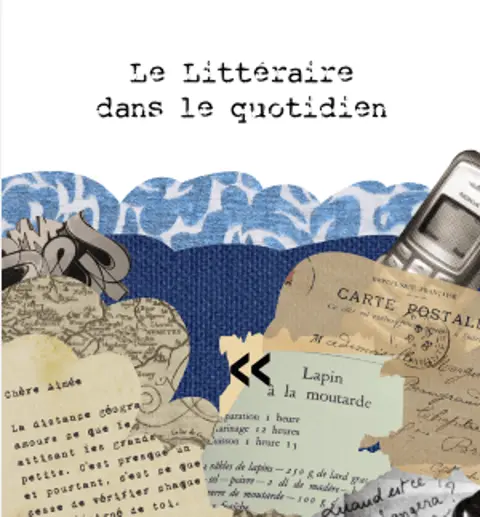 Communication écrite
Le Littéraire dans le quotidien : Resources for a transdisciplinary approach to reading/writing at the first and second year levels of college French
View Le Littéraire dans le quotidien : Resources for a transdisciplinary approach to reading/writing at the first and second year levels of college French — book Operations Management
View Operations Management — book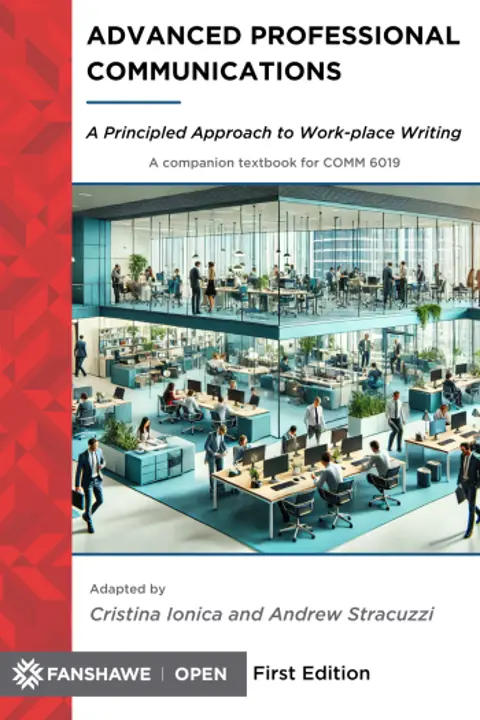 Communication
Advanced professional communication : A principled approach to workplace writing
View Advanced professional communication : A principled approach to workplace writing — book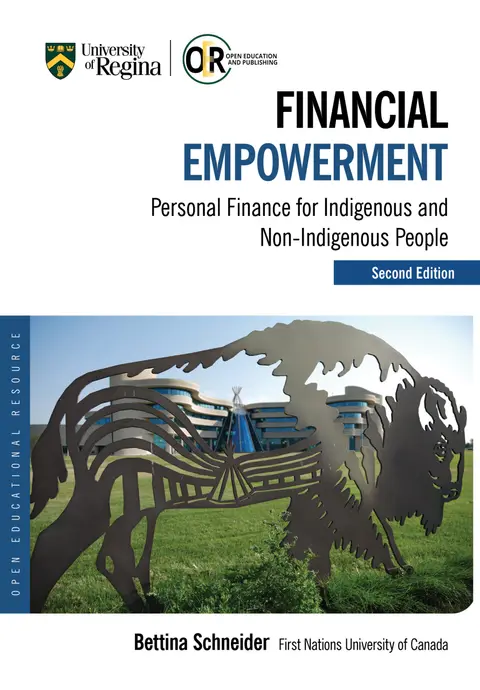 Budgeting and financial management
Financial Empowerment (2nd Edition)
View Financial Empowerment (2nd Edition) — book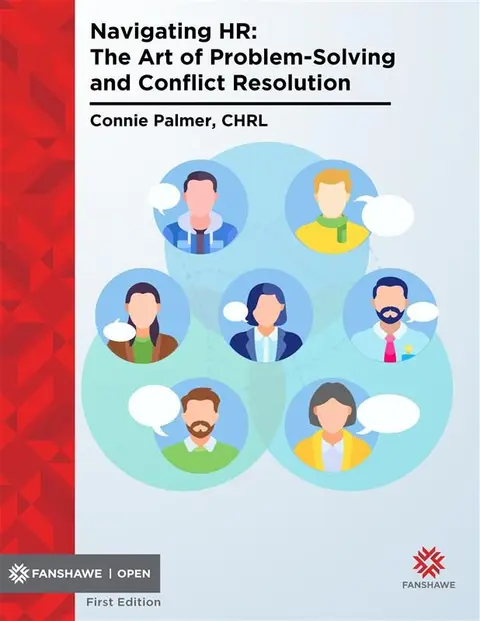 Conflict management
Navigating HR : The art of problem-solving and conflict resolution
View Navigating HR : The art of problem-solving and conflict resolution — book Algebra



