
 Complex analysis
Political ideologiesTextbook
Political Ideologies and Worldviews : An Introduction, 2nd edition
Not rated yetRate this bookPolitical Ideologies and Worldviews, second edition, examines competing ways of understanding society, authority, freedom, belonging, and change. This guide follows the source’s 15 parts, combining comparison of political traditions with close attention to Indigenous worldview, religion, ecological thought, and feminism.
Free reading is available at the official source. Opens in a new tab.
 Free
About this book
Political Ideologies and Worldviews, second edition, examines competing ways of understanding society, authority, freedom, belonging, and change. This guide follows the source’s 15 parts, combining comparison of political traditions with close attention to Indigenous worldview, religion, ecological thought, and feminism.
How to study this book
For each tradition, record its view of human beings, its central values, the problems it identifies, its preferred institutions, and its internal disagreements. Distinguish explaining an ideology from endorsing it. Use the historical context of the examples and support comparisons with arguments from the text rather than party labels alone.
Chapter-wise explanations and study tasks
I. Approaching Political Ideologies
The opening contrasts a critical understanding of ideology with a pluralist account of competing traditions. Left–right spectra offer one comparative tool, but their meaning varies across contexts and they cannot capture every difference. Treat ideologies as changing frameworks that extend beyond governments and parties.
Study task: Create a comparison grid with three dimensions beyond left and right, then show how two traditions could occupy different positions on each.
II. Dis(placement) and Indigenous Worldview
Jennifer Anaquod’s Coyote narrative requires a different reading approach from a list of institutional principles. Attend to story, relationship, place, displacement, and the position of the narrator. Avoid treating one account as a complete representation of all Indigenous peoples or translating it too quickly into familiar ideological categories.
Study task: Select one narrative moment and explain how place or relationship shapes its meaning; identify an assumption in your own initial reading.
III. Liberalism
Liberalism’s variants disagree about how freedom is protected and which social conditions make it meaningful. Classical, reform, and neoliberal approaches give different roles to markets and public action. Compare their reasoning about individuals and institutions rather than assuming that the same word implies the same policy.
Study task: Compare classical and reform liberal arguments about an education policy, identifying both shared values and the point where their reasoning diverges.
IV. Conservatism
Classical conservatism emphasizes tradition, social continuity, authority, and human fallibility. The New Right brings together strands that do not always agree, including libertarian and neoconservative ideas. Examine the tension between protecting inherited institutions and allowing market forces to transform them.
Study task: Explain how a classical conservative and a libertarian might evaluate the closure of a long-established local institution.
V. Socialism
Socialist traditions criticize inequalities and the organization of economic power, but differ over ownership, democracy, and the route to change. Utopian, libertarian, communist, and social-democratic strands should not be collapsed into one model. The later sections connect socialism with ecological, feminist, and national questions.
Study task: Compare two socialist currents on ownership and political change, then identify one challenge raised by environmental limits.
VI. Anarchism
Anarchism questions domination and the justification of authority rather than simply advocating disorder. Social and individualist approaches differ in how they understand freedom and cooperation. Read the historical examples with attention to the institutions and relationships proposed as alternatives to imposed hierarchy.
Study task: Design a small voluntary association and explain how it could coordinate work and resolve disagreements without assuming an unquestioned central authority.
VII. Nationalism
Nationalism links political claims to ideas of nationhood, history, and membership. Modernist and ethnosymbolic explanations ask different questions about its development. The discussion of civic and ethnic categories, including Québec, shows why simple two-category classifications can conceal important complexities.
Study task: Analyse a nationalist claim by separating its account of history, membership criteria, and political objective; explain one limitation of labelling it purely civic or ethnic.
VIII. Multiculturalism
Multiculturalism can describe a social condition, a public philosophy, or a set of policies. The Canadian and Bristol schools provide contrasting emphases, while implementation varies with political context. Evaluate the reasoning behind recognition and accommodation as well as objections to them.
Study task: Compare a philosophical argument for minority recognition with a concrete accommodation policy, identifying what evidence would be needed to evaluate the policy.
IX. Populism
Populism frames politics through a relationship between the people and an elite, but it can connect with different substantive ideologies. Its democratic implications depend on how representation, disagreement, and institutions are treated. Compare examples without assuming that every appeal to ordinary citizens is populist.
Study task: Examine a political speech excerpt and identify whether it constructs a unified people and an opposing elite; explain what additional evidence would support your classification.
X. Fascism
The chapter analyses radical nationalism, mobilization, purity, elitism, the absolute state, and struggle as connected themes. Historical fascism and Nazism require careful distinctions, as do comparisons with later movements. Use explicit criteria rather than employing fascism as a general term of condemnation.
Study task: Build a criteria-based comparison between two historical examples discussed in the chapter and identify a limit to applying those criteria to a different movement.
XI. Religion as Political Ideology
The discussion considers religious fundamentalism, the Christian Right, and varieties of Islamism in specific historical contexts. Religious belief, political participation, and fundamentalism are distinct categories. Attend to the text’s qualifications and internal differences rather than inferring a political program from religious identity alone.
Study task: Compare two political interpretations discussed in the chapter and explain why neither can stand for every member of its wider religious community.
XII. Confucianism
Confucian political thought connects the collective good, benevolent government, virtue, and meritocracy. Examine how moral expectations relate to authority and public responsibility. Its contemporary significance requires distinguishing a living and contested tradition from an unchanging cultural essence.
Study task: Compare a virtue-based justification of leadership with an election-based justification, noting one potential strength and one accountability question for each.
XIII. Green Ideology
Ecological thought connects environmental concerns with assumptions about value, development, and human relationships with nature. Conservation, green-party politics, deep ecology, and other strands can disagree about priorities and methods. Distinguish an environmental objective from the broader worldview that supports it.
Study task: Compare two green approaches to a hypothetical land-use dispute, identifying their values, preferred response, and a possible trade-off.
XIV. Feminism
Feminist traditions investigate patriarchy, power, rights, and differences in lived experience. The historical wave framework organizes developments but should not erase overlapping movements and perspectives. Compare arguments about formal equality, social structures, identity, and global connections.
Study task: Analyse a gender-related institutional rule through two feminist perspectives and explain what each reveals that a rights-only description might miss.
XV. Ideology in the Globalized Future
The conclusion places ideological questions within globalization, sovereignty, and the international system. Levels of analysis help distinguish individual, state, and wider structural explanations. Return to the earlier traditions to examine how their assumptions travel or change across political settings.
Study task: Choose one issue involving globalization and analyse it at two levels, then compare how two traditions would interpret the same evidence.
Applied assignment
Write a comparative essay on a fictional public-policy dispute using three traditions from the book. Present each position in a form its supporters could recognize, identify an internal disagreement, and evaluate the arguments using stated criteria. Add a reflection on the limits of your comparison.
Suggested reading plan
Study parts I–II for approaches and reading perspective, III–VI for major European traditions, VII–X for belonging, pluralism, mobilization, and authoritarianism, and XI–XIV for religious, Confucian, ecological, and feminist thought. Use XV to integrate the comparison rather than simply summarize it.
Questions for reflection
- When does a left–right label conceal more than it explains?
- How can an ideology remain recognizable while changing over time?
- What is lost when a worldview is reduced to a policy checklist?
Edition and source notes
Based on the linked 2023 second edition associated with Valérie Vézina and Alexandra Taylor, with contributions by multiple chapter authors. The guide follows its 15 main parts. References to contemporary politics reflect the source’s period and should be distinguished from verified current developments.
About access & copyright
This page provides book information and study material. Full-text access is provided by the original publisher or authorised source; a listing does not grant permission to republish the book.
Read our Library Access & Copyright policyExplore the contents
Check the chapters covered in this edition.
Visit the official source
See reading, preview or purchase options.
Save for later
Keep this textbook in your saved collection.
Reader ratings & reviews
Share your thoughts
Your review helps other students choose the right resources.
KEEP LEARNING
Your next great read
Complex analysis Biophysics
Principles of Development : An Inquisitive Journey into Embryology
View Principles of Development : An Inquisitive Journey into Embryology — book Communication écrite
Le Littéraire dans le quotidien : Resources for a transdisciplinary approach to reading/writing at the first and second year levels of college French
View Le Littéraire dans le quotidien : Resources for a transdisciplinary approach to reading/writing at the first and second year levels of college French — book Operations Management
View Operations Management — book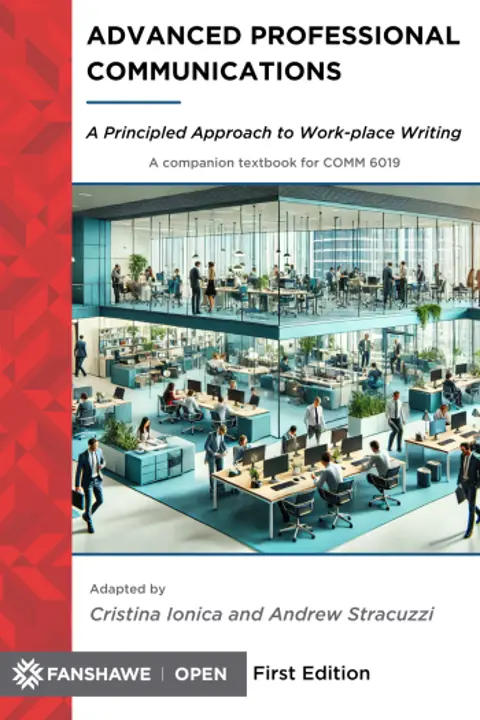 Communication
Advanced professional communication : A principled approach to workplace writing
View Advanced professional communication : A principled approach to workplace writing — book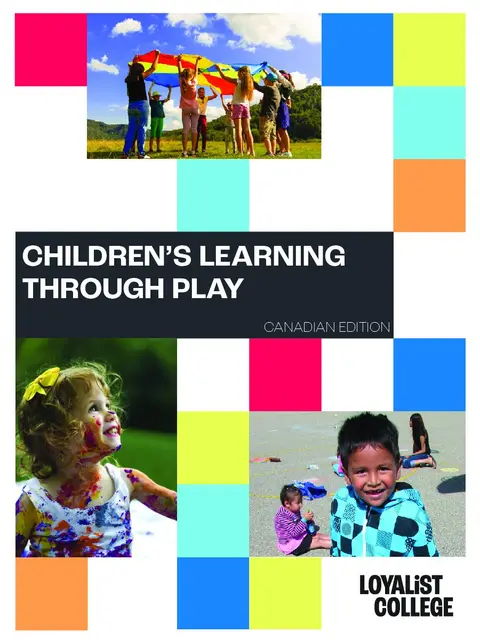 Early Childhood Education
Children's learning through play
View Children's learning through play — book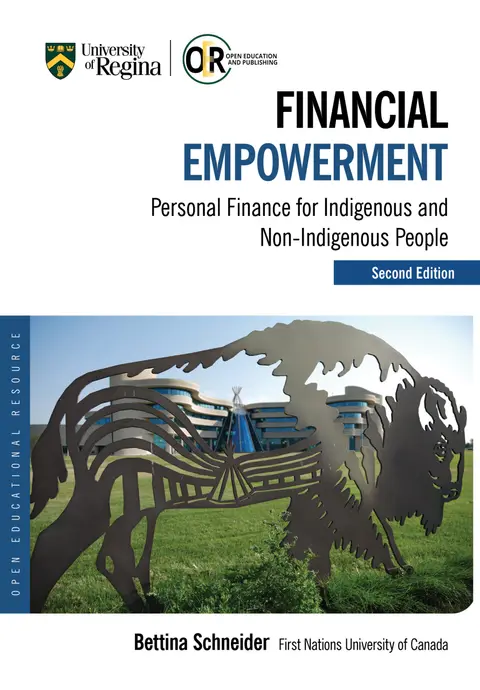 Budgeting and financial management
Financial Empowerment (2nd Edition)
View Financial Empowerment (2nd Edition) — book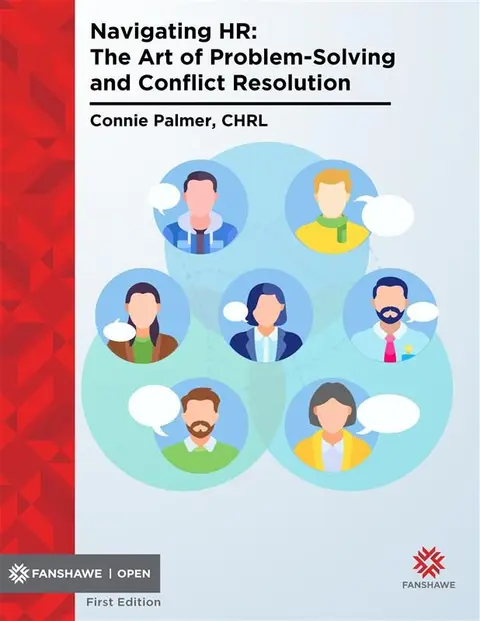 Conflict management
Navigating HR : The art of problem-solving and conflict resolution
View Navigating HR : The art of problem-solving and conflict resolution — book Algebra
Medical mathematics
View Medical mathematics — book #FunctionalAnalysis



