
 Business
Textbook
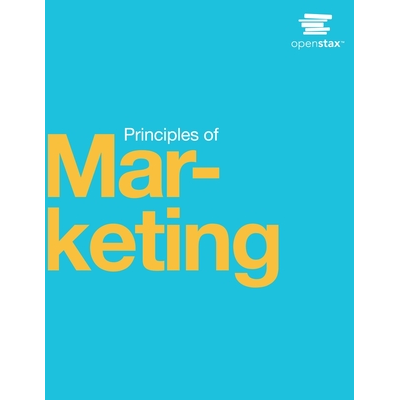
Principles of Marketing
Not rated yetRate this bookPrinciples of Marketing explains how organizations understand customers and coordinate offerings, prices, communication, and distribution to create value. Maria Gomez Albrecht, Mark Green, Linda Hoffman, and contributors develop nineteen chapters, from strategy and research through digital channels and sustainable marketing. This guide pairs each chapter with an original applied task and treats ethics as part of every marketing decision.
Free reading is available at the official source. Opens in a new tab.
 Free
About this book
Principles of Marketing explains how organizations understand customers and coordinate offerings, prices, communication, and distribution to create value. Maria Gomez Albrecht, Mark Green, Linda Hoffman, and contributors develop nineteen chapters, from strategy and research through digital channels and sustainable marketing. This guide pairs each chapter with an original applied task and treats ethics as part of every marketing decision.
Chapter-wise summaries and study tasks
Chapter 1 Marketing and Customer Value
Marketing begins with understanding a customer's problem and creating an exchange that offers value. The marketing process links research, a chosen audience, a coherent offering, and continuing relationships. Product, price, place, and promotion work together within an environment shaped by competitors, institutions, technology, and social expectations. The chapter traces the development of marketing orientations and introduces CRM as a way to manage relationships rather than simply accumulate contacts. Ethical questions belong at the beginning: an offer can generate sales while failing to serve customers fairly or respect their information.
Study task. Describe a customer problem and build a four-part marketing mix; explain how each choice supports the same value proposition.
Chapter 2 Strategic Planning in Marketing
Strategic planning aligns marketing with the organization's mission, capabilities, and competitive setting. A marketing plan translates analysis into objectives, target choices, actions, responsibilities, budgets, and measures. Useful metrics connect to a decision: exposure, engagement, sales, and profitability answer different questions. Measuring progress should reveal whether a strategy is working, not merely supply impressive numbers. Ethical issues arise when objectives encourage misleading claims or exploit vulnerable groups. A coherent plan states assumptions and review points so that feedback can lead to revision rather than post hoc justification of an unsuccessful campaign.
Study task. Draft a one-page plan with a measurable objective, audience, actions, budget, owner, and review date; identify a metric that could be misleading.
Chapter 3 Consumer Markets and Purchasing Behavior
Consumer purchasing reflects cultural, social, personal, and psychological influences. The decision process can include recognizing a need, searching for information, evaluating alternatives, purchasing, and responding afterward, but involvement and habit change how fully those stages unfold. Marketers need to understand the buyer's situation rather than assume all decisions follow a deliberate sequence. Perceived risk, experience, and reference groups affect what information seems trustworthy. Ethical analysis asks whether communications help customers evaluate an offer or manipulate uncertainty and pressure. Post-purchase experience also shapes future relationships and word of mouth.
Study task. Map a hypothetical consumer purchase from need recognition to post-purchase evaluation, identifying evidence needs, influences, and one ethical risk at each stage.
Chapter 4 Business Markets and Purchasing Behavior
Business buyers purchase to support organizational activity, often through formal procedures and multiple participants. Derived demand, order size, technical requirements, and continuing supplier relationships distinguish many B2B decisions from consumer purchases. A buying center may include users, influencers, buyers, gatekeepers, and decision makers whose priorities differ. New tasks, modified rebuys, and routine rebuys require different levels of search and evaluation. Selling effectively involves understanding the whole procurement process and providing relevant evidence. Gifts, conflicts of interest, and inaccurate representations can undermine the legitimacy of a supplier relationship.
Study task. Map a buying center for a fictional equipment purchase; specify each role's criteria and the evidence a supplier should provide.
Chapter 5 Market Segmentation, Targeting, and Positioning
Segmentation groups customers whose needs or behavior make a meaningful difference to an offering. Consumer, business, and international markets may require different variables. A useful segment must be identifiable, reachable, substantial enough, and actionable within the firm's resources. Targeting selects which groups to serve, while positioning explains the intended distinction relative to alternatives. A perceptual map can clarify a hypothesis but should not be mistaken for measured customer belief without research. Ethical targeting considers exclusion, stereotyping, vulnerability, and fairness alongside commercial attractiveness.
Study task. Define three evidence-based segments, choose one target with explicit criteria, and write a positioning statement that avoids unsupported superiority claims.
Chapter 6 Marketing Research and Market Intelligence
Marketing research turns a decision problem into a structured inquiry. Secondary information can establish context, while primary research can address gaps through appropriate qualitative or quantitative methods. Defining the problem precedes selecting a survey or collecting a large dataset. Sampling, question wording, measurement, analysis, and reporting all affect validity. Market intelligence is ongoing monitoring rather than a substitute for a focused research plan. Researchers must also consider consent, privacy, and how findings are represented. A large volume of customer data may produce detail without answering the decision that originally motivated the study.
Study task. Write a research brief with a decision, research question, method, sample, consent approach, and limitations; explain how the result would change an action.
Chapter 7 Marketing in a Global Environment
Global marketing requires evaluating opportunities alongside political, economic, legal, cultural, and operational differences. An attractive population size does not by itself establish accessible demand or a viable route to market. Exporting, licensing, partnerships, and direct investment involve different resource commitments and degrees of control. Decisions about adapting a product or message must connect to local evidence rather than assumptions. Trade conditions and supply arrangements affect feasibility. The chapter's ethical dimension includes treatment of workers, local communities, and customers, making market entry a question of responsibility as well as potential revenue.
Study task. Compare two fictional foreign markets using demand, access, risk, competition, and distribution; justify an entry mode and identify an assumption to investigate.
Chapter 8 Marketing in a Diverse Marketplace
Diverse-market strategies ask when a common approach is suitable and when adaptation improves relevance and inclusion. Cultural identity, language, age, disability, income, and other characteristics interact rather than define a uniform customer. Research should capture differences within groups and avoid reducing people to a demographic stereotype. Inclusive marketing concerns product design, access, representation, and the customer experience as well as campaign imagery. Ethical practice requires checking whether apparent personalization is respectful and useful. Authenticity depends on what the organization does across the relationship, not simply on who appears in an advertisement.
Study task. Audit a fictional campaign for accessibility and stereotyping; propose research and changes to the offering, service experience, and message.
Chapter 9 Products: Consumer Offerings
An offering includes benefits, services, and experiences beyond its physical features. Product lines and mixes organize related choices, while branding supports recognition, expectations, and relationships. The product life cycle helps discuss changing market conditions but is not a guaranteed timetable for every item. Packaging and labeling communicate information, protect goods, and influence use and disposal. Brand development choices must fit customers and the existing portfolio. Evaluate packaging claims and environmental effects alongside convenience and cost. Customer value can be lost when an attractive label obscures important information or creates unnecessary waste.
Study task. Analyze a fictional product's core benefit, supporting services, brand role, and packaging; identify one change that improves value and reduces a documented problem.
Chapter 10 Maintaining a Competitive Edge with New Offerings
New-product development reduces uncertainty through a sequence of idea generation, evaluation, development, testing, and launch decisions. Customer perspectives distinguish a genuinely useful innovation from a feature that is merely new to the producer. Metrics should change with the stage: an early concept test and a launched product do not answer the same questions. Adoption depends on perceived benefits, compatibility, complexity, trial, and communication. Failure can arise from weak demand, execution, timing, or a poor business model. Ethical testing and honest evidence are essential when deciding whether to continue, revise, or abandon an idea.
Study task. Design stage gates for a new offering, stating evidence and stop criteria; distinguish early interest from validated willingness to pay.
Chapter 11 Services: The Intangible Product
Services create value through performance and interaction, often with variability and limited ability to store unused capacity. The service marketing triangle connects promises made to customers with the organization's ability and willingness to deliver them. The service-profit chain relates employee conditions, service quality, customer responses, and organizational outcomes, but these links require evidence in context. The gap model helps locate mismatches between expectations, specifications, delivery, and communication. Ethical service provision includes transparency, accessibility, and respectful recovery when performance fails. Improving service therefore involves systems and staff support, not simply demanding friendlier behavior.
Study task. Diagnose a fictional service failure with the gap model; propose an operational change and a customer-recovery response with measurable outcomes.
Chapter 12 Pricing Products and Services
Pricing connects customer value with costs, competition, objectives, and channel conditions. A pricing process defines the goal, examines demand and constraints, evaluates alternatives, and establishes a policy. New offerings may use penetration or skimming approaches under different conditions, while existing products raise questions about discounts, bundles, and adjustments. A low price can increase volume without improving contribution or profit. Ethical issues include misleading reference prices, hidden charges, discrimination, and collusion. A defensible price explanation makes the unit, total payable amount, and relevant conditions clear to the buyer.
Study task. Compare two hypothetical prices using volume, variable cost, contribution, and customer response assumptions; explain one ethical concern with the proposed presentation.
Chapter 13 Integrated Marketing Communications
Integrated marketing communications coordinates promotional methods around a consistent audience, objective, and message. The communication process includes encoding, media, interpretation, feedback, and noise; sending a message does not establish that it was understood. Planning connects the target customer's journey with the promotion mix and a realistic budget. Consistency should preserve the central proposition while adapting expression to each medium. Evaluation distinguishes communication effects from sales outcomes influenced by other factors. Ethical integration requires that evidence and qualifications remain accurate across every channel rather than disappearing in shorter formats.
Study task. Build an IMC plan for one objective across three channels; specify message, audience action, measurement, and a qualification that must appear consistently.
Chapter 14 The Promotion Mix: Advertising and Public Relations
Advertising offers paid control over placement and message, whereas public relations works through relationships, reputation, and forms of exposure with less direct control. Advertising planning requires objectives, audience, creative decisions, media selection, and evaluation. Reach or clicks may indicate exposure without proving incremental sales. Public relations can support credibility but also faces risks when organizations conceal sponsorship or substitute publicity for addressing a problem. Ethical practice requires substantiated claims and transparent relationships. Assess both tools according to their purpose and evidence rather than assuming visibility is automatically favorable or commercially valuable.
Study task. Compare an advertising proposal and a public-relations response for a fictional launch; choose meaningful measures and disclose sponsorship wherever relevant.
Chapter 15 The Promotion Mix: Personal Selling and Sales Promotion
Personal selling supports direct dialogue, especially where needs are complex and relationships continue after purchase. Prospecting, preparation, presentation, handling concerns, closing, and follow-up should serve an appropriate customer decision. Sales-force management includes selection, training, compensation, and evaluation, all of which shape behavior. Sales promotion offers temporary incentives to customers or channel partners but may shift timing rather than create lasting demand. Pressure, inaccurate promises, and misleading promotion conditions can damage trust. Evaluate the fit of incentives with customer value and long-term relationships, not only short-term sales targets.
Study task. Write a consultative sales outline and a transparent promotion; identify how a compensation rule could encourage harmful pressure and propose a safeguard.
Chapter 16 Direct, Online, Social Media, and Mobile Marketing
Direct and digital marketing connect organizations with identifiable audiences through mail, online content, social platforms, mobile channels, and related methods. These approaches create opportunities for timely communication and measurement but also raise privacy, consent, targeting, and disclosure questions. Impressions, click-throughs, conversions, and acquisition costs describe different stages and depend on definitions and attribution choices. A campaign can look successful on one platform while producing weak overall value. The chapter's principles should be applied with current channel requirements in mind, because specific interfaces and measurement tools change.
Study task. Design a small digital campaign with consent, a clear action, defined conversion, cost metric, and attribution limits; explain how you would detect misleading engagement.
Chapter 17 Distribution: Delivering Customer Value
Distribution makes an offering available through organizations that perform transactional, logistical, and facilitating functions. Direct and indirect channels differ in coverage, control, expertise, and costs. Channel selection must fit the product, customer expectations, and the firm's capabilities. Relationships can produce conflict when incentives or responsibilities are unclear. Supply-chain management coordinates flows among suppliers and downstream partners, while logistics focuses on movement, storage, and related activities. Ethical concerns include labor conditions, environmental effects, and transparency. Availability should be assessed together with reliability, total cost, and the responsibilities shared across the channel.
Study task. Map a product's channel and physical flow separately; identify one conflict, one logistics bottleneck, and a measurable improvement for each.
Chapter 18 Retailing and Wholesaling
Retailers serve final customers through formats and experiences that differ in assortment, service, price, location, and channel integration. Wholesalers support other organizations through purchasing, storage, distribution, and related services. Retail strategy links target customers with merchandise, presentation, access, and service, rather than treating the store or website as an isolated design choice. Technology and changing behavior create new options, but each requires an economic rationale. Ethical issues arise in supplier treatment, information practices, pricing, and access. Compare formats by the value they provide and the costs they impose across the system.
Study task. Develop a retail concept for a defined segment, then explain the wholesaler's potential role and how inventory, service, and channel choices fit together.
Chapter 19 Sustainable Marketing: The New Paradigm
Sustainable marketing considers customer needs alongside long-term environmental and social consequences. It challenges a narrow focus on immediate transactions by asking how production, consumption, and disposal affect future well-being. Purpose-driven claims require consistent operations and evidence; a compelling narrative alone does not establish a beneficial impact. Benefits may involve trust, resilience, innovation, and reduced harm, but trade-offs and measurement boundaries must be explicit. The chapter connects sustainability principles with the whole marketing system. Evaluate whether an initiative changes material practices or merely changes how an unchanged product is described.
Study task. Audit a fictional sustainability claim for evidence, scope, trade-offs, and verification; rewrite it so that customers can understand what is and is not established.
How to study this book
- Use one fictional business as a continuing case, revising its marketing choices as later chapters introduce new evidence.
- Separate customer research findings from assumptions, and state what would disconfirm a proposed strategy.
- Link every metric to a decision and distinguish exposure, engagement, incremental sales, and profitability.
- Evaluate consent, accessibility, truthful claims, and impacts on affected groups alongside commercial objectives.
Questions for reflection
- Does the offering solve a customer problem or only support a campaign idea?
- Which evidence would justify adapting the strategy for a particular audience?
- Are the organization's promises consistent with its operations and incentives?
Source edition and coverage
This guide follows the nineteen main chapters of the linked OpenStax Principles of Marketing PDF. Company cases and platform examples belong to the source edition; the guide's fictional tasks develop transferable reasoning rather than report current company statistics. These are original study explanations and learning tasks. Read the complete book at the official source.
About access & copyright
This page provides book information and study material. Full-text access is provided by the original publisher or authorised source; a listing does not grant permission to republish the book.
Read our Library Access & Copyright policyExplore the contents
Check the chapters covered in this edition.
Visit the official source
See reading, preview or purchase options.
Save for later
Keep this textbook in your saved collection.
Reader ratings & reviews
Share your thoughts
Your review helps other students choose the right resources.
KEEP LEARNING
Your next great read
Business Business
Principles of Microeconomics 3e
View Principles of Microeconomics 3e — book Business
Principles of Management
View Principles of Management — book Business
Principles of Macroeconomics 3e
View Principles of Macroeconomics 3e — book Business
Principles of Finance 2e
View Principles of Finance 2e — book Business
Principles of Data Science
View Principles of Data Science — book Business
Organizational Behavior
View Organizational Behavior — book Business
Introductory Business Statistics 2e
View Introductory Business Statistics 2e — book Business
Introduction to Intellectual Property
View Introduction to Intellectual Property — book Business



