
 Business
Textbook
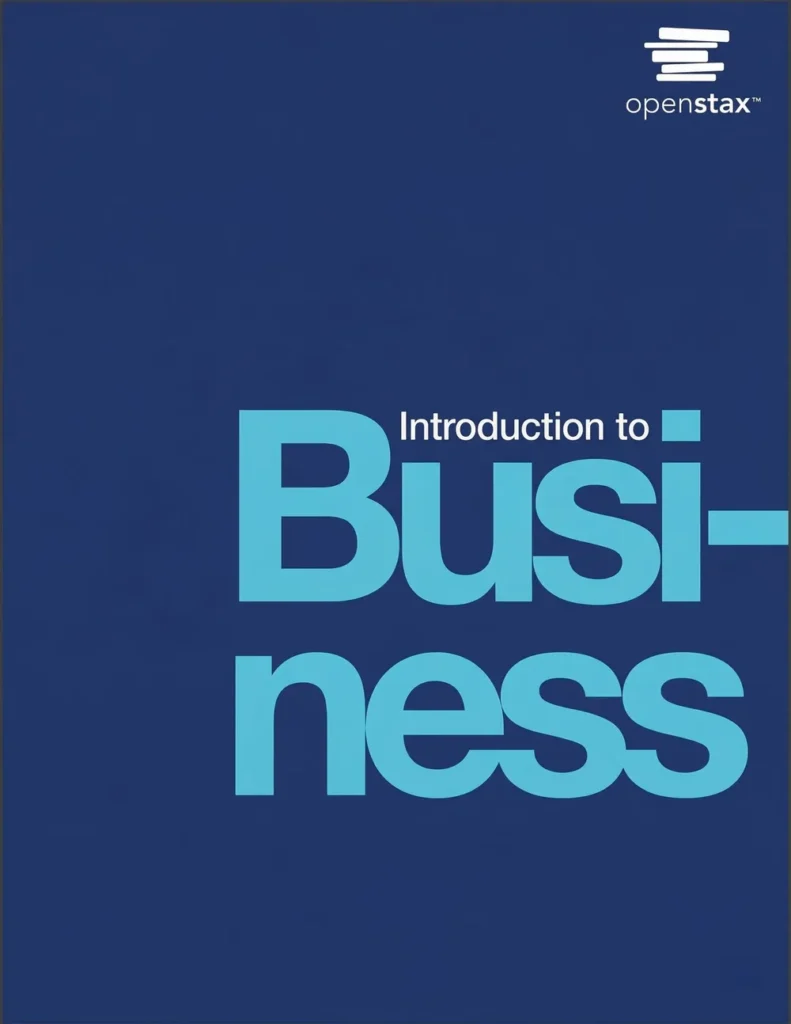
Introduction to Business 2e
Not rated yetRate this bookIntroduction to Business 2e surveys how organizations create value, coordinate people and resources, reach customers, and manage information and money. This seventeen-chapter guide links the textbook’s functional areas through practical decisions faced by a fictional organization. Each chapter pairs its main concepts with a study task, encouraging readers to explain trade-offs rather than memorize isolated business terms.
Free reading is available at the official source. Opens in a new tab.
 Free
About this book
Introduction to Business 2e surveys how organizations create value, coordinate people and resources, reach customers, and manage information and money. This seventeen-chapter guide links the textbook’s functional areas through practical decisions faced by a fictional organization. Each chapter pairs its main concepts with a study task, encouraging readers to explain trade-offs rather than memorize isolated business terms.
Chapter-wise summaries and reading tasks
Chapter 1 Understanding Economic Systems and Business
Business operates within economic, social, technological, competitive, and political environments. The first chapter connects the nature of business with macroeconomic conditions, microeconomic choices, market competition, and changing external pressures. Revenue, profit, and value creation are related but distinct, and organizations can pursue different purposes. Supply and demand help explain market coordination, while aggregate indicators address broader conditions rather than the experience of every firm or household. A business decision should therefore be located at the right level of analysis. Readers should connect an external change to a specific mechanism affecting costs, customers, or competition instead of treating the environment as a background list. Different organizations may experience the same economic change in different ways.
Study task. Choose a fictional local business and map five environmental influences. Explain how one economy-wide change could affect its customers and costs differently.
Chapter 2 Making Ethical Decisions and Managing a Socially Responsible Business
Ethical decisions require more than checking whether conduct is profitable or formally permitted. The chapter examines ethical judgment, organizational influences, social responsibility, stakeholder relationships, and changing expectations. Incentives, leadership behavior, reporting channels, and everyday routines can support stated values or undermine them. A stakeholder analysis identifies affected groups but must also explain how competing interests should be weighed. Public commitments are easier to assess when connected to observable practices and outcomes. Readers should distinguish a genuine conflict of responsibilities from a convenient justification for shifting costs onto others. The chapter treats ethics as part of management rather than an occasional exception to ordinary business decisions.
Study task. Analyze a fictional supplier decision that trades lower cost against working conditions. Identify stakeholders, alternatives, incentives, and a concrete accountability measure for the chosen policy.
Chapter 3 Competing in the Global Marketplace
Global business links firms to customers, suppliers, competitors, and institutions across national boundaries. The chapter explains reasons for trade, barriers, cooperation, economic communities, entry approaches, multinational activity, and opportunities and threats. Comparative advantage concerns relative opportunity costs rather than simply which country can produce everything more efficiently. Firms also face practical differences in currency exposure, logistics, regulation, and business culture. A larger market does not automatically make expansion attractive if serving it introduces costs or dependencies the organization cannot manage. Readers should separate an argument about aggregate gains from trade from questions about how benefits and adjustment costs are distributed. Historical examples provide context without establishing current trade rules.
Study task. Compare exporting with a deeper foreign-market commitment for a fictional product. Identify demand evidence, operational requirements, exchange-rate exposure, and a reason expansion might be postponed.
Chapter 4 Forms of Business Ownership
Ownership forms shape control, liability, financing, continuity, and administrative obligations. The chapter compares sole proprietorships, partnerships, corporations, specialized forms, franchising, and mergers and acquisitions. No single form is best for every venture because owners place different weight on independence, shared expertise, risk, and access to capital. A franchise combines a business arrangement with brand and operating requirements rather than simply eliminating entrepreneurial risk. An acquisition changes ownership but also creates integration questions involving people, systems, and customers. Readers should distinguish an organization’s legal form from its size or management quality. Comparing forms requires explicit assumptions about the founders’ goals and circumstances rather than a checklist with an automatic winner.
Study task. Create a decision matrix for two founders choosing an ownership form. Compare control, financing, liability, and continuity, noting which legal details would need current professional verification.
Chapter 5 Entrepreneurship: Starting and Managing Your Own Business
Entrepreneurship involves recognizing an opportunity, testing assumptions, mobilizing resources, and managing uncertainty. The chapter discusses entrepreneurial characteristics, the role of small business, startup preparation, management demands, support institutions, and trends. Enthusiasm for an idea is different from evidence that customers have a problem worth solving at a sustainable price. A plan connects the value proposition, target market, operations, people, and finances, while research tests the weakest assumptions. Starting and operating also demand different skills: a founder must build routines and adapt as evidence accumulates. Readers should distinguish risks that can be investigated from uncertainty that must be monitored through small, informative experiments.
Study task. Outline a fictional venture’s customer problem, offer, revenue logic, and three uncertain assumptions. Design a low-cost test for the assumption most likely to invalidate the concept.
Chapter 6 Management and Leadership in Today's Organizations
Management coordinates planning, organizing, leading, and controlling to accomplish organizational aims. The chapter connects these functions with managerial roles, skills, and changing leadership demands. Plans establish direction, but they require people, resources, and feedback to become useful. Leadership influences commitment and behavior, while control compares results with expectations and prompts adjustment. Different managerial levels need different balances of conceptual, interpersonal, and technical skill. Readers should avoid treating management as a fixed sequence completed once: a change in performance can require revisiting both the plan and the structure. Effective action also depends on communicating priorities clearly enough that employees can make consistent decisions without constant intervention.
Study task. Set a goal for a fictional team and show how each management function supports it. Choose a useful performance signal and explain what action an unexpected result should trigger.
Chapter 7 Designing Organizational Structures
Organizational structure distributes work, authority, and coordination responsibilities. The chapter compares traditional and contemporary arrangements, teams, authority relationships, centralization, design considerations, and informal networks. A chart shows formal reporting lines but cannot fully describe how information and influence move. Functional specialization can build expertise while creating coordination problems across departments. Decentralization may improve responsiveness but requires clear decision boundaries and information. Teams can connect perspectives, yet their effectiveness depends on responsibilities and workable processes. Readers should match structure to strategy, environment, and task interdependence rather than assume a flatter organization is always better. Informal relationships can support formal work or create hidden bottlenecks.
Study task. Design a structure for a growing service company and specify who decides pricing, staffing, and customer exceptions. Identify one cross-functional dependency and how it will be coordinated.
Chapter 8 Managing Human Resources and Labor Relations
Human resource management connects workforce needs with recruitment, selection, development, performance, compensation, and employee relations. The chapter also covers labor relations, grievances, conflicts, and the legal environment. A coherent approach begins with the work to be done and the capabilities it requires, then uses relevant evidence to make decisions. Selection criteria should connect to job requirements, while performance systems should make expectations understandable and provide useful feedback. Compensation affects more than payroll cost because it communicates priorities and influences behavior. Readers should distinguish a policy’s stated intent from how employees experience it. Labor relationships also involve collective interests and procedures, not simply individual motivation or managerial preference.
Study task. Write a role profile, job-related selection criteria, and a development plan for a fictional position. Explain how performance feedback and a fair grievance process would support the same expectations.
Chapter 9 Motivating Employees
Motivation theories offer different explanations for effort, persistence, satisfaction, and workplace behavior. The chapter reviews early approaches, the Hawthorne studies, Maslow, McGregor, Herzberg, contemporary theories, and practical applications. These frameworks are analytical tools rather than diagnostic shortcuts for every employee. Needs, expectations, perceived fairness, job design, and recognition can interact, so the same intervention may have different effects in different settings. Managers’ assumptions about people can also shape the conditions under which those people work. Readers should distinguish satisfaction from performance and incentives from the broader meaning of a task. An evidence-based intervention begins with a specific problem and checks whether the proposed mechanism is plausible.
Study task. Analyze a fictional team with declining effort through two motivation theories. Propose a limited intervention and identify evidence that would distinguish improvement from a temporary change in reported satisfaction.
Chapter 10 Achieving World-Class Operations Management
Operations management transforms resources into goods or services that meet customer requirements. The chapter covers process choices, location, resource planning, control, quality improvement, technology, and trends. Capacity, flow, inventory, scheduling, and quality are connected: improving one local measure can worsen the overall system. A bottleneck limits throughput even when other resources appear highly productive. Service operations face variability in demand and customer participation as well as production challenges. Readers should map a process before recommending automation or additional capacity. Quality improvement requires understanding recurring causes rather than relying only on inspection after work is complete. Operational decisions should connect efficiency with reliability and the customer experience.
Study task. Map a small service process, locate its likely bottleneck, and choose a quality measure. Compare adding capacity at the bottleneck with improving a non-bottleneck stage.
Chapter 11 Creating Products and Pricing Strategies to Meet Customers' Needs
Marketing begins with understanding customer needs and deciding which customers the organization can serve well. The chapter combines the marketing concept, strategy, segmentation, buyer behavior, the marketing mix, product development, lifecycles, and pricing. A product includes the benefits and experience customers value, not only its physical features. Segmentation is useful when groups differ in needs or responses in ways the firm can act on. Pricing connects customer value, costs, competitive conditions, and organizational aims; it is more than adding a standard percentage to cost. Readers should treat lifecycle patterns as aids to interpretation rather than guaranteed schedules. A coherent offer aligns its audience, benefits, positioning, and price.
Study task. Choose a fictional product, define a target segment, and write a value proposition. Explain a pricing approach and what customer evidence could show that your assumptions are wrong.
Chapter 12 Distributing and Promoting Products and Services
Distribution makes an offering available, while promotion communicates and supports its value. The chapter examines intermediaries, wholesaling, retailing, supply chains, advertising, personal selling, sales promotion, public relations, social media, and e-commerce. Channel choices affect reach, service, cost, control, and the relationship with customers. Promotional methods serve different purposes and should work together rather than deliver conflicting messages. High attention or frequent clicks do not necessarily show that a campaign improved customer outcomes or profitable demand. Readers should connect each channel and message to a defined audience and stage in the purchase process. Supply-chain coordination also shapes whether a promise made in promotion can actually be fulfilled.
Study task. Design a distribution and promotion plan for the product from Chapter 11. Explain each channel’s role, a fulfillment risk, and a measure that goes beyond audience exposure.
Chapter 13 Using Technology to Manage Information
Information technology supports operations, communication, analysis, and managerial decisions. The chapter covers networks, management information systems, technology planning, protection of information, and changing capabilities. Data becomes useful when it is accurate, timely, relevant, and interpreted in relation to a decision. Automating a poorly understood process can reproduce its weaknesses more quickly instead of improving it. Technology planning should consider integration, user needs, skills, maintenance, and security alongside initial cost. Readers should distinguish a system that records transactions from one that helps analyze patterns or support a particular managerial choice. Protecting information also requires organizational practices and assigned responsibilities, not just purchasing technical tools.
Study task. Identify an information problem in your fictional business and specify the decision it affects. Propose a system response, required data-quality checks, access controls, and a way to evaluate usefulness.
Chapter 14 Using Financial Information and Accounting
Accounting organizes financial events into information that supports accountability and decision making. The chapter introduces the profession, procedures, balance sheet, income statement, cash-flow statement, and financial analysis. Each statement answers a different question: financial position at a point in time, performance over a period, or movements of cash. Profit is therefore not interchangeable with available cash. Transactions can affect several accounts, and a single ratio is rarely sufficient to judge an organization’s condition. Readers should compare measures over time and consider the context behind changes. The goal is to interpret relationships among statements rather than memorize names without understanding what the numbers represent.
Study task. Create a simple fictional sale on credit and explain its effects on income, receivables, and cash. Then identify which statements would reveal performance and collection problems.
Chapter 15 Understanding Money and Financial Institutions
Money and financial institutions support exchange, saving, borrowing, and payments. The chapter explains money’s functions, the Federal Reserve, U.S. institutions, deposit insurance, international banking, and changes in financial services. A financial system links savers and borrowers while transforming risk and maturity, which creates both useful services and vulnerabilities. Central-bank functions differ from the services a commercial bank provides to a customer. Readers should distinguish an institution’s role from the particular products it offers and examine how confidence, oversight, and payment infrastructure support transactions. The source’s examples explain concepts in context; current rates, coverage limits, and institutional conditions require separate verification rather than being inferred from the textbook.
Study task. Trace a fictional business payment and loan through the financial system. Explain the roles of the customer, commercial institution, and central-bank infrastructure without assuming they perform the same functions.
Chapter 16 Understanding Financial Management and Securities Markets
Financial management concerns obtaining funds, allocating them, and balancing risk, return, and liquidity. The chapter distinguishes short-term financing, longer-term debt, equity, securities markets, and the financial manager’s responsibilities. Funding choices affect control, obligations, flexibility, and exposure to uncertainty. A growing organization may report attractive sales while struggling to finance inventories or collect receivables. Securities markets connect issuers and investors, but raising funds from a new issue differs from later trading among investors. Readers should connect a financing choice to the timing and risk of the use of funds. No source of capital is simply free: costs can take the form of payments, ownership dilution, restrictions, or other commitments.
Study task. Compare borrowing and issuing ownership interests for a fictional expansion. Identify cash-flow timing, control implications, downside risks, and the information needed before choosing between them.
Chapter 17 Your Career in Business
The final chapter applies business understanding to career development. It emphasizes foundational knowledge, interpersonal skills, planning, education, and practical steps toward work opportunities. A career plan translates broad interests into capabilities, evidence, relationships, and manageable actions. Interpersonal skill includes listening and collaboration as well as clear presentation, and it can be developed through deliberate practice and feedback. Readers should assess their current strengths without treating a self-test as a permanent identity or prediction. Education choices become more purposeful when connected to actual responsibilities and the skills those responsibilities require. The chapter encourages ongoing adjustment as experience reveals new interests, constraints, and opportunities.
Study task. Choose a role to investigate and create a three-month development plan. Link each action to a required skill and specify evidence of progress, such as a completed project, feedback, or an informational interview.
How to study this book
- Use one fictional organization throughout the book. Add an ownership choice, people plan, operating process, marketing approach, and financial model so the functions remain connected.
- For each recommendation, state its objective, assumptions, affected stakeholders, and trade-off. Separate a historical company example from evidence about current business conditions.
- Practice interpreting simple financial statements and process measures. Check whether a proposed improvement changes overall outcomes or only makes one department’s numbers look better.
Questions for reflection
- How could a successful marketing campaign create an operations or cash-flow problem?
- Which organizational incentives might undermine an ethical policy?
- When would growth reduce rather than improve a business’s resilience?
Source edition and coverage
This guide follows all seventeen numbered chapters of Introduction to Business 2e. It provides original study explanations and hypothetical tasks. Company cases and period-specific economic or legal details should be read in their source context, with current official information used for real decisions. This original study guide explains the source in new wording and adds learning activities. Read the publisher’s book and complete exercises.
About access & copyright
This page provides book information and study material. Full-text access is provided by the original publisher or authorised source; a listing does not grant permission to republish the book.
Read our Library Access & Copyright policyExplore the contents
Check the chapters covered in this edition.
Visit the official source
See reading, preview or purchase options.
Save for later
Keep this textbook in your saved collection.
Reader ratings & reviews
Share your thoughts
Your review helps other students choose the right resources.
KEEP LEARNING
Your next great read
Business Business
Introductory Business Statistics 2e
View Introductory Business Statistics 2e — book Business
Introduction to Intellectual Property
View Introduction to Intellectual Property — book Business
 Ethics
View Business Ethics — book Business
Digital Marketing Strategy
View Digital Marketing Strategy — book Business
Policy Analysis of Multi-Actor Systems
View Policy Analysis of Multi-Actor Systems — book Accounting
 in the Finance World
View Accounting in the Finance World — book Business
International Finance: Theory and Policy
View International Finance: Theory and Policy — book Business
Exploring Business
View Exploring Business — book Business



