
 Business
Textbook
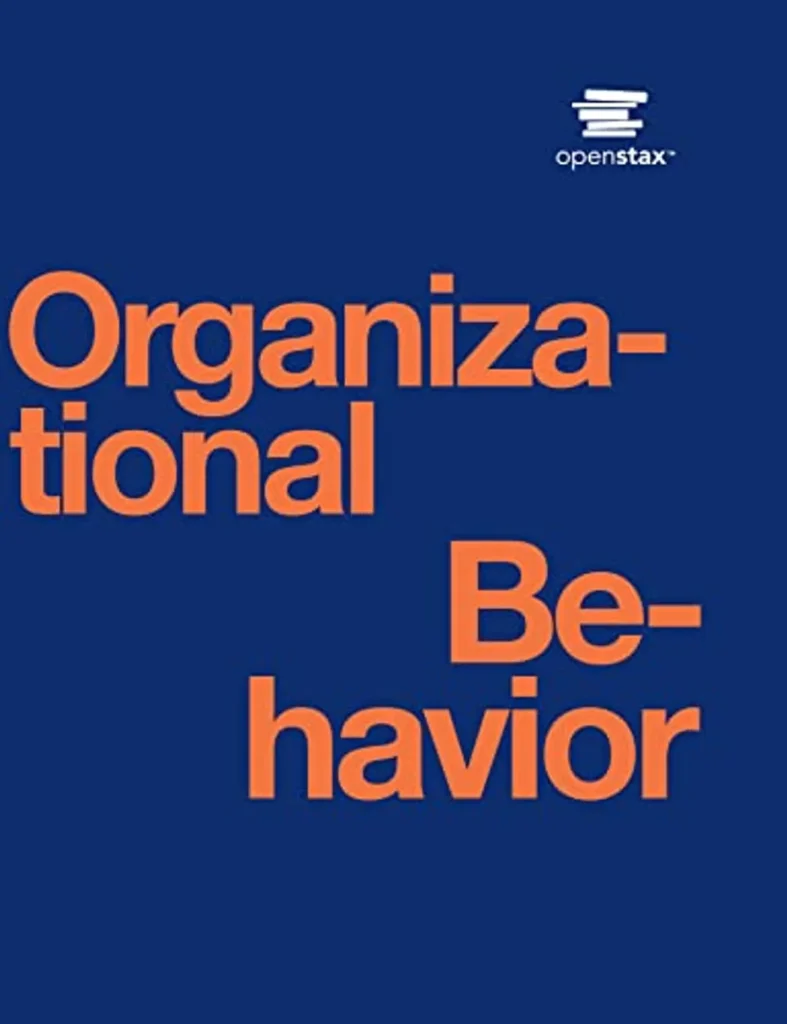
Organizational Behavior
Not rated yetRate this bookOpenStax Organizational Behavior explains workplace behaviour at individual, group, and organizational levels. Nineteen chapters connect differences in ability and values with perception, learning, motivation, appraisal, teams, communication, leadership, power, conflict, culture, structure, HRM, well-being, and entrepreneurship. The book combines concepts with cases and self-assessment activities. This guide follows its chapter sequence and encourages readers to compare explanations, identify contextual influences, and evaluate management choices using evidence rather than applying personality labels or fashionable techniques as universal answers.
Free reading is available at the official source. Opens in a new tab.
 Free
About this book
OpenStax Organizational Behavior explains workplace behaviour at individual, group, and organizational levels. Nineteen chapters connect differences in ability and values with perception, learning, motivation, appraisal, teams, communication, leadership, power, conflict, culture, structure, HRM, well-being, and entrepreneurship. The book combines concepts with cases and self-assessment activities. This guide follows its chapter sequence and encourages readers to compare explanations, identify contextual influences, and evaluate management choices using evidence rather than applying personality labels or fashionable techniques as universal answers.
Chapter-wise summaries and reading tasks
Chapter 1 Management and Organizational Behavior
The opening chapter places work within its social and organizational setting and introduces the responsibilities of management. Behaviour at work is influenced by people, groups, organizational arrangements, and the surrounding environment. A problem described as poor employee attitude may therefore involve job design, unclear goals, or conflicting incentives as well as personal choices. The chapter’s model gives readers a way to connect these levels rather than treat them as competing explanations. Management involves coordinating effort toward goals while responding to change and the needs of different stakeholders. The purpose of organizational behaviour is to make that coordination more understandable and open to evidence.
Study task. Analyse one workplace difficulty at individual, group, and organizational levels. Explain what evidence would help distinguish the contribution of each level.
Chapter 2 Individual and Cultural Differences
Abilities, skills, personality, values, and culture contribute to differences in work behaviour. The chapter examines how those differences interact with job requirements and organizational expectations. A trait description may help formulate a question, but it should not be treated as a complete prediction of performance or a fixed limit on development. Cultural comparisons similarly describe patterns rather than every member of a group. Ethical values affect what people regard as an acceptable goal or method. A useful application asks whether the work provides a suitable match and conditions for effective contribution, rather than assuming one ideal personality suits every role.
Study task. Compare the requirements of two jobs and explain why a characteristic useful in one may be less helpful in the other. Identify a risk in relying on a single personality label.
Chapter 3 Perception and Job Attitudes
Perception is an active process of selecting and interpreting information. The chapter considers barriers such as stereotypes and the attributions people make about why others behave as they do. Observers can overemphasize personal causes while missing circumstances that shaped an action. Attitudes toward work, including satisfaction and commitment, are also connected with behaviour without being perfect substitutes for performance measures. Managers need to separate what they directly observed from the explanation they inferred. Seeking additional perspectives and examining the situation can reduce premature judgement and make feedback more specific and fair.
Study task. Describe a fictional performance incident in purely observable terms, then list two different causal explanations. Identify what additional information would help evaluate each explanation.
Chapter 4 Learning and Reinforcement
Learning explains how experience changes behaviour and how organizations can support new skills and habits. The chapter connects learning models with reinforcement, behaviour modification, and self-management. Consequences influence behaviour according to their timing and meaning to the person, not simply the intention of the manager. Negative reinforcement removes an unwanted condition and differs from punishment, a distinction that matters when designing an intervention. A reward may also strengthen the wrong behaviour if the measure is poorly chosen. Effective learning arrangements include practice, feedback, and a clear link between the desired behaviour and its consequences.
Study task. Design a simple learning plan for a new task. Distinguish practice feedback from reinforcement and explain how an incentive could unintentionally encourage a shortcut.
Chapter 5 Diversity in Organizations
Workplace diversity includes visible and less visible differences that influence experience, opportunity, and interaction. The chapter examines discrimination, diversity theories, potential benefits, and challenges in organizational practice. Diverse membership does not automatically produce inclusion or improved decisions; the conditions for participation and fair treatment matter. Group categories can become a basis for stereotyping or exclusion when individual contributions are overlooked. Managing diversity therefore involves examining systems such as recruitment, development, and everyday teamwork, not simply celebrating a varied workforce. Evaluation should consider whose access and influence change as well as organizational outcomes.
Study task. Audit one routine workplace process for unequal opportunity. Suggest an improvement and identify a measure that distinguishes representation from meaningful participation.
Chapter 6 Perception and Managerial Decision Making
Managerial decisions range from routine responses to unfamiliar problems requiring deliberate analysis. The chapter contrasts reflective and rapid processing, programmed and nonprogrammed decisions, and individual and group approaches. Time pressure, incomplete information, cognitive biases, and social dynamics can limit judgement. A structured process clarifies the problem, considers alternatives, and evaluates consequences, but it cannot remove uncertainty entirely. Group participation adds knowledge while also creating risks such as conformity or suppressed disagreement. The practical goal is to design a process suited to the decision’s stakes and conditions rather than assume either intuition or extensive analysis is always superior.
Study task. Compare a routine operational decision with an unfamiliar strategic one. Design a decision process for each and include a check against one likely bias.
Chapter 7 Work Motivation for Performance
Motivation concerns where effort is directed, how intensely it is applied, and whether it is sustained. Content theories focus on needs, while process theories examine expectations, fairness, goals, and the links people perceive between effort and outcomes. The chapter encourages comparison of explanations rather than selecting one formula for every employee. A person may value a reward yet doubt that extra effort can achieve it, or may have the ability but lack a fair opportunity to perform. Motivation also differs from performance, which depends on skills and working conditions. Diagnosis should therefore precede an incentive or encouragement campaign.
Study task. Explain a low-effort situation using two motivation theories. Identify different evidence and interventions that would follow from the two explanations.
Chapter 8 Performance Appraisal and Rewards
Performance appraisal and rewards translate organizational priorities into judgements and consequences for employees. The chapter compares appraisal techniques, feedback, and individual and group incentive arrangements. Measures can be incomplete, affected by bias, or influenced by conditions outside the employee’s control. Feedback is more useful when it describes behaviour, expectations, and improvement opportunities than when it reduces a person to a rating. Incentives direct attention toward what is rewarded, so an apparently efficient system can undermine cooperation or encourage gaming. A defensible design aligns measurement, development, fairness, and the work’s actual requirements.
Study task. Design a balanced appraisal for one role using several evidence sources. Explain how an incentive linked to only one metric could damage another important outcome.
Chapter 9 Group and Intergroup Relations
Groups develop roles, norms, status relationships, and patterns of interaction that shape what members do. The chapter considers group structure and effectiveness alongside relations between groups. Norms can coordinate work but can also discourage contributions or support low effort. Conflict between departments may reflect competing goals and resource arrangements rather than personal hostility alone. Understanding those structures makes it possible to change coordination conditions instead of repeatedly asking individuals to cooperate more. Readers should distinguish a collection of employees from a group whose members influence one another through shared expectations and interdependence.
Study task. Map the roles and informal norms of a fictional work group. Identify how one norm helps performance and how another could discourage useful information.
Chapter 10 Understanding and Managing Work Teams
Teams depend on coordinated contributions toward a shared purpose, and their needs change as members work together over time. The chapter examines development, management, team building, diversity, and multicultural collaboration. Effective teamwork requires clarity about tasks and responsibilities alongside the capacity to discuss problems openly. Diversity can add perspectives while also increasing the work needed to establish shared understanding. Not every task benefits from a team, especially when coordination costs exceed the value of interdependence. The chapter invites readers to examine how the task, membership, processes, and organizational support combine to influence results.
Study task. Decide whether a proposed task genuinely requires a team. If it does, specify interdependencies, decision responsibilities, and a process for surfacing disagreement.
Chapter 11 Communication
Communication involves meaning being encoded, transmitted, interpreted, and checked through feedback. The chapter examines organizational channels, managerial roles, reputation, and the practical skills of talking, listening, reading, and writing. A message can be delivered without being understood, especially when status differences, assumptions, or inappropriate channels interfere. The choice of medium should reflect ambiguity, urgency, sensitivity, and the need for a record. Listening is an active part of the process rather than an interval before the speaker responds. Effective communication arrangements make it easier to detect misunderstanding and correct it before it becomes an operational problem.
Study task. Rewrite a vague instruction with a clear purpose, action, responsibility, and deadline. Choose a communication channel and describe how understanding would be confirmed.
Chapter 12 Leadership
Leadership is examined as an influence process involving leaders, followers, tasks, and context. Trait and behavioural approaches highlight different aspects, while contingency theories ask when a style or arrangement is effective. Leadership may emerge informally as well as through appointment, and organizational conditions can substitute for or limit a leader’s influence. Transformational, visionary, and charismatic approaches broaden the discussion but do not remove the need for ethical judgement. A strong analysis connects a leader’s action with the situation and observed effects rather than attributing every success to personal charisma.
Study task. Analyse a leadership example using a trait explanation and a situational explanation. Identify what each reveals and what evidence would be needed to support a causal claim.
Chapter 13 Organizational Power and Politics
Power arises from dependence, control of resources, expertise, authority, and relationships. The chapter connects interpersonal influence with organizational politics and ways to limit its damaging effects. Political action is not restricted to senior titles, and resistance or counterpower can emerge wherever others control something needed. Influence may support coordination or protect narrow interests, so its consequences depend on goals and methods. Transparent criteria and fair decision processes can reduce opportunities for arbitrary advantage. Readers should trace the source of dependence rather than assume formal hierarchy fully explains who shapes a decision.
Study task. Map the sources of influence in a fictional resource decision. Distinguish formal authority from expertise or resource dependence and propose a fairness safeguard.
Chapter 14 Conflict and Negotiations
Conflict can emerge from incompatible goals, scarce resources, unclear roles, or different interpretations. The chapter examines its causes, consequences, resolution approaches, and negotiation. Not all disagreement is harmful: task-focused challenge may improve a decision, while personal hostility can obstruct cooperation. A suitable response depends on the issue, relationship, and time available rather than on one preferred conflict style. Negotiation benefits from separating positions from interests and understanding alternatives to agreement. The chapter encourages readers to address underlying arrangements as well as the visible dispute, making a durable response more likely.
Study task. Describe a conflict in terms of interests, constraints, and alternatives. Propose a negotiation approach and explain which underlying cause it would address.
Chapter 15 External and Internal Organizational Environments and Corporate Culture
Organizations operate within environments that create uncertainty, opportunities, and constraints. The chapter connects external conditions with internal design and corporate culture. Shared assumptions and practices influence how members interpret events and which responses seem legitimate. A structure that works in a stable setting may struggle when information or customer needs change rapidly. Culture can support coordination while also making adaptation difficult when established assumptions go unexamined. Analysing fit therefore requires considering environment, strategy, structure, and everyday behaviour together rather than treating culture as a slogan or a fixed list of company values.
Study task. Choose an environmental change and explain its implications for organizational structure and shared routines. Identify a cultural assumption that could help or hinder adaptation.
Chapter 16 Organizational Structure and Change
Organizational structure distributes work, authority, and coordination. The chapter compares design arrangements and examines the challenges of planned and emerging change. Mechanistic and organic forms organize responsiveness differently, and neither is automatically best in every setting. Changing reporting lines alone may not alter incentives, information flows, or informal relationships. Effective change management therefore considers the problem, desired behaviour, stakeholder concerns, implementation, and feedback. Resistance can reveal a legitimate design weakness as well as reluctance to abandon familiar routines. Evaluation should examine whether the new arrangement improves the intended work rather than simply whether a reorganization was completed.
Study task. Propose a structural response to a coordination problem. Explain how responsibilities, information flows, and incentives would change and identify an implementation risk.
Chapter 17 Human Resource Management
Human resource management links organizational needs with the recruitment, support, performance, development, and future availability of people. The chapter covers compliance, performance management, motivation, talent development, and succession planning. These activities need to operate as a coherent system rather than as isolated administrative events. A development plan should connect current capability with future requirements, while succession planning addresses continuity without assuming one person’s departure can be solved at the last minute. The source’s legal examples are context-specific, so the broader lesson is to consider both strategic contribution and fair, accountable employment processes.
Study task. Connect recruitment, appraisal, learning, and succession for one critical role. Explain how a weakness in one stage could undermine the others.
Chapter 18 Stress and Well Being
Stress results from the relationship between demands, resources, and the way a situation is experienced. The chapter considers adjustment, organizational stressors, consequences, and ways to reduce harmful effects. Workload, uncertainty, role conflict, and social support can influence well-being, so a response focused only on personal coping may overlook preventable organizational causes. Individual resources and supportive relationships can buffer some pressures, but they do not justify avoidable excessive demands. Readers should distinguish identifying a stressor from assuming its effect is identical for every person. A useful intervention examines both the work arrangement and available support.
Study task. Separate organizational stressors from individual responses in a fictional case. Propose one work-design change and one support measure, with an outcome for evaluating each.
Chapter 19 Entrepreneurship
Entrepreneurship brings together opportunity recognition, initiative, uncertainty, and the work of creating or developing an enterprise. The chapter examines the entrepreneurial process and the conditions that support it, connecting individual action with resources and environment. An appealing idea is not yet a viable opportunity: demand, implementation capability, and the ability to organize people matter. Entrepreneurial behaviour can also occur inside established organizations, where routines and authority may enable or constrain experimentation. The chapter closes the book by applying organizational-behaviour reasoning to the formation of new activity rather than treating entrepreneurship as a personality category alone.
Study task. Evaluate a small venture idea by separating the opportunity, assumptions, required resources, and people-related challenges. Identify an inexpensive way to test one important assumption.
How to study this book
- Use cases to identify the level of analysis before selecting a theory: individual, group, or organization.
- For each concept, write a workplace example and an alternative explanation that the same observations might support.
- Treat self-assessments as reflective learning tools rather than definitive diagnoses of yourself or colleagues.
- Evaluate proposed management actions for effects on performance, fairness, and employee experience.
- Compare a theory’s assumptions with the context before recommending a practice.
Questions for reflection
- When is an apparent individual problem better explained by a work system?
- How can incentives improve one metric while harming collaboration?
- What evidence would distinguish effective leadership from favourable conditions?
Source edition and coverage
All nineteen main chapters of the linked OpenStax Organizational Behavior edition are covered. The source appendices support research-method and self-assessment work. This original study guide explains the source in new wording and adds learning activities. Read the publisher’s book and complete exercises.
About access & copyright
This page provides book information and study material. Full-text access is provided by the original publisher or authorised source; a listing does not grant permission to republish the book.
Read our Library Access & Copyright policyExplore the contents
Check the chapters covered in this edition.
Visit the official source
See reading, preview or purchase options.
Save for later
Keep this textbook in your saved collection.
Reader ratings & reviews
Share your thoughts
Your review helps other students choose the right resources.
KEEP LEARNING
Your next great read
Business Business
Introduction to Intellectual Property
View Introduction to Intellectual Property — book Business
Introduction to Business 2e
View Introduction to Business 2e — book Business
 Ethics
View Business Ethics — book Business
Digital Marketing Strategy
View Digital Marketing Strategy — book Business
Policy Analysis of Multi-Actor Systems
View Policy Analysis of Multi-Actor Systems — book Accounting
 in the Finance World
View Accounting in the Finance World — book Business
International Finance: Theory and Policy
View International Finance: Theory and Policy — book Business
Exploring Business
View Exploring Business — book Business



