
Applying the International Classification of Functioning, Disability & Health: A Team-Based/Project Based Course for Undergraduate Students
MedicineTextbook
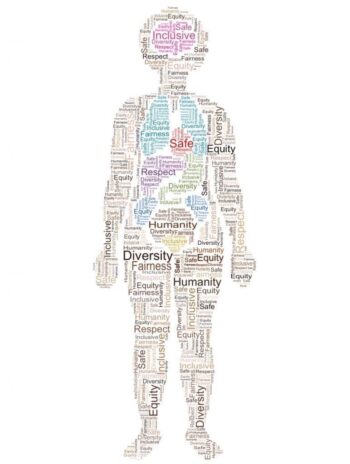
Inclusive Approach to Anthropometric Body Measurement Assessments
Not rated yetRate this bookThis introductory nursing resource examines body measurement through an inclusive assessment framework. Its opening emphasizes that numerical measurements need context and should not be treated as a complete account of a person’s health.
Read on the publisher’s website. Opens in a new tab.
 Free
About this book
About this book
The January 2024 open resource was developed by nursing educators and contributors associated with Centennial College and Toronto Metropolitan University. Its introduction identifies undergraduate nursing students as the intended audience. It combines assessment learning with attention to culture, race, gender, body diversity, disability, and clinical judgment. The authors recommend the online Pressbooks edition for access to video and interactive activities. This guide reviews the introduction, stated outcomes, and opening contextual discussion. It does not reproduce measurement procedures or establish a clinical assessment standard.
Sources and reading coverage
The introduction and contributor information on PDF sheets 5–7, learning outcomes on sheet 9, and selected opening passages on sheets 10–11 were reviewed. Later measurement techniques were not reviewed as operating instructions.
See the official publication record for edition details. Read the publisher’s online edition. The external PDF provides the available source text.
The consulted PDF contains 57 sheets, including preliminary material; this count can differ from printed pagination.
Book summary
Guide to the reviewed opening
The opening describes anthropometric measures as quantitative information about body size and adipose tissue. It immediately qualifies their meaning: measurements are not diagnostic tools on their own. Their educational value depends on being interpreted with other information and within the circumstances of the person being assessed.
The reviewed discussion also questions an exclusively weight-centred approach to health. It directs attention toward well-being, social determinants, and health equity. Rather than treating inclusion as an optional addition to technique, the resource places it within the way an assessment is understood.
A further distinction concerns a single observation and a pattern over time. The opening notes that one measurement captures one point, while a trend may provide a different kind of information. This page highlights that interpretive issue without supplying thresholds, diagnoses, or a substitute for supervised nursing instruction.
How to study this book
Before studying a measurement technique, record what the measurement can indicate and what it cannot establish alone. Add a separate note about communication, consent, comfort, and the context needed to understand the result. Keep the person’s account distinct from assumptions based only on a numerical category.
Use the online edition’s activities alongside the explanatory text. When considering a case, identify the additional observations that would be needed before drawing a conclusion. Discuss clinical procedures, interpretation, and current standards with your instructor or supervisor; the purpose here is to organize study of the authors’ inclusive framework.
Questions for reflection
- Why is a body measurement insufficient as a diagnosis?
- How can a trend differ from a single observation?
- What assumptions might a weight-centred discussion overlook?
The study suggestions and questions are independent Academic Master editorial material.
About access & copyright
This page provides book information and study material. Full-text access is provided by the original publisher or authorised source; a listing does not grant permission to republish the book.
Read our Library Access & Copyright policyContext
Interpret measurements alongside other assessment information.
Inclusivity
Examine assumptions that can shape an encounter.
Trends
Distinguish one observation from change over time.
Clinical judgment
Identify the limits of a numerical result.
Reader ratings & reviews
Share your thoughts
Your review helps other students choose the right resources.
KEEP LEARNING
Your next great read
Medicine
Urinalysis Atlas: A Pictorial Guide to Formed Elements in Urine (Doty and Taylor)
Urinalysis Atlas: A Pictorial Guide to Formed Elements in Urine (Doty and Taylor)
View Urinalysis Atlas: A Pictorial Guide to Formed Elements in Urine (Doty and Taylor) — book Medicine
Drug Use and Misuse: A Community Health Perspective
View Drug Use and Misuse: A Community Health Perspective — book Medicine
Neuroscience for Pre-Clinical Students
View Neuroscience for Pre-Clinical Students — book Medicine
Cardiovascular Pathophysiology for Pre-Clinical Students
View Cardiovascular Pathophysiology for Pre-Clinical Students — book Medicine
Pulmonary Physiology for Pre-Clinical Students
View Pulmonary Physiology for Pre-Clinical Students — book Medicine
Epidemiology
View Epidemiology — book Medicine
Social Determinants of Health in Nursing Education: Integrating Into Curriculum and Practice
View Social Determinants of Health in Nursing Education: Integrating Into Curriculum and Practice — book Education
Qualitative Research – a practical guide for health and social care researchers and practitioners
View Qualitative Research – a practical guide for health and social care researchers and practitioners — book Medicine



