
 Key Stage 3
Curriculum & InstructionTextbook
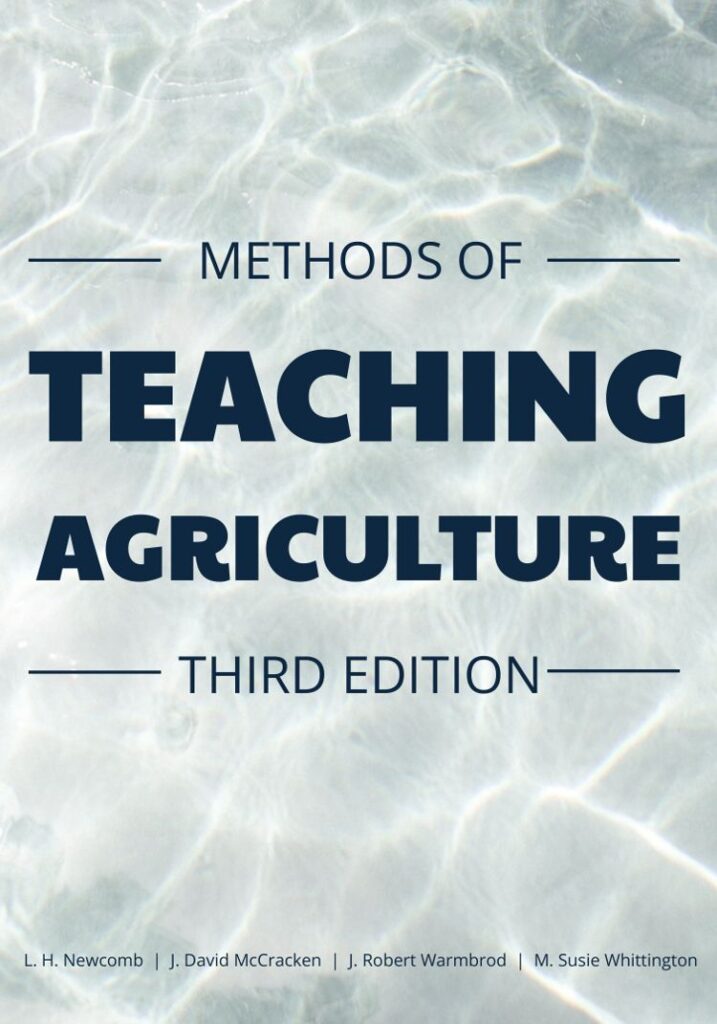
Methods of Teaching Agriculture
Not rated yetRate this bookMethods of Teaching Agriculture connects subject expertise with the work of planning, delivering, and evaluating instruction. This third edition provides a framework for agricultural teacher education, with attention to learners, practical application, and the purposes of an instructional programme.
Read on the publisher’s website. Opens in a new tab.
 Free
About this book
The third edition of Methods of Teaching Agriculture is by L. H. Newcomb, J. David McCracken, J. Robert Warmbrod, and M. Susie Whittington. Originally published in 2004, it was reformatted and republished as an open textbook by University Libraries at Virginia Tech in 2025.
The edition has 394 numbered main-text pages and 408 PDF pages when front matter is included. Its fourteen chapters are arranged into five parts: foundations, teaching and learning methods, application, special learner populations, and evaluation. Appendices provide additional instructional resources.
The preface identifies preservice and in-service teacher education as intended settings. The 2025 release preserves the original third-edition text rather than presenting every example or term as newly written. That distinction is important when using an established framework alongside contemporary curricula and institutional requirements.
The text carries CC BY-NC 4.0 with exceptions for credited material. The study overview below covers the preface, the first part’s orientation, and selected opening material from Chapter 1.
Book summary
Methods of Teaching Agriculture presents fourteen chapters in five parts. The linked open republication preserves the third-edition teaching text originally published in 2004. It connects course planning, instructional methods, behavior, application, special populations, and evaluation. The guide treats those ideas within the source’s educational context while emphasizing the relationship between learning goals, learner activity, and evidence of learning.
Chapter-by-chapter summaries
1. Decisions About Teaching
The opening examines factors that shape instructional decisions. Content, learners, context, and educational purpose constrain what an appropriate method can accomplish. It establishes teaching as reasoned selection rather than a preference for one activity or presentation style.
2. Principles of Teaching and Learning
Learning principles provide a basis for explaining why an instructional arrangement may work. The chapter connects them with practice rather than leaving them as general slogans. A useful application identifies what learners need to do and which condition is intended to support that learning.
3. Planning the Course of Study
Course planning organizes the larger sequence of content and experiences. Decisions about scope and progression affect what can be learned and practiced. The chapter encourages coherence across lessons rather than treating a course as an accumulation of independent activities.
4. Learning as Problem Solving
Problems can give purpose to inquiry and application. The chapter connects learning with the work of understanding a situation and developing a response. An effective problem needs to require the intended reasoning, not simply provide a decorative scenario around a routine task.
5. Planning for Instruction
Instructional planning translates course aims into specific learning experiences. Objectives, content, methods, and assessment should support one another. The chapter makes preparation an explanation of how learning is expected to occur rather than only a schedule of what the teacher will say.
6. Group Teaching Techniques
Group methods create shared opportunities for explanation, discussion, and activity. Their suitability depends on purpose and participation arrangements. The chapter invites attention to what each learner contributes and learns, rather than assuming that placing people together automatically produces effective collaboration.
7. Individualized Teaching Techniques
Individualized approaches address differences in pace, preparation, and learning needs. The chapter connects independence with structure and feedback. A suitable arrangement provides a path and evidence of progress rather than simply leaving a learner to work alone with the same task.
8. Managing Student Behavior
Behavior management is related to the conditions supporting instruction. Expectations, routines, and responses affect participation and the classroom environment. The chapter connects management with learning rather than treating immediate compliance as the only indicator of a successful response.
9. The Laboratory
Laboratory application connects concepts with materials, processes, and observable consequences. The chapter emphasizes the educational purpose of practical work. A useful activity requires learners to make and explain decisions, not merely complete operations without understanding their relationship to the intended outcome.
10. Supervised Agricultural Experience
Supervised experience extends learning into sustained practical activity. Its educational value depends on goals, guidance, documentation, and reflection. The chapter connects experience with instruction so that participation becomes evidence of developing understanding rather than an activity recorded only for completion.
11. FFA
The FFA chapter considers an organized setting for applying learning and developing leadership. The connection with the curriculum matters: an activity should have an educational purpose and opportunities for reflection. The chapter helps relate participation to the wider agricultural-education program.
12. Learners with Special Needs
Teaching requires attention to access, support, and the specific learner rather than a label alone. The chapter examines adaptation within the instructional process. A useful plan preserves a meaningful learning goal while considering how materials, participation, or assessment may need to change.
13. Adults
Adult learners bring experiences, purposes, and constraints that affect instruction. The chapter connects those characteristics with teaching choices. Respecting experience does not remove the need for a clear learning sequence; it changes how the educator can connect new material with existing knowledge and practical aims.
14. Evaluation
Evaluation connects the intended learning with evidence and judgment. The chapter completes the relationship among planning, teaching, and outcomes. Assessment decisions should make clear what is being evaluated and how a result will inform further instruction, rather than treating a score as an explanation in itself.
Appendices
The sample instructional unit and vocabulary for objectives and test items support application. Use them to examine alignment between a goal and the thinking required by an activity or question. They are working resources for planning, not a requirement that every unit reproduce one fixed format.
Study instructions
- Develop one unit through objectives, learning activities, application, and evaluation.
- Compare group and individualized methods for the same goal and explain the tradeoff.
- Design a reflection that makes learning from practical experience visible.
- Use assessment evidence to revise the unit and distinguish a teaching problem from a difficulty in the assessment itself.
Sources and coverage
This original study guide follows the linked source edition and its chapters or explicitly identified sections. It condenses the main ideas and their relationships; examples and practice directions are for study alongside the complete text. Complete source edition.
About access & copyright
This page provides book information and study material. Full-text access is provided by the original publisher or authorised source; a listing does not grant permission to republish the book.
Read our Library Access & Copyright policyTeaching competence
Connect subject expertise with knowledge of learning and instruction.
Context
Relate a teaching choice to purposes, learners, and content.
Coherent planning
Recognise connections among course organisation, activities, and evaluation.
Edition awareness
Distinguish the 2004 text from its 2025 open republication.
Reader ratings & reviews
Share your thoughts
Your review helps other students choose the right resources.
KEEP LEARNING
Your next great read
Key Stage 3 Curriculum & Instruction
Teaching in a Digital Age: Guidelines for designing teaching and learning
View Teaching in a Digital Age: Guidelines for designing teaching and learning — book Curriculum & Instruction
Teaching Crowds: Learning and Social Media
View Teaching Crowds: Learning and Social Media — book Curriculum & Instruction
Efficacious Technology Management: A Guide for School Leaders
View Efficacious Technology Management: A Guide for School Leaders — book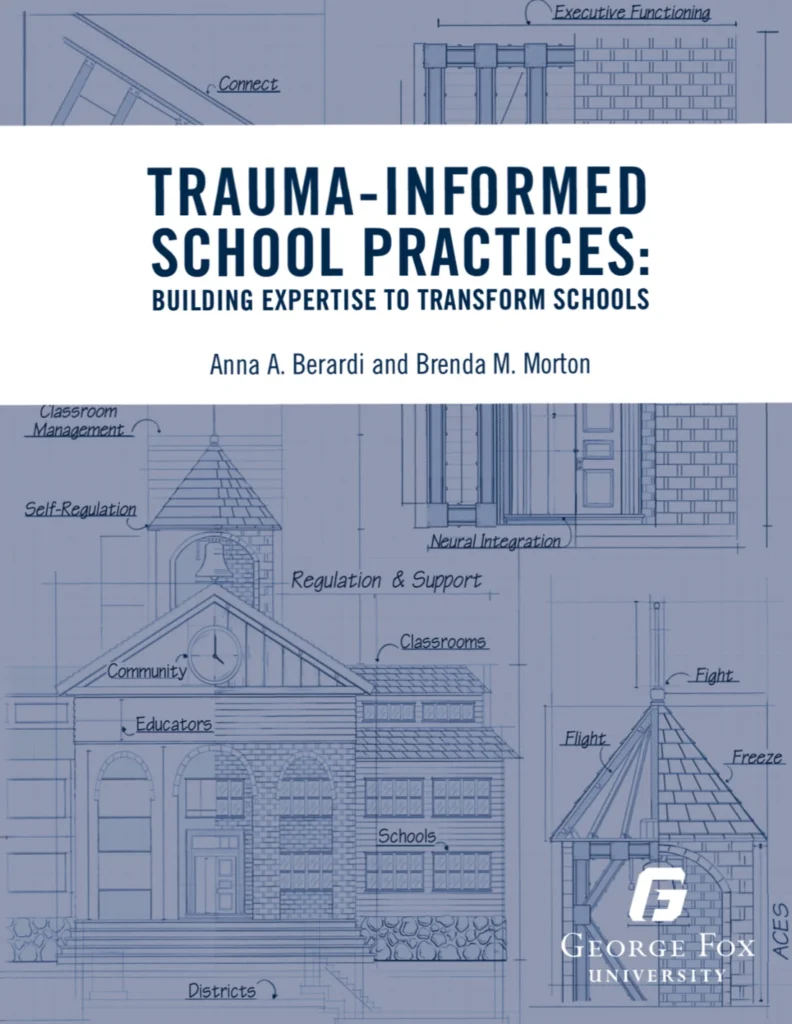 Education
Trauma-Informed School Practices: Building Expertise To Transform Schools
View Trauma-Informed School Practices: Building Expertise To Transform Schools — book Curriculum & Instruction
Teaching Early and Elementary STEM
View Teaching Early and Elementary STEM — book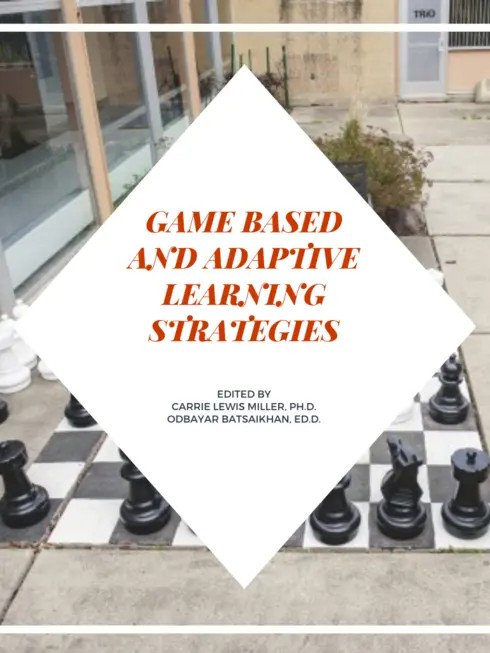 Computer Science
Game Based and Adaptive Learning Strategies
View Game Based and Adaptive Learning Strategies — book Curriculum & Instruction
The Asynchronous Cookbook
View The Asynchronous Cookbook — book Curriculum & Instruction
Technology in Schools
View Technology in Schools — book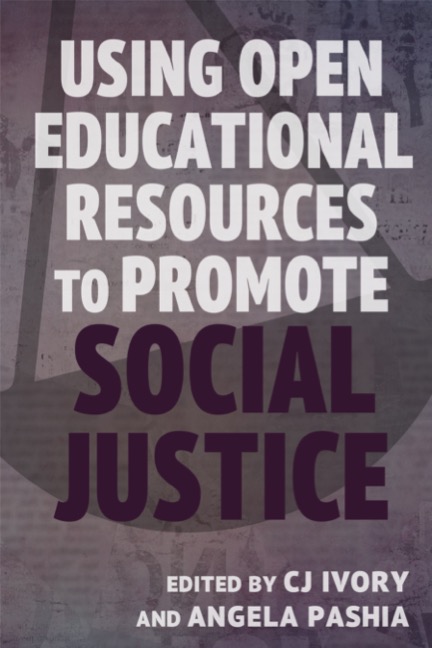 Curriculum & Instruction



