
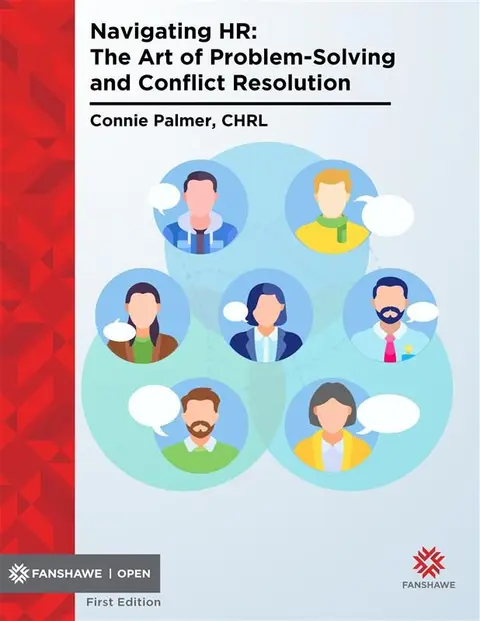
 Conflict management
BusinessTextbook
Health and Safety in Canadian Workplaces
Not rated yetRate this bookHealth and Safety in Canadian Workplaces by Jason Foster and Bob Barnetson examines hazards, law, workplace power, prevention, and responses after harm. The 2016 edition’s eleven chapters challenge explanations reducing injury to individual carelessness. Work organization, incentives, reporting, enforcement, and participation shape what risks workers face and which controls are adopted. This guide follows that edition rather than the separate revised edition. Canadian requirements vary by jurisdiction and change over time; use current authoritative materials for an actual workplace decision.
Free reading is available at the official source. Opens in a new tab.
 Free
About this book
Health and Safety in Canadian Workplaces by Jason Foster and Bob Barnetson examines hazards, law, workplace power, prevention, and responses after harm. The 2016 edition’s eleven chapters challenge explanations reducing injury to individual carelessness. Work organization, incentives, reporting, enforcement, and participation shape what risks workers face and which controls are adopted. This guide follows that edition rather than the separate revised edition. Canadian requirements vary by jurisdiction and change over time; use current authoritative materials for an actual workplace decision.
Cover: source-edition cover, displayed to identify the linked book. Publisher and third-party rights remain with their respective holders.
Book summary
Health and Safety in Canadian Workplaces by Jason Foster and Bob Barnetson examines hazards, law, workplace power, prevention, and responses after harm. The 2016 edition’s eleven chapters challenge explanations reducing injury to individual carelessness. Work organization, incentives, reporting, enforcement, and participation shape what risks workers face and which controls are adopted. This guide follows that edition rather than the separate revised edition. Canadian requirements vary by jurisdiction and change over time; use current authoritative materials for an actual workplace decision.
Chapter-by-chapter summaries
1. Workplace injury in theory and practice
Definitions and reporting practices affect which work-related harms become visible. Immediate events are only part of an explanation: employment relations and production pressures influence exposure and prevention. Compare individual-behaviour and organizational accounts of one incident, identifying their evidence and implied controls. Recorded claims may understate delayed illness and unreported harm. The chapter asks readers to examine both why injury happens and how institutions determine which consequences are recognized as occupational.
2. Prevention and compensation legislation
Health-and-safety and compensation arrangements allocate duties, rights, oversight, and responses to injury. Internal responsibility and external enforcement play different roles. Compensation responds to harm without necessarily removing its source. Map employer, worker, representative, and regulator responsibilities in a specified jurisdiction. Formal rights and practical ability to exercise them should be distinguished. The 2016 text supplies institutional foundations rather than current instructions; legislation and procedures must be checked for the relevant jurisdiction and date.
3. Hazard recognition, assessment, and control
Recognition identifies possible harm, assessment evaluates significance, and control changes exposure conditions. Risk scores depend on assumptions about frequency, severity, and uncertainty. Removal or isolation often demands less continuing worker vigilance than controls relying entirely on individual behaviour. Apply the control hierarchy to one task and state residual risk. Include knowledge of actual work, not only written procedure. Explain how effectiveness will be checked rather than treating installation or training as proof that exposure has been reduced.
4. Physical hazards
Energy, force, movement, equipment, and environmental conditions can cause immediate or cumulative harm. Assess source, pathway, duration, and people exposed. A tolerable single task may become harmful through repetition. Compare engineering controls, administrative arrangements, and protective equipment. The aim is effective intervention in the exposure system rather than a general instruction to be careful. Actual thresholds and technical requirements require current standards beyond the educational account in this source.
5. Chemical and biological hazards
Risk depends on the agent, route, amount, duration, and susceptibility. Hazard communication supports recognition but does not replace control. Trace an agent through the work process and identify opportunities for substitution, containment, and exposure reduction. Delayed effects complicate both causal recognition and reporting. An absence of recorded illness is weak evidence where monitoring is poor or employment ends before symptoms appear. Distinguish an agent’s potential hazard from the particular exposure circumstances determining risk.
6. Psycho-social hazards
Workload, low control, insecurity, harassment, violence, and social relations can affect psychological and physical health. Calling every problem individual stress may obscure organizational sources. Compare a worker-focused response with changes to staffing, scheduling, authority, or conduct systems. Support for individuals does not prove the hazard itself has been controlled. Identify who can change demands and resources, and evaluate whether proposed measures alter the conditions producing harm or only improve coping with them.
7. Health effects of employment
Income, security, schedules, protection, and bargaining power connect employment arrangements with health. The same task may create different risks for workers with different contractual positions. Trace pathways from precarious employment to training, reporting, and exposure. Avoid assuming a formal right can be exercised without practical consequences. The chapter broadens occupational analysis beyond single accidents, showing how the organization of employment can influence access to prevention and the willingness or ability to report harm.
8. Training and prevention programs
Training develops knowledge and skills but cannot compensate for uncontrolled hazards or incentives rewarding shortcuts. Programs require resources, responsibilities, implementation, and evaluation. Separate attendance from competence and from exposure reduction. Write an observable training objective and specify conditions permitting its use. Assess the actual work after training. A prevention program should be judged through meaningful changes in hazards and behaviour within the system, not only the number of sessions completed or documents distributed.
9. Incident investigation
Investigation reconstructs events and underlying conditions to prevent recurrence. Stopping at the last human error can conceal equipment, staffing, communication, supervision, and production causes. Build a timeline distinguishing evidence from assumptions. Link corrective actions with identified causes and check them after implementation. Near misses can provide learning before severe harm occurs. An investigation’s quality depends on the explanatory and preventive value of its findings rather than the speed with which it assigns blame.
10. Disability and return to work
Return involves capacity, actual demands, accommodation, compensation, and relationships. Early return is not automatically suitable or sustainable. Compare a plan based on task demands with one based only on a job title. Include worker information and concerns, confidentiality, pressure, and recurrence risk. Individual plans need current qualified and jurisdiction-specific guidance. The source introduces the institutional questions and competing interests that can shape whether a plan supports recovery or merely accelerates removal from an absence record.
11. Health-and-safety practice
Policies coexist with unsafe conditions when incentives, authority, or resources contradict them. Integrate a hazard analysis with a plan naming who acts, what changes, how workers participate, and how effectiveness is evaluated. Include revision when conditions change. This final chapter treats prevention as ongoing organizational practice rather than a completed binder. Ask whether the people expected to carry out a control have the power, information, and support necessary to do so consistently.
Study instructions
- Map tasks, sources, exposure pathways, controls, and authority for one job.
- Distinguish immediate events, organizational conditions, and employment arrangements in incident analysis.
- Evaluate programs through implementation and exposure changes as well as injury data.
- Consult current jurisdiction-specific authorities for real decisions and use the 2016 edition for conceptual study.
Questions for reflection
- How can recorded injuries understate occupational harm?
- When does training leave a hazard unchanged?
- What makes return to work sustainable for the injured worker?
Sources and coverage
This original reading guide covers the linked edition’s main chapters, or the principal sections of its two-chapter calculus text. Consult the source for full arguments, cases, worked examples, exercises, illustrations, and references. Coverage is the 2016 edition by Jason Foster and Bob Barnetson. A separate revised edition is available; this page does not silently substitute its authors or contents. Read the source edition.
About access & copyright
This page provides book information and study material. Full-text access is provided by the original publisher or authorised source; a listing does not grant permission to republish the book.
Read our Library Access & Copyright policyExplore the contents
Check the chapters covered in this edition.
Visit the official source
See reading, preview or purchase options.
Save for later
Keep this textbook in your saved collection.
Reader ratings & reviews
Share your thoughts
Your review helps other students choose the right resources.
KEEP LEARNING
Your next great read
Conflict management Business
 Fundamentals for the Golf & Club Industry - Canadian Edition
View Business Fundamentals for the Golf & Club Industry - Canadian Edition — book Business
Workplace Software and Skills
View Workplace Software and Skills — book Business
Principles of Microeconomics 3e
View Principles of Microeconomics 3e — book Business
Principles of Marketing
View Principles of Marketing — book Business
Principles of Management
View Principles of Management — book Business
Principles of Macroeconomics 3e
View Principles of Macroeconomics 3e — book Business
Principles of Finance 2e
View Principles of Finance 2e — book Business
Principles of Data Science
View Principles of Data Science — book Business



