
Cancer Care in the Post-COVID World
Biobased value chainsTextbook
Bioeconomy
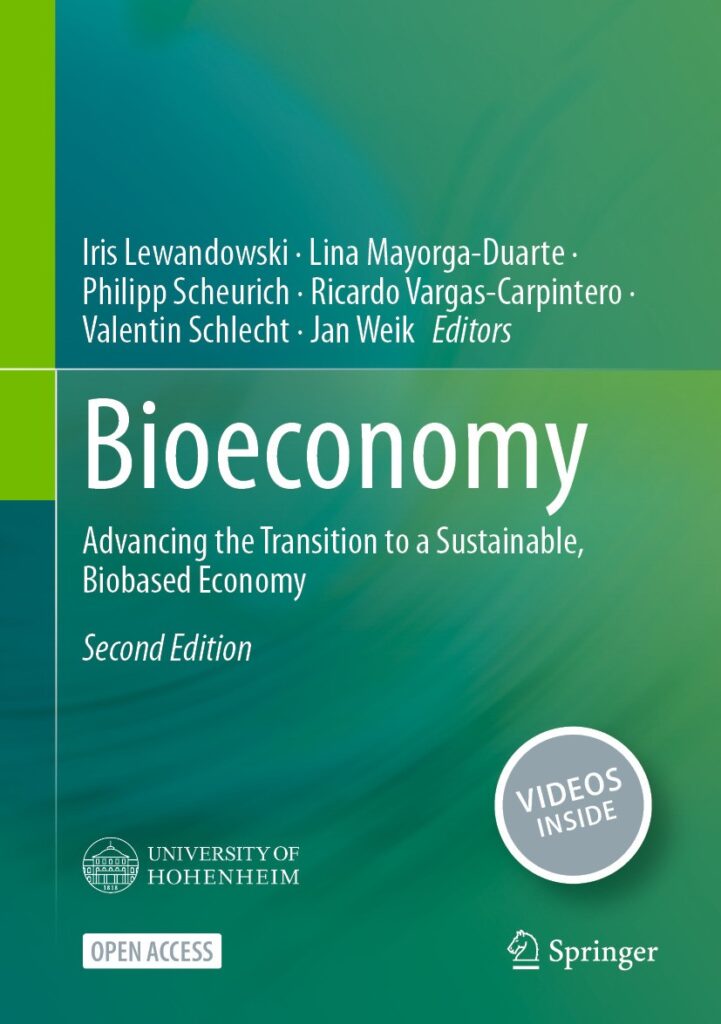
Not rated yetRate this bookBioeconomy examines how biological resources and knowledge can support a sustainable economic transition. This expanded 2026 second edition, edited by Iris Lewandowski and colleagues, connects biomass production and processing with markets, stakeholders, governance and assessment. The guide follows all 43 main chapters, with a separate reading note for the publisher's correction.
Free reading is available at the official source. Opens in a new tab.
 Free
About this book
Bioeconomy examines how biological resources and knowledge can support a sustainable economic transition. This expanded 2026 second edition, edited by Iris Lewandowski and colleagues, connects biomass production and processing with markets, stakeholders, governance and assessment. The guide follows all 43 main chapters, with a separate reading note for the publisher's correction.
How to use this guide
Use the book as an interdisciplinary course rather than a catalogue of replacement materials. Follow one resource or product through the six parts, adding evidence about its production, conversion, markets and governance as you read. Keep separate notes on physical feasibility, economic viability and sustainability. These questions overlap but cannot substitute for one another. Attempt the textbook's chapter questions before checking its answers, and use the accompanying videos where available to review difficult concepts.
Chapter-wise explanations and study tasks
Part I: Bioeconomy Context, Concepts and Principles
Chapter 1: Context
The opening chapter places the bioeconomy within connected pressures on food, climate, ecosystems and finite resources. Biomass can replace some fossil inputs, but increasing demand also puts pressure on land and biological productivity. Read the chapter as a problem definition: technological substitution must be considered alongside the capacity of ecosystems to keep supplying resources. Separate a proposed contribution to sustainability from evidence that a particular project achieves it.
Study task: Map one connection between food demand, land use and climate. Identify where a bio-based intervention might help and where it might create another pressure.
Chapter 2: Bioeconomy Concepts
The meaning of bioeconomy has changed as policy and research priorities have shifted. The chapter traces perspectives emphasizing replacement of fossil resources, biotechnology-led innovation and a greener economic system. These perspectives overlap but do not imply identical priorities. A definition shapes which sectors are included, which innovations receive support and which outcomes count as success. Compare the assumptions behind definitions before treating the term as a single agreed programme.
Study task: Compare a resource-substitution definition with a biotechnology-innovation definition. Explain how each could select different research priorities.
Chapter 3: Guiding Principles of a Bioeconomy
A sustainable bioeconomy requires explicit principles rather than an assumption that renewable inputs are automatically beneficial. The chapter relates present and future wellbeing to planetary limits and the regeneration of ecological functions. Normative choices matter because efficiency, fairness and ecosystem protection may pull decisions in different directions. Translate each broad principle into a question that can guide an actual production decision, then identify what information would be needed to answer it.
Study task: Choose a proposed biomass product and formulate one environmental, one social and one economic condition it should meet.
Chapter 4: Bio-Based Value Chains and Webs
A value chain follows successive activities that turn resources into products, while a value web recognizes branching flows and connections between sectors. This distinction helps explain how a by-product from one process can become an input elsewhere. Trace physical flows separately from financial value: the participant handling the greatest mass does not necessarily capture the greatest return. Evaluating the whole network reveals dependencies and opportunities that a single-factory perspective can miss.
Study task: Draw a biomass value web with one primary product and two secondary uses. Label material transfers and identify who captures value.
Part II: Biomass Production Systems
Chapter 5: Bio-Based Resources
The chapter treats both biomass and biological knowledge as resources. Photosynthesis explains a major route through which solar energy and carbon become biological material, while composition influences possible uses. A tonne of one feedstock cannot automatically substitute for a tonne of another because moisture, constituents and processing requirements differ. Link the origin of a resource with its properties before proposing a conversion route. Knowledge also changes how efficiently existing resources can be used.
Study task: Compare two feedstocks by origin, composition and likely processing need. Explain why equal mass does not imply equal usefulness.
Chapter 6: Agricultural Production
Agriculture supplies food as well as materials and energy feedstocks through crops, livestock and integrated systems. Production decisions connect biological conditions with management choices and the purposes of the harvest. A higher output must be evaluated alongside the inputs and ecological consequences needed to obtain it. The chapter encourages a systems perspective: crop and livestock relationships, land suitability and resource use influence whether a supply strategy is practical and sustainable.
Study task: Sketch an integrated crop–livestock system. Identify one useful exchange between activities and one environmental pressure requiring management.
Chapter 7: Urban Agriculture
Urban agriculture encompasses activities with different scales, aims and participants. Commercial production in controlled environments differs from community or household growing, even when both occur within a city. Distinguish food output from educational, social or other benefits when comparing models. Space constraints, infrastructure and resource requirements affect feasibility. Assess the stated purpose before selecting performance measures, rather than judging every urban growing project solely by the quantity harvested.
Study task: Compare a community garden with an indoor commercial farm. Choose a suitable success indicator for each and explain the difference.
Chapter 8: Forestry
Forests provide materials and energy while also supporting biodiversity, livelihoods, soil protection, water functions and carbon storage. Resource supply therefore cannot be assessed independently of the other services forests perform. Harvesting decisions operate over longer biological timescales than many industrial investment plans. Consider the relationship between management, regeneration and competing uses of wood. The chapter's broader lesson is that a production landscape remains an ecosystem with functions beyond its saleable output.
Study task: List three forest services besides timber production. Explain how a proposed harvesting strategy could affect each.
Chapter 9: Blue Bioeconomy
Aquatic resources include organisms from freshwater and marine environments, supplied through capture fisheries and aquaculture. The distinction between harvesting natural stocks and cultivating organisms matters for management and environmental assessment. Species and production systems differ substantially, so broad claims about aquatic biomass should be examined carefully. Follow the route from organism and habitat through production to food, feed or another use, identifying resource dependencies and ecological constraints along the way.
Study task: Compare a capture-fishery product with an aquaculture product. Identify the different questions needed to assess their supply sustainability.
Chapter 10: Microalgae
Microalgae offer diverse food, feed and biochemical possibilities, but different strains have different compositions and cultivation requirements. The chapter connects organism selection with cultivation and downstream processing. A valuable constituent in laboratory biomass does not alone establish a viable production system: harvesting and recovering that constituent also matter. Compare the entire route from growth conditions to usable product, separating biological potential from the engineering and economic requirements of larger-scale operation.
Study task: Outline a microalgal product pathway. Identify one cultivation decision and one downstream processing step that could affect feasibility.
Chapter 11: Insects
Insects contribute both products and ecosystem services, including roles that cannot be reduced to harvested biomass. The chapter distinguishes collection from the wild, partial domestication and farming, and examines food, feed and other uses. Species, production methods and intended applications must be specified before making comparisons. Insect biorefinery ideas connect multiple outputs, but the choice of feed substrate and the fate of residual material remain important parts of the resource system.
Study task: Map an insect-based production system from substrate to products and residues. State which assumptions would need verification before calling it circular.
Chapter 12: Residual Biomass: Origins, Characteristics, Composition
Residual biomass arises across farms and processing industries, with properties that determine its suitability for further use. Origin, variability and quality affect collection, storage and conversion choices. A residual stream should not be treated as a uniform or unlimited free resource. Some material may already have an important use or ecological function. Matching a stream to a suitable pathway requires both a compositional assessment and an understanding of where and when it becomes available.
Study task: Select one agricultural residue. Identify its origin, possible existing use, quality constraints and a plausible additional application.
Chapter 13: Biogenous Waste Management
Managing biological waste begins before treatment, with decisions about prevention, separation and collection. The chapter discusses food waste and the importance of keeping suitable streams available for appropriate recovery routes. Mixing materials can reduce quality and complicate treatment, so a technical process cannot compensate for every collection problem. Compare options by considering the composition of the incoming stream, the recovered outputs and what remains after processing. Prevention and recovery answer different problems.
Study task: Design a collection plan for household food waste. Explain how contamination would affect the usefulness of the recovered material.
Chapter 14: Bio-Based Fertilizing Products: Closing Nutrient Loops by Recycling
Nutrient recycling reconnects organic waste streams with agricultural production. Nitrogen and phosphorus illustrate why nutrient recovery concerns resource conservation as well as pollution prevention. A recovered product must still be evaluated for its nutrient content, availability and suitability for a particular agricultural application. Closing a loop does not mean that every nutrient is recovered without loss. Track the quantities and forms moving through the system to identify where recovery improves performance.
Study task: Draw a nutrient loop from food production through an organic waste stream back to a field. Mark one likely loss and one quality check.
Chapter 15: Digitalization in Agricultural Production
Digital agriculture connects observation, data processing and management action, including applications of artificial intelligence. The chapter places recent developments within the longer evolution of agricultural technology. A useful tool must inform a decision, not merely collect more data. Ask what is measured, how a recommendation is generated and how its benefit would be evaluated. Differences in access, infrastructure and operating conditions affect whether a technology transfers successfully between farms.
Study task: Describe a crop-management decision that sensor data could support. Specify the measurement, decision and outcome you would compare with existing practice.
Chapter 16: Economics of Primary Production
The cost of providing agricultural or forest resources influences the viability of later bio-based products. Correct unit-cost calculation requires identifying the relevant output and the inputs used to supply it. Compare production alternatives on consistent assumptions and distinguish a physical yield from an economic return. A feedstock that appears inexpensive at its point of origin may incur additional provision costs before use. The chapter connects primary-production choices with the commercial opportunities of downstream activities.
Study task: Prepare a simple feedstock cost table with an explicit output unit. Explain how a change in yield would affect the cost per unit.
Part III: Biomass Processing
Chapter 17: Biomass Use and Biorefineries
Biomass processing depends on intended use and the properties of the incoming material. A biorefinery links conversion and separation steps to obtain a useful combination of outputs. Begin with composition and product requirements, then assess how the process fits them. Multiple products can improve resource use, but they also introduce coordination and market dependencies. The central study skill is following material streams through the system rather than assuming that every possible output has an available buyer.
Study task: Sketch a biorefinery with feedstock, two products and a residual stream. Explain how changing feedstock composition could affect the output mix.
Chapter 18: Biotechnological Conversion
Industrial biotechnology uses living cells or enzymes to transform materials into useful products. The chapter's examples include ethanol fermentation and routes associated with products such as PLA and propanediol. Connect a biological conversion with its substrate, organism or catalyst, required conditions and product-recovery steps. Producing a target molecule is only part of the system: separating it from the process mixture may strongly affect resource requirements. Distinguish a biological mechanism from the overall industrial production route.
Study task: Select a fermentation product. Outline substrate preparation, biological conversion and product recovery, identifying why each stage is needed.
Chapter 19: Thermochemical Conversion
Thermochemical routes address characteristics such as biomass's oxygen content and variable composition. Processing conditions influence whether the desired output is a fuel, chemical intermediate or another material. Different routes should be compared by the properties of their inputs and outputs, rather than being grouped together simply because they use heat. Technical suitability must also connect with practical implementation. Track energy requirements and material changes to understand what the process improves and what additional burdens it introduces.
Study task: Compare two thermochemical routes in terms of intended product and feedstock requirement. Identify a condition that would make one more appropriate.
Chapter 20: Food Processing
Food processing applies physical, biological and chemical understanding to convert raw materials into usable food. Safety, quality and resource efficiency must be considered together. A process may preserve a product, change its functionality or prepare it for subsequent manufacture; those purposes require different performance criteria. The chapter connects scientific and engineering decisions with socioeconomic considerations. Study an operation by asking what property it changes, why that change is desirable and what inputs and losses are involved.
Study task: Choose a food-processing operation. Explain its purpose, the quality property it affects and one potential resource-efficiency improvement.
Chapter 21: Dairy and Meat Analogues
Alternative products aim to reproduce selected characteristics of animal-derived foods using other raw materials, including plant proteins. Appearance, flavor, texture, functionality and nutritional composition are separate design objectives. Success on one dimension does not guarantee success on the others. The chapter links ingredient properties with processing and intended use, while recognizing the motivations behind demand. Evaluate a product against a specified purpose rather than assuming that similarity in appearance establishes nutritional or environmental equivalence.
Study task: Compare an analogue with the product it replaces using separate criteria for texture, nutrition and intended culinary use. State what evidence each comparison needs.
Chapter 22: Transforming Bio-Based Sidestreams and Raw Materials into Food Ingredients
Recovering useful food ingredients from suitable sidestreams links circular resource use with a food-first perspective. The challenge is to connect a stream's composition and quality with an ingredient function and a feasible recovery process. A material does not become appropriate for food simply because it contains useful compounds. Trace quality requirements, handling and processing alongside the proposed benefits. This chapter encourages readers to evaluate residual streams as specific resources rather than as a generic waste category.
Study task: Select a food-industry sidestream. Propose an ingredient function and list the quality and processing questions that must be answered first.
Chapter 23: Extraction of Fibres for Non-food Applications
Plant fibres differ according to their biological source and how they are extracted. The chapter distinguishes fibre categories and connects extraction methods with the properties of the resulting material. A process that separates fibres also affects their suitability for a later application. Hydrothermal processing and steam explosion illustrate the relationship between treatment and material characteristics. Compare the required performance of the final product with the properties that a particular feedstock and process can actually deliver.
Study task: Choose a non-food fibre application. Explain which fibre properties it requires and how extraction could influence those properties.
Chapter 24: Bioenergy: Energy Derived from Biomass
Bioenergy includes multiple conversion pathways, from combustion and gasification to fermentation and anaerobic digestion. Feedstock characteristics and the desired energy carrier determine which pathways are suitable. Heat, electricity and transport fuels are different outputs with different system requirements. A useful comparison follows the entire chain and identifies what form of energy is delivered. Consider how material uses and nutrient recovery interact with energy production rather than assuming energy is always the best destination for biomass.
Study task: Match three contrasting biomass streams with plausible energy pathways. Explain each match using feedstock properties and the desired output.
Chapter 25: Digitalization in Processing
Data analysis and artificial intelligence can support process control, quality management and reductions in production losses. Their value depends on a clearly defined operational problem and reliable observations. Connect the model's output with an action that a process operator can take, then identify an outcome that would show improvement. A prediction that performs well on one dataset may still require assessment in an operating environment. Digital performance should ultimately be connected with product quality and resource use.
Study task: Design a processing use case for a predictive model. Specify the input data, operational decision and measure of improvement.
Chapter 26: Process and Product Cost Assessment
Cost assessment connects process design with investment decisions. Material and energy balances influence manufacturing costs, while investment requirements and expected revenues shape commercial feasibility. The chapter also recognizes location, technical conditions and market circumstances as relevant factors beyond a single profitability figure. Early estimates should make their assumptions visible rather than implying unwarranted certainty. Compare alternatives on consistent boundaries and test how sensitive the result is to uncertain quantities.
Study task: Prepare an illustrative production-cost estimate with labeled assumptions. Identify which input price or operating parameter most needs sensitivity analysis.
Part IV: Markets and Economics
Chapter 27: Markets of Bio-based Resources and Products
Bio-based resource markets interact with agricultural and food markets. Increased demand can influence prices and quantities, with effects extending beyond the buyer of the new product. Supply and demand constraints therefore matter when evaluating plans to expand a bio-based industry. Distinguish a firm's purchasing decision from its wider market consequences. The chapter encourages readers to connect product-market opportunities with the resource system that must support them.
Study task: Sketch how additional demand for a crop-based industrial feedstock might affect its market. Identify one affected group outside the new industry.
Chapter 28: Economics for a Sustainable Bioeconomy—Theory and Policies
Scarce resources must be allocated among competing uses, making economic reasoning central to a sustainable transition. The chapter connects analytical tools with environmental, social and economic objectives. Market outcomes need to be examined alongside costs or benefits that are not fully reflected in prices. Policy instruments address particular problems and should be assessed against clear objectives. Avoid assuming that an economically attractive project necessarily delivers the best outcome for society.
Study task: Define a resource-allocation problem involving biomass. Identify a consequence that its market price may fail to capture and a policy question it raises.
Part V: Stakeholders of the Bioeconomy
Chapter 29: Governance of the Bioeconomy
Governance concerns how decisions are coordinated among public institutions, private organizations and other societal actors. Bioeconomy strategies are one instrument within that wider arrangement, rather than a guarantee of implementation. Map who sets priorities, who carries out activities and who can hold decision-makers accountable. The relationship between strategy formation and biodiversity governance highlights that resource transitions involve political choices as well as technical capacity.
Study task: Map the actors involved in a regional bioeconomy strategy. Identify one coordination gap and one accountability mechanism.
Chapter 30: The Role of Farmers and Farmer Associations
Farmers respond to changing markets, regulation, quality expectations and environmental responsibilities. Their role goes beyond supplying a low-cost input: they must make development decisions within uncertain conditions and practical constraints. Associations can influence how interests are represented and how farmers participate in wider value chains. Consider how benefits, risks and decision-making power are distributed between producers and downstream partners before assessing a proposed business relationship.
Study task: List the risks a farmer might face when supplying a new biomass processor. Suggest questions an association should ask during contract discussions.
Chapter 31: Sustainability Management at Farm Level
Farm sustainability begins with sound agricultural practice and can be supported by structured assessment. Life-cycle and criteria-based tools help identify hotspots and improvement options, while certification can support documentation and communication. The tool should fit the management question. A label alone does not explain which impacts were measured, how the assessment boundary was drawn or where improvement remains possible. Connect indicators to specific decisions and revisit them after management changes.
Study task: Choose a farm-level sustainability concern. Select a suitable indicator, propose a management response and explain how progress would be checked.
Chapter 32: Fostering Innovation Systems for the Transition to a Bioeconomy
Innovation develops through relationships among firms, consumers and institutions, not through isolated inventions alone. The chapter applies an evolutionary economic perspective to knowledge creation and diffusion, including the difficulty of moving away from established fossil-based systems. Existing infrastructure and practices can reinforce one another, creating barriers for alternatives. Study the surrounding system of learning, investment and demand when judging why a promising technology does or does not spread.
Study task: Identify a barrier to adopting a new bio-based process. Explain which actors would need to coordinate to overcome it.
Chapter 33: Inclusive Innovation in the Bioeconomy
Technological progress raises questions about who benefits, who controls resources and who bears risks. This chapter places economic and environmental justice alongside efficiency. Participation is meaningful only when affected groups can influence decisions rather than merely receive information after priorities are fixed. Examine access to knowledge, ownership arrangements and the distribution of gains. A project can be technically successful while leaving existing inequalities unaddressed or making them worse.
Study task: Name an affected group that might be excluded from an innovation project. Propose a way for that group to influence the project's direction.
Chapter 34: Entrepreneurial Ventures and the Bioeconomy
Entrepreneurs turn perceived opportunities into ventures that may contribute to the transition. Opportunity recognition must connect a societal need with a workable product, customer and delivery arrangement. A compelling environmental goal does not remove practical questions about demand, partners or resources. Study the venture as an evolving attempt to test assumptions. Distinguish the proposed value for customers from the broader contribution claimed for the bioeconomy.
Study task: Draft a venture proposition for a bio-based product. Identify the intended customer and the first assumption you would test before expanding.
Chapter 35: Sustainability Management at Corporate Level
Companies pursue sustainability for regulatory, social and commercial reasons, but effective management requires evidence and operational responsibility. Life-cycle assessment and greenhouse-gas accounting can connect corporate claims with impacts along a value chain. Define the reporting boundary and distinguish improvements within a factory from changes elsewhere in its supply system. The chapter supports a critical reading of business claims: ask what was measured, which comparison was used and what decisions followed.
Study task: Choose a corporate sustainability claim. List the boundary, baseline and data needed to evaluate it.
Chapter 36: Consumers in the Bioeconomy
Demand is shaped by consumer behavior and the retail settings in which purchases take place. The chapter examines influences on choices, ways of studying them and approaches to managing demand. Stated preferences and actual purchases are different forms of evidence. Retailers influence which products are available and how alternatives are presented, so consumer behavior should not be explained only through individual attitudes. Connect a research method with the specific question it can answer.
Study task: Design a small study comparing stated interest in a bio-based product with purchase behavior. Identify one influence at the point of sale.
Chapter 37: Inter- and Transdisciplinary Research in Bioeconomy
Bioeconomy problems combine scientific, economic and societal dimensions that no single discipline can fully resolve. Interdisciplinary work connects academic perspectives; transdisciplinary work also involves practical knowledge and actors outside academia. Collaboration requires a shared problem definition and attention to differences in language, assumptions and objectives. Evaluate not only which experts participate but also how their knowledge influences decisions throughout the research process.
Study task: Plan a research team for a regional biomass problem. Explain the distinct contributions of two disciplines and one non-academic participant.
Chapter 38: The Bioeconomist
The bioeconomy professional is presented as an integrator who connects knowledge, actors and levels of decision-making. This role requires more than familiarity with a single production technology. Communication, systems understanding and the capacity to work across perspectives support the transition. Reflect on the difference between being knowledgeable in one area and helping others connect their expertise. Identify skills through concrete tasks rather than relying on broad claims about interdisciplinarity.
Study task: Create a skills plan for coordinating a bioeconomy project. Link each chosen skill to a specific action or decision.
Part VI: Guiding the Bioeconomy Transition
Chapter 39: Conditions for a Responsible Bioeconomy
The promise of a bioeconomy carries ethical demands that cannot be resolved through the name alone. Different values attached to nature require attention, and biological resource use must be placed within a broader account of responsibility. Examine the assumptions behind a proposed transition: whose wellbeing counts, what limits apply and what forms of value may be lost. Ethical evaluation complements technical assessment by questioning the goals themselves.
Study task: State an ethical condition for approving a biomass project. Explain how that condition could alter a technically feasible proposal.
Chapter 40: Exploring the Biodiversity–Bioeconomy Nexus
The bioeconomy depends on biodiversity while its production activities can also contribute to biodiversity pressures. The chapter introduces ways of describing biodiversity and connects ecological change with ecosystem services and direct drivers of loss. A resource substitution may improve one indicator while harming habitats or species elsewhere. Specify the location and ecological context of an assessment rather than treating biodiversity as a single interchangeable quantity.
Study task: Trace one dependence of a bio-based product on biodiversity and one possible pressure it creates. Identify the spatial information needed to assess both.
Chapter 41: Sustainability Assessment
Assessment makes the sustainability principle testable through methods suited to products, services, organizations or systems. The choice of boundary, indicators and comparison influences the conclusions. Environmental performance must be considered alongside social and economic dimensions, with trade-offs made explicit. An assessment result should be interpreted in light of data quality and assumptions. The purpose is to support decisions, not simply to produce a single score that hides important differences.
Study task: Define a comparison between a bio-based and conventional product. Specify a common function, relevant boundaries and at least three indicators.
Chapter 42: Modelling to Support the Bioeconomy Transition
Models organize assumptions about system behavior to support decisions under complexity. Different tools answer different questions, and results depend on the way relationships, data and scenarios are represented. Distinguish a conditional projection from a prediction of what must happen. Exploring alternative assumptions can reveal which conclusions are robust and which need further investigation. Connect model outputs with the policy or management decision they are intended to inform.
Study task: Formulate a scenario question about biomass demand. Identify two uncertain assumptions and explain how changing them might alter the result.
Chapter 43: Bioeconomy Monitoring
Monitoring tracks progress toward strategic objectives through a continuing system of data collection, analysis and reporting. It differs from a one-time assessment because indicators must remain usable across time, sectors and relevant geographical scales. The chapter connects conceptual design with implementation and communication. Choose indicators that represent the intended objectives and can reveal trade-offs, rather than collecting only what is convenient. Explain the limitations of the evidence alongside reported trends.
Study task: Design a monitoring dashboard with one environmental, one economic and one social indicator. State the reporting scale, data source and update frequency.
Correction notice
The publisher lists a separate Correction to: Bioeconomy. Check that notice when consulting the edition, especially before using figures or other material in academic work. It is supplementary to the 43 main chapters and is not treated here as another teaching chapter.
Six-stage reading plan
- Define the problem: Read Chapters 1–4 and write a definition that states the transition's intended objectives and limits.
- Understand supply: Read Chapters 5–16. Compare two resource systems using consistent questions about composition, availability, ecological functions and cost.
- Follow conversion: Read Chapters 17–26. Produce a process map with inputs, products, losses and the major technical and economic assumptions.
- Test the market: Read Chapters 27–28. Consider resource competition, price effects and consequences beyond the proposed producer.
- Map participation: Read Chapters 29–38. Identify decision-makers, affected groups, missing knowledge and opportunities to share benefits.
- Evaluate progress: Read Chapters 39–43. Combine ethical conditions, biodiversity questions, assessment boundaries, scenarios and monitoring indicators in one final appraisal.
Integrative assignment
Select a proposed bio-based product and compare it with a conventional alternative delivering the same function. Document its feedstock, processing route, users and end-of-use pathway. Identify a potential resource conflict, an affected stakeholder and a biodiversity concern. Explain the economic assumptions behind its adoption, then propose a small set of sustainability indicators. Conclude with a conditional judgement: what evidence would justify proceeding, and what finding would require redesign? Do not assign invented numerical benefits when reliable data are unavailable.
Questions for critical reading
- When does substituting a fossil input shift an environmental burden rather than reduce it?
- How does a value web change the way benefits and responsibilities should be allocated?
- What evidence distinguishes a circular material flow from a sustainable production system?
- Which stakeholders can influence a transition, and which may be affected without having that influence?
- How should a decision change when economic, social and ecological indicators point in different directions?
Edition and source coverage
This original study companion follows the publisher's chapter sequence and chapter descriptions for Bioeconomy: Advancing the Transition to a Sustainable, Biobased Economy, second edition, Springer, 2026, edited by Iris Lewandowski, Lina Mayorga-Duarte, Philipp Scheurich and colleagues. Sources are the official book record and linked open-access chapters, including the contents on its second and third catalogue pages. The explanations and tasks support conceptual study; they do not reproduce the chapter answers or claim to summarize every case study, equation or dataset in the 803-page volume. Consult each full chapter for its detailed evidence, methods and references.
About access & copyright
This page provides book information and study material. Full-text access is provided by the original publisher or authorised source; a listing does not grant permission to republish the book.
Read our Library Access & Copyright policyExplore the contents
Check the chapters covered in this edition.
Visit the official source
See reading, preview or purchase options.
Save for later
Keep this textbook in your saved collection.
Reader ratings & reviews
Share your thoughts
Your review helps other students choose the right resources.
KEEP LEARNING
Your next great read
Coronavirus
 Agents
No Prices No Games! Four Economic Models
View No Prices No Games! Four Economic Models — book Collective choice
Models in Political Economy: Collective Choice, Voting, Elections, Bargaining, and Rebellion
View Models in Political Economy: Collective Choice, Voting, Elections, Bargaining, and Rebellion — book axiomatic analysis of economic systems
Models in Microeconomic Theory: Expanded Second Edition (She)
View Models in Microeconomic Theory: Expanded Second Edition (She) — book axiomatic analysis of economic systems
Models in Microeconomic Theory: Expanded Second Edition (He)
View Models in Microeconomic Theory: Expanded Second Edition (He) — book Associative Rings and Algebras
Quaternion Algebras
View Quaternion Algebras — book Body-mind-spirit
Health Promotion in Health Care – Vital Theories and Research
View Health Promotion in Health Care – Vital Theories and Research — book charged particle motion in Earth’s magnetosphere
Physics of Earth’s Radiation Belts
View Physics of Earth’s Radiation Belts — book burns
Textbook on Scar Management
View Textbook on Scar Management — book Diseases and disorders



