
 Nursing
Body-mind-spiritTextbook
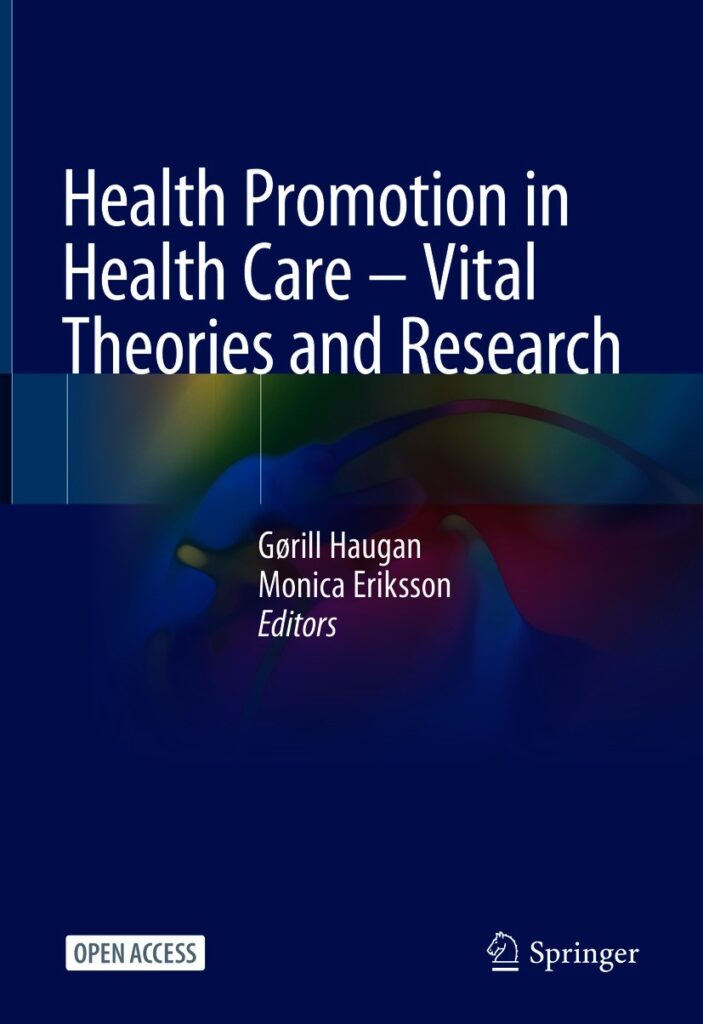
Health Promotion in Health Care – Vital Theories and Research
Not rated yetRate this bookHealth Promotion in Health Care – Vital Theories and Research connects health-promoting theory with care relationships and research in clinical settings. This chapter-wise companion follows the volume’s 26 contributions, emphasizing salutogenic resources, meaning, wellbeing and the interpretation of evidence. Use it to compare conceptual frameworks and develop research questions grounded in patients’ experiences.
Free reading is available at the official source. Opens in a new tab.
 Free
About this book
Health Promotion in Health Care – Vital Theories and Research connects health-promoting theory with care relationships and research in clinical settings. This chapter-wise companion follows the volume’s 26 contributions, emphasizing salutogenic resources, meaning, wellbeing and the interpretation of evidence. Use it to compare conceptual frameworks and develop research questions grounded in patients’ experiences.
How to study this book
Distinguish a health-promotion construct from its measurement and from an intervention intended to influence it. Keep a matrix of setting, population, theory, study design and limits. Use the tasks for academic reflection and care-design discussion, checking contemporary evidence before operational clinical decisions.
Chapter-wise study guide
Chapter 1: An Introduction to the Health Promotion Perspective in the Health Care Services
The opening chapter places health promotion inside health-care services rather than limiting it to disease prevention outside clinical settings. Illness and resources for wellbeing can coexist. A salutogenic perspective asks what supports coping, meaning and participation alongside assessment of symptoms and pathology. Examine how service relationships and environments affect those resources, rather than assigning responsibility solely to an individual's behavior.
Study task: Compare a symptom-focused question with a resource-focused question in the same illustrative care encounter.
Chapter 2: The Overarching Concept of Salutogenesis in the Context of Health Care
Salutogenesis asks how health is created and maintained across changing circumstances. The chapter connects this orientation with health promotion while distinguishing it from the study of disease mechanisms. The approaches can complement one another. Identify resources, stressors and the person's interpretation of their situation; avoid treating a strengths focus as a reason to overlook illness or unmet care needs.
Study task: Draw a model linking a stressor, a resistance resource and an individual's experience of manageability.
Chapter 3: The Ethics of Health Promotion: From Public Health to Health Care
Health promotion creates ethical questions about influence, autonomy and the aims of care. The chapter moves from public-health dilemmas to clinical relationships and emphasizes empowerment as a possible foundation. An intervention intended to help may still override a person's priorities. Separate the desired outcome from the legitimacy of the process used to pursue it.
Study task: Analyze an illustrative health-promotion proposal for consent, influence and opportunities for patient choice.
Chapter 4: Sense of Coherence
Sense of coherence concerns whether life is experienced as comprehensible, manageable and meaningful. It is a global orientation rather than a guarantee that stressors disappear. The chapter connects this concept with identifying and mobilizing resources. Distinguish the three components when interpreting a situation, and avoid assuming that an observed association establishes a simple causal intervention.
Study task: Create an example showing how the same care situation might be understandable yet feel unmanageable.
Chapter 5: A Salutogenic Mental Health Model: Flourishing as a Metaphor for Good Mental Health
The flourishing model treats mental health through feelings and psychological and social functioning. Good mental health is not simply the absence of a diagnosis. The chapter discusses a salutogenic model and measurement, including the Mental Health Continuum–Short Form. Match a measure with its conceptual purpose and distinguish subjective wellbeing from clinical symptom assessment.
Study task: Compare a wellbeing indicator with a symptom indicator and explain why both may be informative.
Chapter 6: Hope: A Health Promotion Resource
Hope is presented as a future-oriented resource involving feelings, thinking and behavior. Its relevance is especially clear when people live with continuing health challenges. Hope should not be equated with unsupported reassurance or a promise of cure. Examine what a person hopes for and how goals may change while remaining meaningful.
Study task: Describe a supportive response that recognizes uncertainty while preserving a person's own meaningful goals.
Chapter 7: Dignity: An Essential Foundation for Promoting Health and Well-Being
Dignity is explored through caring-science perspectives and its relationship with suffering and wellbeing. Respect is expressed in interactions and institutional practices, not only in abstract declarations. A person's identity, privacy and experience of being valued may be affected by routine care. Distinguish a universal claim to dignity from differences in how people experience respectful treatment.
Study task: Audit an illustrative routine procedure for privacy, recognition and opportunities to express preferences.
Chapter 8: Meaning-in-Life: A Vital Salutogenic Resource for Health
Meaning-making can support health during disruption, loss or chronic illness. The chapter connects meaning in life with salutogenic resources without assuming that everyone finds meaning in the same beliefs or activities. A practitioner should not impose an interpretation of suffering. Explore how values, relationships and purposes influence the person's account, while distinguishing theoretical claims from empirical associations.
Study task: Identify questions that invite a person's meaning-making without suggesting what the answer should be.
Chapter 9: Self-Transcendence: A Salutogenic Process for Well-Being
Self-transcendence concerns an expansion of perspective and connectedness relevant to wellbeing. The chapter examines theory, empirical support and practical relevance across health situations. It overlaps with other wellbeing concepts but should not be used as a vague substitute for them. Specify how a study defines and measures it before interpreting a reported relationship.
Study task: Compare self-transcendence with social support, identifying both an overlap and a conceptual difference.
Chapter 10: Nurse-Patient Interaction: A Vital Salutogenic Resource in Nursing Home Care
The nursing-home discussion connects nurse–patient interaction with residents' resources and wellbeing. Communication and recognition matter within a setting where people may depend heavily on others. A salutogenic view complements attention to disease and functional limitations. Examine the quality of the relationship, the resident's own perspective and organizational conditions that support meaningful contact.
Study task: Propose an observation framework for whether an interaction supports recognition and participation.
Chapter 11: Social Support
Social support includes emotional connection, belonging, practical help and information. The presence of people in a network does not alone establish that useful support is available or experienced. Distinguish the type of support needed from what is offered, and consider loneliness separately from simple network size. The chapter connects these distinctions with coping and quality of life.
Study task: Map an illustrative support network by function rather than merely listing its members.
Chapter 12: Self-Efficacy in a Nursing Context
Self-efficacy concerns belief in one's capacity to perform a particular action. It is not identical to general optimism, competence or access to resources. The chapter reviews its theoretical development and nursing applications. Identify the task and context when interpreting a measure, and consider how feedback, achievable experience and support interact with confidence.
Study task: Formulate a task-specific self-efficacy question and distinguish it from a question about intention.
Chapter 13: Empowerment and Health Promotion in Hospitals
Empowerment is examined as a concept, a process and an outcome in hospital care. Participation requires more than providing instructions: it involves the person's capacity to influence decisions and use resources. The chapter discusses empowerment-based supervision and related principles. Evaluate the interaction and institutional conditions rather than assuming that education automatically transfers power.
Study task: Describe evidence that would distinguish patient information-giving from meaningful shared influence.
Chapter 14: Health Promotion Among Families Having a Newborn Baby
The transition to parenthood can involve stress, changing roles and reduced confidence. The chapter applies a salutogenic perspective to support families' resources and participation in maternity care. Medical needs and a positive wellbeing focus should be considered together. Ask how services can include parents' knowledge and priorities without imposing one model of a successful family transition.
Study task: Map resources and stressors for an illustrative new-parent family, including service-related factors.
Chapter 15: Salutogenic-Oriented Mental Health Nursing: Strengthening Mental Health Among Adults with Mental Illness
Mental health promotion remains relevant when an adult has mental illness. This chapter considers nursing history and a salutogenic orientation to feelings, functioning and personal resources. Avoid equating recovery-related aims with the elimination of all symptoms. Consider how care can support agency and meaningful life while addressing clinical needs, and distinguish the person's perspective from professional assumptions.
Study task: Compare a symptom-reduction goal with a person-defined wellbeing goal and explain their possible relationship.
Chapter 16: Health Promotion Among Individuals Facing Chronic Illness: The Unique Contribution of the Bodyknowledging Program
The Bodyknowledging approach examines how people living with chronic illness develop knowledge and resources for health. The chapter describes the theory and its associated programme, with reported outcomes and implications. Treat experiential knowledge as meaningful without assuming it replaces clinical assessment. When evaluating the programme, inspect its context, participants and outcome measures before generalizing.
Study task: Identify what evidence would be needed to assess a resource-oriented programme in a new care setting.
Chapter 17: Health Promotion Among Cancer Patients: Innovative Interventions
Cancer-related health promotion extends across diagnosis, treatment, survivorship and other care phases. The chapter discusses interventions addressing both physiological and psychological consequences. A preventive message and support after diagnosis serve different purposes. Distinguish an intervention's intended mechanism from evidence of benefit, and interpret results in the particular population and phase studied.
Study task: Compare two cancer-care phases and identify how an appropriate health-promotion outcome might differ.
Chapter 18: Health Promotion Among Long-Term ICU Patients and Their Families
Long-term intensive care creates profound dependence and challenges to communication and participation. The chapter examines human connectedness and the nurse's relationship with patients and families alongside clinical care. Reduced physical capacity should not be interpreted as absence of preferences or meaning. Review how an intervention is adapted to the person's condition and how wellbeing is assessed.
Study task: Describe ways to preserve recognition and participation when ordinary verbal communication is limited.
Chapter 19: Health Promotion and Self-Management Among Patients with Chronic Heart Failure
Heart-failure self-management requires skills, understanding and support within the constraints of a complex condition. The chapter reviews educational strategies and the evidence for supporting self-care. Knowledge alone may not translate into action when symptoms, resources or daily circumstances create barriers. Distinguish a behavioral outcome from a clinical outcome and examine whether both were actually measured.
Study task: Map the steps between receiving education and carrying out a self-management action, identifying a possible barrier at each stage.
Chapter 20: Older Adults in Hospitals: Health Promotion When Hospitalized
Older hospitalized adults may experience interacting physical, cognitive and emotional vulnerabilities. A health-promoting approach looks for resources and participation without assuming all older patients have the same needs. The chapter encourages attention to the effects of hospitalization itself. Compare individual preferences with ward routines and examine how outcomes reflect more than the treatment of the admitting illness.
Study task: Identify one hospital routine that could support or undermine an older person's agency.
Chapter 21: Sociocultural Aspects of Health Promotion in Palliative Care in Uganda
The Uganda chapter places palliative care and health promotion in a sociocultural and service context. Understanding community relationships and structural conditions is essential before transferring an intervention from another country. Distinguish contextual description from universal claims about a population. Evaluate how policy support, access and local meanings influence feasible care and the resources people can mobilize.
Study task: List contextual questions to answer before adapting a palliative health-promotion intervention across settings.
Chapter 22: Health Promotion Among Home-Dwelling Elderly Individuals in Turkey
The Turkish home-care discussion examines older adults' family relationships and the support needs of caregivers. Family participation can be a resource while also creating uneven burdens. Avoid treating a described cultural pattern as a fixed characteristic of every household. Consider preferences, available support and the wellbeing of both the older person and those providing care.
Study task: Map the support needs of the care recipient and caregiver separately, then identify their overlap.
Chapter 23: SHAPE: A Healthy Aging Community Project Designed Based on the Salutogenic Theory
SHAPE presents a community healthy-aging project informed by salutogenesis. Older people are considered holders of knowledge and resources rather than defined only by deficits. Examine the link between the programme's theory, activities and intended outcomes. A positive account of participation should still be assessed against implementation evidence and the experiences of people who did not participate.
Study task: Construct a theory-of-change diagram linking an activity, a salutogenic resource and a proposed outcome.
Chapter 24: Health Promotion in the Community Via an Intergenerational Platform: Intergenerational e-Health Literacy Program (I-HeLP)
The intergenerational e-health literacy programme connects community participation with navigating digital health information. Access to a device, confidence and the ability to appraise information are different capabilities. Consider how learning relationships benefit participants and what support is needed after the programme. Evaluate literacy outcomes separately from assumptions about improved health.
Study task: Design an appraisal task that tests understanding of online health information rather than only device operation.
Chapter 25: Coping and Health Promotion in Persons with Dementia
Health promotion for people living with dementia includes coping, relationships and opportunities for meaningful life. The chapter examines strategies and resources in the context of changing abilities. Keep dignity and the person's perspective central, avoiding the assumption that a diagnosis removes agency. Read treatment statements in the 2021 source as historical context rather than a current therapeutic review.
Study task: Describe how an activity could be adapted to support participation while respecting a person's preferences.
Chapter 26: Future Perspectives of Health Care: Closing Remarks
The concluding chapter reflects on health promotion and the vulnerability of care systems highlighted around 2020. It returns to enabling people and communities to influence health through resources and supportive relationships. Treat pandemic observations in their historical context. The synthesis encourages readers to connect theory, empirical research and service organization rather than reduce health promotion to a single technique.
Study task: Identify one service-level change that could support several of the book's salutogenic resources together.
Suggested reading plan
- Read the opening theoretical chapters and compare their definitions of health and wellbeing.
- Group the care-related chapters by population and setting, noting how context changes the questions.
- Compare research designs and measures before combining conclusions across chapters.
- Develop a small health-promotion research proposal with outcomes, ethical considerations and a plan for evaluation.
Questions for reflection
- How does a resource-oriented perspective change the questions asked about care?
- Which concepts overlap, and which require distinct measures?
- What evidence supports a proposed mechanism rather than only an association?
- How can patients’ own priorities shape evaluation?
Edition and source notes
This original study companion follows the 2021 source edition and its verified chapter sequence. It draws on publisher records, chapter descriptions or abstracts and accessible learning material. It is a conceptual reading guide rather than a reproduction of the source or a claim to have independently checked every proof, dataset or empirical finding. Study tasks are original prompts, not the book’s assigned exercises.
About access & copyright
This page provides book information and study material. Full-text access is provided by the original publisher or authorised source; a listing does not grant permission to republish the book.
Read our Library Access & Copyright policyExplore the contents
Check the chapters covered in this edition.
Visit the official source
See reading, preview or purchase options.
Save for later
Keep this textbook in your saved collection.
Reader ratings & reviews
Share your thoughts
Your review helps other students choose the right resources.
KEEP LEARNING
Your next great read
Nursing Nursing
Medical-Surgical Nursing
View Medical-Surgical Nursing — book Nursing
Community and Public Health Nursing: A Call to Action
View Community and Public Health Nursing: A Call to Action — book Nursing
Strategies for Success in Nursing School From Start to Finish
View Strategies for Success in Nursing School From Start to Finish — book Nursing
 Advanced Skills
View Nursing Advanced Skills — book Nursing
The Complete Subjective Health Assessment
View The Complete Subjective Health Assessment — book Nursing
Interpreting Canada's 2019 Food Guide and Food Labelling for Health Professionals
View Interpreting Canada's 2019 Food Guide and Food Labelling for Health Professionals — book Nursing
Vaccine Practice for Health Professionals
View Vaccine Practice for Health Professionals — book Nursing
Leadership and Influencing Change in Nursing
View Leadership and Influencing Change in Nursing — book Nursing



