
 Math
MathTextbook
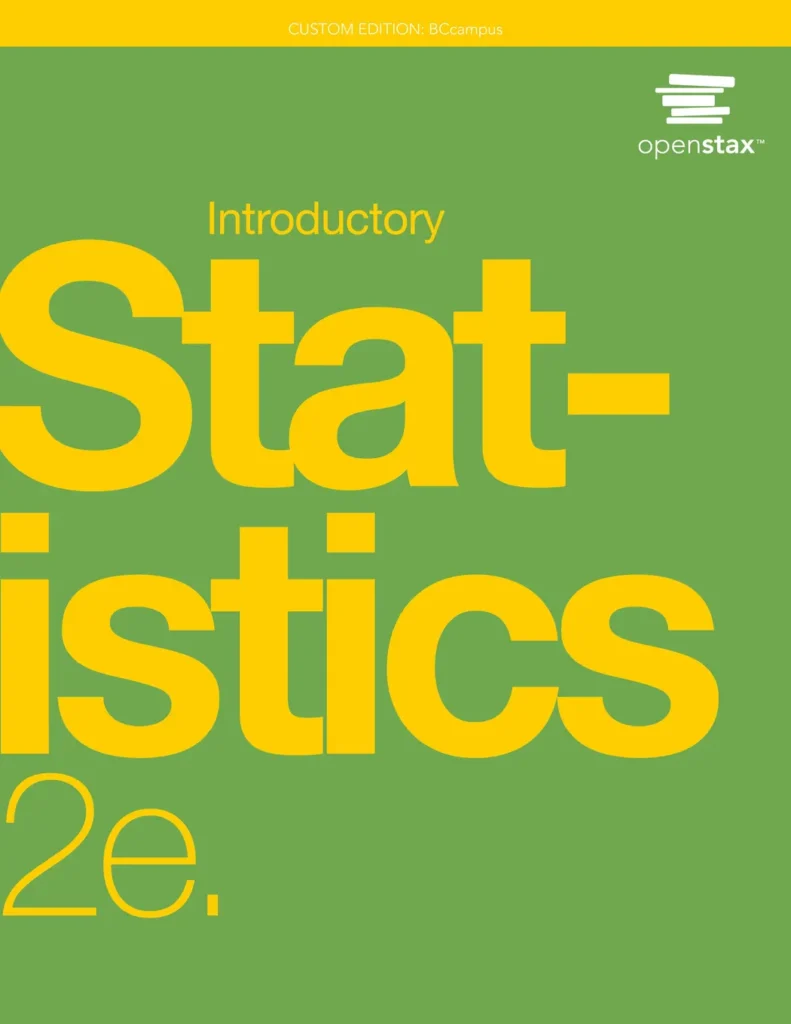
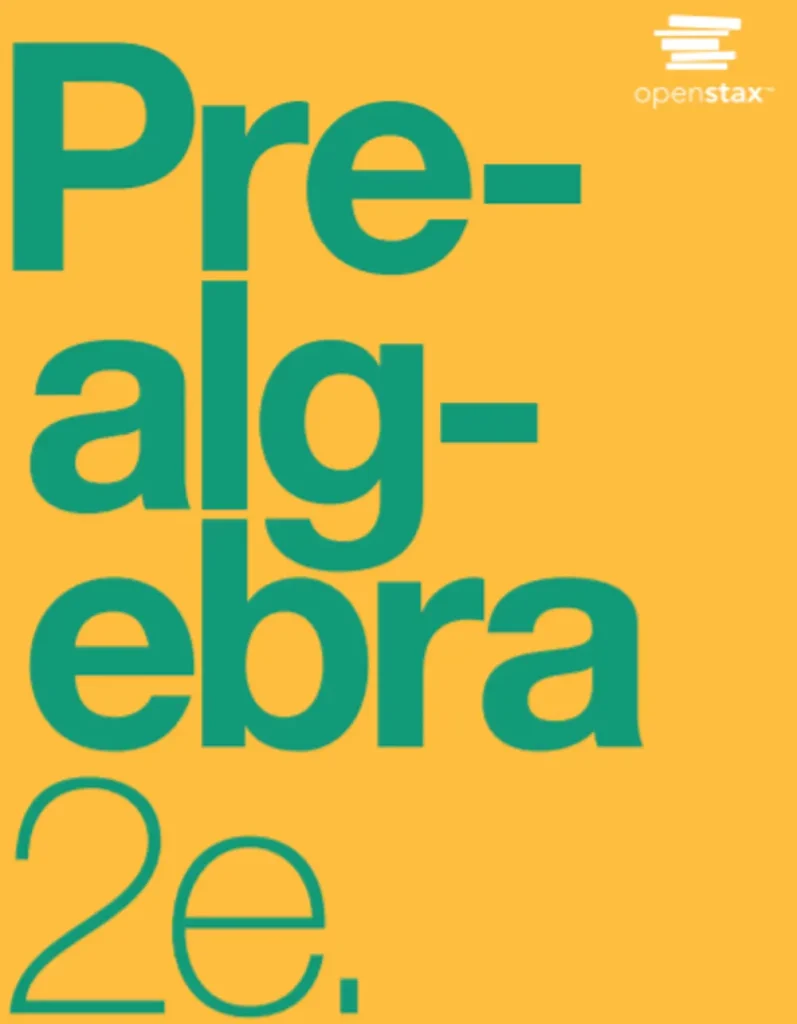
Prealgebra 2e
Not rated yetRate this bookPrealgebra 2e builds a route from everyday arithmetic to introductory algebra. Lynn Marecek, MaryAnne Anthony-Smith, and Andrea Honeycutt Mathis develop whole-number operations, signed numbers, fractions, decimals, percentages, equations, geometry, polynomials, and graphs across eleven chapters. The emphasis is on explaining a method, practising it in small steps, and checking whether an answer fits the original situation. This guide follows the second edition and connects each chapter to the skills needed in the next one.
Free reading is available at the official source. Opens in a new tab.
 Free
About this book
Prealgebra 2e builds a route from everyday arithmetic to introductory algebra. Lynn Marecek, MaryAnne Anthony-Smith, and Andrea Honeycutt Mathis develop whole-number operations, signed numbers, fractions, decimals, percentages, equations, geometry, polynomials, and graphs across eleven chapters. The emphasis is on explaining a method, practising it in small steps, and checking whether an answer fits the original situation. This guide follows the second edition and connects each chapter to the skills needed in the next one.
Chapter-wise summaries and reading tasks
Chapter 1 Whole Numbers
Whole numbers provide the place-value system on which later calculations depend. The chapter moves through reading and writing numbers, comparing values, rounding, and the four basic operations. Written algorithms are connected to the meaning of grouping and sharing, so a correct result can be explained rather than merely produced. Estimation gives an independent check on arithmetic, especially when carrying, borrowing, or inserting zeros. Division also introduces the need to interpret a remainder in context: a remainder in a sharing problem may mean a fraction, an unused quantity, or one additional container. Mastering these decisions prepares the reader for algebraic expressions and rational numbers.
Study task. Solve one addition, subtraction, multiplication, and division problem by hand. Estimate each result first, then use the inverse operation to check it.
Chapter 2 The Language of Algebra
Algebra introduces symbols that stand for numbers and a precise vocabulary for describing calculations. Expressions name quantities; equations assert that two quantities are equal. The chapter develops order of operations, substitution, and translation from words into symbols before using addition and subtraction to preserve equality while solving equations. Its work on factors, multiples, divisibility, and prime factorization provides the machinery later needed for equivalent fractions and common denominators. A useful distinction is between evaluating an expression for a known variable value and solving an equation to discover an unknown one. Keeping those purposes separate makes unfamiliar notation much easier to interpret.
Study task. Translate three verbal statements into expressions and three into equations. For one pair of numbers, find both the greatest common factor and least common multiple and explain the difference.
Chapter 3 Integers
Integers extend counting to values below zero and give meaning to changes in temperature, elevation, and financial balance. A number line helps distinguish a number’s position from its distance from zero. Addition can be understood as combining signed changes, while subtraction asks for a difference or adds the opposite. Multiplication and division follow consistent sign rules, but those rules should be linked to patterns and inverse operations rather than memorized in isolation. The chapter also solves equations using integer arithmetic and division. Parentheses are especially important: a negative sign attached to a number and a subtraction symbol can play different roles within the same calculation.
Study task. Represent two signed calculations on a number line, then solve an equation with a negative coefficient. Substitute the solution into the original equation.
Chapter 4 Fractions
Fractions describe equal parts of a whole and ratios between quantities. The denominator defines the unit being counted, which explains why addition requires matching denominators while multiplication does not. Equivalent fractions and simplification preserve value even when the written form changes. The chapter applies these ideas to products, quotients, mixed numbers, and complex fractions, and then to equations containing fractional quantities. Converting a mixed number to an improper fraction can simplify multiplication, whereas estimating with familiar benchmark fractions helps identify implausible answers. A fraction bar also groups the entire numerator and denominator, so expressions must be simplified with attention to that structure.
Study task. Explain why one-half plus one-third cannot be combined by adding both numerators and denominators. Solve one mixed-number calculation and one equation with fractions, showing every equivalent form.
Chapter 5 Decimals
Decimals express fractional quantities through powers of ten and connect numerical work to money and measurement. Place value explains alignment in addition and subtraction and the positioning of the decimal point in multiplication and division. Conversions between fractions and decimals reveal that the same quantity can have different useful representations. The chapter broadens applications to averages, basic probability, ratios, unit rates, and square roots. A unit rate is a comparison normalized to one unit, while a square root asks which nonnegative number produces a given square. Rounding should occur at an appropriate final stage so intermediate approximations do not unnecessarily distort a result.
Study task. Compare two package prices using unit rates, convert their quantities between decimal and fractional form, and state the rounding rule used. Estimate a square root between consecutive whole numbers.
Chapter 6 Percents
Percent means a quantity measured per hundred, making it a common language for proportions, financial calculations, and comparisons. The chapter relates percentages to fractions and decimals before distinguishing the percentage rate, the base amount, and the resulting part. That distinction is crucial when solving backwards from a discounted price or finding an original quantity. Applications include sales tax, commissions, discounts, simple interest, and proportional relationships. Percentage change uses the original amount as its reference, so an increase and an equal-rate decrease do not usually undo one another. Setting up the relationship explicitly is more reliable than selecting an operation from a keyword.
Study task. Calculate a discounted price followed by sales tax and compare it with applying the discount after tax. State which quantity serves as the base at each step.
Chapter 7 The Properties of Real Numbers
The real-number system organizes the numbers encountered so far and introduces irrational numbers that cannot be written as ratios of integers. The chapter then studies properties that justify rearranging, regrouping, and simplifying expressions. Commutativity changes order, associativity changes grouping, and distributivity links multiplication with addition. Identity and inverse properties explain the roles of zero and one and the operations used to reverse a calculation. These are permissions with limits: subtraction and division cannot generally be rearranged as freely as addition and multiplication. Measurement conversions put the same reasoning into practice, with units acting as a check on whether a conversion factor has been oriented correctly.
Study task. Simplify an expression in two valid ways and name the properties used. Convert a measurement between two units by writing a factor that cancels the original unit.
Chapter 8 Solving Linear Equations
Linear equations are solved by producing equivalent statements that preserve the same solution. The chapter combines addition, subtraction, multiplication, and division with simplification on either side of the equality sign. Variables and constants may appear on both sides, and fractional or decimal coefficients can be removed systematically before isolating the unknown. The aim is to understand what each operation accomplishes rather than imitate a fixed sequence. Distribution and combining like terms often make the equation easier to read. Checking the result in the original equation guards against sign errors, incorrect cancellation, and mistakes introduced while clearing denominators.
Study task. Solve one equation with variables on both sides and another containing fractions. Annotate each line with the operation applied to both sides and check both answers.
Chapter 9 Math Models and Geometry
Mathematical models turn a verbal situation into a relationship that can be solved and interpreted. The chapter develops a problem-solving strategy and applies it to money, angles, triangles, rectangles, trapezoids, circles, irregular figures, volume, and surface area. The Pythagorean theorem connects the side lengths of a right triangle; it is not a rule for every triangle. Distinguishing length, area, and volume prevents the common error of treating different measurements as interchangeable. Rearranging formulas also prepares readers to solve for whichever quantity a problem leaves unknown. A diagram, labelled variables, and units often reveal more about a problem than immediately inserting numbers.
Study task. Sketch a composite shape and explain how to calculate its area without double counting. Rearrange a volume formula to isolate a dimension before substituting numerical values.
Chapter 10 Polynomials
Polynomials extend arithmetic from numbers to expressions containing variables and exponents. Terms are classified by their coefficients, variable parts, and degrees, and only like terms can be combined through addition or subtraction. Multiplication relies on distributing every required product, while exponent rules describe repeated multiplication rather than arbitrary manipulation of symbols. The chapter also divides monomials, works with integer exponents and scientific notation, and introduces factoring as the reversal of expansion. The difference between an expression such as a squared sum and a sum of squares is particularly important. Writing intermediate steps makes it possible to see which structure an exponent or negative sign actually affects.
Study task. Expand and then factor a polynomial to check that the operations reverse one another. Compare a squared binomial with the sum of its squared terms using a numerical example.
Chapter 11 Graphs
Graphs translate numerical and algebraic relationships into positions on a coordinate plane. Ordered pairs describe horizontal and vertical location in a fixed order, and a solution to an equation can be checked by substitution as well as plotted. Linear equations are graphed using points or intercepts, while slope measures a consistent vertical change relative to horizontal change. The sign and size of slope have meaning only in relation to the axes and their scales. Horizontal and vertical lines require special attention because their slopes behave differently. Connecting tables, equations, and graphs helps readers recognize that these representations describe the same relationship in different ways.
Study task. Make a table for a linear relationship, graph it with labelled scales, and calculate slope from two points. Explain the meanings of the intercepts in a practical context.
How to study this book
- Work through examples with the solution covered, then compare your reasoning with the source explanation.
- Keep an error log organized by place value, signs, fractions, equation balance, and interpretation. Correct the reason for an error before doing another similar exercise.
- Use exact values during intermediate steps and label all measurement units. Estimate first and check afterwards.
- After each chapter, mix several earlier problem types into a short review so choosing the method becomes part of the practice.
Questions for reflection
- How do inverse operations help check both arithmetic and equations?
- When is a decimal representation more useful than a fraction, and when is it less useful?
- How can a graph reveal whether an algebraic answer is plausible?
Source edition and coverage
The guide covers all eleven main chapters of OpenStax Prealgebra 2e. Chapter exercises and answer material remain in the linked source. This original study guide explains the source in new wording and adds learning activities. Read the publisher’s book and complete exercises.
About access & copyright
This page provides book information and study material. Full-text access is provided by the original publisher or authorised source; a listing does not grant permission to republish the book.
Read our Library Access & Copyright policyExplore the contents
Check the chapters covered in this edition.
Visit the official source
See reading, preview or purchase options.
Save for later
Keep this textbook in your saved collection.
Reader ratings & reviews
Share your thoughts
Your review helps other students choose the right resources.
KEEP LEARNING
Your next great read
Math Business
Introductory Business Statistics 2e
View Introductory Business Statistics 2e — book Math
Intermediate Algebra 2e
View Intermediate Algebra 2e — book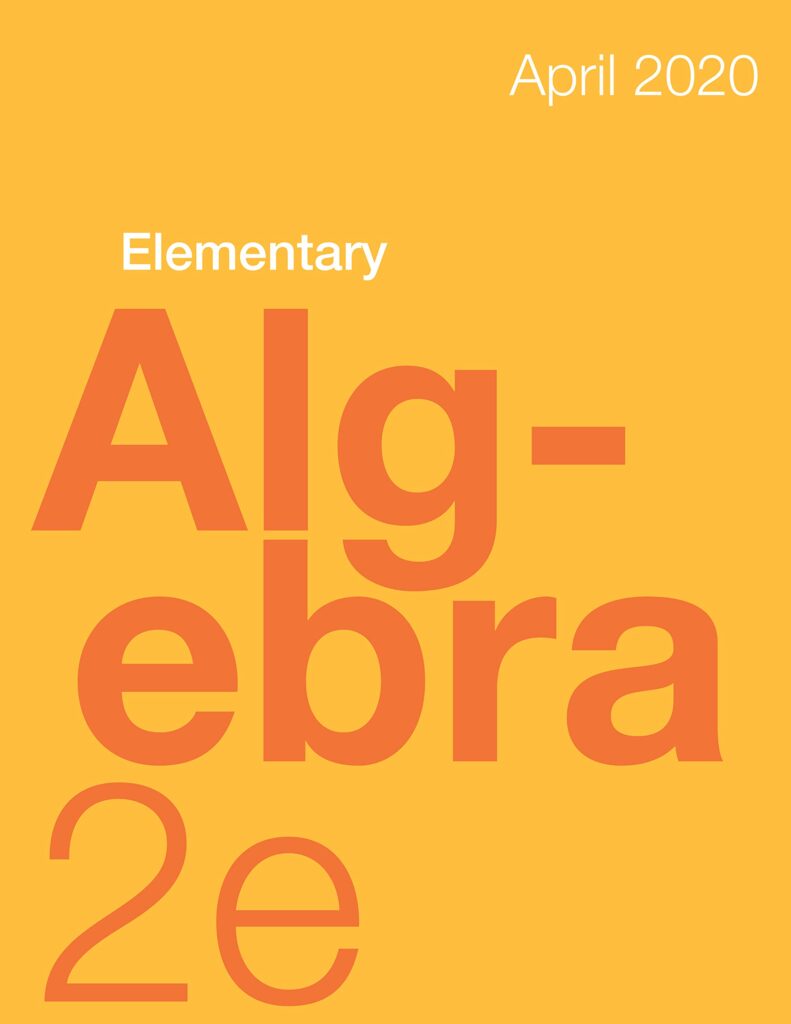 Math
Elementary Algebra 2e
View Elementary Algebra 2e — book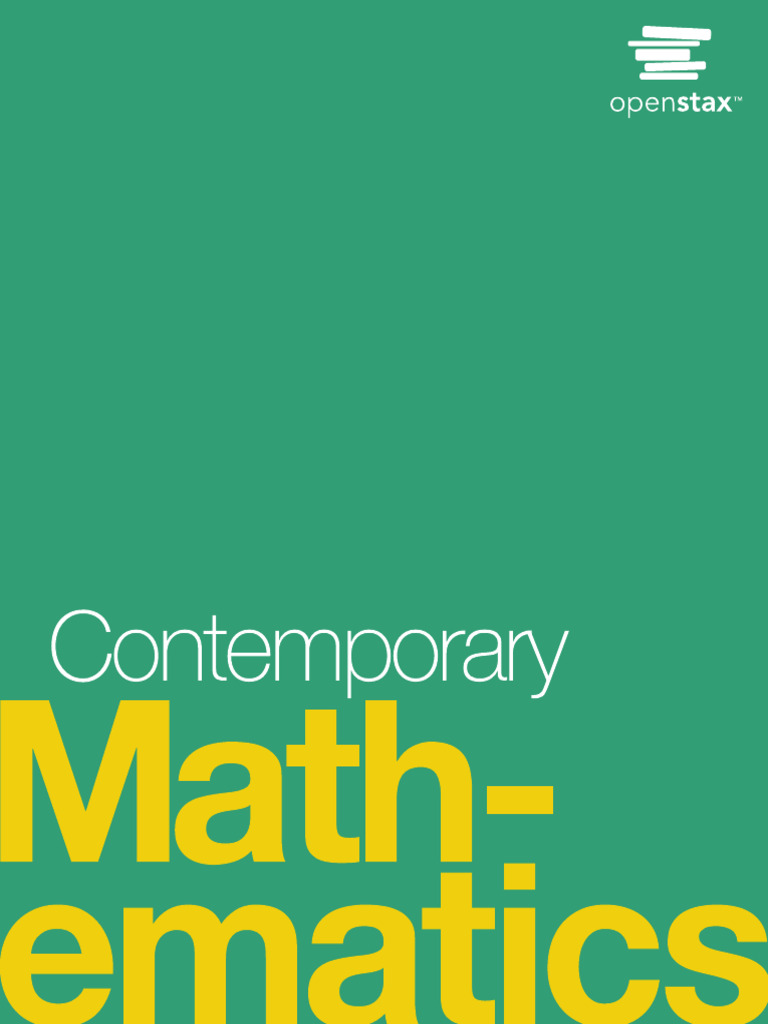 Math
Contemporary Mathematics
View Contemporary Mathematics — book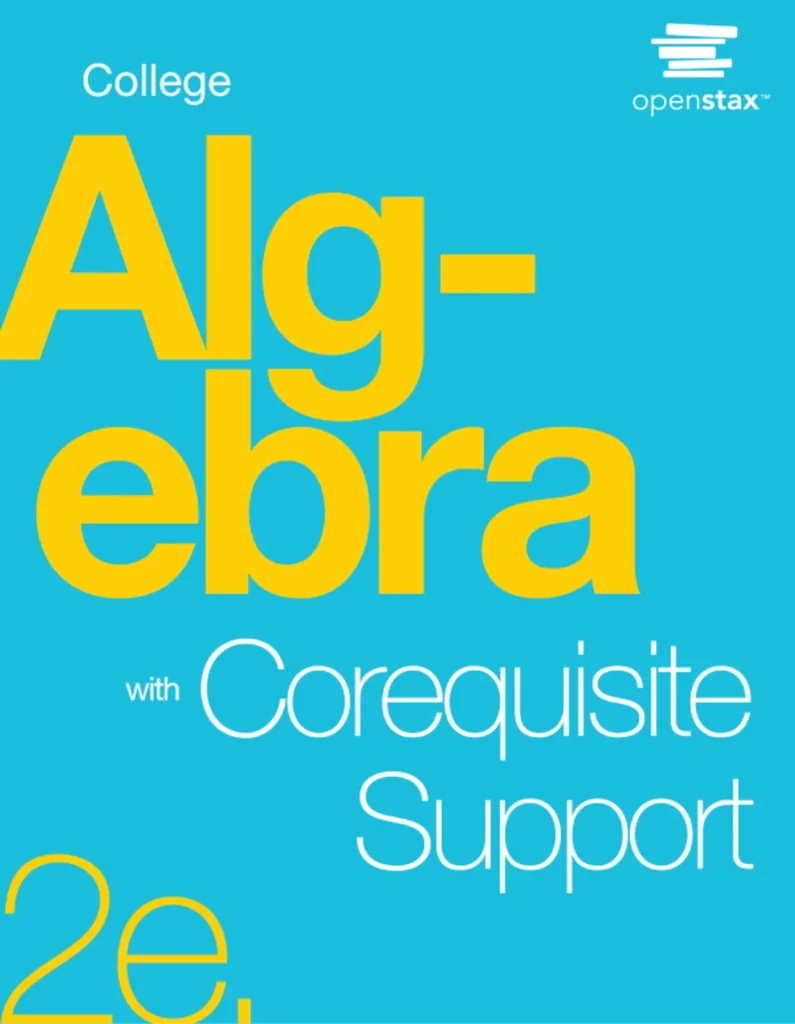 Math
College Algebra 2e with Corequisite Support
View College Algebra 2e with Corequisite Support — book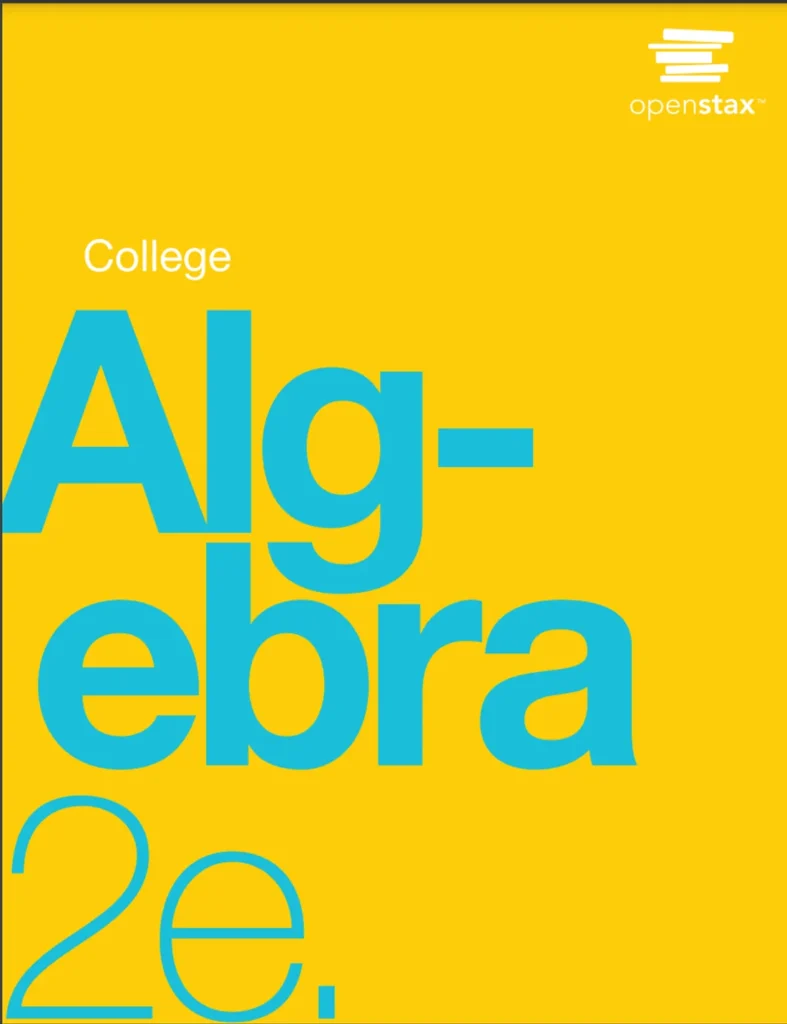 Math
College Algebra 2e
View College Algebra 2e — book Math
Calculus Volume 3
View Calculus Volume 3 — book Math
Calculus Volume 1
View Calculus Volume 1 — book Math



