
 Math
MathTextbook
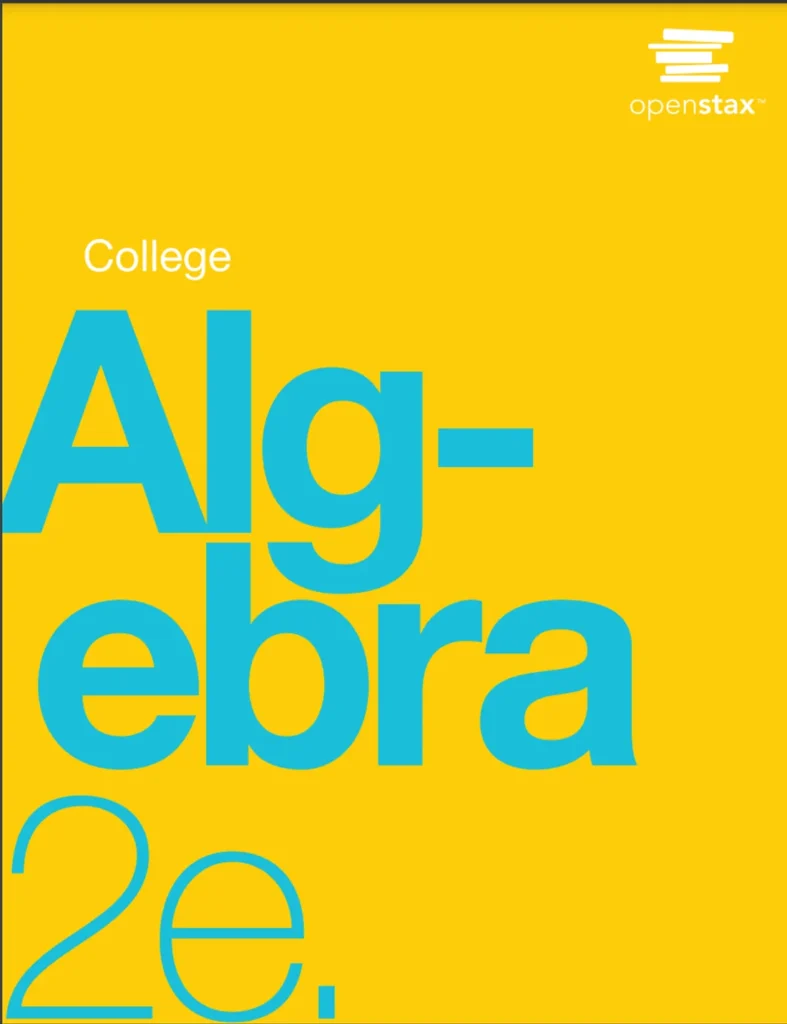
College Algebra 2e
Not rated yetRate this bookCollege Algebra 2e develops a function-centered approach to algebra across nine chapters. The OpenStax text moves from symbolic prerequisites and equations to linear, polynomial, rational, exponential, and logarithmic models, then systems, analytic geometry, sequences, and probability. This guide connects each chapter’s techniques to interpretation, using original tasks that require domain checks, multiple representations, and a reasoned choice of method.
Free reading is available at the official source. Opens in a new tab.
 Free
About this book
College Algebra 2e develops a function-centered approach to algebra across nine chapters. The OpenStax text moves from symbolic prerequisites and equations to linear, polynomial, rational, exponential, and logarithmic models, then systems, analytic geometry, sequences, and probability. This guide connects each chapter’s techniques to interpretation, using original tasks that require domain checks, multiple representations, and a reasoned choice of method.
Chapter-wise summaries and study tasks
Chapter 1 Prerequisites
Prerequisites establish the algebraic structures used throughout the course. Real numbers, exponents, radicals, polynomials, factoring, and rational expressions are related through properties that justify transformations. A simplified expression must retain the original restrictions: canceling a denominator factor does not restore a value that made the starting expression undefined. Rational powers and roots also depend on the number system and domain. Readers should recognize products and sums before applying a rule and distinguish an identity from an equality holding only for selected inputs. Factoring is especially useful because it exposes zeros and common factors that expanded form can conceal. The chapter is a diagnostic foundation rather than arithmetic detached from later functions.
Study task. Simplify a rational expression containing powers or radicals, recording restrictions first. Verify the result for permitted values and explain why a tempting cancellation across a sum is invalid.
Chapter 2 Equations and Inequalities
Equations and inequalities describe conditions on unknown quantities. The chapter connects coordinate graphs, linear equations, applications, complex numbers, quadratics, other equation types, and absolute-value inequalities. Method choice should follow structure: factoring, isolating a power, and using a general formula serve different situations. Some transformations preserve equivalence while others can introduce candidate answers that require checking. Inequalities describe sets and may reverse direction under multiplication by a negative number. Readers should separate an algebraic solution from a valid answer in context, where units or physical restrictions may exclude a value. Graphs can check plausibility without replacing exact reasoning.
Study task. Solve one equation in two ways, identifying any step that could introduce extraneous candidates. Compare its solution with a related inequality and interpret the allowed values on a graph or number line.
Chapter 3 Functions
Functions provide a language for relating inputs and outputs. The chapter develops notation, domain and range, rates of change, graph behavior, composition, transformations, absolute-value functions, and inverses. Function notation names an output rather than indicating multiplication. A domain is part of the definition and can be constrained by the formula or the modeled situation. Composition follows an order and may create additional restrictions. Inverses reverse a mapping only when the relationship is suitably one-to-one, sometimes after a domain restriction. Readers should connect symbolic forms with tables, graphs, and verbal descriptions. A transformation is best understood by tracking what happens to points rather than memorizing a list of sign changes.
Study task. Build a function and its composition with another function, stating both domains. Compare transformations on a graph and explain whether an inverse exists on the original domain.
Chapter 4 Linear Functions
Linear functions describe constant rates of change and support many first models of data. The chapter connects slope and intercept with applications and fitting a line to observations. Units give the slope meaning, while the intercept may represent a baseline outside the range where the model is useful. A fitted line summarizes a pattern without proving a causal relationship. Residuals and the context help assess whether linearity is a reasonable approximation. Readers should distinguish interpolation within observed conditions from extrapolation beyond them. A useful model includes an explicit input range and a check that predictions remain sensible rather than treating a convenient formula as universally valid.
Study task. Fit or construct a linear model for a small synthetic dataset. Interpret slope and intercept with units, inspect residuals, and identify a prediction that would be unjustified extrapolation.
Chapter 5 Polynomial and Rational Functions
Polynomial and rational functions connect algebraic structure with graph behavior. Quadratics, power functions, polynomial zeros, division, rational functions, inverse and radical relationships, and variation models appear together in this chapter. Factored form highlights zeros and multiplicities, while leading terms help explain end behavior. Rational functions require distinguishing zeros from excluded inputs and examining asymptotic behavior. A canceled factor may leave a hole, not an unrestricted continuous function. Readers should combine intercepts, sign, domain, and long-run behavior to build a graph and then check it algebraically. Variation models translate proportional relationships into functions whose constants and assumptions need contextual interpretation.
Study task. Analyze a rational function from factors, identifying domain, zeros, holes or asymptotes, and end behavior. Compare a sketch with sample values and explain one direct or inverse variation model.
Chapter 6 Exponential and Logarithmic Functions
Exponential and logarithmic functions model multiplicative change and inverse relationships. The chapter develops graphs, properties, equations, applications, and fitting exponential models to data. A constant percentage change differs from a constant additive increase. Logarithms answer exponent questions and require positive real arguments under the usual real-valued definition. Their properties apply to products, quotients, and powers, not indiscriminately to sums. Readers should state the base, time scale, domain, and interpretation of an initial value. Transforming data can help examine a model, but a good numerical fit does not establish that its mechanism or long-term prediction is correct. Solutions require checking the original conditions.
Study task. Compare linear and exponential descriptions of synthetic growth. Solve for a target time with logarithms, check the result, and identify the assumptions that limit the model’s useful range.
Chapter 7 Systems of Equations and Inequalities
Systems combine relationships, while matrix methods organize the algebra needed to solve them. The chapter treats two- and three-variable linear systems, nonlinear systems and inequalities, partial fractions, matrix operations, elimination, inverses, and determinants. Different methods expose different features, but all must preserve the original conditions. A singular matrix is connected to the system’s structure rather than merely an inconvenient calculation. Nonlinear systems may have several intersections, and inequalities describe regions instead of isolated solutions. Readers should understand why a method applies before using it and verify answers in the starting equations. Partial fractions reorganize a rational expression under specific algebraic assumptions.
Study task. Solve a small system by elimination and a matrix approach, checking both against the originals. Explain what changes for an inconsistent system and verify a simple partial-fraction decomposition by recombining it.
Chapter 8 Analytic Geometry
Analytic geometry connects equations with ellipses, hyperbolas, parabolas, rotated axes, and polar descriptions. Each conic has geometric features that explain its standard form. Completing the square can reveal centers, vertices, or scale hidden in an expanded expression. Rotation changes the coordinate description without changing the underlying curve, so an equation containing a mixed term may require a new viewpoint. Polar coordinates express position through distance and angle rather than two Cartesian components. Readers should use a labeled sketch to connect algebraic parameters with geometry and check sign conventions and scale. Similar-looking formulas can describe different shapes when their signs or reference points change.
Study task. Convert an expanded conic to a standard form, identify its defining features, and sketch it. Explain how a rotated or polar description changes the representation while preserving the curve.
Chapter 9 Sequences, Probability, and Counting Theory
Sequences, series, counting, and probability organize discrete patterns and uncertainty. The chapter connects explicit and recursive notation, arithmetic and geometric sequences, sums, counting principles, the binomial theorem, and probability. An index convention matters when comparing formulas. Counting ordered arrangements differs from choosing an unordered group, and replacement changes the available outcomes. Probability calculations need a clearly defined sample space and appropriate assumptions about equally likely outcomes. A series is a sum, not simply another name for a sequence. Readers should derive small cases to check a general formula and distinguish a model’s expected distribution from a guaranteed result in a small number of trials.
Study task. Describe one sequence recursively and explicitly, compute a finite sum, and solve a small counting problem both by listing outcomes and by a formula. Explain the assumptions behind a resulting probability.
How to study this book
- Use a prerequisite check when a later problem stalls. Distinguish an algebraic manipulation error from a misunderstanding of the function or model.
- Move between formulas, graphs, tables, and words. Record domains and units before calculating and use a second representation to check a result.
- Complete mixed practice requiring method selection, not only consecutive examples of one technique. Revisit incorrect solutions after a delay and explain the repaired reasoning.
Questions for reflection
- Which representation reveals the most useful structure for this problem?
- How can simplifying a formula conceal a domain restriction?
- When does a fitted relationship support prediction without supporting a causal claim?
Source edition and coverage
This guide follows the nine numbered chapters of College Algebra 2e. It summarizes the standard edition; the separate corequisite-support edition adds aligned foundational review and labs. Use the source for full examples, exercises, and selected answers. This guide provides original explanations and learning tasks. Read the complete book at the publisher’s official source.
About access & copyright
This page provides book information and study material. Full-text access is provided by the original publisher or authorised source; a listing does not grant permission to republish the book.
Read our Library Access & Copyright policyExplore the contents
Check the chapters covered in this edition.
Visit the official source
See reading, preview or purchase options.
Save for later
Keep this textbook in your saved collection.
Reader ratings & reviews
Share your thoughts
Your review helps other students choose the right resources.
KEEP LEARNING
Your next great read
Math Business
Principles of Data Science
View Principles of Data Science — book Math
Precalculus 2e
View Precalculus 2e — book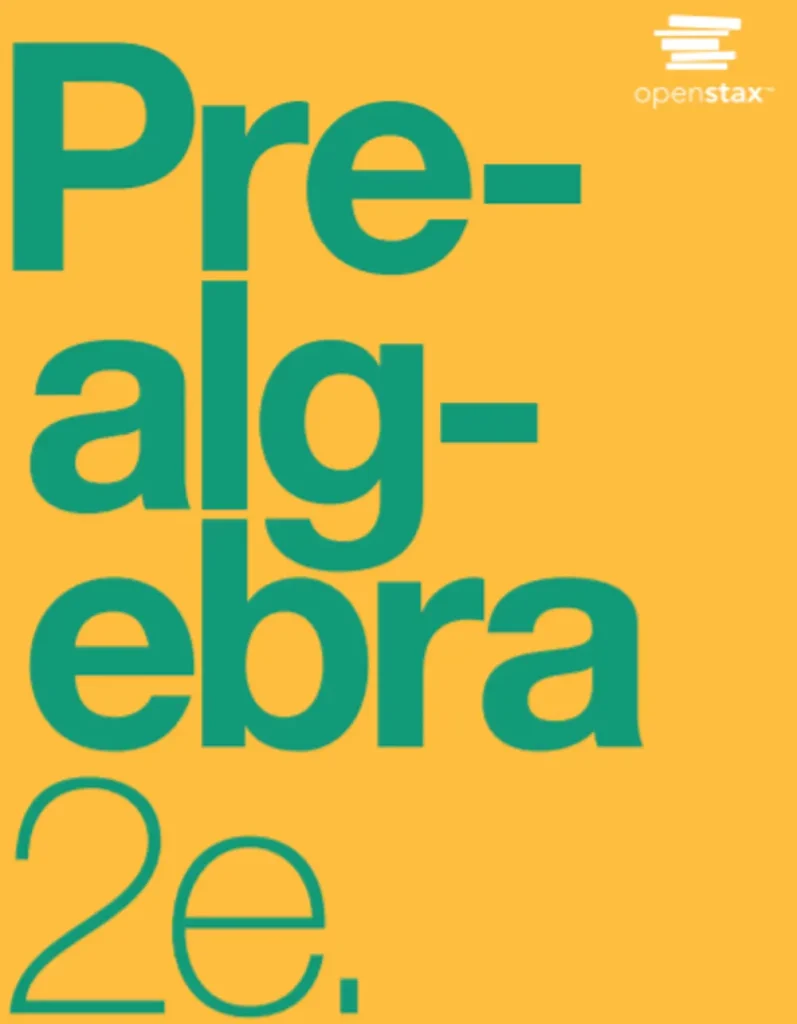 Math
Prealgebra 2e
View Prealgebra 2e — book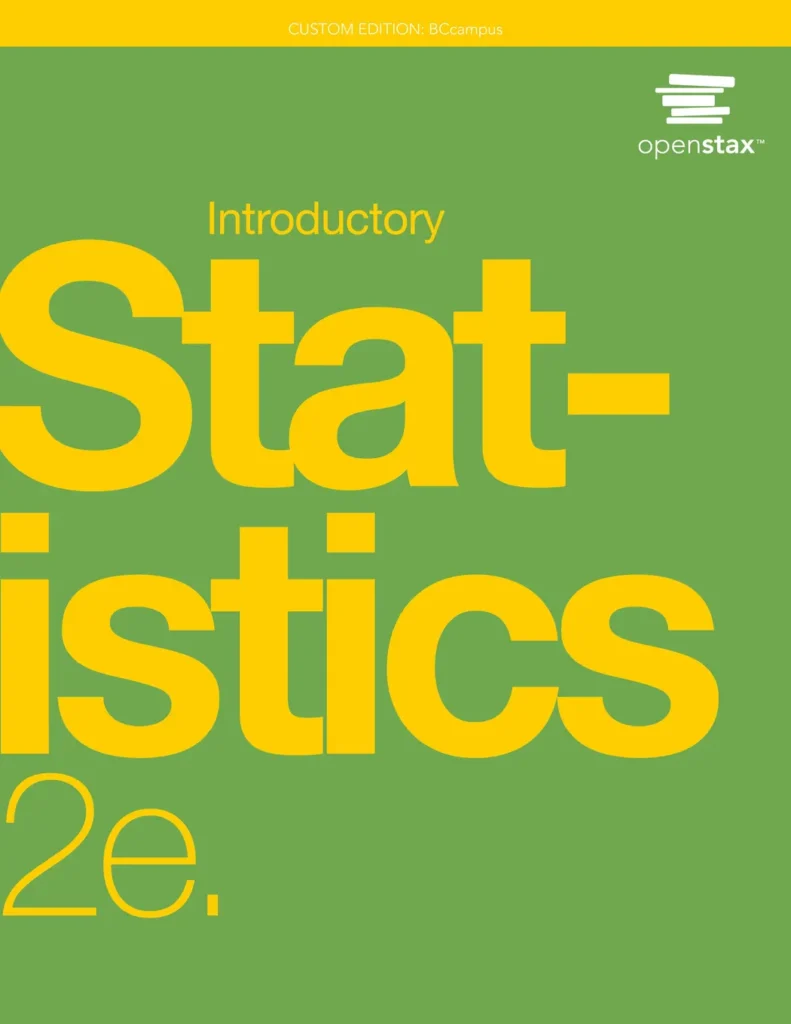 Math
Introductory Statistics 2e
View Introductory Statistics 2e — book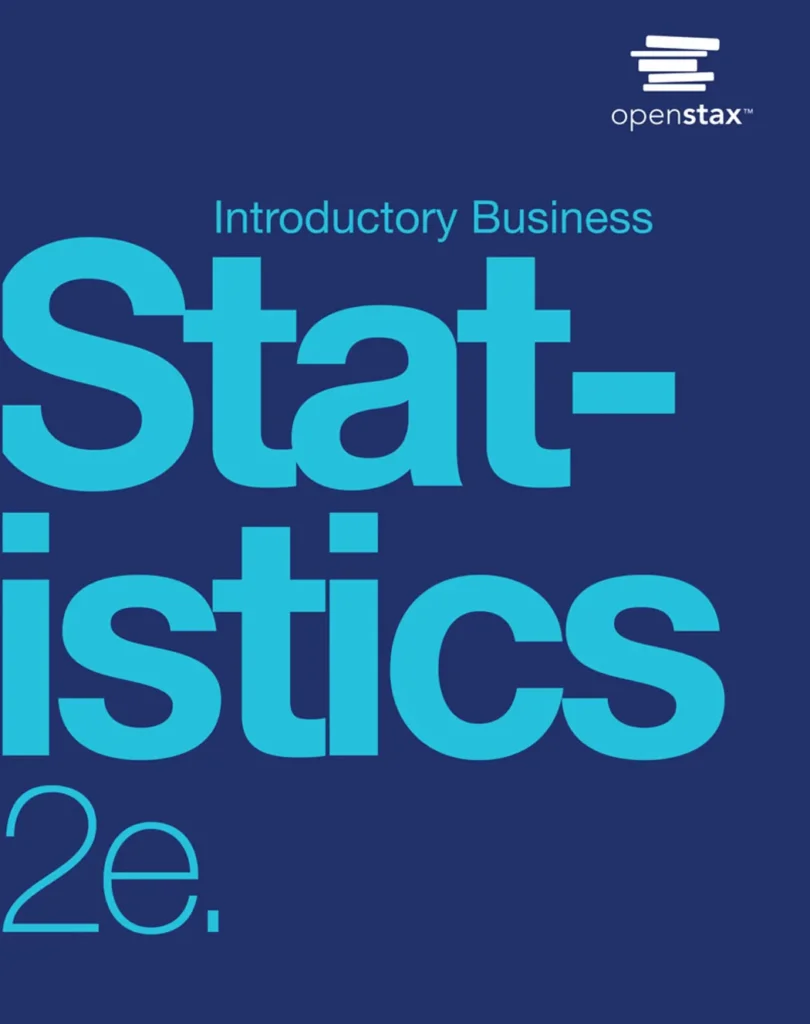 Business
Introductory Business Statistics 2e
View Introductory Business Statistics 2e — book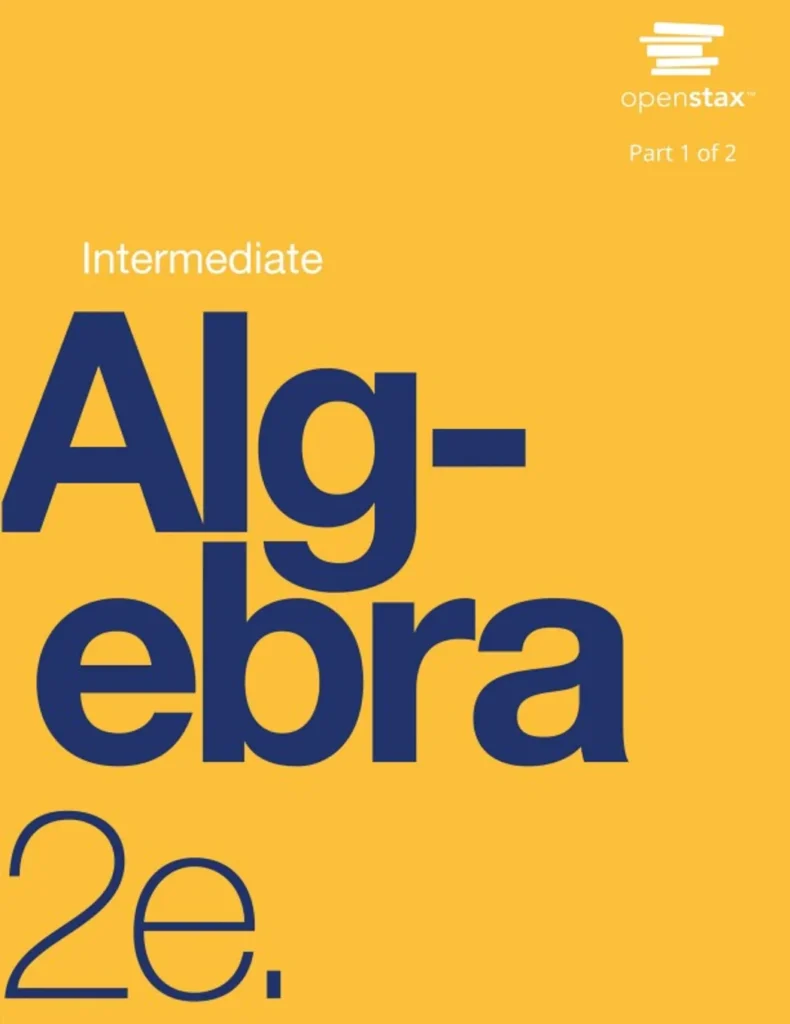 Math
Intermediate Algebra 2e
View Intermediate Algebra 2e — book Math
Elementary Algebra 2e
View Elementary Algebra 2e — book Math
Contemporary Mathematics
View Contemporary Mathematics — book Math



