
 Math
MathTextbook
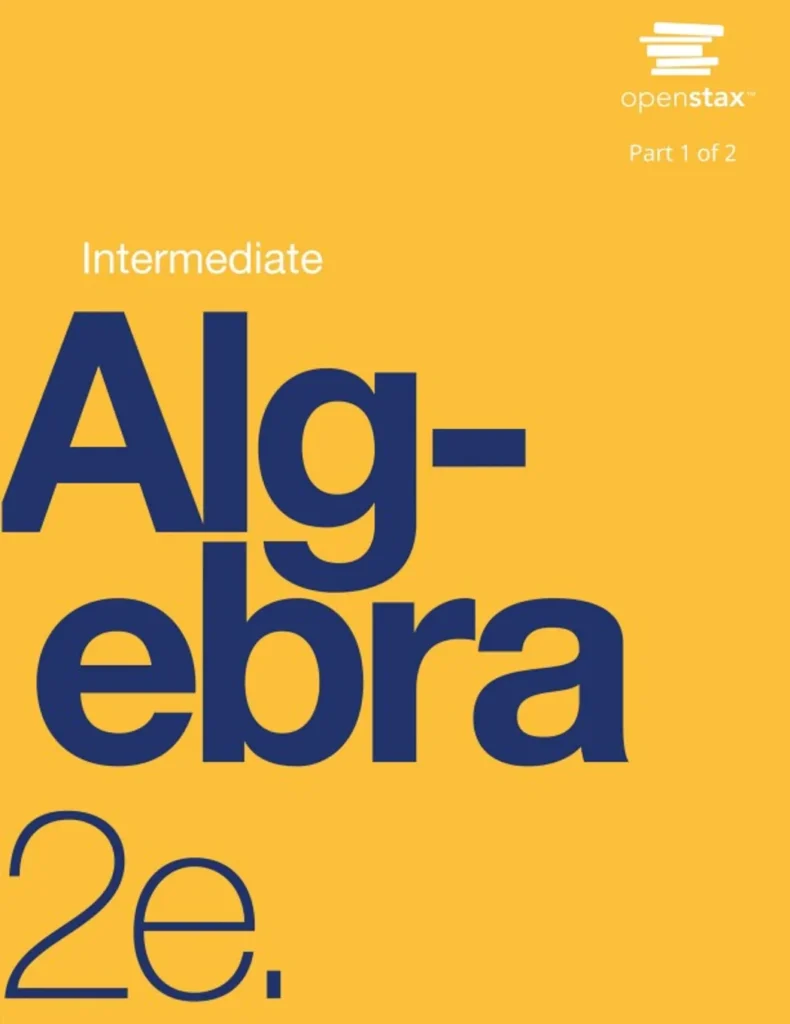
Intermediate Algebra 2e
Not rated yetRate this bookIntermediate Algebra 2e by Lynn Marecek and Andrea Honeycutt Mathis develops algebraic reasoning through twelve chapters, from real-number operations and linear equations to rational, radical, quadratic, exponential, and logarithmic relationships. Later chapters introduce conics, sequences, series, and the binomial theorem. This guide pairs each chapter with a study task and emphasizes restrictions, representations, and verification so that a correct-looking procedure leads to a valid solution.
Free reading is available at the official source. Opens in a new tab.
 Free
About this book
Intermediate Algebra 2e by Lynn Marecek and Andrea Honeycutt Mathis develops algebraic reasoning through twelve chapters, from real-number operations and linear equations to rational, radical, quadratic, exponential, and logarithmic relationships. Later chapters introduce conics, sequences, series, and the binomial theorem. This guide pairs each chapter with a study task and emphasizes restrictions, representations, and verification so that a correct-looking procedure leads to a valid solution.
Chapter-wise summaries and study tasks
Chapter 1 Foundations
The foundations chapter rebuilds the language and arithmetic on which later algebra depends. Variables, expressions, equations, integers, fractions, decimals, and real-number properties are connected through careful use of notation and order of operations. An expression is evaluated or simplified, whereas an equation states a relationship that may be solved. Negative signs deserve attention because subtraction, additive inverses, and powers can produce different results depending on grouping. Fraction operations require understanding factors and common denominators rather than transferring a rule from addition to multiplication. Readers should explain each transformation using a property, not just a remembered movement of symbols. Estimation and substitution provide quick checks that can reveal arithmetic errors before they spread into a longer solution.
Study task. Simplify one expression containing negatives, fractions, and parentheses. Name the property used at each step, estimate the result first, and compare the exact answer with a decimal approximation.
Chapter 2 Solving Linear Equations
Linear equations are solved through equivalent operations that preserve the relationship between both sides. The chapter extends a general strategy to verbal problems, formulas, mixtures, motion, inequalities, compound inequalities, and absolute-value inequalities. Translating a situation begins with defining variables and units before writing an equation. Rearranging a formula requires the same reasoning as solving with numerical coefficients. Inequalities introduce an important change: multiplication or division by a negative number reverses the comparison. Compound statements and absolute value require interpreting whether a solution lies inside a range or outside it. Readers should check an equation’s candidate solution in the original statement and test boundary points and intervals when interpreting inequalities.
Study task. Model a simple mixture or motion problem with units. Then solve a related inequality, show its solution on a number line, and verify both a boundary and a point outside the solution set.
Chapter 3 Graphs and Functions
Graphs connect algebraic relationships with geometric representations. The chapter develops linear graphs, slope, equations of lines, two-variable inequalities, relations, functions, and function graphs. Slope measures change in one variable relative to another and must be interpreted with units in applications. An intercept describes a particular input or output condition rather than merely a location to memorize. A function assigns one output to each permitted input, while its domain and range describe different sets. Readers should move between a table, an equation, a graph, and a verbal description, checking that each represents the same relationship. Shaded inequality regions also require a boundary decision and a test point, not just a visual guess.
Study task. Represent a fictional cost rule as an equation, table, and graph. Explain slope, intercept, domain, and range, then compare it with a relation that fails to define a function.
Chapter 4 Systems of Linear Equations
Systems seek values satisfying several conditions simultaneously. The chapter introduces two- and three-variable systems, applications, mixtures, matrices, determinants, and systems of linear inequalities. Graphical intersection and algebraic elimination describe the same underlying requirement, while substitution is useful when one variable is easily isolated. A system may have one solution, no solution, or infinitely many; these outcomes should be interpreted rather than treated as failed calculations. Matrix methods organize elimination but still require attention to the meaning of rows and operations. Inequality systems produce feasible regions instead of a single point. Readers should check every candidate against all original conditions and explain whether the mathematical result is sensible in the application.
Study task. Solve a two-variable resource problem by elimination and check it by substitution. Change one condition to create an inconsistent system, and explain what the contradiction means in context.
Chapter 5 Polynomials and Polynomial Functions
Polynomial work develops fluency with algebraic structure. The chapter covers addition, subtraction, exponent properties, scientific notation, multiplication, and division. Like terms combine through their coefficients, but terms with different powers do not become like terms simply because they contain the same variable. Exponent rules describe products and powers under specified conditions; they should not be applied indiscriminately to sums. Multiplication connects to distributive reasoning, while division can be checked by reconstructing the dividend from quotient, divisor, and remainder. Scientific notation links these ideas to scale and calculation. Readers should keep expressions organized by degree and use small numerical substitutions to detect mistakes without mistaking one successful check for a complete proof.
Study task. Multiply two polynomials, divide the result by one factor, and verify the reconstruction. Include a separate example showing why an exponent rule for products cannot be applied to a sum.
Chapter 6 Factoring
Factoring reverses multiplication by expressing a polynomial as a product. The chapter begins with a greatest common factor and grouping, then develops trinomial and special-product methods before applying a general strategy to equations. A complete factorization depends on the number system being used, so recognizing when a method applies matters as much as carrying it out. The zero-product property allows a factored expression equal to zero to be solved through its factors; it does not justify setting separate terms of a sum equal to zero. Readers should check factoring by expansion and avoid discarding a common factor that may produce a valid root. The aim is to recognize structure and select a method deliberately.
Study task. Factor a polynomial with a common factor and a remaining trinomial, then solve the associated equation. Expand to check the factorization and substitute every proposed root into the original equation.
Chapter 7 Rational Expressions and Functions
Rational expressions are quotients of polynomials and require explicit attention to excluded values. The chapter covers operations, complex fractions, equations, applications, and inequalities. Factoring exposes common factors, but canceling does not permit removing individual terms from a sum. A simplified expression may have the same values as the original only on the original domain, so restrictions must be retained. Clearing denominators can help solve an equation, provided candidates are checked against those restrictions. Rational inequalities require considering both zeros and undefined points, with signs assessed across intervals. Readers should connect symbolic manipulation with function behavior, recognizing that a neat final expression can conceal a missing domain condition.
Study task. Simplify a rational expression while recording all original exclusions. Solve a related equation and reject any invalid candidate, then use a sign chart to analyze a simple rational inequality.
Chapter 8 Roots and Radicals
Roots and radicals extend powers and connect to rational exponents, functions, and complex numbers. The chapter develops simplification, operations, rationalizing denominators, radical equations, and the complex number system. Real even roots require nonnegative radicands, while principal-root notation has a specific meaning that differs from all solutions of a squared equation. For example, the principal square root of a squared variable is its absolute value over the reals. Raising both sides to a power can introduce extraneous candidates, so checking the original equation is essential. Readers should distinguish an equivalent simplification from a step that expands the possible solution set. Complex numbers provide a framework for cases that have no real square root.
Study task. Solve a radical equation by isolating the radical and squaring, then check every candidate in the original. Explain an extraneous result and contrast real-root restrictions with a simple complex-number calculation.
Chapter 9 Quadratic Equations and Functions
Quadratic relationships can be solved and graphed through several complementary methods. The chapter develops the square-root property, completing the square, the quadratic formula, quadratic-form equations, applications, transformations, and inequalities. Method choice should follow structure: a perfect square may be simpler to recognize than to expand into a general formula. Completing the square explains the connection between standard and vertex forms, while the discriminant helps classify roots. A parabola’s vertex, axis, and intercepts provide different information about the function. Readers should distinguish solving an equation from describing an entire graph and should apply contextual restrictions to an algebraic answer. Quadratic inequalities require intervals determined by roots and the sign of the expression.
Study task. Solve one quadratic by two methods and compare their efficiency. Rewrite it in vertex form, sketch its graph, and use that graph to explain the solution of a related inequality.
Chapter 10 Exponential and Logarithmic Functions
Exponential and logarithmic functions connect repeated multiplicative change with inverse reasoning. The chapter begins with composition and inverses, then develops evaluation, graphs, logarithm properties, and equations. A logarithm answers an exponent question, and its real-valued domain must be respected. Product and power rules follow from exponent structure; they do not turn the logarithm of a sum into a sum of logarithms. Inverse functions reverse a relationship only on appropriate domains, so restrictions can be essential. Readers should connect symbolic steps with graphs and use substitution to check solutions after applying logarithms or exponentials. In applications, an initial quantity and a multiplicative factor have different roles from the intercept and slope of a linear model.
Study task. Compare linear and exponential growth from the same starting value. Solve an exponential equation using logarithms, state all domain conditions, and show why a tempting logarithm-of-a-sum shortcut is invalid.
Chapter 11 Conics
Conic sections describe circles, parabolas, ellipses, and hyperbolas through geometric relationships and algebraic equations. The chapter begins with distance and midpoint formulas and extends to nonlinear systems. Completing the square can reveal a center, shifts, and other defining features that are hidden in an expanded equation. The signs and coefficients help distinguish conic types, but a sketch should also respect orientation and scale. Readers should connect each standard form to its geometric definition instead of memorizing disconnected templates. When a conic intersects another curve, simultaneous solutions locate common points and may require checking candidates. A graph is useful evidence for plausibility but does not replace an exact solution where one is required.
Study task. Convert an expanded circle or ellipse equation to standard form and sketch its main features. Solve a simple intersection with a line and check each ordered pair in both original equations.
Chapter 12 Sequences, Series and Binomial Theorem
Sequences organize ordered terms, while series add them. The final chapter distinguishes arithmetic and geometric patterns, develops formulas for terms and sums, and introduces the binomial theorem. A sequence may be described explicitly or recursively, and converting between forms clarifies the role of its initial condition and indexing. Arithmetic change is additive; geometric change is multiplicative. Finite sums differ from infinite series, where convergence requires conditions such as an appropriate common ratio for a geometric series. The binomial theorem uses a systematic coefficient pattern to expand powers without repeated multiplication. Readers should explain why a formula fits a pattern and check early terms before applying it to a distant index.
Study task. Describe an arithmetic and a geometric sequence both recursively and explicitly. Compute a finite sum, state when the corresponding infinite geometric sum exists, and verify a small binomial expansion by multiplication.
How to study this book
- Read a worked example, close it, and reconstruct the reasoning before attempting nearby exercises. Write why each operation is allowed, especially when it changes an inequality or involves a denominator or root.
- Maintain an error log organized by cause: arithmetic, notation, domain restrictions, translation, or method choice. Rework missed problems later without looking at the earlier solution.
- Use mixed practice after each chapter so you must select a method. Verify answers through original-equation substitution, expansion, graphical interpretation, units, and contextual plausibility as appropriate.
Questions for reflection
- Which operations preserve equivalence, and which may introduce extraneous candidates?
- How can two expressions agree wherever one is defined yet have different domains?
- When does a graph reveal something that a symbolic answer alone does not explain?
Source edition and coverage
This guide follows all twelve numbered chapters of the OpenStax second edition. It provides original conceptual summaries and practice suggestions; consult the source for worked examples, complete exercise sets, and selected answers. This guide provides original explanations and learning tasks. Read the complete book at the publisher’s official source.
About access & copyright
This page provides book information and study material. Full-text access is provided by the original publisher or authorised source; a listing does not grant permission to republish the book.
Read our Library Access & Copyright policyExplore the contents
Check the chapters covered in this edition.
Visit the official source
See reading, preview or purchase options.
Save for later
Keep this textbook in your saved collection.
Reader ratings & reviews
Share your thoughts
Your review helps other students choose the right resources.
KEEP LEARNING
Your next great read
Math Math
Introductory Statistics 2e
View Introductory Statistics 2e — book Business
Introductory Business Statistics 2e
View Introductory Business Statistics 2e — book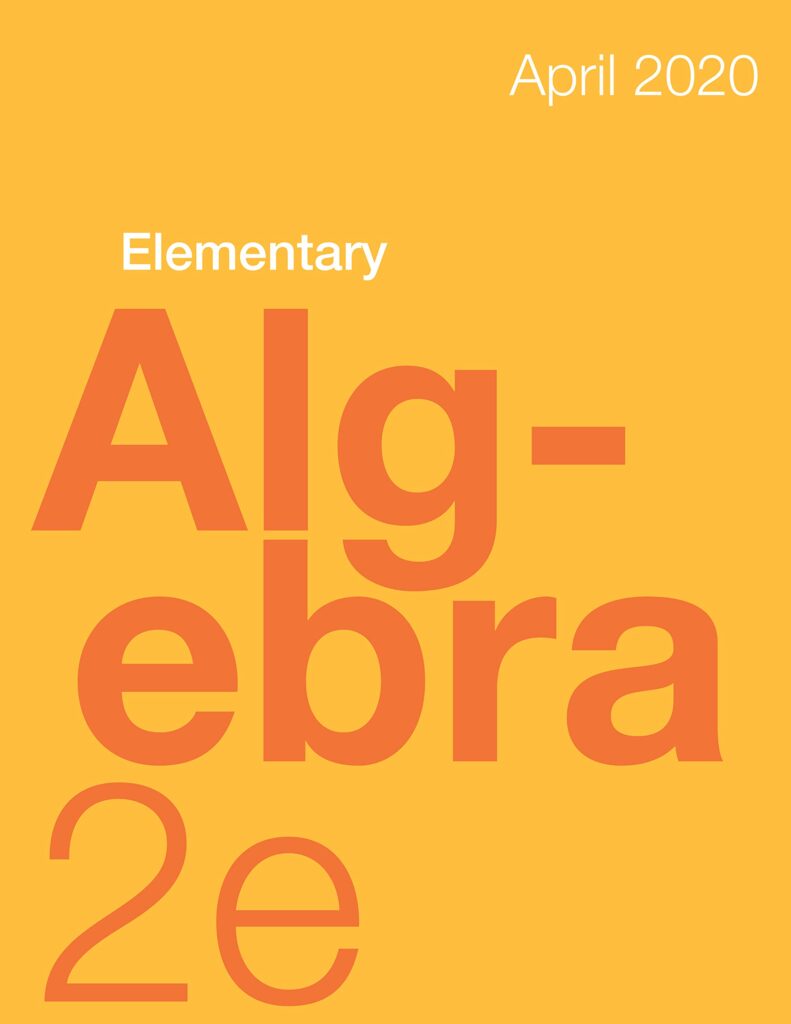 Math
Elementary Algebra 2e
View Elementary Algebra 2e — book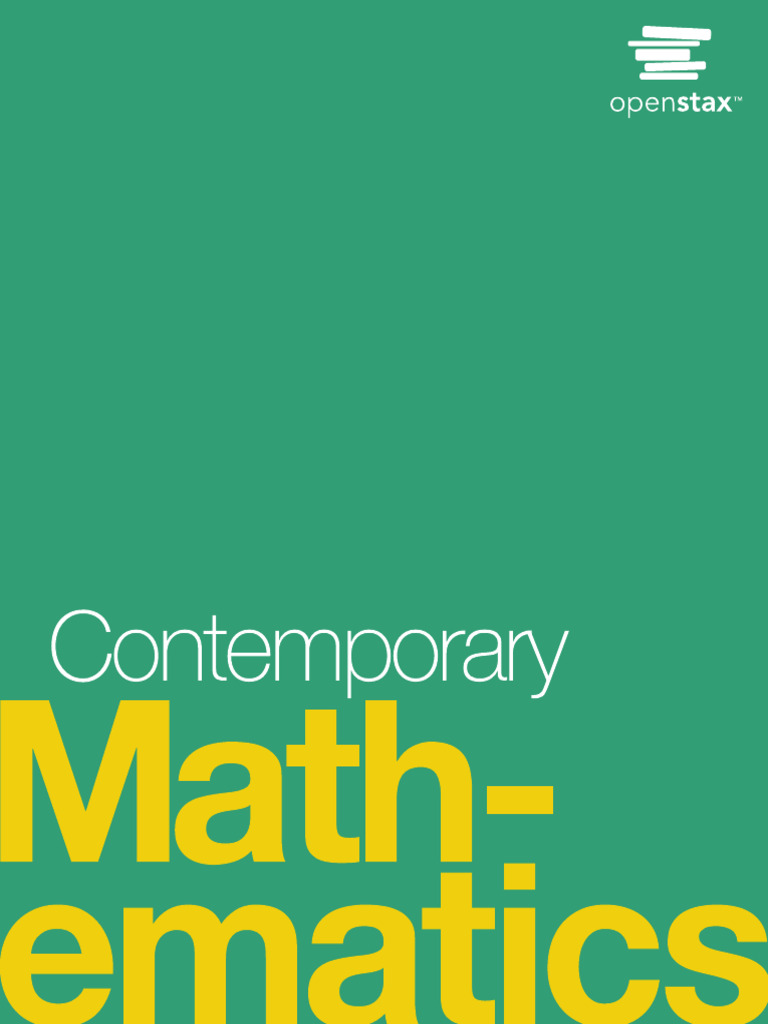 Math
Contemporary Mathematics
View Contemporary Mathematics — book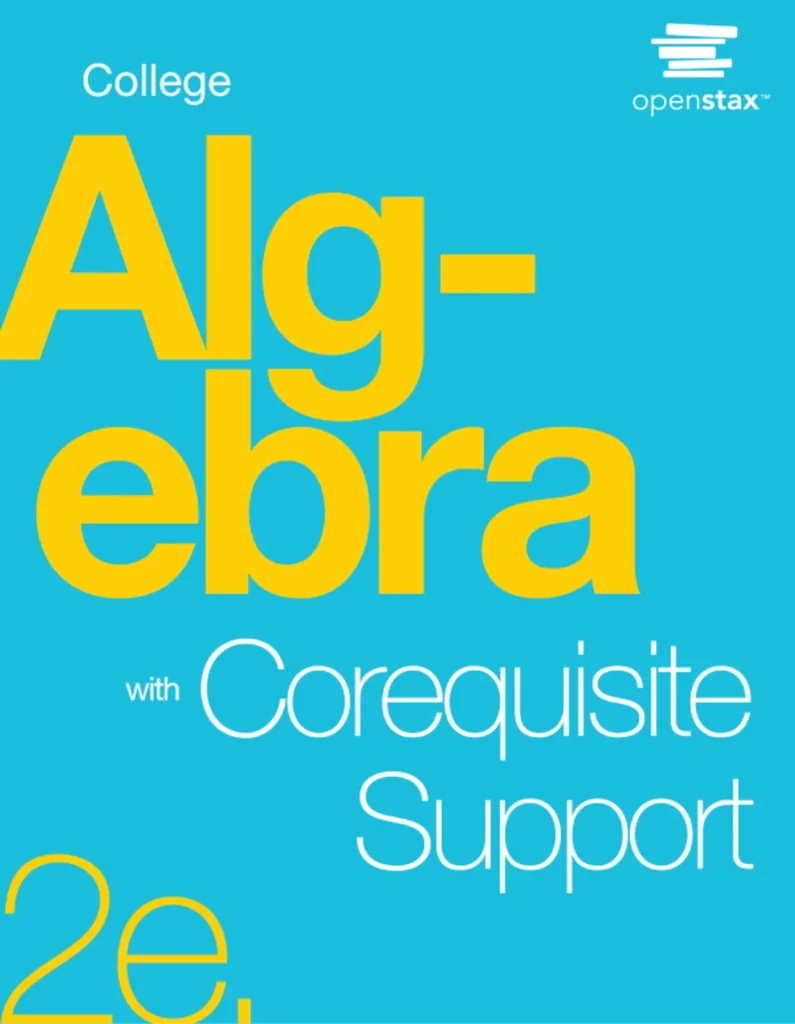 Math
College Algebra 2e with Corequisite Support
View College Algebra 2e with Corequisite Support — book Math
College Algebra 2e
View College Algebra 2e — book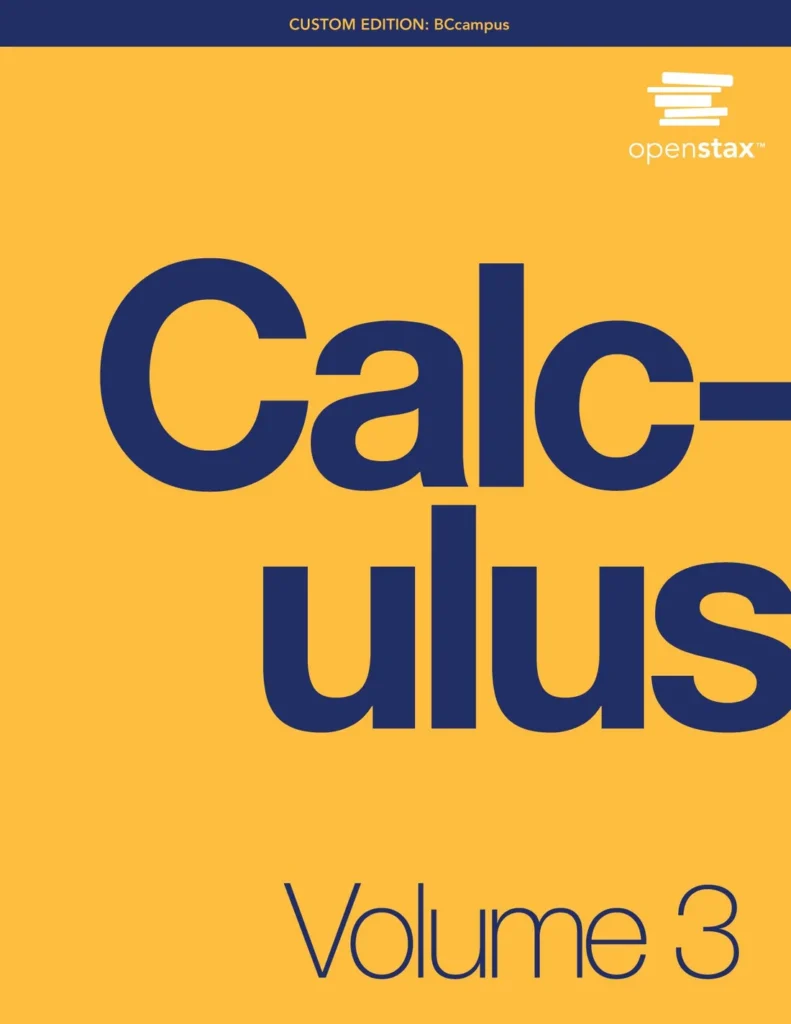 Math
Calculus Volume 3
View Calculus Volume 3 — book Math
Calculus Volume 1
View Calculus Volume 1 — book Math



