
 Arts
ArtsTextbook
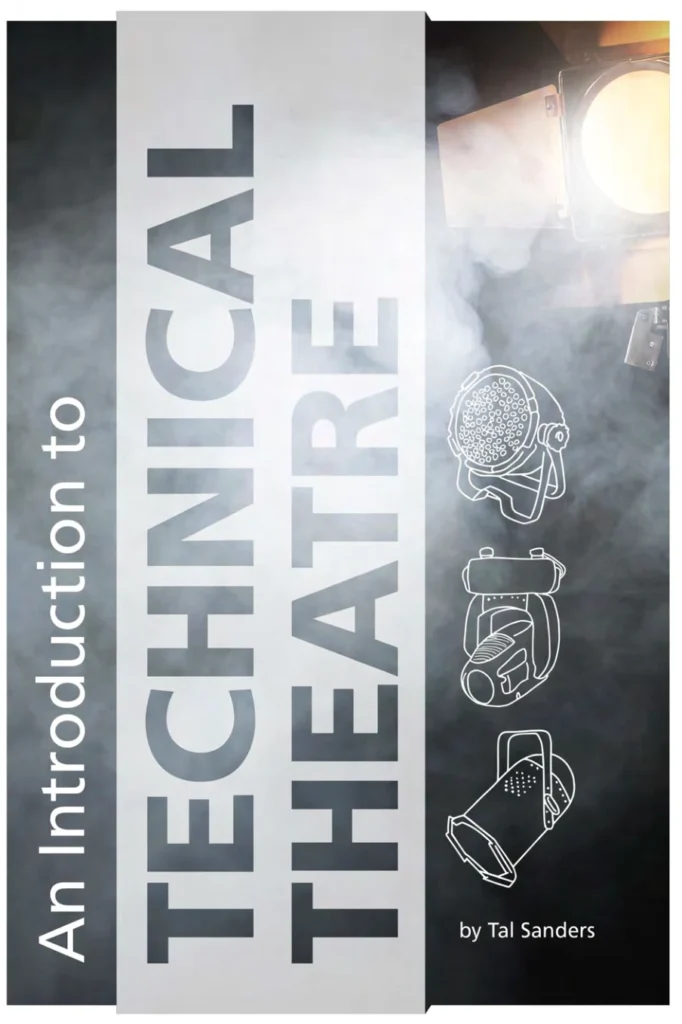
An Introduction to Technical Theatre
Not rated yetRate this bookTal Sanders’s An Introduction to Technical Theatre introduces the people, spaces, schedules, designs, equipment, and backstage practices that turn a script into a repeatable live production. Written for introductory high-school and college study, the 2018 first edition uses fifteen modules so instructors can coordinate reading with the work of an actual production. This guide follows those modules and the glossary. Its central theme is collaboration: scenery, costumes, lighting, sound, management, and running crews each contribute to a shared theatrical intention. The original cover is credited in the source to designer Alex Bell.
Read on the publisher’s website. Opens in a new tab.
 Free
About this book
Tal Sanders’s An Introduction to Technical Theatre introduces the people, spaces, schedules, designs, equipment, and backstage practices that turn a script into a repeatable live production. Written for introductory high-school and college study, the 2018 first edition uses fifteen modules so instructors can coordinate reading with the work of an actual production. This guide follows those modules and the glossary. Its central theme is collaboration: scenery, costumes, lighting, sound, management, and running crews each contribute to a shared theatrical intention. The original cover is credited in the source to designer Alex Bell.
Book summary
Tal Sanders’s An Introduction to Technical Theatre introduces the people, spaces, schedules, designs, equipment, and backstage practices that turn a script into a repeatable live production. Written for introductory high-school and college study, the 2018 first edition uses fifteen modules so instructors can coordinate reading with the work of an actual production. This guide follows those modules and the glossary. Its central theme is collaboration: scenery, costumes, lighting, sound, management, and running crews each contribute to a shared theatrical intention. The original cover is credited in the source to designer Alex Bell.
Chapter-by-chapter summaries
Module 1: Theatre — A Collaborative Art
Theatre emerges from the coordinated work of many artists and technicians rather than one person’s isolated creation. Sanders contrasts the concentrated responsibilities common in small educational groups with the more specialized roles of larger organizations. A shared production concept gives departments a common artistic direction, but collaboration still requires listening, negotiation, and clear communication as designs become practical work. The module follows a production from selection and early meetings toward rehearsals and performance, including different technical rehearsal purposes. Participation therefore means making commitments that affect other people’s progress. Map how a single artistic decision reaches several departments, and explain why remaining silent about a problem or changing a detail without informing colleagues can disrupt the entire production.
Module 2: Organizational Structures
Job descriptions clarify artistic responsibility, practical supervision, and the reporting relationships that keep information moving. Producers, directors, designers, technical staff, stage managers, and shop personnel contribute different forms of expertise. A small company may combine several jobs in one person, but the underlying responsibilities still need to be fulfilled. An organizational chart is useful when it identifies whom to consult and who can authorize a decision; it becomes misleading when treated as proof that creative ideas travel in only one direction. Build two charts for the same hypothetical production, one with a large staff and one with a small educational team. Mark shared roles and potential conflicts, then identify how a design change would be communicated without bypassing the person responsible for implementation.
Module 3: Production Scheduling
A production calendar translates artistic ambition into coordinated deadlines. Designs must arrive early enough for budgeting and construction, costumes need fitting time, and technical rehearsals depend on sufficient preparation by several departments. Scheduling backward from opening night exposes dependencies that a simple list of dates can hide. Rehearsal periods, installation, technical work, dress rehearsals, performances, and strike all claim people, space, and resources. A delay in one area can transfer pressure into another even when both teams work diligently. For a short scene, create a calendar with decisions, deliverables, and review points, then trace what happens if a central scenic element changes late. Include time to communicate and test revisions rather than treating completion as the moment an object merely leaves the workshop.
Module 4: Theatre Spaces
The relationship between stage and audience shapes how a performance can be designed and perceived. Proscenium, thrust, arena, and more flexible configurations create different sightlines, entrances, concealment possibilities, and relationships among spectators and performers. A ground plan shows an arrangement horizontally, while elevations clarify height and vertical relationships. Blocking or scenery that works from one viewing direction can obscure action in a space surrounded by audiences. Draw the same short scene in two venue configurations and identify which design assumptions must change. The point is not to rank one arrangement as universally better, but to recognize how architecture contributes to the audience’s experience and places practical constraints on every department.
Module 5: Our Stages and Their Equipment
Stage terminology gives collaborators a shared language for locations, overhead areas, masking, curtains, and equipment. Stage-left and stage-right follow the performer’s orientation, so they can conflict with a spectator’s casual description. Wings, backstage routes, and the space above the acting area influence where people and scenery can move or be concealed. Rigging and supporting systems introduce equipment whose operation depends on the particular venue. The module develops recognition and communication rather than making unfamiliar machinery self-explanatory. Annotate a venue diagram with its main areas and trace a scene change from storage to performance position. Record which tasks need trained operators and venue-specific procedures, since understanding a term on a page is different from being qualified to operate the system.
Module 6: Design and Collaboration
Design begins with close reading and discussion of the script, then develops through research, shared images, sketches, and increasingly specific documentation. Designers revisit the text after meetings because other departments’ ideas can reveal new possibilities or constraints. Renderings, models, plans, samples, and plots communicate different aspects of a proposal and allow colleagues to respond before resources are committed. A successful design choice should contribute to the production concept while remaining understandable to those who must build, fit, install, or operate it. Choose one scene and assemble a small collection of visual references. Explain what each reference communicates about the dramatic world, then distinguish inspiration from an actual construction or operating instruction.
Module 7: Scenery and Construction
Scenery establishes a physical and visual world through structures that may also need to support movement, survive repeated use, and change between scenes. Flats, platforms, and other common scenic units solve different problems; their construction depends on intended function as well as appearance. Materials and joinery affect weight, rigidity, handling, reuse, and storage. A convincing surface does not establish that an underlying structure can safely support a person or a load. Read the drawings and terminology as a means of discussing a design with the technical team. Sketch a scenic element and list its performance requirements before selecting a method of construction. Practical shop work should follow the supervising instructor’s procedures, tool training, and approved construction decisions.
Module 8: Props and Effects
Props connect the production’s visual world with objects that performers handle or use. Selection must consider function, scale, period, durability, reset, and repeatability, not simply whether an item looks right in a reference image. Effects create events or atmosphere and require coordination with action, lighting, sound, and venue conditions. Sanders discusses examples including stage weaponry, breakaway objects, and atmospheric effects, whose practical use needs specialized planning and oversight. Distinguish a decorative object from one whose operation affects performance timing or physical interaction. Create a prop tracking sheet containing where each object begins, who uses it, where it goes, and how it is checked and reset. This reveals logistical problems before they become disruptions during a live show.
Module 9: Stage Management
Stage management connects rehearsal decisions, departmental communication, cue preparation, and the continuity of performances. The prompt book records information in a usable form so that blocking, cues, and changes can be found and applied reliably. Reports and contact with the production team keep decisions from remaining known only to people who happened to attend a particular rehearsal. During performance, consistent calling and shared cue language help coordinate actions across departments. The role depends on preparation and interpersonal judgment as much as on tidy paperwork. Practice marking a short scene with clearly identified cue locations and draft a rehearsal report that separates observations, decisions, and requests. Ask whether an absent collaborator could understand what changed and what action is required.
Module 10: Costumes and Character Creation
Costumes communicate character, social context, period, and relationships while interacting directly with the performer’s movement. Research and renderings develop an intention that must be realized through sourcing, construction, fittings, and coordination with the rest of the design. Shoes, accessories, hair, and related appearance choices can contribute as much as a main garment to how a character reads. Quick changes, repeated wear, maintenance, and practical use during the action create further requirements. A costume’s visual success is incomplete if it prevents the actor from performing the scene. Analyze one character through silhouette, texture, color, and movement needs, and explain how those choices connect with the script instead of treating costume as decoration detached from storytelling.
Module 11: Lighting Design
Lighting establishes visibility while directing attention, modeling form, shaping space, and contributing to mood and rhythm. The brightest area is not the only consideration: angle, contrast, color, texture, and change over time affect how the audience interprets action. Cues can mark transitions, emphasize a moment, or support a scene’s emotional movement. A design must work with scenery and costume surfaces rather than assume they will look the same under every light. Describe a short sequence in terms of what the audience should notice at each moment before selecting equipment. This separates the artistic purpose from its technical realization and provides a clearer basis for discussing whether a lighting choice supports the production concept.
Module 12: Lighting Equipment and Control Systems
Fixtures differ in beam qualities, optical control, color possibilities, and suitable applications. A lighting system also needs power, control, positions, connections, and documentation that make the fixtures operate as a coordinated design. Addresses and control assignments should be distinguished from physical locations and electrical arrangements. The module’s equipment examples reflect the period of the 2018 book and introduce concepts rather than supply a current product guide. Compare two fixture types by the tasks they perform in a scene, then trace the information needed to identify, control, and document one unit in a plot. Electrical installation, work at height, and live operation require the appropriate training and venue procedures beyond this introductory reading.
Module 13: Sound Design and Equipment
Sound design can establish place, atmosphere, rhythm, and offstage events, as well as support speech or music. Microphones, playback, loudspeakers, monitoring, and control equipment operate within an acoustic space that influences what listeners hear. The performer’s monitoring needs can differ from the audience’s mix, and louder output does not automatically improve intelligibility. Timing and the apparent location of sound also affect its dramatic meaning. Build a cue list for a short scene and identify which sounds belong to the represented world and which provide commentary or transition. For each cue, state its purpose, source, timing, and intended audience effect before discussing equipment. This keeps the design focused on storytelling while exposing the system requirements needed to realize it.
Module 14: Scene Painting and Color Theory
Scenic painting uses color, texture, contrast, scale, and layered treatment to create a surface that reads convincingly from the audience’s position. Paint and light combine in ways that make a sample’s viewing conditions important. Sanders introduces tools and techniques such as scumbling, spattering, dry brushing, stippling, and layered coats, each producing a different kind of mark or effect. A close-up imitation of a material may disappear at theatrical distance, while deliberate exaggeration can improve the stage illusion. Compare a small sample under different lighting and from different distances, recording what changes in contrast and texture. Plan the intended visual result and test the treatment before applying it across a large scenic surface.
Module 15: Stage Crews and Production Etiquette
A running crew makes precise, repeatable actions possible through preparation, attention, and reliable communication. Backstage conduct matters because a distraction, misplaced object, or missed signal can affect a colleague whose next action depends on it. Roles and reporting structures clarify how to raise a problem and who can authorize a change during a performance. Consistency includes presets, checks, cue execution, resets, and the care of equipment between shows. Walk through a hypothetical shift on paper and identify who is waiting for whom at each stage. Etiquette then becomes an operational practice grounded in respect and coordination, rather than a collection of arbitrary manners. Review the sequence after rehearsal and document agreed revisions for the whole team.
Glossary
The glossary consolidates the vocabulary highlighted across the modules, making it useful when a production schedule requires reading them in a different order. Definitions should be connected to a drawing, example, or actual supervised observation whenever possible. Several terms describe viewpoint, location, equipment, or responsibility, and a familiar everyday meaning can cause confusion. Build personal cards containing the term, a plain-language definition, and one production situation in which it matters. If a venue uses a local convention, record that convention explicitly rather than assuming every company labels its equipment and documents identically. The glossary supports clear collaboration across all fifteen modules; it is not a substitute for venue orientation or role-specific training.
Study instructions
- Read Modules 1–3 first to understand the collaborative process, responsibilities, and schedule. Then coordinate the design and equipment modules with the production or class project.
- Choose one short scene and maintain a shared concept statement. For every design choice, explain what it communicates to the audience and which other department it affects.
- Create an organization chart, calendar, prop list, and sample rehearsal report. Test whether another reader can identify the responsible person and next action from each document.
- Use venue drawings to practice stage directions and sightline analysis. Confirm the orientation before describing positions.
- Observe supervised rehearsals where possible. Distinguish artistic decisions, technical requirements, and the documents used to communicate them.
- Complete practical work only with the instruction and supervision required by the venue and task. After rehearsal, update the agreed records rather than relying on private memory.
Questions for reflection
- How does a production concept connect decisions across departments?
- Who needs to know when a prop, costume, or cue changes?
- What changes when a scene moves from a proscenium stage to an arena?
- How can a design be visually persuasive but impractical to perform repeatedly?
- Which information makes a cue instruction precise enough for another operator?
Sources and coverage
This original reading guide follows the linked source edition’s chapter, module, unit, or lesson structure. Consult the source for full arguments, cases, worked examples, exercises, illustrations, and references. Coverage follows all fifteen modules and the glossary in the 2018 first edition published by Tualatin Books/Pacific University Press. The original Alex Bell cover is taken from that publisher PDF. Read the source edition.
About access & copyright
This page provides book information and study material. Full-text access is provided by the original publisher or authorised source; a listing does not grant permission to republish the book.
Read our Library Access & Copyright policyExplore the contents
Check the chapters covered in this edition.
Visit the official source
See reading, preview or purchase options.
Save for later
Keep this textbook in your saved collection.
Reader ratings & reviews
Share your thoughts
Your review helps other students choose the right resources.
KEEP LEARNING
Your next great read
Arts Arts
Vocal Techniques for the Instrumentalist
View Vocal Techniques for the Instrumentalist — book Arts
Music on the Move
View Music on the Move — book Arts
Brass Techniques and Pedagogy
View Brass Techniques and Pedagogy — book Arts
Storytelling on Screen: An Online Playback Theatre Archive and Guidebook
View Storytelling on Screen: An Online Playback Theatre Archive and Guidebook — book Arts
Fundamentals of Music Theory
View Fundamentals of Music Theory — book Arts
American Encounters: Art, History, and Cultural Identity
View American Encounters: Art, History, and Cultural Identity — book Arts
Navigating the Arts
View Navigating the Arts — book Arts
Westonia: Selected Works of Elizabeth Jane Weston
View Westonia: Selected Works of Elizabeth Jane Weston — book Arts



