
Advanced Spanish Language and Composition
ArtsTextbook
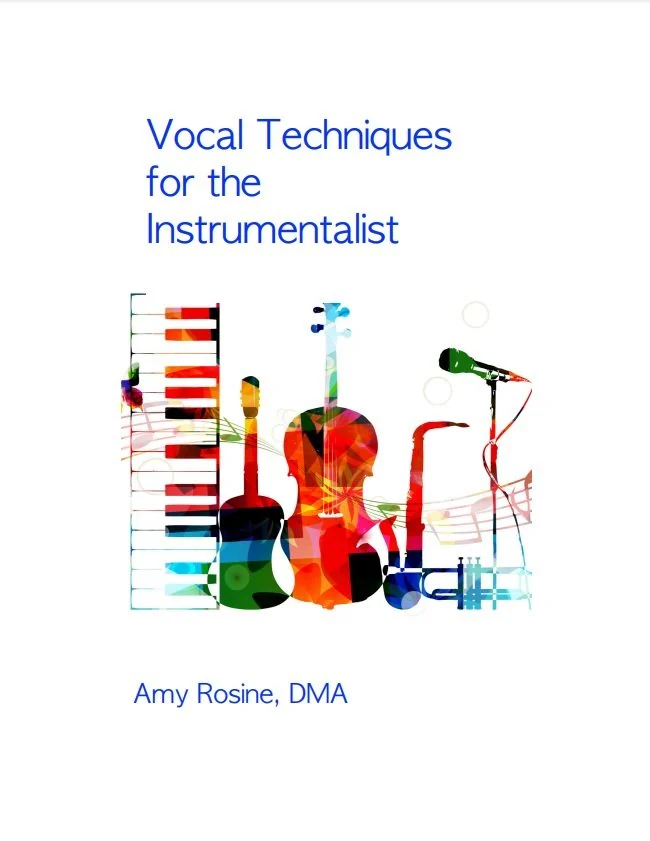
Vocal Techniques for the Instrumentalist
Not rated yetRate this bookAmy Rosine’s Vocal Techniques for the Instrumentalist helps instrumental music educators understand singing through the body, musicianship, and practical teaching. The 2021 second-edition online text credits Sandra Mosteller as editor. Its nine chapters move from the vocal instrument and mental preparation to breathing, tone, diction, repertoire, voice classification, and adolescent singers. Four appendices extend the course into exercises, vocal health, Italian diction, and the particular habits instrumentalists bring to singing.
Read on the publisher’s website. Opens in a new tab.
 Free
About this book
Amy Rosine’s Vocal Techniques for the Instrumentalist helps instrumental music educators understand singing through the body, musicianship, and practical teaching. The 2021 second-edition online text credits Sandra Mosteller as editor. Its nine chapters move from the vocal instrument and mental preparation to breathing, tone, diction, repertoire, voice classification, and adolescent singers. Four appendices extend the course into exercises, vocal health, Italian diction, and the particular habits instrumentalists bring to singing.
Book summary
Amy Rosine’s Vocal Techniques for the Instrumentalist helps instrumental music educators understand singing through the body, musicianship, and practical teaching. The 2021 second-edition online text credits Sandra Mosteller as editor. Its nine chapters move from the vocal instrument and mental preparation to breathing, tone, diction, repertoire, voice classification, and adolescent singers. Four appendices extend the course into exercises, vocal health, Italian diction, and the particular habits instrumentalists bring to singing.
Chapter-by-chapter summaries
Chapter 1 — The Vocal Instrument
The central adjustment for an instrumentalist is that the instrument is the person’s body, always present and affected by daily use. Existing musical skills are valuable, but instrumental habits do not transfer automatically to vocal production. The chapter connects alignment, physical awareness, and the interacting processes of singing. Read it as an invitation to notice coordination rather than force a predetermined sound. Compare your usual instrument with the voice: what generates vibration, what supplies energy, and how is the resulting sound modified? Recognize that personal vulnerability can affect learning as much as unfamiliar technique.
Chapter 2 — Motivation
Motivation concerns the mental intention preceding sound, including imagined pitch, breath preparation, musical style, and communication of text. The mind-body relationship explains why singing is more than a sequence of isolated muscular actions. Preparation can organize an action before the singer tries to correct it afterward. For study, compare a phrase begun without a clear intention with the same phrase prepared through silent musical thought. Record what you intended and what you actually heard. The goal is attentive, purposeful practice rather than constant self-criticism or an attempt to control every physical detail consciously.
Chapter 3 — Respiration
Breath management is introduced through the relationship among the spine, ribs, lungs, diaphragm, and surrounding musculature. The chapter distinguishes the breathing needs of singing from habitual breathing and invites wind players to reassess familiar assumptions. Alignment and coordinated movement matter because the breathing system operates within a mobile body. Connect the explanation to phrase length and musical shape instead of treating breath as a contest in air quantity. Observe whether preparation remains comfortable and free of unnecessary tension. Compare how breathing supports tone directly in singing and wind playing, and indirectly in other instrumental performance.
Chapter 4 — Phonation
Phonation explains how airflow and vocal-fold vibration initiate vocal sound within the larynx. The chapter introduces anatomical vocabulary and connects the beginning of tone to coordination between breath and the vocal mechanism. Its practical significance lies in hearing and sensing an onset that serves the phrase without excessive effort. Build a labeled conceptual diagram distinguishing the sound source from the spaces that subsequently modify it. When reflecting on practice, describe the audible result rather than assuming a sensation provides a complete anatomical explanation. Revisit this chapter alongside respiration and resonance to keep the processes connected.
Chapter 5 — Resonance
Resonance concerns how the vocal tract filters and modifies the sound generated by the vocal folds. Changes in the tract and vowel shape affect the resulting tone, intonation, and perceived color. The chapter also discusses different ways resonance is described, including physical vibration and sympathetic response. A useful comparison is the distinction between where a singer feels vibration and what an audience hears. Listen to a short phrase on different vowels while keeping the musical aim clear. Explain how resonance interacts with articulation and phonation rather than functioning as a separate effect added after a tone already exists.
Chapter 6 — Articulation
The addition of language makes vocal music different from an instrumental melody. Articulation involves coordinated movement of the tongue, lips, jaw, and other speech structures; the chapter distinguishes terms such as pronunciation, enunciation, and diction. Vowels sustain much of the singing tone, while consonants help listeners recognize words and their boundaries. Study a song text first as speech, identifying word stress and meaning, then compare its musical setting. Use phonetic notation as a tool for precision rather than a substitute for listening. The aim is intelligible, expressive language integrated with an unforced melodic line.
Chapter 7 — Learning and Performing Vocal Solos
Song preparation combines accurate musical learning with understanding and communicating the words. The chapter proposes separating components of the task: researching the song, examining the text, learning melody and rhythm, and considering harmony and phrase structure. These components must eventually be reunited in performance. Prepare a brief account of who is speaking, to whom, and with what intention, while grounding interpretation in the actual text. Compare spoken stress with the composer’s setting. Rehearse entrances, endings, and collaboration with an accompanist as musical decisions, and use recording or feedback to identify a specific next practice goal.
Chapter 8 — Identifying Voice Type
Voice classification depends on more than the highest and lowest notes a singer can produce. Range, comfortable tessitura, timbre, vocal weight, and register transitions all contribute to an assessment. The chapter distinguishes mature solo voice categories from practical choral assignments and cautions against rigid labels for developing singers. Its discussion of registration also shows why different teachers may use different terminology. Make a glossary that records each term’s meaning in this text. Treat classification as a provisional aid to choosing suitable music and teaching, allowing room for continued development instead of making an identity judgment from one brief exercise.
Chapter 9 — Adolescent Singers
Adolescent voices require supportive teaching that recognizes individual variation in the timing and course of change. Temporary shifts in range, coordination, or stability should not lead to exclusion or embarrassment. The chapter connects physiological change with repertoire selection, manageable musical demands, and an encouraging rehearsal environment. Evaluate a song for tessitura, phrase length, intervals, text, and accompaniment rather than relying only on its printed voice label. Plan ways for a student to remain musically involved while requirements are adapted. The teaching priority is comfortable, confident participation and developing musicianship, with regular reassessment as the voice changes.
Appendix I — Vocal Exercises
The exercise appendix supports practical application of the chapter concepts. Consult the source presentation for any notation or embedded material; extracted text alone may not reproduce musical examples. Select an exercise because it addresses a clear purpose, such as coordination, phrase preparation, or vowel consistency. In a practice log, identify that purpose before singing and evaluate whether the result improved. An exercise is most useful when its benefit transfers to an actual musical phrase, so follow it with a short repertoire passage that asks for the same skill.
Appendix II — Vocal Health
This appendix addresses vocal fatigue, hydration, daily demands, and signs that the voice is not functioning normally. It helps teachers recognize that singing cannot be separated from speaking habits, environment, rest, and general wellbeing. Use it to develop awareness and sensible practice pacing rather than to diagnose a condition. Record patterns of workload and comfort, and avoid treating persistent difficulty as a challenge to be overcome by greater force. In a teaching context, distinguish routine pedagogical adjustments from concerns that require assessment by an appropriately qualified professional.
Appendix III — Italian Diction
Italian diction connects stable vowel formation, consonant distinctions, and phonetic notation with the clarity of sung text. The appendix compares Italian sounds with habits familiar to English-speaking learners and discusses such features as consonant length and spelling-dependent pronunciation. English approximations are starting aids, not exact equivalents for every sound. Mark a short text with syllable divisions, stress, and pronunciation notes, then check it against reliable spoken and sung models. Reconnect diction with the line’s meaning and rhythm so pronunciation remains expressive rather than becoming a sequence of detached technical tasks.
Appendix IV — Singing Instrumentalists
The closing essay returns explicitly to the audience of the book. Instrumentalists bring listening, reading, rhythm, and phrasing skills, but may also bring habitual postures, breath assumptions, or expectations about physically controlling sound. Singing additionally requires memorizing and communicating words while the body is directly exposed as the instrument. Compare the chapter’s observations with your own experience without assuming every player of an instrument has identical habits. Identify one transferable strength and one habit to reconsider. Use that reflection to design a supportive beginner lesson for another instrumentalist.
Bibliography and Author Information
The bibliography offers routes into further vocal pedagogy, and the author section explains the teaching experience behind the text. Use these resources to trace a term or teaching claim beyond a single explanation. Record whether a source addresses adult solo training, classroom singing, or adolescent development, because their aims and assumptions may differ. A final course portfolio can combine your terminology notes, practice observations, annotated song, and a short lesson plan, showing how the book’s anatomical, musical, and educational concerns fit together.
Study instructions
- Work through Chapters 1–6 in order and keep a terminology notebook linking each process to an audible musical result.
- Use brief, purposeful practice sessions with a log of intention, observation, feedback, and the next adjustment.
- Prepare one song through spoken text, musical analysis, melody, rhythm, diction, and expressive performance, then integrate those stages.
- Review the adolescent chapter before planning school instruction; assess suitable tessitura and participation rather than assigning fixed identities.
- Revisit all four appendices and include an annotated Italian text and an instrumental-to-vocal learning reflection in your portfolio.
Questions for reflection
- Which instrumental habits support your singing, and which require adjustment?
- Why is tessitura more useful than an isolated highest note when choosing repertoire?
- How can text stress and musical phrasing reinforce or complicate one another?
- How can a teacher sustain confidence while a student’s voice is changing?
Sources and coverage
This original reading guide follows the linked source edition’s chapter, module, unit, or lesson structure. Consult the source for full arguments, cases, worked examples, exercises, illustrations, and references. This guide follows the second-edition public online text, including the Italian-diction appendix. Amy Rosine is the author; Sandra Mosteller is credited as editor. Read the source edition.
About access & copyright
This page provides book information and study material. Full-text access is provided by the original publisher or authorised source; a listing does not grant permission to republish the book.
Read our Library Access & Copyright policyExplore the contents
Check the chapters covered in this edition.
Visit the official source
See reading, preview or purchase options.
Save for later
Keep this textbook in your saved collection.
Reader ratings & reviews
Share your thoughts
Your review helps other students choose the right resources.
KEEP LEARNING
Your next great read
Humanities
Annotated and Translated Odyssey with Undergraduate Critical Introduction and Activities
Annotated and Translated Odyssey with Undergraduate Critical Introduction and Activities
View Annotated and Translated Odyssey with Undergraduate Critical Introduction and Activities — bookENGL 3330: Approaches to Literature
ENGL 3330: Approaches to Literature
View ENGL 3330: Approaches to Literature — bookPHIL 300: Introduction to Philosophy
PHIL 300: Introduction to Philosophy
View PHIL 300: Introduction to Philosophy — book Humanities
ENGL 95S Corequisite
View ENGL 95S Corequisite — bookLIBR 318: Library Research and Information Literacy
LIBR 318: Library Research and Information Literacy
View LIBR 318: Library Research and Information Literacy — bookReadings on Roman Men and Women
Readings on Roman Men and Women
View Readings on Roman Men and Women — bookBad Ideas About Writing
Bad Ideas About Writing
View Bad Ideas About Writing — bookDevelopmental Reading
Developmental Reading
View Developmental Reading — book Humanities



