
Introduction to Sustainability
Social SciencesTextbook
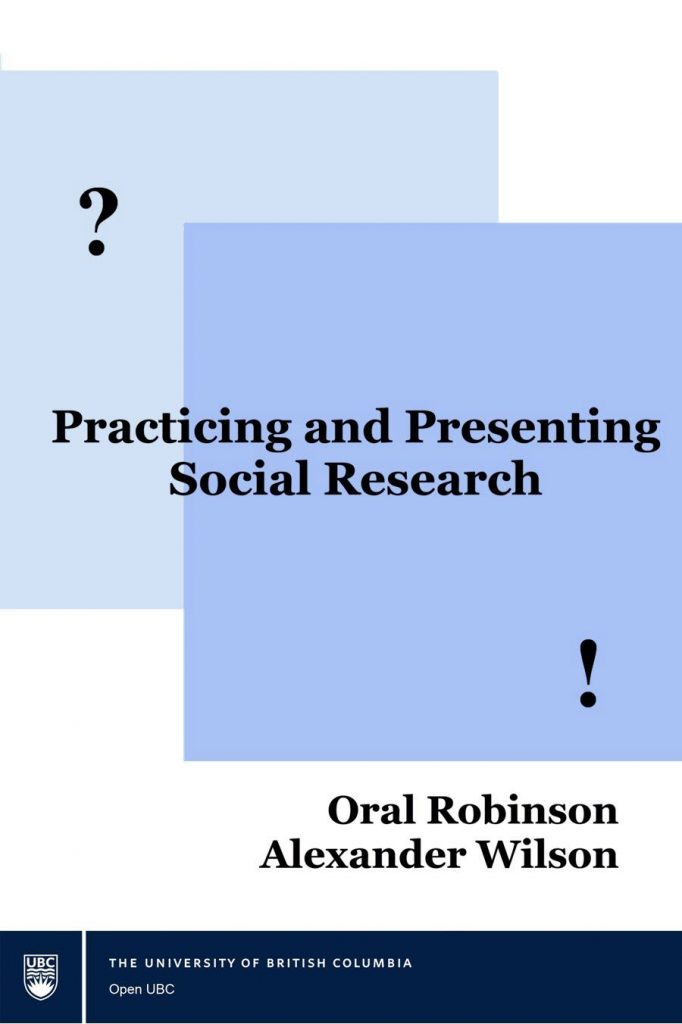
Practicing and Presenting Social Research
Not rated yetRate this bookOral Robinson and Alexander Wilson’s manual supports undergraduate researchers from developing a question to communicating findings. Its opening treats research writing as a learnable practice supported by reflection, planning, and feedback.
Free reading is available at the official source. Opens in a new tab.
 Free
About this book
About this book
Published through UBC Library, the manual is organized around the stages of a student research project rather than an exhaustive survey of methods. Its guide identifies an eight-month undergraduate project as a useful planning horizon, while noting that other timelines are possible. Practical examples, templates, checklists, and references provide support. This page reviews the preface, guide, and opening discussion of research preparation. Students should consult specialist methods sources for the detailed design and analysis required by their own study.
Sources and reading coverage
The preface, guide, and selected opening research-preparation passages on PDF sheets 9, 13, and 17 were reviewed. Later methods, ethics, and presentation sections were not comprehensively assessed.
Consult the official source for the available edition and publication details.
The consulted PDF contains 286 sheets, including preliminary material. PDF sheet numbers can differ from printed pagination.
Book summary
Guide to the reviewed opening
The preface links discovery with the task of communicating discoveries to other people. Academic writing is presented as a set of practices that develops with support, rather than an ability a new researcher should already possess fully.
The guide distinguishes this manual from a comprehensive research-methods textbook. Its purpose is to accompany a project and direct students toward deeper resources where needed. Knowing that limit helps readers decide when a checklist is useful and when a methodological explanation requires further study.
The opening warns against rushing into data collection before thinking through the question, design, and evidence required. Problems at that stage may be difficult to repair later. The emphasis is therefore on a coherent route from an initial interest to a defensible conclusion and its presentation.
How to study this book
Write a question, explain why it matters, and identify the kind of evidence needed to answer it. Compare that requirement with what is feasible within your time and setting. Record your assumptions and your position in relation to the topic.
Use the manual’s project sequence to make milestones, but consult the full source and institutional requirements for ethics and methods. Return to the question when revising a proposal or report, checking that each section contributes to the inquiry.
Questions for reflection
- What evidence would answer the question?
- Which design decision must be made before collecting information?
- How will the intended audience understand the contribution?
The study suggestions and questions are independent Academic Master editorial material.
About access & copyright
This page provides book information and study material. Full-text access is provided by the original publisher or authorised source; a listing does not grant permission to republish the book.
Read our Library Access & Copyright policyCoherence
Connect question, design, and evidence.
Planning
Match scope to a realistic project.
Writing
Treat communication as a developing practice.
Reflection
Make assumptions and positionality visible.
Reader ratings & reviews
Share your thoughts
Your review helps other students choose the right resources.
KEEP LEARNING
Your next great read
Social Sciences
 Humanities
Reading Social Science Methods
View Reading Social Science Methods — book Student Success
Writing for Inquiry and Research
View Writing for Inquiry and Research — book Engineering & Technology
Ethics in Technology
View Ethics in Technology — book Curriculum & Instruction
Using Open Educational Resources to Promote Social Justice
View Using Open Educational Resources to Promote Social Justice — book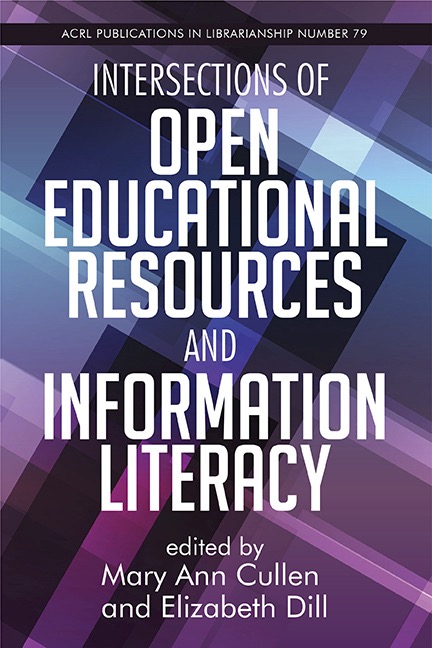 Curriculum & Instruction
Intersections of Open Educational Resources and Information Literacy
View Intersections of Open Educational Resources and Information Literacy — book Political Science
Introduction to Comparative Government and Politics
View Introduction to Comparative Government and Politics — book Social Sciences
Research Methods for the Social Sciences: An Introduction
View Research Methods for the Social Sciences: An Introduction — book Political Science
Comparative Politics: A Practical Guide for a Globalizing World
View Comparative Politics: A Practical Guide for a Globalizing World — book Cultural & Ethnic Studies



