
 Computer Science
Information SystemsTextbook
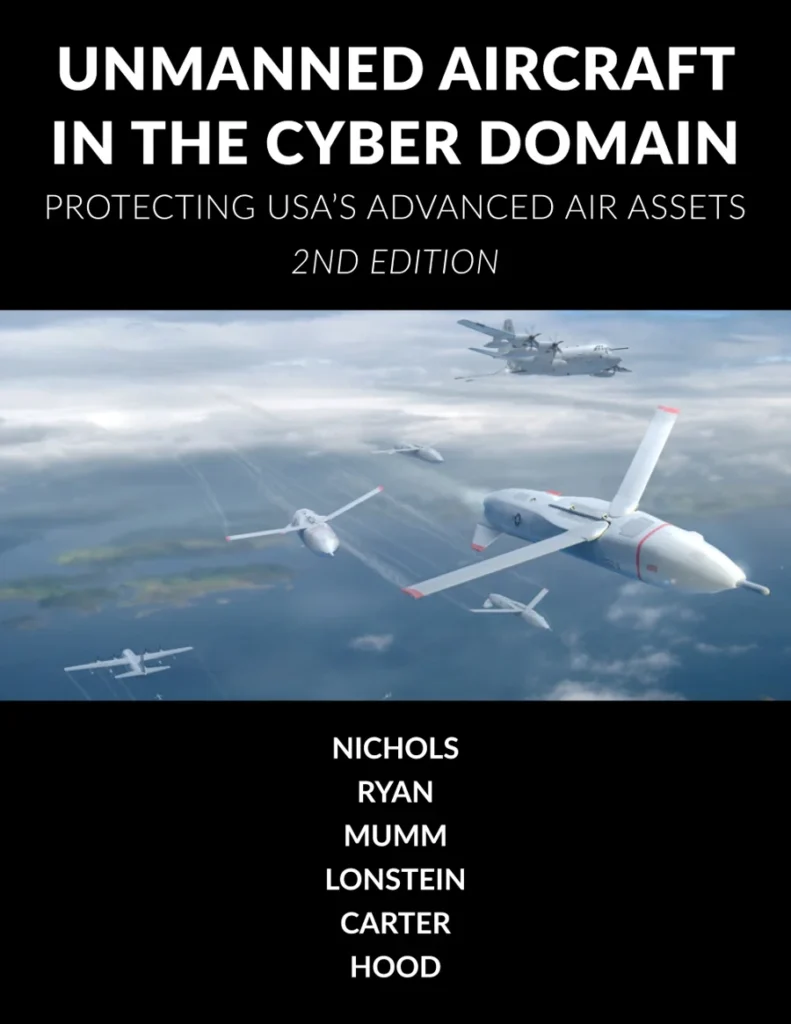
Unmanned Aircraft Systems in the Cyber Domain
Not rated yetRate this bookUnmanned Aircraft Systems in the Cyber Domain examines the aircraft, communications, information systems, institutions, and ethical decisions that together make drone operations possible. This guide follows the 22 chapters of the 2019 second edition. Its market forecasts, regulatory descriptions, and geopolitical assessments belong to that publication context; they should be read as historical evidence rather than current operating guidance. The strongest learning approach is to connect engineering dependencies with public safety, evidence quality, and accountable human judgment.
Read on the publisher’s website. Opens in a new tab.
 Free
About this book
Unmanned Aircraft Systems in the Cyber Domain examines the aircraft, communications, information systems, institutions, and ethical decisions that together make drone operations possible. This guide follows the 22 chapters of the 2019 second edition. Its market forecasts, regulatory descriptions, and geopolitical assessments belong to that publication context; they should be read as historical evidence rather than current operating guidance. The strongest learning approach is to connect engineering dependencies with public safety, evidence quality, and accountable human judgment.
Book summary
Unmanned Aircraft Systems in the Cyber Domain examines the aircraft, communications, information systems, institutions, and ethical decisions that together make drone operations possible. This guide follows the 22 chapters of the 2019 second edition. Its market forecasts, regulatory descriptions, and geopolitical assessments belong to that publication context; they should be read as historical evidence rather than current operating guidance. The strongest learning approach is to connect engineering dependencies with public safety, evidence quality, and accountable human judgment.
Chapter-by-chapter summaries
Chapter 1 — A View of the UAS Market
The opening chapter places unmanned aircraft within commercial and governmental markets, explaining why applications, investment, and adoption depend on more than airframe performance. Infrastructure, regulation, available expertise, and confidence in reliable operations influence demand. Separate the chapter’s reported market estimates from its forecasts, recording the year and assumptions behind each. A useful study exercise is to compare two civilian applications, such as inspection and environmental observation, and explain why their payload, endurance, data, and oversight requirements differ.
Chapter 2 — UAS Law: Legislation, Regulation, and Adjudication
The legal overview distinguishes legislation, administrative regulation, and decisions that interpret rules. It shows how aviation authority intersects with privacy, property, commercial activity, and responsibility for harm. Reading should focus on the institutional question: who can authorize, restrict, or adjudicate a particular activity? Make a table identifying the authority, jurisdiction, and date of each source the chapter cites. Because this is a 2019 edition, do not use its legal examples to decide what flight or counter-drone activity is permitted today.
Chapter 3 — Hostile Use and Cyber-Vulnerabilities
A drone is treated as an interconnected system of aircraft, sensors, software, control stations, and communications. The distinction between automation and autonomy matters because delegating a task changes the location of decision making without removing system dependencies. The chapter also links sensing, industrial control, and cyber-risk terminology. For study, draw a non-operational dependency map showing what information each component needs and what can happen when that information becomes unreliable. Distinguish documented failures from hypothetical vulnerabilities.
Chapter 4 — INFOSEC: Protecting Information Channels and Components
Information security broadens the discussion from the aircraft to the information it handles throughout its life cycle. Confidentiality, integrity, availability, access control, and trustworthy components become interdependent requirements. A system can transmit data successfully while transmitting incorrect or unauthorized data. Read the chapter through a defensive assurance lens: identify the information asset, its legitimate users, the evidence needed to trust it, and the consequence of losing that trust. Explain why security also depends on organizational practices and maintenance.
Chapter 5 — Intelligence and Red Teaming
This chapter introduces structured analysis and adversarial review as ways to challenge assumptions about system security and organizational preparedness. Intelligence is useful only when its provenance, relevance, and uncertainty are understood. Red teaming should be interpreted as authorized evaluation with defined scope, rather than permission to interfere with other systems. Summarize the analytical process at the level of questions, evidence, and review: what is assumed, what could contradict it, and what corrective decision follows from the finding?
Chapter 6 — Case Studies in Risk for UAS
Cases turn general risk language into situations with competing priorities and imperfect information. Technical reliability, human decisions, exposure, and consequences need separate consideration. Avoid reducing a case to a single dramatic failure; reconstruct the chain of assumptions and organizational choices that made the outcome possible. For each case, write an evidence-based account of the hazard, affected parties, existing safeguards, remaining uncertainty, and proposed improvement. This builds the habit of making proportionate judgments rather than treating every vulnerability as equally consequential.
Chapter 7 — Sense-and-Avoid Methodologies and Conflict Detection
Integrating unmanned aircraft into shared airspace depends on detecting relevant traffic and hazards, interpreting observations, and managing conflicts reliably. Sensing and decision making have limits, including incomplete information and delays. The chapter connects these limits to aviation safety rather than presenting autonomy as an automatic substitute for oversight. Study the distinctions among detection, classification, prediction, and conflict resolution. Explain what evidence a safety assessment would need before accepting a particular system’s claims about avoiding collisions.
Chapter 8 — Designing UAS Systems for Stealth
The chapter considers aircraft detectability and the engineering tradeoffs associated with signature reduction. This guide treats the material as a conceptual study of design constraints and military technology history. Greater emphasis on one performance goal can introduce compromises elsewhere, and claims about low observability require a stated observation context. Compare the competing objectives described by the authors without reproducing design methods. Ask how reduced detectability changes accountability, identification, and the safety challenges faced by other airspace users.
Chapter 9 — The Smart Skies Project
The Smart Skies case illustrates efforts to coordinate aircraft, communications, and airspace management within an integrated research project. It makes clear why successful components do not automatically produce a successful system: interfaces and coordination must also work. Identify the project’s objectives, participating functions, and evaluation questions. Then distinguish a demonstration under specified conditions from general proof of readiness. The case is especially useful for learning how research findings should be translated into bounded claims about real-world deployment.
Chapter 10 — Intelligence, Surveillance, and Reconnaissance
ISR brings together collection, interpretation, communication, and decision making. The chapter’s military framing provides a context for examining how aerial observations become information products. Images and sensor outputs are not self-explanatory; uncertainty, interpretation, and timeliness affect their significance. Trace the information life cycle at a general level, including stewardship and review. A critical reading should consider privacy, proportionality, mistaken identification, and the difference between possessing extensive observations and possessing well-supported knowledge.
Chapter 11 — UAS Weapons
This chapter surveys the relationship between unmanned aircraft and weapons within the edition’s military discussion. The educational focus here is the changing allocation of responsibility, the limits of remote observation, and the consequences of delegating consequential decisions. Compare the author’s technological claims with the supporting evidence and distinguish capability from lawful or ethically justified use. Discuss civilian protection, human judgment, and accountability at a policy level. The source should not be treated as a practical weapons manual.
Chapter 12 — Deployment and Information Dominance
The deployment chapter connects unmanned systems with networked organizations and the strategic value attributed to information. Its central analytical issue is how collection and communication support a wider decision process. More information can also create dependence, overload, and confidence unsupported by evidence. Summarize the organizational relationships rather than tactical procedures. Ask which decisions remain human responsibilities, how contradictory observations are reconciled, and what happens when an institution mistakes information volume or network access for reliable understanding.
Chapter 13 — Data-Link Functions, Attributes, and Latency
Data links connect the aircraft with other parts of the system, carrying control and mission information with different timing and reliability needs. Capacity, delay, availability, and security impose competing requirements. Explain why a link that works adequately for one application may be unsuitable for another. Build a conceptual comparison of information types and their consequences if late, missing, or corrupted. Keep the discussion focused on requirements and assurance rather than settings or methods for interfering with communications.
Chapter 14 — Electronic Warfare and Low-Probability-of-Intercept Signals
The chapter situates UAS communications within a contested electromagnetic environment and discusses protective communications concepts. For this guide, the useful outcome is understanding dependence on a shared physical medium and the limits of assuming an uninterrupted connection. Separate technical possibility from demonstrated effectiveness. Evaluate claims about resilience by asking what conditions were tested and what uncertainty remains. Review the implications for safety, governance, and dependable operations without turning the source material into interference or evasion instructions.
Chapter 15 — Drone Activity in Africa
This regional chapter discusses foreign involvement, security concerns, investment, and drone operations in African settings as understood by the authors in 2019. Read its broad geopolitical language critically: African countries have distinct institutions, histories, and priorities that cannot be reduced to one continental narrative. Identify the specific country, actor, date, and evidence behind each example. Compare military applications with public-interest civilian possibilities, and ask whose perspectives, local expertise, and assessments of benefit or harm are missing.
Chapter 16 — Drones and the Spratly Islands
The Spratly Islands discussion connects unmanned systems with disputed maritime space and strategic rivalry in the South China Sea. Geography, competing claims, surveillance, and the possibility of escalation shape the author’s argument. Some scenarios are explicitly conjectural; do not present them as established events. Construct a reading table separating documented observations, attributed claims, and predictions. Assess how uncertainty and threat framing influence policy arguments, while recognizing that the chapter’s account reflects its publication period.
Chapter 17 — High-Altitude Platforms
High-altitude platforms are considered as possible communications infrastructure between terrestrial networks and satellites. The chapter evaluates their promise against persistent constraints involving endurance, coverage, environmental conditions, and dependable service. Compare the proposed role with alternative infrastructure at the level of public-service requirements and engineering tradeoffs. The learning goal is to explain why a compelling concept can remain difficult to deploy sustainably. Treat the chapter’s conclusions about technological maturity as a dated assessment, not a verdict on every later project.
Chapter 18 — Counter-UAS and Large-Scale Threats
Counter-UAS introduces the problem of responding to unauthorized drones while protecting lawful activity and shared infrastructure. Detection, identification, and response raise different evidentiary and legal questions. An apparent threat does not automatically confer authority to interfere with an aircraft or its communications. Examine the agencies and legal mechanisms discussed in the 2019 text as historical examples. A good summary separates risk assessment from response authority and considers misidentification, unintended consequences, public safety, and proportionality.
Chapter 19 — Audiology, Acoustics, and Identification Libraries
This chapter explores acoustic ideas in relation to unmanned aircraft identification and countermeasure research. Its broader lesson is the difficulty of moving from an observable signal to a dependable classification under changing conditions. Background noise, variation among aircraft, and incomplete reference data can limit conclusions. Assess the author’s proposed uses through questions about validation, false positives, reproducibility, and evidence quality. Keep the treatment at the level of scientific evaluation rather than implementing countermeasures or optimizing their effects.
Chapter 20 — Legal and Regulatory Development
The later legal chapter revisits regulation as an evolving response to technological change and observed events. It asks how institutions balance innovation, public protection, and uncertainty about future uses. Compare its treatment with Chapter 2 to see which problems the authors regard as persistent and which they consider newly urgent. Evaluate arguments for anticipatory regulation by identifying the expected benefit, possible burden, evidence, and review mechanism. Consult current official sources separately before making present-day legal decisions.
Chapter 21 — UAS Proliferation and the New Silk Road
The chapter places drone proliferation within the authors’ account of China’s Belt and Road initiatives, infrastructure investment, and strategic interests. Study how technology exports can create dependencies involving training, maintenance, data, and institutional relationships. Separate economic projects, security interpretations, and predictions instead of assuming they have identical purposes. A critical comparison should identify the source and date of each claim and consider how the interests of participating states complicate a single geopolitical explanation.
Chapter 22 — Ethics, Autonomous Systems, and Artificial Intelligence
The closing chapter brings together autonomy, human responsibility, institutional choices, and the societal consequences of increasingly capable systems. Technical feasibility alone cannot settle questions about acceptable delegation or responsibility for harm. Compare a civilian and a military example using the same ethical questions: who benefits, who bears risk, who can contest a decision, and who remains accountable? Distinguish the authors’ forecasts from established outcomes. The chapter works best as an invitation to reason explicitly about values and uncertainty.
Study instructions
- Read Chapters 1–7 first to establish the market, legal, security, and airspace vocabulary before the specialized cases.
- Keep a dated evidence ledger: claim, source, publication year, whether observed or predicted, and what would justify revising it.
- For each engineering topic, draw a high-level dependency diagram and identify the safety or information requirement at each boundary.
- Compare regional chapters using country-specific evidence and identify perspectives absent from the authors’ accounts.
- Finish with a civilian UAS governance case study addressing purpose, oversight, information stewardship, failure consequences, and accountability.
Questions for reflection
- How does autonomy change responsibility without eliminating human institutions?
- Why can a technically impressive demonstration still provide insufficient safety evidence?
- Which forecasts or geopolitical claims require especially careful separation from verified events?
- How should uncertainty affect decisions about surveillance, identification, and intervention?
Sources and coverage
This original reading guide follows the linked source edition’s chapter, module, unit, or lesson structure. Consult the source for full arguments, cases, worked examples, exercises, illustrations, and references. Coverage follows the public 2019 second-edition text. Military and electronic-warfare chapters are summarized conceptually, with attention to evidence, safety, and governance. Read the source edition.
About access & copyright
This page provides book information and study material. Full-text access is provided by the original publisher or authorised source; a listing does not grant permission to republish the book.
Read our Library Access & Copyright policyExplore the contents
Check the chapters covered in this edition.
Visit the official source
See reading, preview or purchase options.
Save for later
Keep this textbook in your saved collection.
Reader ratings & reviews
Share your thoughts
Your review helps other students choose the right resources.
KEEP LEARNING
Your next great read
Computer Science Computer Science
Essentials of Geographic Information Systems
View Essentials of Geographic Information Systems — book Computer Science
Nature of Geographic Information
View Nature of Geographic Information — book Curriculum & Instruction
Technology in Schools
View Technology in Schools — book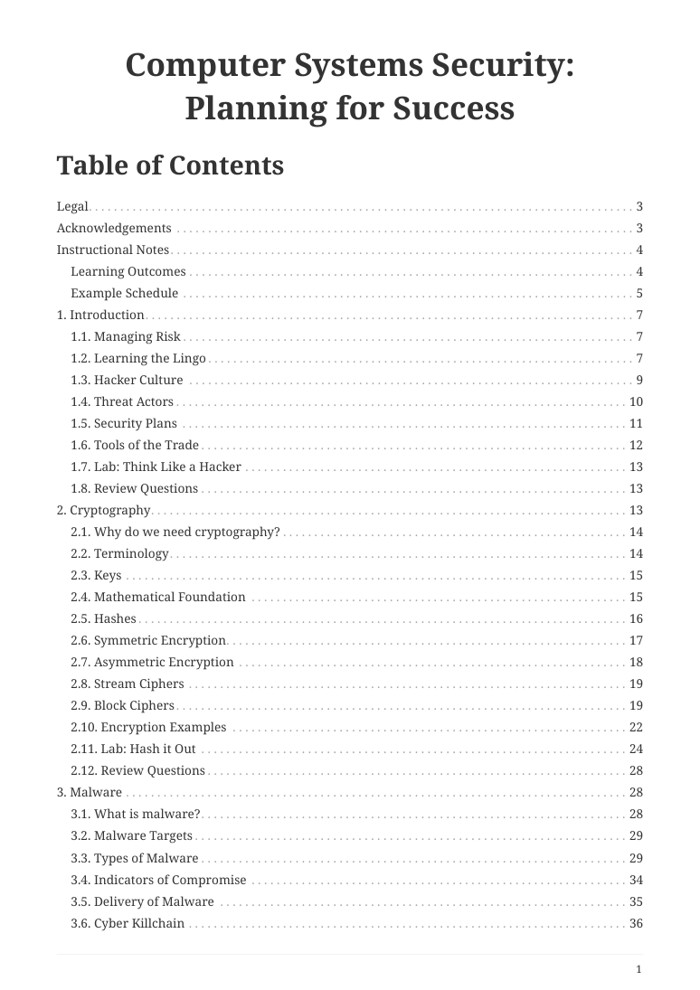 Computer Science
Computer Systems Security: Planning for Success
View Computer Systems Security: Planning for Success — book Computer Science
Pro Git: Everything You Need to Know About Git (English)
View Pro Git: Everything You Need to Know About Git (English) — bookHow to Think Like a Computer Scientist: C++ Version
How to Think Like a Computer Scientist: C++ Version
View How to Think Like a Computer Scientist: C++ Version — bookThink Data Structures: Algorithms and Information Retrieval in Java
Think Data Structures: Algorithms and Information Retrieval in Java
View Think Data Structures: Algorithms and Information Retrieval in Java — bookThink DSP: Digital Signal Processing in Python
Think DSP: Digital Signal Processing in Python
View Think DSP: Digital Signal Processing in Python — bookThink Complexity: Exploring Complexity Science with Python



