
 English Literature
Plays
Troilus and Cressida
William Shakespeare; complete source text.
Not rated yetRate this bookTroilus and Cressida places an unstable courtship within a prolonged war whose proclaimed ideals are repeatedly undermined by bargaining, rivalry, and brutality. Its Greek and Trojan plots ask how value is assigned to people, promises, and reputations. This guide covers the Prologue and all five acts, including Cressida's transfer to the Greek camp and the circumstances of Hector's death.
 Free
About this book
Troilus and Cressida is a play set in the Trojan War, bringing stories of heroic reputation into contact with desire, bargaining and sceptical wit. The Prologue in this Project Gutenberg text announces that the action begins in the middle of the conflict rather than retelling its whole origin. The opening scenes then move between Troilus’s account of his love and Cressida’s conversation with Pandarus as warriors pass by. Military names, family relationships and reports of battle are repeatedly turned into competing estimates of personal value. Students can use the sequence to examine how praise tries to direct attention and how a listener can answer that pressure. The text’s scene divisions should be used when referencing the hosted version. This guide distinguishes the Prologue’s theatrical frame, the characters’ claims and Academic Master’s editorial interpretation. Later encounters between the lovers and the Greek camp remain outside the reviewed coverage.
The hosted PDF is Academic Master’s 2026 formatting of Project Gutenberg eBook #1528, first released in 1998. It contains the complete source text and Gutenberg notices. Its displayed 138-page count refers to PDF sheets, including front matter and notices, rather than the pagination of an early printed edition.
Academic relevance. Folger Shakespeare Library supplies the text, scholarly resources and teaching materials for this work. This establishes academic relevance rather than evidence that a particular course assigns this PDF. View the institutional source
Editorial suitability: undergraduate English literature and drama students practising close reading, with guidance where unfamiliar language requires it. This is Academic Master’s assessment, rather than a level stated by the author.
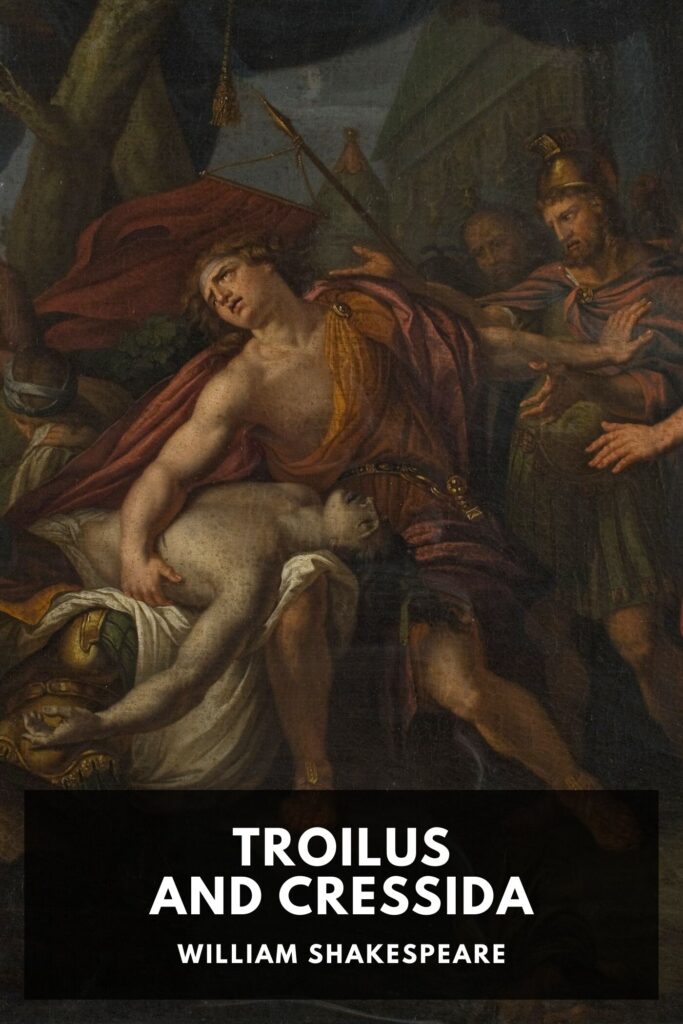
Cover image: Standard Ebooks edition. The hosted PDF remains the edition described above.
Source licence: Full Project Gutenberg License. Required source notices and licence terms are retained in the downloadable files.
Book summary
About this work
Troilus and Cressida places an unstable courtship within a prolonged war whose proclaimed ideals are repeatedly undermined by bargaining, rivalry, and brutality. Its Greek and Trojan plots ask how value is assigned to people, promises, and reputations. This guide covers the Prologue and all five acts, including Cressida's transfer to the Greek camp and the circumstances of Hector's death.
Act-by-act summaries
Prologue — Entering a war already in progress
The armored Prologue situates the action during the Trojan War and announces that the play begins in the middle of its story. This is a framing device rather than a promise to dramatize the entire legendary conflict. The audience is invited to judge the play's fortunes, and the military costume makes performance itself part of the encounter with heroic reputation. Keep this limitation in mind at the ending: Troy's eventual destruction belongs to the larger story, but the represented action closes earlier. The choice of a partial, unsettled episode helps explain why neither a completed romance nor a decisive military victory supplies conventional closure.
Act I — Courtship and a crisis of leadership
Troilus is absorbed by his desire for Cressida and relies on Pandarus to promote the relationship. Cressida listens to her uncle's praise of the Trojan warriors while distinguishing her private feelings from what she will openly reveal. In the Greek camp, Agamemnon and Nestor discuss the stalled campaign. Ulysses argues that the neglect of rank and order has allowed rivalry to weaken the army, especially through Achilles's refusal to participate. Hector's challenge creates an opportunity to manipulate reputations: the Greeks plan to elevate Ajax and make Achilles feel displaced. The act connects intimate desire with military competition through a common concern about how praise, withholding, and comparison affect what people want.
Act II — Worth, honor, and the continuation of war
Thersites mocks the Greek heroes, exposing an unflattering view of their pretensions and violence. In Troy, the princes debate whether to return Helen. Hector initially questions whether keeping her can justify the suffering, while Troilus argues that value depends on the honor already invested in the cause. Cassandra's warnings are heard but do not redirect policy. Hector ultimately supports continued resistance despite his earlier reasoning. Among the Greeks, attempts to provoke Achilles make Ajax's self-importance part of the same economy of prestige. Do not treat Ulysses's theory of order or Troilus's defense of honor as the play's settled moral. The dramatic sequence tests such arguments against decisions that preserve the war and the status of those conducting it.
Act III — Promises and a negotiated exchange
Pandarus brings Troilus and Cressida together. Their declarations invoke the prospect that future generations will use their names as examples of fidelity or falsehood, making imagined reputation part of their intimacy. Meanwhile, Cressida's father Calchas, now with the Greeks, asks for her in exchange for the captured Trojan Antenor. Her future is negotiated as a diplomatic transaction without her participation. Ulysses also stages the Greek leaders' apparent indifference to Achilles, explaining the instability of public reputation and the need to keep performing value. The act places the lovers' desire for an absolute promise beside systems that continually reassign people and honors. Cressida's impending departure is therefore a political act before it becomes a test of personal constancy.
Act IV — Separation and public appraisal
Troilus and Cressida learn that she must leave Troy. Their farewell includes exchanged tokens and anxiety about the Greek men she will encounter. Diomedes escorts her to the camp, where the greetings and kissing subject her to a public assessment shaped by male desire and competition. Ulysses offers a harsh interpretation of her conduct, but that interpretation belongs to a character whose own strategies the audience has already observed. Hector and Ajax fight in a ceremonially managed encounter that ends with recognition of kinship rather than a definitive victory. Hospitality follows across enemy lines. Troilus asks Ulysses to help him see Cressida, bringing the courtship plot into the same space where warriors exchange courtesies while preparing further violence.
Act V — Witnessing, disillusionment, and the destruction of heroic form
Troilus secretly watches Cressida with Diomedes and sees her give him the sleeve received from Troilus, though her words and hesitation complicate a simple account of ease or indifference. Troilus struggles to reconcile the woman he sees with the identity he has invested in her. Battle resumes despite warnings to Hector. After Patroclus's death, Achilles returns to action. Hector later removes his armor, and Achilles's Myrmidons surround and kill him; the announced glory of Achilles's victory conceals the manner of the killing. Troilus survives in anger and calls for renewed hostility. Pandarus closes with an address preoccupied with disease and inheritance, offering no repaired love story. The ending leaves the machinery of war and exchange continuing after its ideals have been exposed.
Study instructions
- Compare the Trojan debate over Helen with the Greek discussion of rank. Identify whose interests are protected by each account of value.
- Track Cressida's available choices before and after her transfer, separating political constraint from your judgment of particular actions.
- Read Ulysses's descriptions as interventions by a strategist rather than automatically accepting them as neutral narration.
- Compare Hector's ceremonial encounter with Ajax and his final encounter with Achilles's followers.
- Distinguish the ending shown in this play from later events in the wider Trojan legend when writing a summary.
Questions for reflection
- What changes when a person is treated as a prize, a diplomatic exchange, and a source of reputation?
- How do the lovers' imagined future reputations affect their present promises?
- Why does the manner of Hector's death matter more than the bare announcement that Achilles has killed him?
Sources and coverage
This original study guide follows the complete work in the linked Project Gutenberg edition and includes the ending. Poem numbers and act divisions follow that source; thematic reading groups are editorial aids, not additional chapters of the original. Plot summary and interpretation are distinguished through the reading questions. Historical title-page attributions do not by themselves settle authorship. Read the source text; Edition details.
About access & copyright
Check this edition’s source and licence before reusing its files or content. A library listing does not grant additional rights.
Read our Library Access & Copyright policyMediation
Analyse Pandarus’s role in managing the courtship.
Contested reputation
Compare rival estimates of heroic and personal worth.
Public and private speech
Distinguish Cressida’s displayed resistance from her admitted affection.
Theatrical framing
Explain the Prologue’s selective account of war.
Reader ratings & reviews
Share your thoughts
Your review helps other students choose the right resources.
KEEP LEARNING
Your next great read
English Literature English Literature
Thomas Lord Cromwell
View Thomas Lord Cromwell — book English Literature
Sir John Oldcastle
View Sir John Oldcastle — book English Literature
The Merry Devil of Edmonton
View The Merry Devil of Edmonton — book English Literature
The Puritan Widow
View The Puritan Widow — book English Literature
The London Prodigal
View The London Prodigal — book English Literature
King Edward III
View King Edward III — book English Literature
Fair Em
View Fair Em — book English Literature
Arden of Feversham
View Arden of Feversham — book English Literature



