
 Earth Sciences
Natural SciencesTextbook
Food Preparation Lab Manual for FSHN 1150
Not rated yetRate this bookThis Iowa State University laboratory manual uses food preparation to explore food-science principles. Written by the Department of Food Science and Human Nutrition and edited by Erica Beirman and Kate Gilbert, it supports the FSHN 1150 course.
Read on the publisher’s website. Opens in a new tab.
 Free
About this book
Food Preparation Lab Manual for FSHN 1150 is a 2025 Iowa State University Digital Press publication. The Department of Food Science and Human Nutrition is credited as the authoring body; Erica Beirman and Kate Gilbert are the editors. The official PDF contains 257 pages.
The contents organise learning around equipment and measurement, ingredients, food properties, cooking methods, and the evaluation of prepared products. Later sections include grains, legumes, fats, dairy, eggs, meats, baking, and beverages. Appendices provide evaluation vocabulary, charts, terminology, and image credits.
The introduction gives the manual a specific educational purpose. Its recipes and comparisons were selected for laboratory learning, with some preparations adapted to the conditions of a teaching session. It should therefore be approached as a course resource rather than an interchangeable collection of household recipes.
The original text is CC BY-NC-SA 4.0, except where noted. The guide below covers the introduction only and links to the complete official manual instead of reproducing recipes, assessment questions, or procedures.
Book summary
The Food Preparation Lab Manual for FSHN 1150 uses fifteen laboratory units to connect preparation with food-science principles. Iowa State University's department developed the manual, edited by Erica Beirman and Kate Gilbert. Recipes are teaching tools, sometimes adapted to laboratory timing; the introduction explains why they should not automatically be treated as general recipes or scaled without reconsidering the process.
Chapter-by-chapter summaries
Unit 1: Procedures, Measurement, Heating, and Sensory Attributes
The opening establishes the shared laboratory environment and the need for consistent measurement. Heating equipment and sensory vocabulary connect an operation with the evidence used to evaluate its result. A useful record distinguishes what was done from what was observed, making later comparisons interpretable rather than dependent on memory.
Unit 2: Varietal Differences, Osmosis, and Browning
Potato and apple comparisons make differences in materials and processes visible. The unit connects variety with outcomes while examining osmosis and enzymatic browning. Interpreting a comparison requires attention to which factor changed and which conditions remained comparable, rather than assuming every difference in a finished sample has the same cause.
Unit 3: Vegetables and Pigments
Pigments and cooking methods influence visible and sensory qualities. The unit links preparation with the characteristics of different vegetables. It encourages explaining an observed color or flavor through the process and material involved, not simply rating a result as better without identifying the criterion used.
Unit 4: Starch and Cereals
Starch-thickened products and cereal cookery provide examples of structure developing through processing. The unit connects ingredients, heating, and the resulting consistency. A useful explanation identifies the intended product property and relates the observations to it rather than treating a recipe's completion as proof that the desired transformation occurred.
Unit 5: Cereal Grains and Legumes
The unit extends preparation to materials with different structures and requirements. Comparing recipes helps connect handling and cooking choices with texture and other outcomes. The conclusion task should identify why the selected process fits the material, not assume that one procedure is equally suitable for all grains and legumes.
Unit 6: Fats, Oils, Frying, and Emulsions
Fats and oils perform several roles in food preparation. Frying and dressings illustrate different systems and desired outcomes. The unit encourages distinguishing an ingredient's presence from its function, including the relationships among phases in an emulsion and the conditions affecting the resulting product.
Unit 7: Protein and Dairy
Dairy cookery connects protein behavior with preparation and product characteristics. Cheese varieties expand comparison beyond one uniform category. Interpretation should link an observed change with the particular product and process, recognizing that materials grouped under dairy can behave differently in a cooking task.
Unit 8: Eggs, Custards, and Cookery
Egg quality and cooking behavior are connected with custard and other preparations. The unit makes the relation among composition, heating, and structure observable. A report should distinguish a product's texture or appearance from the explanation proposed for it and use the comparison supplied by the assigned activity.
Unit 9: Egg-White Foams
Foam products such as angel food cake and soufflés show how air, structure, and processing interact. The unit includes defects and probable causes, making diagnosis part of learning. A plausible cause should be related to the actual preparation record rather than inferred from the finished appearance alone.
Unit 10: Dry-Heat Cookery
Dry-heat methods are examined through recipes and comparison of meat, poultry, and fish. The unit connects a method with the material and desired product. Different foods should not be assumed to respond identically, so the evaluation needs explicit criteria and attention to the conditions used.
Unit 11: Moist Heat and Biscuits
Moist-heat meat cookery is paired with biscuit work in this laboratory sequence. The activities address different structures and transformations. The unit illustrates why a laboratory schedule can include multiple learning goals, each requiring its own explanation and evidence rather than one general conclusion about cooking success.
Unit 12: Muffins and Shortened Cakes
The muffin and conventional cake methods connect mixing and ingredients with product structure. Comparison makes the role of method visible. The educational task is to explain why a process produces a characteristic result, using observations and the preparation record instead of assuming that ingredients alone determine the outcome.
Unit 13: Pies and Pastry
Pastry preparation and defect analysis connect technique with the desired crust and filling. The unit encourages evaluating the product against specific characteristics. When a result differs from the expectation, the record of ingredients and handling helps distinguish among possible explanations.
Unit 14: Yeast Bread
Yeast bread and pizza provide a setting for examining a developing dough system and its processing. The unit connects stages of preparation with the final structure. Understanding the sequence matters because a later observation may reflect conditions established earlier rather than only the final heating step.
Unit 15 and Appendices: Review and Evaluation
The final unit combines review with botanical-beverage tasting. Appendices provide sensory terms, meat charts, cooking vocabulary, and image information. These resources support precise comparison: an evaluation becomes more useful when the same term and criterion mean the same thing across observations.
Study instructions
- For each unit, predict one product difference and state the process expected to cause it.
- Use the manual's sensory vocabulary to record observations consistently.
- Compare the preparation record with the finished product before assigning a probable cause to a defect.
- Explain the underlying principle in a conclusion, keeping a laboratory teaching recipe distinct from a general-use formulation.
Sources and coverage
This original study guide follows the linked source edition and its chapters or explicitly identified sections. It condenses the main ideas and their relationships; examples and practice directions are for study alongside the complete text. Complete source edition.
About access & copyright
This page provides book information and study material. Full-text access is provided by the original publisher or authorised source; a listing does not grant permission to republish the book.
Read our Library Access & Copyright policyInstructional purpose
Explain why a preparation may be selected for a laboratory comparison.
Context
Recognise the importance of course conditions when reading a manual.
Observation
Separate what happened from an interpretation of the result.
Source use
Return to the complete manual for the actual procedures and assessments.
Reader ratings & reviews
Share your thoughts
Your review helps other students choose the right resources.
KEEP LEARNING
Your next great read
Earth Sciences Engineering & Technology
Building with Nature & Beyond: Principles for designing nature based engineering solutions
View Building with Nature & Beyond: Principles for designing nature based engineering solutions — book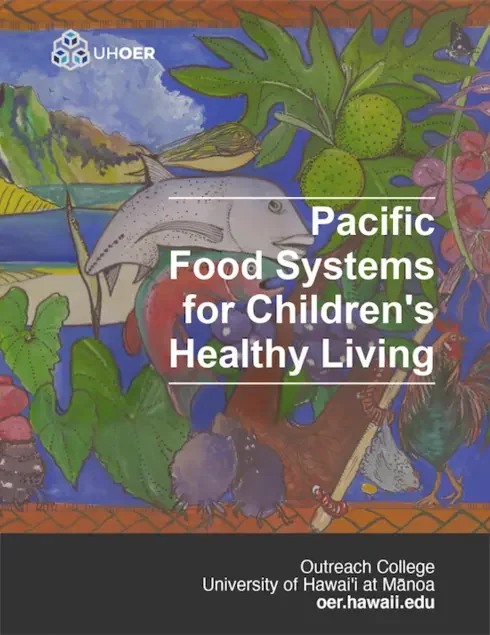 Cultural & Ethnic Studies
Pacific Food Systems for Children's Healthy Living
View Pacific Food Systems for Children's Healthy Living — book Chemistry
The Basics of General, Organic, and Biological Chemistry
View The Basics of General, Organic, and Biological Chemistry — book Natural Sciences
The Adventure of Physics - Vol. I: Fall, Flow, and Heat
View The Adventure of Physics - Vol. I: Fall, Flow, and Heat — book Natural Sciences
The Adventure of Physics - Vol. VI: The Strand Model - A Speculation on Unification
View The Adventure of Physics - Vol. VI: The Strand Model - A Speculation on Unification — book Natural Sciences
Mind, Body, World: Foundations of Cognitive Science
View Mind, Body, World: Foundations of Cognitive Science — book Biology
Anatomy and Physiology of Animals
View Anatomy and Physiology of Animals — book Biology
General Biology
View General Biology — book Chemistry



