
 Math
DesignTextbook
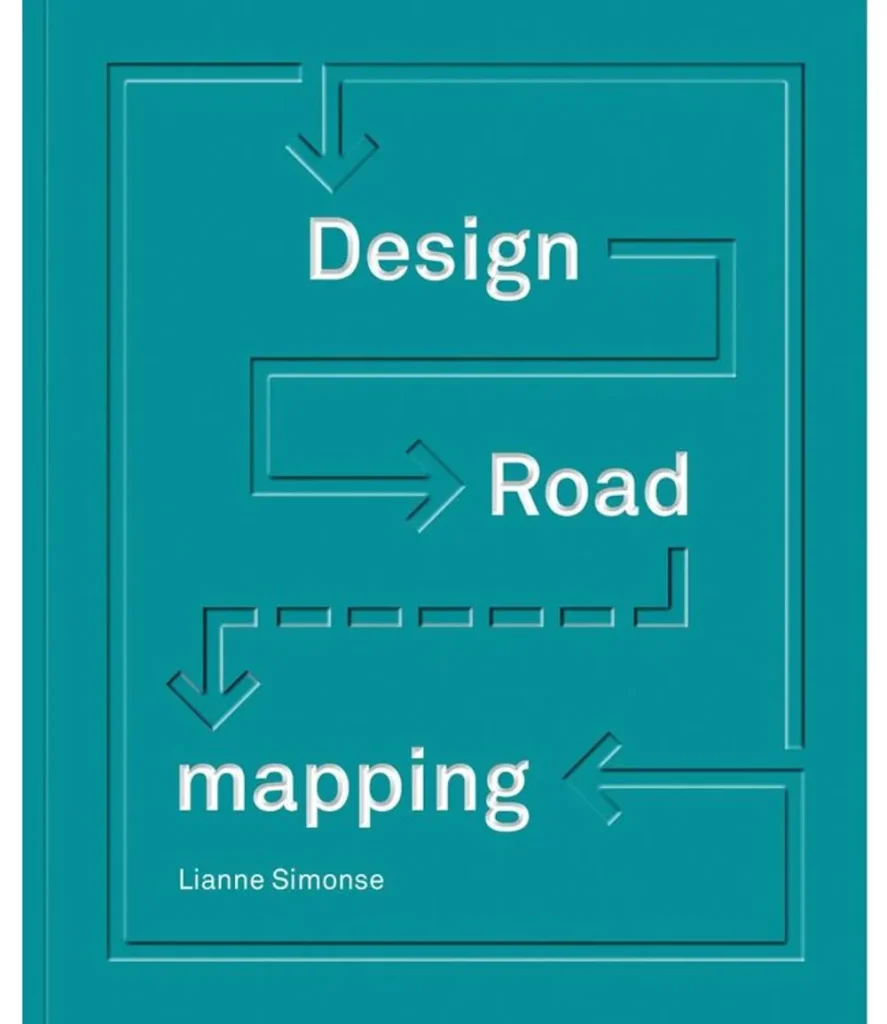
Design Roadmapping: Guidebook for Future Foresight Techniques
Not rated yetRate this bookDesign Roadmapping: Guidebook for Future Foresight Techniques explains how designers connect a desirable future with coordinated choices about products, technology, markets, and timing. Its seven chapters combine foresight techniques, examples, collaborative mapping, and practical labs. This guide follows the complete book and treats a roadmap as a reasoned, revisable strategy rather than a confident prediction.
Free reading is available at the official source. Opens in a new tab.
 Free
About this book
Design Roadmapping: Guidebook for Future Foresight Techniques explains how designers connect a desirable future with coordinated choices about products, technology, markets, and timing. Its seven chapters combine foresight techniques, examples, collaborative mapping, and practical labs. This guide follows the complete book and treats a roadmap as a reasoned, revisable strategy rather than a confident prediction.
Chapter-wise summaries and reading tasks
Chapter 1 Design Roadmapping
Design roadmapping establishes a shared account of how present capabilities might develop toward future value. The opening chapter introduces the roadmap as both a visual artifact and a collaborative process: it connects ambitions, opportunities, and enabling developments across time. Different layers make relationships visible, while the temporal dimension exposes dependencies that a static list of ideas would conceal. Historical development and practical cases show why roadmaps are useful for aligning people who approach the future from different professional perspectives. The central challenge is to maintain a clear direction without pretending that uncertain events are guaranteed. A useful roadmap therefore records assumptions and invites revision as learning changes what appears feasible or desirable.
Study task. Choose a design challenge and map a future benefit, the product or service that could deliver it, and the enabling capabilities. Mark assumptions and dependencies separately from commitments.
Chapter 2 Creative Trend Research
Creative trend research looks for meaningful changes that may shape future needs and opportunities. The chapter connects broad scanning with interpretation: collecting striking examples is only a beginning, because a trend must explain a direction of change rather than merely name something fashionable. Visual material can make emerging patterns easier to discuss, but its source, context, and relevance still require scrutiny. Strategic scanning helps connect signals from society, culture, technology, and markets to a particular design question. The Peerby case illustrates how research can inform a concrete opportunity. Readers should compare multiple signals, investigate contradictory evidence, and explain how a proposed trend might affect people’s activities or expectations.
Study task. Build a small evidence board for one possible trend using varied sources. Separate observations from your interpretation, identify a counterexample, and describe a design implication worth investigating.
Chapter 3 Future Visioning
Future visioning develops an inspiring yet discussable picture of a desirable future. A vision is more than a forecast of what seems likely: it expresses a direction that people may choose to pursue. The chapter considers the vision concept, creative leadership, and ways to turn future possibilities into a coherent design ambition. The Ferrari case offers material for examining the relationship between identity, aspiration, and future propositions. A productive vision is specific enough to influence decisions while leaving room for alternative pathways. Its assumptions about users and society should be visible, particularly when different stakeholders value different outcomes. Visioning gains practical force when it changes what a team chooses to explore next.
Study task. Write a short future scenario for a chosen user group, stating the desired experience and underlying values. Ask a second reader which design decisions the vision supports and which remain ambiguous.
Chapter 4 Technology Scouting & Modular Architecture
Technology scouting connects emerging capabilities to possible applications, while modular architecture helps organize how those capabilities could fit into a larger offering. The chapter examines technological evolution, scouting practices, and the use of a system perspective to identify components and interfaces. A radar or comparable overview can make maturity and relevance easier to compare, but technical novelty alone does not establish strategic value. The Océ case and teardown-oriented lab encourage readers to relate abstract possibilities to actual product structures. Dependencies matter: a promising component may require complementary development before it becomes useful. Scouting should therefore examine evidence of readiness, integration requirements, and the opportunity it enables for users.
Study task. Break a familiar product into functional modules and identify one possible replacement technology. Assess what interfaces, capabilities, and evidence of readiness would be needed before adopting it.
Chapter 5 Time Pacing Strategy
Time pacing strategy addresses when changes should happen and how different development rhythms interact. Markets, technologies, organizations, and product generations do not necessarily move on the same clock. The chapter uses time horizons, lifecycle thinking, and design clocks to explore these mismatches and their strategic consequences. Moving early may create learning opportunities but also expose an organization to immature capabilities; moving late can reduce uncertainty while missing a useful opening. The Philips case gives a context for considering how timing supports design strategy. Readers should avoid spacing milestones merely to make a diagram look balanced. A credible sequence explains why each transition becomes possible and what information could change its timing.
Study task. Create three time horizons for your challenge. For each transition, name a prerequisite, a signal that would justify moving forward, and an event that would make the timing premature.
Chapter 6 Mapping Sessions
Mapping sessions turn individual knowledge into a negotiated strategic picture. The chapter describes creative dialogue, critical moments in the mapping process, and the relationship between facilitation and decision making. Participants bring different assumptions about value, feasibility, and timing; making those assumptions explicit is part of the work rather than an interruption. A session should produce more than an attractive arrangement of notes: it should clarify connections, unresolved disagreements, and the reasoning behind selected pathways. The value-mapping lab provides an opportunity to practice this collective interpretation. Good facilitation allows quieter perspectives to influence the outcome and distinguishes agreement about a direction from certainty about every detail.
Study task. Plan a short mapping workshop with a clear question, participant roles, and a sequence of activities. Specify how you will capture disagreement, record decisions, and assign follow-up research.
Chapter 7 Visualise Roadmaps
Visualising roadmaps makes strategic reasoning accessible to a particular audience. The final chapter considers templates, visual choices, and communication through examples including the State Library case. Layers, time axes, labels, pathways, and emphasis should help viewers understand relationships without an extensive verbal explanation. A template is a starting structure, not a guarantee that the underlying reasoning is sound. Excessive detail can obscure strategic choices, while excessive simplification can hide uncertainty and dependencies. A compelling roadmap therefore balances readability with sufficient evidence to support discussion. Readers should check whether a viewer can identify the future ambition, trace an enabling pathway, and distinguish a firm commitment from a possibility.
Study task. Produce a one-page roadmap for a named audience. Ask someone unfamiliar with the project to explain its direction, dependencies, and uncertainties, then revise the graphic where their interpretation differs from your intent.
How to study this book
- Begin with a specific design question and stakeholder context. Maintain a distinction between observed evidence, interpretations, future aspirations, and implementation decisions.
- Work through the seven chapters as a connected process. Bring trend research, technology scouting, and time assumptions into mapping sessions instead of treating the labs as isolated worksheets.
- Keep an assumption log alongside the visual roadmap. Schedule a review around meaningful evidence or decision points and record what changed and why.
Questions for reflection
- Which parts of your roadmap express a desired future, and which claim that a development is likely?
- Whose needs or knowledge are absent from the mapping process?
- What evidence would make you revise a pathway or its timing?
Source edition and coverage
This guide follows the complete seven-chapter Design Roadmapping book by Lianne Simonse. The publisher also supplies separate lab worksheets; those supplements do not replace the complete guidebook. Chapter tasks here are original learning activities, not reproductions of the published lab sheets. This original study guide explains the source in new wording and adds learning activities. Read the publisher’s book and complete exercises.
About access & copyright
This page provides book information and study material. Full-text access is provided by the original publisher or authorised source; a listing does not grant permission to republish the book.
Read our Library Access & Copyright policyExplore the contents
Check the chapters covered in this edition.
Visit the official source
See reading, preview or purchase options.
Save for later
Keep this textbook in your saved collection.
Reader ratings & reviews
Share your thoughts
Your review helps other students choose the right resources.
KEEP LEARNING
Your next great read
Math Econometrics and economic statistics
Introduction to Business Statistics Problem Ancillary Materials: Yukon Edition
View Introduction to Business Statistics Problem Ancillary Materials: Yukon Edition — book Nursing
Population Health for Nurses
View Population Health for Nurses — book Music Theory
Fundmentals of Music Theory
View Fundmentals of Music Theory — book Science
Physics
View Physics — book Mathematical Modeling
From theORy to application: learning to optimize with Operations Research in an interactive way
View From theORy to application: learning to optimize with Operations Research in an interactive way — book Business
Organizational Behavior
View Organizational Behavior — book Nursing
Nutrition for Nurses
View Nutrition for Nurses — book evidence-based HRM
Evidence Based HRM: What we know about people in workplaces
View Evidence Based HRM: What we know about people in workplaces — book Science



