
 Math
European Heritage MapsTextbook
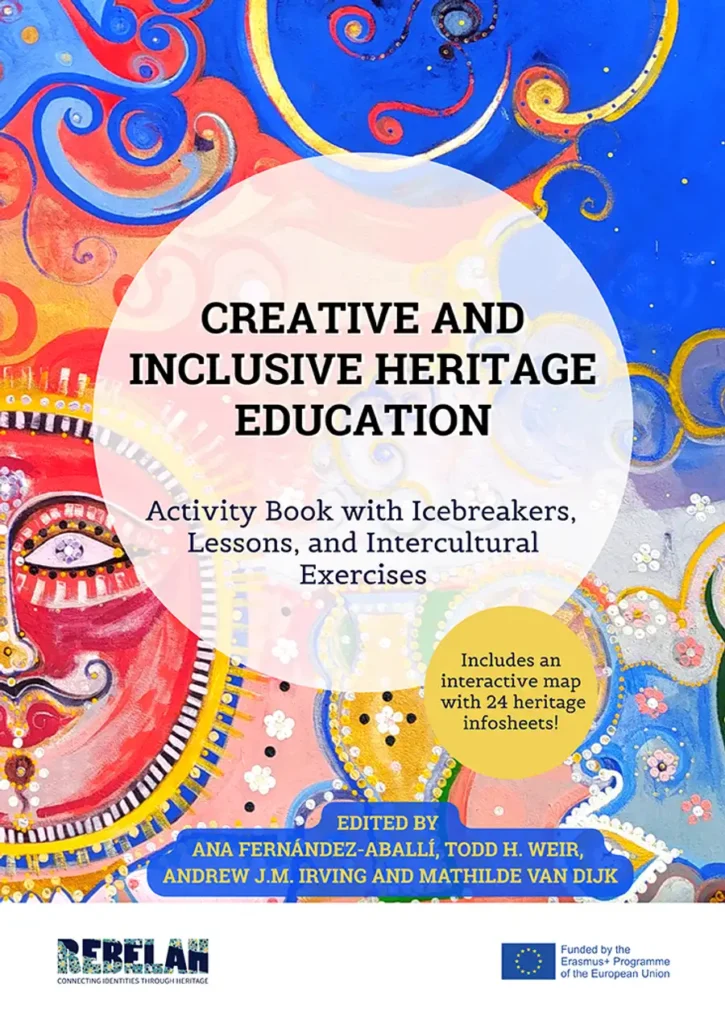
Creative and Inclusive Heritage Education: Activity Book with Icebreakers, Lessons, and Intercultural Exercises
Not rated yetRate this bookCreative and Inclusive Heritage Education: Activity Book with Icebreakers, Lessons, and Intercultural Exercises supports educators in connecting personal heritage with public places, objects, stories, and institutions. Three introductory sections establish its purpose and pedagogy, followed by twenty-nine activities. This guide summarizes every section and activity, with original preparation and reflection tasks. It complements the theoretical handbook and directs readers to the source for complete facilitation instructions.
Free reading is available at the official source. Opens in a new tab.
 Free
About this book
Creative and Inclusive Heritage Education: Activity Book with Icebreakers, Lessons, and Intercultural Exercises supports educators in connecting personal heritage with public places, objects, stories, and institutions. Three introductory sections establish its purpose and pedagogy, followed by twenty-nine activities. This guide summarizes every section and activity, with original preparation and reflection tasks. It complements the theoretical handbook and directs readers to the source for complete facilitation instructions.
Chapter-wise summaries and study tasks
1 Introduction
The introduction expands heritage beyond museums and monuments to include memories, habits, sayings, and practices that learners bring into an educational setting. It frames the educator as a mediator between personal experience and public heritage rather than the sole authority on meaning. The activity book is intended to be read with its companion handbook, which provides fuller theoretical grounding. Readers should identify the kind of dialogue an activity is meant to support before choosing it. Inclusion depends on the process of participation as well as the examples selected. A learner should retain control over personal information and be able to engage through a nonpersonal example.
Study task. Write a learning aim that connects personal and public heritage. Explain how your role would shift from supplying the correct interpretation to facilitating an evidence-aware conversation.
2 Whose Heritage? A Short Introduction to European Heritage Debates
The European heritage introduction uses debate around a prominent public site to ask why some inherited places command recognition and resources. Heritage can support belonging at personal, national, religious, and wider levels, while different people relate to the same site in different ways. Public recognition is selective, so readers should ask which histories are maintained, whose contributions are visible, and who participates in decisions. A familiar monument’s significance should be investigated rather than presumed universal. The section prepares learners to discuss heritage as interpretation and social practice instead of a fixed inventory of valuable objects.
Study task. Compare two fictional funding proposals for heritage sites. Identify their stated values, implied audiences, absent perspectives, and the evidence that would support a fair discussion of priorities.
3 Methodologies and Pedagogical Approach
The pedagogy section introduces the methodological foundations behind the activities and points to the handbook for deeper treatment. Storytelling, embodied work, critical incidents, and participatory theatre offer different ways to surface meaning and examine relationships. An activity’s format is not itself evidence that it will produce inclusion. Facilitators must consider the group, their own competence, accessibility, and how difficult moments will be handled. Reflection connects experience to learning and allows feedback on the process. Readers should distinguish an educational exercise from therapy and avoid assuming that emotional intensity is a necessary measure of success.
Study task. Choose one method named in the source and identify its educational purpose, demands on the facilitator, and an accessible alternative. Plan a debrief that permits disagreement and private feedback.
Activity 1: My Photo
My Photo uses a chosen image as an entry point into memory, storytelling, and appreciative listening. Its educational value lies in the meaning a person gives the image rather than the photographic quality or public importance of its subject. Listening can reveal how individual memories connect with broader heritage without turning a personal account into a universal history. An educator should make the scope of sharing clear and avoid treating a photograph as permission to copy, display, or circulate it. The source provides the full activity; this guide emphasizes agency and the distinction between hearing a story and claiming ownership of it.
Study task. Draft a participation note explaining that a public image, invented example, or decision to pass is acceptable. Identify a listening question that invites meaning without pressing for private detail.
Activity 2: Concentric Circles
Concentric Circles is an icebreaker designed to build connections through short paired exchanges about heritage. The changing conversational setting can reveal how people associate different emotions and experiences with the same broad topic. Its value depends on listening rather than rushing to collect facts about one another. Brief encounters can make entry easier for some learners while increasing language or processing demands for others. Readers should consider how the structure affects access and whether the pace allows participants to choose what they share. The reflection should connect the experience to the subjectivity of heritage rather than assume that meeting several people automatically creates understanding.
Study task. Assess the format for a group with varied language fluency or mobility. Describe an equivalent conversational option and one debrief question about how meanings differed across exchanges.
Activity 3: Kaleidoscopic Portrait – Presenting Oneself through Heritage
The Kaleidoscopic Portrait uses associations with objects, places, and historical or cultural references to introduce a person through several facets. The metaphor challenges the idea that identity can be reduced to a single label. A chosen comparison communicates a particular meaning, but another participant may attach a different meaning to the same reference. Educators can use that difference to encourage curiosity rather than correction. The activity should not become a test of cultural knowledge or an attempt to infer someone’s entire background from a preference. Its purpose is a playful beginning to self-presentation and connection.
Study task. Prepare a fictional multi-faceted portrait and explain two possible interpretations of one reference. Identify how you would invite clarification while leaving the speaker in control of meaning.
Activity 4: What would you rather?
What Would You Rather? uses choices to prompt energy, connection, and reflection on what matters to participants. The apparent simplicity of a choice can reveal competing values and show that people may reach similar decisions for different reasons. Readers should resist turning responses into personality diagnoses or stable cultural traits. The educational opportunity is to discuss interpretation and the constraints built into a question. A forced pair of options may exclude a participant’s actual preference, so the facilitator should allow complexity in the discussion. Questions need to fit the group and avoid unnecessary disclosure or public judgment.
Study task. Create two low-stakes fictional choice questions and identify the values they might raise. Explain how you would respond if someone rejects both options or gives an unexpected reason.
Activity 5: The Places We Inherit
The Places We Inherit links heritage, memory, identity, and bodily representation. It connects places associated with origins and present life without assuming that these attachments are simple or continuous. Embodied expression can communicate meanings that are difficult to put into words, while observers may still interpret a posture differently from its creator. Readers should consider accessibility and the possibility that birthplace or family history is sensitive. The activity’s learning value lies in exploring relationships among place and experience, not in requiring a participant to prove a connection to an expected location.
Study task. Plan an accessible response option using description, drawing, or a fictional place. Identify a question that connects past and present attachments without requiring disclosure of family or migration history.
Activity 6: The Imaginary Journey
The Imaginary Journey connects sound, memory, the body, and personal heritage through paired participation. It draws attention to forms of cultural meaning that do not rely primarily on verbal explanation. Sound can evoke a place or experience while remaining open to different interpretations. Readers should consider trust, sensory access, and participant control before using an immersive format. An educator should not assume a particular sound carries the same emotional meaning for everyone. The source gives the complete method; the study focus here is how sensory experience can support reflection without making a listener’s interpretation more authoritative than the person’s own account.
Study task. Identify sensory and communication access needs for a hypothetical group. Propose a nonimmersive alternative and a debrief question distinguishing what was perceived from what was intended.
Activity 7: I am Heritage
I Am Heritage treats heritage as a lived part of the self rather than only an external object. Personal connections can make the topic meaningful and reveal why disagreements about heritage may feel emotionally charged. An educational setting should recognize that significance without seeking to uncover or resolve every participant’s sensitive history. Readers should distinguish self-awareness from compulsory disclosure and avoid treating an emotional reaction as evidence of a shared group identity. The facilitator’s role is to create boundaries for exploration and reflection. A participant may choose an ordinary, public, or invented example while still engaging with the central idea.
Study task. Write a preparation note defining the voluntary scope of reflection and an alternative to personal sharing. Explain how you would respond if a participant wished to pause or keep an interpretation private.
Activity 8: Doja, the Gypsy Fairy
Doja, the Gypsy Fairy centers a Romani animated story as a resource for thinking about representation and heritage. The activity invites attention to narrative perspective and cultural meaning rather than reliance on outside stereotypes. Its title is retained from the published source, while educators should use terminology with attention to context and people’s self-description. A single story can open a discussion without representing the diversity of Roma communities. Readers should examine who created the account, what it makes visible, and how a viewer’s prior expectations influence interpretation. Narrative engagement should prompt further learning rather than confidence that one now understands an entire community.
Study task. Prepare contextual notes about the source story and two questions about perspective or representation. Identify an additional community-informed source that could prevent the discussion from relying on one example.
Activity 9: Birth Order
Birth Order uses familiar assumptions about family positions to examine how quickly stereotypes form. The point is not to establish that birth order reliably predicts personality. Instead, the activity makes the process of categorizing, generalizing, and judging available for reflection. Participants may recognize exceptions that expose the weakness of an apparently plausible label. Readers should avoid replacing one stereotype with another or pressuring people to explain family circumstances. A careful debrief connects the example to broader patterns of inference and their consequences. It should distinguish the convenience of a category from evidence about an individual.
Study task. Write a fictional birth-order generalization, then identify the evidence and counterexamples needed to assess it. Plan a debrief that explicitly rejects using the exercise to classify participants’ personalities.
Activity 10: Telling Fairy Tales: Hansel and Gretel
Telling Fairy Tales uses a familiar narrative to examine how perspective changes interpretation. The source focuses on Hansel and Gretel while allowing consideration of other tales. Retelling can reveal which character’s motives were taken for granted and which details shaped sympathy or judgment. Readers should distinguish imaginative reinterpretation from a claim about the history of the original story. Familiarity also varies, so a common reference should not be assumed. The activity supports creative and critical thinking by making narrative choices visible. Its broader relevance is that public heritage stories, like fairy tales, can privilege a narrator or leave other viewpoints unexplored.
Study task. Compare two fictional perspectives on a well-known tale. Identify a changed assumption, an unchanged event, and a question about whose account is usually treated as authoritative.
Activity 11: Bodies Building Heritage
Bodies Building Heritage uses collective physical representation to connect tangible and intangible heritage with observation and cooperation. It asks participants to respond to one another rather than rely only on verbal direction. The process can make leadership, coordination, and assumptions about a shared reference visible. A group may discover that the heritage element it believed everyone knew has several interpretations. Readers should consider mobility, comfort, consent, and alternatives to physical participation. The learning focus is collaboration and meaning making, not performance quality. Reflection should ask how the group arrived at its representation and whose ideas became most influential.
Study task. Plan a nonphysical equivalent using movable shapes or a shared sketch. Define how participants can contribute equally and one question about the emergence of informal leadership.
Activity 12: “Put Your Name On It!”
Put Your Name On It connects names, personal histories, and public places. A name can carry family, linguistic, historical, and social meanings while also being interpreted or mispronounced by others. The activity links everyday movement through a city with a sense of belonging and recognition. Readers should approach unfamiliar names respectfully without assuming a person wishes to explain their origin. Public presentation also raises questions about privacy and consent. The educational focus is the relationship between personal and collective heritage, not the extraction of a complete life story from a label.
Study task. Draft a respectful way to ask how someone wishes to be addressed and an option using a chosen or fictional name. Identify privacy considerations before any public display or recording.
Activity 13: Introduction to an Alien
Introduction to an Alien uses an imagined outsider to examine descriptions of community membership. A broad statement about a group can sound convincing until it is compared with individual experiences and exceptions. The activity makes the gap between category and person discussable. Readers should avoid requiring a minority participant to demonstrate or defend a collective identity. A fictional or voluntary example can reveal how stereotypes are formed without assigning anyone a spokesperson role. The debrief should focus on who makes the description, what evidence supports it, and what variation it obscures. Belonging need not imply conformity to every expectation attached to a label.
Study task. Write an outsider’s short description of a fictional community, then revise it to show variation and uncertainty. Identify which claims would need member perspectives before being used in teaching.
Activity 14: My music, your Music
My Music, Your Music explores how songs and musical practices connect memory, movement, and identity. Music can evoke a place or life period while also reflecting exchange across regions and communities. A shared melody may have different histories or meanings for different listeners. Readers should distinguish personal association from documented origin and avoid assuming that musical heritage belongs within a single unmoving boundary. The activity can support discussion of migration and change without requiring participants to disclose experiences they consider private. Listening should recognize both connection and difference rather than seek one correct emotional response.
Study task. Choose a public musical example and separate its documented history from a hypothetical listener’s personal associations. Identify a question about exchange or migration that would require further research.
Activity 15: Tree of Life
Tree of Life uses a visual metaphor to connect past influences, present strengths, values, and future possibilities. Its structure can help a learner organize a story without reducing the person to a linear list of events. Different parts of a tree may mean different things to different participants, and the metaphor should remain a tool rather than a prescribed account of identity. Readers should avoid assuming a family-centered interpretation fits everyone. Personal reflection may remain private, and an invented example can serve the same conceptual purpose. The learning aim is awareness and meaning, not comparison of whose life story is more substantial.
Study task. Prepare a fictional tree-based reflection and explain how it connects continuity with change. Offer an alternative metaphor and identify which aspects participants could choose to keep private.
Activity 16: My Heritage, Your Heritage: Talking about Difference
My Heritage, Your Heritage emphasizes personal narratives around meaningful objects and practices without limiting heritage to expert recognition. Sharing can reveal how an ordinary item carries significance that is not visible from appearance alone. The activity supports democratization by recognizing participants as interpreters rather than only recipients of institutional knowledge. Readers should also distinguish personal meaning from a historical claim that requires evidence. Dialogue can hold both without demanding that they be identical. A facilitator should encourage curiosity and preserve control over what is shared, avoiding ranking stories by prestige, antiquity, or familiarity.
Study task. Compare an institutional label and a fictional personal account of the same object. Explain how both could appear in a learning resource while clearly distinguishing evidence, memory, and interpretation.
Activity 17: Drawing a Monument
Drawing a Monument uses paired communication to explore cooperation and the assumptions behind describing a familiar heritage object. A mismatch between an intended image and a drawing can reveal ambiguous instructions, different reference points, or unspoken expectations. The result should not be judged as a test of artistic ability. Readers should examine how clarification is permitted and whether the communication structure gives both participants a meaningful role. A monument believed to be shared knowledge may not be equally familiar to everyone. The debrief connects a playful task with broader questions about how heritage is communicated and understood.
Study task. Design a reflection comparing intended meaning, spoken description, and received interpretation. Identify one adjustment for language or sensory access without turning accuracy into a competition.
Activity 18: Heritage Scavenger Hunt
Heritage Scavenger Hunt introduces a structured inquiry into an object, practice, site, event, building, or person. The activity combines curiosity with multiple research routes, such as public information, institutional resources, and conversations where appropriate. Its value lies in finding different perspectives rather than merely collecting the fastest answer. Readers should track provenance, distinguish repeated claims from independent evidence, and acknowledge gaps. A discovery can change an initial interpretation rather than simply confirm it. The educator should make permissions and ethical boundaries clear for any proposed interaction with people or places.
Study task. Write a research plan for a public heritage element using three different source types. Include a way to record conflicting accounts, missing information, and any permissions needed before inquiry.
Activity 19: Minority Heritage Trails
Minority Heritage Trails brings attention to local histories that standard routes may overlook. Developing a trail requires selecting places and constructing a narrative that connects them. Inclusion concerns how those selections are made and whose knowledge informs the interpretation, not merely adding an unfamiliar stop. Readers should avoid marking a community as an exhibit detached from contemporary life. Access, consent, historical accuracy, and the effects of visitor attention all matter. A trail can make absence visible while still remaining a partial account. Reflection should ask what the route now reveals and which perspectives are still missing.
Study task. Outline a fictional three-stop trail with a reason for each inclusion. Identify local consultation, source verification, accessibility, and privacy questions that would need resolution before public use.
Activity 20: Object Biographies: Stories of People, Stories of Things
Object Biographies examines how things acquire meaning through production, ownership, movement, use, and personal association. The source activity develops this inquiry across multiple sessions and a heritage-institution visit, emphasizing sustained attention rather than a quick show-and-tell. An object’s material history and a person’s remembered relationship with it may illuminate one another without being the same kind of evidence. Readers should consider how an institution’s description changes when a lived account is added. Ownership and permission matter when objects or stories are displayed. The educational value lies in relating material and human histories while preserving uncertainty where evidence is incomplete.
Study task. Create a fictional object timeline separating documented events, remembered meanings, and unanswered questions. Explain how a museum label could present those categories without making speculation appear certain.
Activity 21: Monsters: Discovering the Imaginations of Monsters of Our Cultures
Monsters examines imagined creatures as cultural heritage, asking what their forms and stories reveal about social meanings. A monster may express fear, enforce a boundary, entertain, or challenge an expectation. Similar features across traditions can invite comparison without proving identical origins or functions. Readers should not treat a creative representation as a definitive statement about a culture. The activity uses making and discussion to expose both variation and common questions. Reflection can ask how an image’s meaning changes when it moves into a new setting and whether a viewer’s interpretation differs from the account attached to it.
Study task. Compare two publicly documented monster traditions through context, function, and representation. Identify a similarity that invites inquiry and a difference that prevents treating them as interchangeable.
Activity 22: Death, Diversity, and Heritage
Death, Diversity, and Heritage explores rituals, memorial practices, and cemetery spaces as expressions of culture and memory. The topic can reveal how communities connect people, places, belief, and continuity. It can also carry immediate personal significance, so a facilitator should avoid assuming everyone wishes to discuss bereavement. Public memorials require respectful observation and attention to site rules and ongoing uses. Readers should distinguish visible features from claims about what a person or group believes. A nonpersonal resource or virtual public example may provide an appropriate alternative. The learning aim is contextual understanding of diversity rather than ranking mourning practices.
Study task. Plan a desk-based comparison of public memorial descriptions. Include respectful language, a nonpersonal participation option, and questions that require historical evidence rather than inference from appearance.
Activity 23: Authorized only? Exploring the Boundaries between Expertise and Inclusion in Heritage
Authorized Only? examines the boundary between institutionally recognized heritage and experiences that lack that recognition. Embodiment, storytelling, and participatory theatre help make the emotional and social consequences of inclusion and exclusion visible. Expert knowledge can contribute essential evidence while still leaving questions about who selects priorities and defines meaning. Readers should avoid turning this into a simple rejection of expertise. The issue is how different forms of knowledge and authority interact. A facilitator should attend to who can influence the interpretation and whether an activity recreates the exclusion it is meant to examine.
Study task. Compare expert, institutional, and community contributions in a fictional exhibit decision. Propose a process that preserves evidence standards while sharing meaningful interpretive influence.
Activity 24: What Would You Give Up?
What Would You Give Up? explores the significance of heritage by considering pressure to abandon valued practices or attachments. The activity connects reflection with questions about assimilation and the expectations placed on migrants. An imagined exercise can support perspective-taking, but it does not reproduce the lived experience of displacement or discrimination. Readers should avoid claiming that a short activity establishes complete understanding of another person’s circumstances. Participation should not require a real renunciation or an account of painful history. Reflection should examine who defines acceptable belonging and whether change is expected only from those entering a dominant environment.
Study task. Analyze a fictional assimilation demand and identify the values and choices it affects. State the limits of a simulation and plan a debrief that does not require personal migration testimony.
Activity 25: Cultural Appropriation Detective
Cultural Appropriation Detective invites careful discussion of a contested concept rather than a quick verdict based on cultural difference alone. Cases require information about meaning, power, context, attribution, permission, and consequences. A precise discussion distinguishes appropriation from other forms of discrimination without assuming the concerns can never overlap. Readers should look for relevant perspectives and avoid presenting a community as having one unanimous view. The point is to sharpen questions and reasoning, not appoint participants as judges of every cultural exchange. Uncertainty should remain visible where the available case material does not establish a conclusion.
Study task. Prepare a fictional case with an explicit list of missing facts. Explain how information about provenance, commercial benefit, consultation, and significance could alter different interpretations.
Activity 26: Discovering Our Own Culture through the Heritage of Others
Discovering Our Own Culture through the Heritage of Others uses an unfamiliar or disputed heritage element to examine one’s own assumptions. The activity compares insider and outsider perspectives, often described as emic and etic, while recognizing that each may contain variation. An outsider’s discomfort is information about their interpretive framework, not proof that the heritage element has a particular meaning. Readers should seek context before explaining a conflict and resist treating one account as sufficient for an entire group. The reflective purpose is reciprocal learning: understanding another perspective can reveal values that previously felt neutral or universal.
Study task. Use a publicly documented example to separate participant meanings from outsider reactions. Identify an assumption in the outsider account and a question that could test it without assigning motives.
Activity 27: Joseph/Yusuf, Abraham/Ibrahim, Job/Ayoub
Joseph/Yusuf, Abraham/Ibrahim, Job/Ayoub uses related religious narratives to explore shared heritage and personal values. The activity focuses on Abrahamic traditions while acknowledging possible adaptation to other contexts. Similar figures or story elements can support dialogue without making the traditions identical. Readers should respect differences in text, interpretation, and practice and avoid inviting a participant to verify every belief attributed to a religion. Comparing accounts is an educational task rather than a request to adopt a faith. Meaningful common ground emerges through accurate attention to both resemblance and difference.
Study task. Compare two publicly available accounts of a shared religious figure. Identify a common ethical question and an interpretive difference, using sources rather than assumptions about participants’ beliefs.
Activity 28: Rediscovering the City Through Our Bodies
Rediscovering the City Through Our Bodies connects architectural heritage with embodied perception and expression. A place can be experienced differently according to movement, access, memory, and social position. Performance and image-based methods offer one way to explore those relationships beyond verbal description. Readers should consider accessibility, public-space permissions, privacy, and the comfort of participants before any outward activity. A person’s response is not necessarily a statement about the official historical significance of a site. The learning focus is how bodies and places interact, including whose use of a space appears expected and whose may be constrained.
Study task. Evaluate a fictional site through access, movement, visibility, and possible meanings. Propose both an embodied and a nonphysical response option, then identify what each could reveal or overlook.
Activity 29: Using Forum Theatre for Conflict Resolution: Religion in the Classroom
The final activity uses Forum Theatre to explore conflicts involving religion or secularity in educational settings. It makes interactions and power structures available for collective examination and consideration of alternative responses. A staged scenario can help people think beyond an individual solution, but it does not guarantee resolution or replace institutional responsibilities. Readers should distinguish a fictional learning situation from asking someone to reenact a current painful experience. Skilled facilitation needs boundaries, voluntary participation, and a thoughtful debrief. The educational aim is to examine choices and consequences while recognizing that participants may have unequal authority or safety in the real setting.
Study task. Develop a fictional classroom conflict with several possible interventions. Identify whose power each intervention changes, a facilitation boundary, and an issue that would need formal support beyond the workshop.
How to study this book
- Read the three introductory sections and relevant companion-handbook material before selecting activities. Match the learning aim, context, time, group size, language, and access needs using the source’s full guidance.
- Treat the tasks in this guide as original planning and reflection prompts. Use the publisher’s complete activity text for its actual materials and facilitation sequence rather than reconstructing instructions from a summary.
- Provide voluntary participation, private reflection, and nonpersonal alternatives. Debrief both the heritage topic and the process, recording what needs revision without retaining unnecessary personal information.
Questions for reflection
- Who controls the meaning and future use of a personal story shared in learning?
- How can expertise and shared interpretive authority contribute together?
- What would show that an enjoyable activity also improved inclusion or understanding?
Source edition and coverage
This guide covers the three numbered introductory sections and all twenty-nine activities in the University of Groningen Press edition, for thirty-two substantive units. Activity titles are retained for navigation; the publisher also supplies an overview table and heritage-mapping resources. Summaries and study tasks here are original commentary, not reproductions of the activity sheets. This guide provides original explanations and learning tasks. Read the complete book at the publisher’s official source.
About access & copyright
This page provides book information and study material. Full-text access is provided by the original publisher or authorised source; a listing does not grant permission to republish the book.
Read our Library Access & Copyright policyExplore the contents
Check the chapters covered in this edition.
Visit the official source
See reading, preview or purchase options.
Save for later
Keep this textbook in your saved collection.
Reader ratings & reviews
Share your thoughts
Your review helps other students choose the right resources.
KEEP LEARNING
Your next great read
Math Econometrics and economic statistics
Introduction to Business Statistics Problem Ancillary Materials: Yukon Edition
View Introduction to Business Statistics Problem Ancillary Materials: Yukon Edition — book Nursing
Population Health for Nurses
View Population Health for Nurses — book Music Theory
Fundmentals of Music Theory
View Fundmentals of Music Theory — book Science
Physics
View Physics — book Mathematical Modeling
From theORy to application: learning to optimize with Operations Research in an interactive way
View From theORy to application: learning to optimize with Operations Research in an interactive way — book Business
Organizational Behavior
View Organizational Behavior — book Nursing
Nutrition for Nurses
View Nutrition for Nurses — book evidence-based HRM
Evidence Based HRM: What we know about people in workplaces
View Evidence Based HRM: What we know about people in workplaces — book Science



