
Abstract
Clustering is commonly used in wireless sensor networks (WSN) for energy-efficient data routing. Cluster heads manage data tasks and transmission within their regions. While cluster organization and head selection have received attention, data transmission to the Base Station (BS) is often overlooked. This work ensures reliable and energy-efficient data delivery by providing nodes with information about optimizing path selection, mitigating data loss and enhancing wireless sensor network performance. This comprehensive five-step approach encompasses the deployment, clustering, cluster head selection, optimal path determination, and data transmission within a WSN environment, employing cutting-edge techniques and algorithms to optimize various aspects of network functionality. The process begins with the deployment of WSN comprising sensor nodes and a sink node, forming the core infrastructure for data collection and transmission. Next, clustering comes into play, a fundamental technique for organizing sensor nodes into logical groups. The proposed Multi-Metric Agglomerative Hierarchical Clustering Model leverages eight crucial metrics, including Manhattan Distance, Energy, Delay, and others, to enhance network efficiency and data handling. Cluster Head Selection is a critical task, and Deep Reinforcement Learning (DRL) is employed to autonomously select cluster heads. Multi-Objective Optimization is introduced to determine the Optimal Data Transmission Path. This involves formulating a problem with diverse objectives like congestion avoidance and energy efficiency. Hybrid optimization algorithm Exploring Velocity Based Shark Smell Cat Swarm (EVSSCS) merges Shark Smell Optimization (SSO) and Cat Swarm Optimization (CSO) to identify Pareto-optimal solutions that optimize the formulated objectives. Finally, data transmission occurs along the selected optimal path, efficiently routing data packets to the sink node based on multi-objective optimization results. This ensures effective data collection and transmission within the WSN. The proposed model is implemented using Network Simulator (NS2).
Keywords– WSN; Clustering; Cluster Head; Energy Efficiency; Data Transmission; DRL; EVSSCS.
Introduction
WSN have emerged as a transformative technology with the potential to revolutionize various domains, including environmental monitoring, industrial automation, healthcare, and smart infrastructure. These networks consist of numerous small, resource-constrained sensor nodes equipped with sensing, processing, and communication capabilities [1,2]. WSNs enable the collection, processing, and transmission of data from the physical world to a central data repository or sink node, offering valuable insights and facilitating informed decision-making [3,4]. However, the widespread deployment and effective operation of WSNs face a fundamental challenge: the constrained energy resources of sensor nodes [5]. Many sensor nodes in WSNs are powered by limited-capacity batteries, making it imperative to optimize energy consumption and prolong the network’s operational lifespan [6,7]. This challenge becomes particularly pronounced in scenarios where sensor nodes are deployed in remote or inaccessible locations, making battery replacement a costly and impractical endeavour. Energy efficiency is not the sole concern; the reliability of data transmission is equally critical. In mission-critical applications like environmental monitoring, healthcare, or industrial automation, datan accuracy and timeliness are important [8,9]. Reliable data transmission ensures that the information collected by sensor nodes reaches its intended destination without compromise, enabling real-time monitoring, early detection of anomalies, and swift responses to emerging situations [10].
Achieving energy-efficient and reliable data transmission in WSNs is a multifaceted endeavour that demands a holistic approach encompassing hardware, software, and communication protocols [11,12]. It necessitates innovative solutions that strike a delicate balance between conserving energy and ensuring the dependable delivery of data. Moreover, as WSNs continue to evolve, they encounter new challenges and opportunities, prompting ongoing research and development efforts to refine existing techniques and introduce novel approaches [13]. This research focuses on enhancing the performance of WSN through two key components: DRL based Cluster Head (CH) selection and optimized multi-objective path selection. By employing DRL, this study aims to intelligently choose CHs, optimizing energy efficiency. Additionally, the research addresses multi-objective path selection to ensure reliable data transmission. These combined strategies aim to maximize WSN efficiency, minimize energy consumption, extend network lifespan, and enhance the dependability of data delivery, making it a crucial contribution to the field of WSNs and their diverse applications [14,15].
The motivation behind this research lies in addressing the critical challenges faced by WSN in achieving energy-efficient and reliable data transmission. WSN are widely employed in various applications, but their energy constraints and the need for dependable data transmission present significant hurdles. By leveraging DRL for cluster head selection, the study aims to introduce adaptability and intelligence into the decision-making process, improving energy efficiency and network performance. Furthermore, the proposed multi-objective path selection strategy seeks to optimize congestion, trustworthiness, energy consumption, network lifespan, load balancing, latency, and data aggregation. By combining these advanced techniques, the study strives to enhance the overall efficiency, reliability, and longevity of WSN, making them more effective and resilient.
The primary contribution of this research work is:
To optimize data routing and resource utilization, a novel clustering algorithm, the Multi-Metric Agglomerative Hierarchical Clustering Model, is introduced. This algorithm leverages eight essential metrics, including Manhattan Distance, Energy, Delay, and more, to efficiently group sensor nodes into clusters.
To elevate the intelligence of cluster head selection, DRL is employed. The DRL agent learns to select cluster heads by interacting with the WSN environment, maximizing network performance and energy efficiency.
To address the complex nature of path selection in WSNs, a multi-objective optimization framework is introduced. This step formulates an optimization problem that considers diverse objectives such as congestion avoidance, trustworthiness of intermediate nodes, energy consumption minimization, and more. EVSSCS is applied to identify Pareto-optimal solutions for path selection.
To ensure efficient data transmission within the network, data packets are transmitted through the selected optimal path. This path is determined based on the results obtained from multi-objective optimization, allowing data packets to reach the sink node efficiently.
The following is the arrangement of the remaining sections: The research and literature reviews that are relevant to the topic are covered in Section 2. The suggested framework is talked about in Section 3. Section 5 concludes this study, while Section 4 describes the outcomes that were recorded.
Literature Review
Jagan and Jayarin [16] introduced the concept of Fully Connected Energy Efficient Clustering (FCEEC), highlighting the significance of cluster head selection. FCEEC utilizes the Electrostatic Discharge Algorithm (ESDA) to improve the network’s longevity, reduce the number of inactive nodes, and enhance key performance metrics such as energy efficiency, packet delivery, and network latency. This approach represents a departure from conventional methods like LEACH and its variants. Narayan et al. [17] presented a study focusing on data collection and transmission in WSNs. They employed Particle Swarm Optimization (PSO) for cluster formation and introduced the Fuzzy-based Energy-Efficient Routing Protocol (E-FEERP). By optimizing parameters such as battery energy, node proximity to the Base Station (BS), node density, and communication quality, E-FEERP significantly improved network performance. Key metrics including throughput, residual energy, load balancing, packet delivery, energy consumption, and network lifetime saw notable enhancements compared to existing approaches. Yun and Yoo [18] addressed the critical issue of energy consumption in WSNs and its impact on node lifespan. They proposed a novel Q-learning-based routing algorithm that considers data aggregation possibilities among neighbouring nodes during path selection. This reinforcement learning approach aimed to maximize rewards based on sensor-specific data aggregation efficiency, communication energy, and node residual energy. Simulations demonstrated the protocol’s effectiveness in reducing data volume and extending the lifespan of WSNs, surpassing conventional energy-aware routing algorithms.
Moussa and Alaoui [19] introduced the Energy-efficient Cluster-based Routing Protocol using Unequal Clustering and improved Ant Colony Optimization (ECRP-UCA). This approach focuses on addressing routing and hotspot issues in WSNs by creating unequal clusters based on factors like residual energy, distance to the sink, neighbour nodes, and backward relay nodes. The authors also introduced batch-based clustering and enhanced the routing approach using Ant Colony Optimization (ACO), considering energy, distance, and the Number of Preferred Probable Relay Nodes (NPPRN). Extensive simulations demonstrated that ECRP-UCA outperformed existing protocols across various performance metrics, showcasing its potential in improving the efficiency of WSNs. Al-Kaseem et al. [20], an optimized energy-efficient path planning strategy was presented. This strategy involves partitioning the sensing field, introducing the Stable Election Algorithm (SEA) for clustering, determining optimal sink locations, and utilizing multi-objective evolutionary algorithms for sink trajectories. Simulation results revealed significant enhancements in network lifetime, cluster head numbers, and other performance metrics. The proposed strategy outperformed existing protocols by up to 66%, addressing energy consumption and network lifespan challenges in IoT-integrated WSNs. Ragavan and Ramasamy [21] addressed route optimization and energy minimization in WSNs with ad hoc topologies. Their approach used genetic algorithms to establish dynamic topologies and Tabu search for optimal route selection. By enhancing quality of service parameters such as reliability and energy constraints through multiple optimized path discovery, this protocol outperformed traditional methods. It achieved higher data delivery ratios, reliable data transmission, timely delivery, reduced routing overhead, and extended network lifetimes.
SureshKumar and Vimala [22] introduced the Exponentially-Ant Lion Whale Optimization (E-ALWO) algorithm, aiming to enhance energy-efficient routing in WSNs. E-ALWO combines Exponentially Weighted Moving Average (EWMA) with Ant Lion Optimization (ALO) and Whale Optimization algorithm (WOA). The algorithm optimizes Cluster Head (CH) selection based on energy and delay constraints, resulting in an optimal and secure routing path. The fitness function considers energy, trust, delay, and distance factors. E-ALWO extends the network’s lifespan, ensures scalability, and enhances energy-efficient routing. Tang et al. [23] proposed the DS-EERA routing algorithm, which leverages the Dempster-Shafer (DS) evidence theory. DS-EERA evaluates neighbouring nodes using three attribute indexes: residual energy, traffic, and path proximity. By applying DS evidence theory fusion rules, DS-EERA selects optimal routes, extending the network’s lifespan, reducing packet loss, and improving data transmission reliability. The algorithm is validated through theoretical analysis and simulations. Kumar et al. [24] introduced a novel approach that combines the Harmony Search Algorithm (HSA) and Competitive Swarm Optimization (CSO) to select energy-efficient Cluster Heads (CHs). This hybrid algorithm outperforms existing methods in terms of throughput, residual energy, node count, and network longevity. It achieves these improvements by leveraging HSA’s search efficiency and CSO’s dynamic capabilities. Babu et al. [25] presented a methodology that addresses energy-efficient data gathering in WSNs. The approach combines the Integration of Distributed Autonomous Fashion with Fuzzy If-then Rules (IDAFFIT) for clustering and CH election. It introduces the Adaptive Source Location Privacy Preservation Technique using Randomized Routes (ASLPP-RR) for routing and the Secure Data Aggregation based on Principal Component Analysis (SDA-PCA) for ensuring end-to-end data confidentiality and integrity. These techniques collectively enhance energy efficiency, network lifetime, and data security in WSNs. Table 1 presents the identified research gaps in existing studies.
Table 1: Research Gaps
Author | Aim | Methods | Advantage | Disadvantage |
Jagan and Jayarin [16] | To introduce FCEEC for energy-efficient clustering with ESDA in WSNs, enhancing lifetime and energy efficiency. | electrostatic discharge algorithm | Improved network lifetime, reduced dead nodes, and enhanced energy efficiency, packet delivery, and network latency compared to alternatives. | Lack of exploration of practical challenges and limitations in implementing ESDA in real-world sensor networks. |
Yun and Yoo [18] | Develop a Q-learning-based routing algorithm that considers data aggregation potential among neighbouring nodes to maximize WSN lifetime. | Utilize reinforcement learning to optimize routing paths based on sensor-type-dependent data aggregation rewards. | Effectively reduces data volume and extends WSN lifetime, outperforming conventional energy-aware routing algorithms. | Implementation complexity and potential scalability challenges in large-scale networks may require further consideration. |
Al-Kaseem et al. [20] | Develop an optimized energy-efficient path planning strategy to enhance WSN connectivity and extend network lifetime in IoT integration. | Utilize partitioning, stable election algorithm, sojourn location determination, and multi-objective evolutionary algorithms for optimization. | The proposed approach significantly prolongs network lifetime, reduces cluster head rotations, and outperforms existing routing protocols. | Practical implementation challenges and scalability of the approach in large-scale IoT deployments may require further investigation. |
SureshKumar and Vimala [22] | The aim of the research paper is to propose an energy-efficient routing protocol using the Exponentially-Ant Lion Whale Optimization Algorithm in wireless sensor networks. | Exponentially-Ant Lion Whale Optimization Algorithm | longer network lifetime and improved overall performance. | increased computational complexity and resource requirements, potentially affecting real-time applicability. |
Tang et al. [23] | Develop an energy-efficient and reliable DS-EERA routing algorithm for wireless sensor networks to enhance QoS and energy distribution. | DS-EERA employs DS evidence theory, attribute indexes, entropy weight method, and fusion rules for efficient routing. | DS-EERA extends network lifetime, reduces packet loss, and enhances data transmission reliability through evidence-based routing. | Potential limitations in practical implementation and scalability of DS-EERA in large-scale sensor networks may require further exploration. |
Babu et al. [25] | Develop an energy-efficient data gathering protocol using clustering, routing, and security techniques in WSNs. | Utilize IDAFFIT for clustering, ASLPP-RR for routing, and SDA-PCA for data aggregation with enhanced security. | Achieves higher packet delivery, lower packet dropping, increased residual energy, network lifetime, and reduced energy consumption. | Potential implementation complexity and resource requirements for security mechanisms may be challenging in some scenarios. |
Proposed Methodology
WSNs are made up of autonomous sensors that wirelessly communicate and gather information from their environment. However, because sensor node power is constrained, problems have been raised about energy efficiency, data dependability, and network lifetime. The study focuses on the WSN’s two main challenges: dependable data transmission and energy efficiency. WSN typically use a certain amount of energy, making efficient energy use necessary. The study optimises routing paths for energy conservation to handle this. In order to achieve both energy efficiency and data transmission reliability, this research focuses on optimising the choice of data transmission pathways within WSN. It seeks to increase overall WSN performance and network longevity. The overall architecture is depicted in Figure 1.
Initialization
The essential foundation for the WSN’s operation is set during initialization. The deployment of sensor nodes and a sink node within the network’s coverage region is the first step in this procedure. To track particular parameters or gather data, sensor nodes are dispersed throughout the environment or field. The sink node acts as the hub for communication and data aggregation. The initial settings are configured for the network when the physical deployment is finished. Assigning unique identities, creating connection protocols, specifying data collection intervals, and selecting settings for effective data transfer and energy management are all included in this.
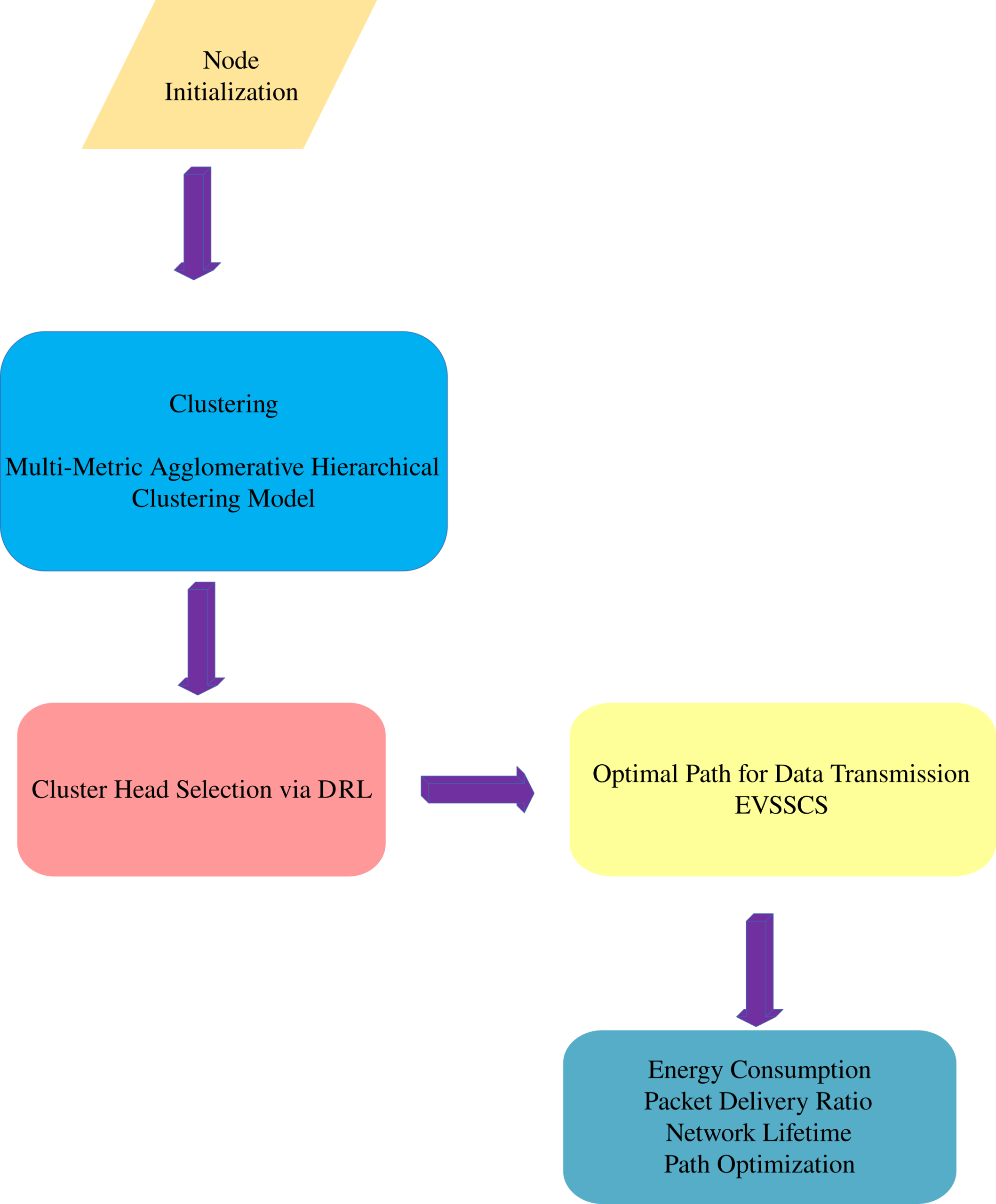
Figure 1: Overall Proposed Architecture
Multi-Metric Agglomerative Hierarchical Clustering Model
Hierarchical clustering (HC) is a powerful strategy used to organize data into hierarchical structures, offering valuable insights into data relationships. The agglomerative approach, known as AGNES (Agglomerative Nesting), is a commonly employed method within HC. It initiates by treating each data point as a separate cluster, progressively merging them based on their similarity. The HC process unfolds systematically, starting with data preparation and the computation of pairwise dissimilarity (or similarity) measures between all data points. Various distance metrics like Euclidean distance or correlation coefficients can be employed to gauge the dissimilarity between points. A critical aspect of agglomerative HC is the choice of linkage function. There are four commonly used methods: single linkage, average linkage, centroid linkage, and complete linkage. These functions dictate how clusters are merged at each step, based on their dissimilarity.
As the algorithm progresses, it creates a hierarchical structure known as a dendrogram. This tree-like representation captures the evolving relationships between data points or clusters as they merge. The final step involves cutting the dendrogram at an appropriate level to create distinct clusters. This step is highly flexible, allowing data analysts to define the desired number of clusters or set a threshold for cluster dissimilarity. Now, let’s delve into the eight measures that are considered for clustering sensor nodes in a WSN.
Manhattan Distance: This metric measures the grid-based distance between sensor nodes, suitable for assessing spatial relationships in the network as per Eq. (1).
|C-D|=∑i=1n(|ci-di|) (1)
Energy: Energy consumption is crucial in WSNs to optimize node battery life and network sustainability, making it an important factor in clustering as per Eq. (2).
E = mc2 (2)
Where, m is the mass, and c represents the speed of light in a vacuum.
Delay: Delays in data transmission impact real-time applications in WSNs, emphasizing the need to minimize delay for timely data delivery as per Eq. (3).
Delay = PDelay+ TDelay + PDelay + QDelay (3)
Where PDelay is the propagation delay, TDelay represents the transmission delay, PDelay define processing delay, and QDelay is the queuing delay.
Inter-cluster Distance: This measure quantifies the separation between clusters, helping to assess the cohesion and distinctiveness of clusters in the hierarchical structure as per Eq. (4).
inter_cluster = Euclidean Distance(CA, CB) (4)
For two cluster centroids represented by vectors CA and CB.
Proximity: Proximity measures the similarity or closeness of sensor nodes, aiding in identifying neighbouring or similar nodes for collaborative tasks within the network.
Sensor Coverage: Sensor coverage evaluates the extent to which the network monitors a specific area, ensuring comprehensive data collection and identifying coverage gaps.
Data Correlation: Data correlation assesses the statistical relationship between sensor data streams, assisting in identifying redundant or complementary sensors in the network.
Node Mobility: Node mobility assesses the movement patterns and characteristics of nodes, particularly relevant in scenarios involving mobile sensor networks or transit-oriented IoT devices.
The bottom-up nature of hierarchical clustering in conjunction with these measures provides a comprehensive view of data relationships and facilitates effective clustering and analysis in complex WSN. Figure 2 depicts the clustering process.
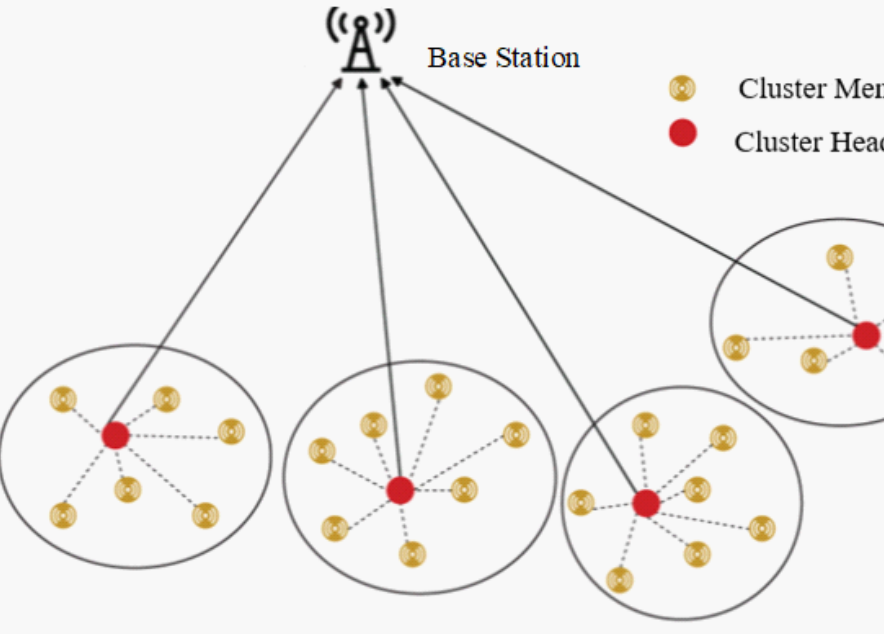
Figure 2: Clustering
Diagram legend: gold nodes are cluster members; red nodes are cluster heads.
Cluster Head Selection via Deep Reinforcement Learning (DRL)
Cluster head selection is a pivotal task in WSN with far-reaching implications for network efficiency, energy conservation, and data routing. Traditional approaches to cluster head selection often rely on predefined heuristics, which can be inflexible and struggle to adapt to the dynamic and unpredictable nature of WSN. In DRL based cluster head selection, a highly adaptable and intelligent agent, represented by the DRL model, takes the control. This agent learns to make optimal cluster head choices through continuous interactions with the WSN environment. When making decisions, such as selecting specific nodes as cluster heads, the DRL agent receives either rewards or penalties based on the quality of these choices. Positive outcomes are rewarded, while suboptimal decisions are penalized. What sets DRL-based cluster head selection apart is the utilization of deep neural networks to approximate the value of various actions within the network. By leveraging these neural networks, the agent can estimate the expected rewards associated with different choices and make decisions that maximize these rewards. This adaptability empowers the agent to dynamically respond to changing network conditions, optimizing the formation of clusters and enhancing overall network efficiency. DRL-based cluster head selection introduces a new level of adaptability and intelligence into the process, offering the potential for more efficient, effective, and autonomous decision-making in the ever-evolving landscape of WSN.
Optimal Path for Data Transmission (Multi-Objective Optimization)
The formulation of a multi-objective optimization problem for path selection in data transmission networks involves considering several critical objectives. The use of hybrid optimization algorithms empowers network designers to discover Pareto-optimal solutions that strike a balance between these objectives, ensuring efficient and effective data transmission while meeting diverse network requirements. Formulating a multi-objective optimization problem for selecting the optimal path for data transmission in a network is a complex and vital task, as it involves considering multiple conflicting objectives simultaneously. In this scenario, multi objectives need to be taken into account,
Congestion Avoidance: Minimizing network congestion to ensure efficient data flow and prevent bottlenecks is crucial for maintaining network performance.
Trustworthiness of Intermediate Nodes: Ensuring the trustworthiness of intermediate nodes along the data transmission path is essential for data security and reliability.
Minimization of Energy Consumption: Reducing energy consumption is critical, especially in battery-powered networks like WSN, to extend the lifetime of nodes and the overall network.
Maximization of Network Lifetime: Prolonging the network’s lifetime is a fundamental objective, as it directly relates to the sustainability and longevity of the network’s operation.
Load Balancing: Distributing data traffic evenly across network nodes helps prevent overloading of specific nodes, ensuring efficient resource utilization.
Latency Minimization: Reducing data transmission latency is crucial for real-time applications, ensuring timely data delivery.
Data Aggregation Efficiency: Optimizing data aggregation processes can reduce redundant data transmission, conserving energy and bandwidth.
To address these diverse and often conflicting objectives, hybrid optimization algorithms are employed. Hybrid algorithms combine the strengths of multiple optimization techniques to find Pareto-optimal solutions, which represent the best trade-offs among the objectives. These algorithms often integrate various optimization paradigms, such as genetic algorithms, particle swarm optimization, simulated annealing, and local search methods. The goal of using hybrid optimization algorithms is to explore the solution space effectively, balancing the competing objectives and identifying paths that achieve the best possible compromises among them. These algorithms iteratively search for Pareto-optimal solutions, allowing network designers to choose from a range of solutions that meet their specific requirements and priorities.
Exploring Velocity Based Shark Smell Cat Swarm (EVSSCS) Optimization
SSO [26] is an optimization algorithm inspired by sharks’ ability to locate prey based on odor concentration. It uses odor-inspired movement patterns to solve optimization problems. CSO [27] draws inspiration from the behavior of cats, combining “seeking mode” for observing the environment and “tracing mode” for pursuing prey. CSO dual-mode approach helps it explore solution spaces efficiently. The proposed hybrid optimization model is the combination of SSO and CSO, respectively. Hybridizing CSO into SSO entails merging their respective optimization strategies to form a more potent approach. This fusion aims to capitalize on the strengths of both algorithms, potentially achieving superior performance compared to using each algorithm in isolation.
Step 1: Initialization – SSO algorithm starts its search process when the metaphorical shark detects an odor particle, symbolizing the presence of prey. The SSO algorithm’s search process is triggered when an “odor particle” is detected, analogous to a shark sensing the scent of prey in its environment. This detection signifies the beginning of the optimization task. Following the odor detection, the algorithm generates an initial population of potential solutions within the feasible search domain. Each solution corresponds to an “odor particle” or a possible position for the “shark” in the optimization problem’s solution space. The initial population of SSO at the beginning of the search process can be represented as per Eq. (5).
[x11,x21,…., xnp1], np=population size (5)
In this equation, xi1 determines the major vector of position for each response i, which is given as per Eq. (6).
[xi1=xi1,xi,21,….,xi,nd1], i=1,…,np (6)
where nd is the number of decision variables in the optimisation problem and xi,j1 is the jth dimension of the ith shark position, or alternatively, the jth decision variable of the ith individual xi1. The NN weights and biases are the choice variables of the optimisation issue relevant to the NN training phase, as was previously discussed. Each position’s strength of odour reflects how close it is to the prey.
Step 2: Fitness calculation – Fitness computation in EVSSCS algorithm involves evaluating the fitness function for each individual in the population, quantifying the performance or quality of their solutions to the problem at hand. The fitness function can be a mathematical formula, simulation, or any other measure specific to the problem, guiding the optimization process towards finding better solutions. It is calculated as per Eq. (7).
fit=min(loss) (7)
Step 3: Evolution (proposed) – Shark is situated at the starting place with an initial velocity. The position and speed of the shark will alter as the odour particle concentration (OP) rises. As a result, the following np starting velocity vectors that correlate to the position vectors as given by Eq. (8).
[Ve11,Ve21,…., Vei, np1] (8)
where components exist for each velocity vector in each dimension,
Vei1=[vei,11,vei,21,….,vei,nd1], i=1,…,np (9)
The speed of the shark will increase as concentration levels rise. The objective function’s gradient, which shows the direction in which it increases at the greatest rate, can be used to represent the mathematical model as per proposed Eq. (10). In the combined approach merging CSO and SSO, the unified velocity equation incorporates elements from both algorithms. It combines the guidance from SSO based on odor concentration and the attraction toward the best solution from CSO. This unified velocity equation enhances optimization by effectively blending exploration (SSO) and exploitation (CSO) strategies, leading to improved convergence and adaptability.
Veim=Veim+c1∙ra1∙∇(of)|(xbestm-xim) (10)
Where of is the objective function, and c1 denotes a constant. The stage number m and the maximum number of stages for the shark’s forward motion are represented in Eq. (10). Additionally, and ra1 is a uniformly distributed random number in the range (0, 1). According to Eq. (10), express the shark’s velocity in each dimension is given as per Eq. (11),
Vei,jm=c1∙ra1∙(∂(of))/(∂xj)|(xbest,jm-xi,jm) (11)
j=1,…,nd, i=1,…,np, m=1,…M
if the current velocity of the shark depends on its previous velocity, modify the velocity Eq. (11) as shown in Eq. (12).
vei,jm=c1∙ra1∙(∂(of))/(∂xj)|(xbest,jm-xi,jm)+c2∙ra2∙vei,jm-1 (12)
where c2 represents the inertia constant for stage m in the range of (0,1). The dependence of the current velocity on the preceding one increases with increasing inertia constant. Similar to ra1, ra2 in Eq. (12) is a random number with a uniform distribution in the range (0,1). The maximum speed of a shark exists in nature. With this bound in mind, Eq. (12) changes as per Eq. (13).
|vei,jm|=min[|c1∙ra1∙(∂(of))/(∂xj)|(xbest,jm-xi,jm)|+|c2∙ra2∙vei,jm-1|,|upcv∙vei,jm-1|] (13)
where upcv is the upper-bound current velocity expressed in terms of the previous one. The vector’s elements Veim are all identified by Eq. (13). In the following stage, Pim+1 which is indicated by, the shark’s forward motion results in a new position, as per Eq. (14),
Pim+1= xim+Veim∙∆tim (14)
where, ∆tim denotes the stage’s time interval. For the sake of simplicity, ∆tim= 1 is taken seriously at every stage in this case. Furthermore, the local hunt for sharks can be modelled as per Eq. (15).
Γim+1,lo=Pim+1+ra3∙Pim+1, lo=1,…,LO i=1,…np m=1,…M (15)
where LO denotes the number of points in each stage’s local search and ra3 is a random number in the range (-1,+1). Shark, which is represented as per Eq. (16) in the SSO algorithm, chooses the best place among those searched in the forward movement and local search,
xik+1=argmax{of(Pim+1),of(Γim+1,1),…,of(Γim+1,LO)} (16)
Step 4: Termination – The EVSSCS algorithm continues iterating through the search, update, and evolution stages until a certain termination condition is met. This condition can be a predefined number of iterations, reaching a desired fitness level, or the convergence of solutions. Once the termination condition is satisfied, the process is terminated, and the algorithm concludes its execution.
Data Transmission
The application of hybrid optimization algorithms to discover Pareto-optimal solutions for path selection in WSN represents a sophisticated and highly effective strategy for addressing the multifaceted challenges associated with routing in such networks. In the field of WSN, where objectives often conflict and network conditions continuously evolve, achieving optimal data transmission paths is a complex attempt. The process begins with the identification of Pareto-optimal solutions, which are those paths that strike an optimal balance between conflicting objectives. These objectives encompass a range of critical factors, including congestion avoidance, trustworthiness of intermediate nodes, energy conservation, network lifetime maximization, load balancing, latency minimization, and data aggregation efficiency. The hybrid optimization model combines two potent algorithms: SSO and CSO. These two algorithms work collaboratively, harnessing their distinctive strengths to evaluate and enhance candidate solutions within the WSN. The outcome is a set of Pareto-optimal solutions that cater to the diverse and often contradictory objectives of the network. These solutions strike a balance, ensuring an effective trade-off between different objectives, which is crucial for making well-informed decisions in dynamic WSN environments.
Once the Pareto-optimal solutions are identified, the algorithm’s intelligence comes into play. It selects the optimal data transmission path that aligns with the specific network objectives. This path is meticulously chosen to ensure the efficient routing of data packets to the sink node, which acts as the central hub for data collection and processing. As data packets are set in motion, they dutifully follow the prescribed path. This ensures that data reaches the sink node swiftly and efficiently, without compromising on the network’s overarching goals. By incorporating the hybrid optimization approach, which artfully blends SSO and CSO, the proposed model demonstrates a remarkable ability to adapt to the ever-changing dynamics of WSNs. It achieves the selection of Pareto-optimal paths that optimize network performance, enhance energy efficiency, minimize delays, balance network loads, and fulfil other vital criteria. This holistic strategy significantly augments the reliability and efficiency of data transmission within WSNs, making it an invaluable tool for complex and dynamic network environments.
Result and Discussion
Experimental Setup
The proposed model is implemented using NS2. The analysis and comparison of the suggested method’s performance with the existing algorithms like Cat Swarm Optimization (CSO), Shark Smell Optimization (SSO), Particle Swarm Optimization (PSO) [28]. Effectiveness of the suggested model evaluated in terms of delay, delay ratio, energy, network life time (NLT), throughput.
Overall Analysis of Performance Metrics
Table 2 provides a comprehensive analysis of the performance metrics for node 25 across various optimization methods. In CSO, it exhibits moderate delay, a relatively high delay ratio, and consumes 92 units of energy. However, it demonstrates a network lifetime of 151 units and a commendable throughput of 421.7200. SSO outperforms CSO in terms of delay, delay ratio, and energy consumption, with a lower delay of 2.759544 and slightly higher energy consumption of 95 units. Nevertheless, its network lifetime is comparatively shorter at 84 units, and throughput at 212.2800. PSO shows similar characteristics to CSO but with a lower delay ratio. It consumes 93 units of energy, has a shorter network lifetime of 77 units, and a throughput of 180.8000. The Proposed Model EVSSCS stands out with significantly lower delay 2.017354 and a higher delay ratio 0.873374. It consumes less energy 87 units, leading to an extended network lifetime of 291 units. Moreover, it achieves the highest throughput, reaching 486.1200.
Table 2: Overall analysis – performance metrics for node 25
Methods | Delay | Delayratio | Energy | NLT | Throughput |
CSO | 3.569836 | 0.729297 | 92 | 151 | 421.7200 |
SSO | 2.759544 | 0.619917 | 95 | 84 | 212.2800 |
PSO | 3.444774 | 0.530152 | 93 | 77 | 180.8000 |
EVSSCS | 2.017354 | 0.873374 | 87 | 291 | 486.1200 |
Table 3 presents the performance metrics for node 50 under different optimization techniques. CSO exhibits the highest delay of 21.28 units, signifying significant data transmission latency. The delay ratio is 0.33, indicating a moderate trade-off between delay and other factors. CSO consumes the lowest energy at 40 units but has a shorter (NLT) of 84 units. The throughput for CSO is 170.76. SSO reduces delay significantly to 9.02 units, with a delay ratio of 0.29, showing improved efficiency. However, it consumes more energy 79 units and has a shorter NLT of 60 units. The throughput for SSO is 151.84. PSO shares a delay similar to CSO 21.94 units with a delay ratio of 0.26. It consumes 50 units of energy and has an NLT of 54 units, resulting in a throughput of 110.08. EVSSCS performs exceptionally well in delay 7.02 units but has a higher delay ratio 0.39. It consumes 38 units of energy and maintains a longer NLT of 111 units. The throughput for EVSSCS is 185.40.
Table 3: Overall analysis – performance metrics for node 50
Methods | Delay | Delayratio | Energy | NLT | Throughput |
CSO | 21.277919 | 0.333813 | 40 | 84 | 170.7600 |
SSO | 9.018969 | 0.293561 | 79 | 60 | 151.8400 |
PSO | 21.944350 | 0.257017 | 50 | 54 | 110.0800 |
EVSSCS | 7.019428 | 0.388875 | 38 | 111 | 185.4000 |
Table 4 summarizes the performance metrics for node 75 using different optimization methods. CSO has a high delay of 37.08, meaning data takes longer to transmit, with a delay ratio of 0.12. SSO reduces delay to 15.44 and has a delay ratio of 0.11, which is more efficient. PSO has a high delay of 39.99 and a delay ratio of 0.08, making it similar to CSO. EVSSCS performs well with a delay of 10.37 and a delay ratio of 0.23, being efficient. In terms of energy consumption, CSO is the lowest 25, while PSO is 35. SSO consumes more 60, and EVSSCS consumes less 22. EVSSCS has a longer network lifetime NLT at 79, while CSO and PSO have shorter NLT. EVSSCS also has the highest throughput at 131.83, indicating better overall performance for node 75.
Table 4: Overall analysis – performance metrics for node 75
Methods | Delay | Delayratio | Energy | NLT | Throughput |
CSO | 37.080336 | 0.118074 | 25 | 35 | 117.0933 |
SSO | 15.439726 | 0.110140 | 60 | 32 | 94.7466 |
PSO | 39.994639 | 0.080472 | 35 | 17 | 89.8800 |
EVSSCS | 10.365337 | 0.229471 | 22 | 79 | 131.8266 |
Table 5 presents performance metrics for node 100 using different optimization methods. CSO exhibits a delay of 37.08, a delay ratio of 0.12, and moderate energy consumption 30. Its NLT is 26, and throughput is 87.82. SSO achieves a lower delay 17.11 and delay ratio 0.03 but consumes more energy 50. It has the shortest NLT 9 and low throughput 24.27. PSO has a delay similar to CSO 40.68 but a significantly lower delay ratio 0.002. However, it consumes more energy 32 and has the shortest NLT 0 and low throughput 2.84. EVSSCS performs well with a lower delay 10.83, moderate delay ratio 0.28, and reasonable energy consumption 28. It boasts the highest NLT 119 and the best throughput 198.59.
Table 5: Overall analysis – performance metrics for node 100
Methods | Delay | Delayratio | Energy | NLT | Throughput |
CSO | 37.080336 | 0.118074 | 30 | 26 | 87.8200 |
SSO | 17.106067 | 0.032302 | 50 | 9 | 24.2700 |
PSO | 40.682643 | 0.001842 | 32 | 0 | 2.8400 |
EVSSCS | 10.831955 | 0.281692 | 28 | 119 | 198.5900 |
Graphical representation of the overall performance metrics of the proposed model
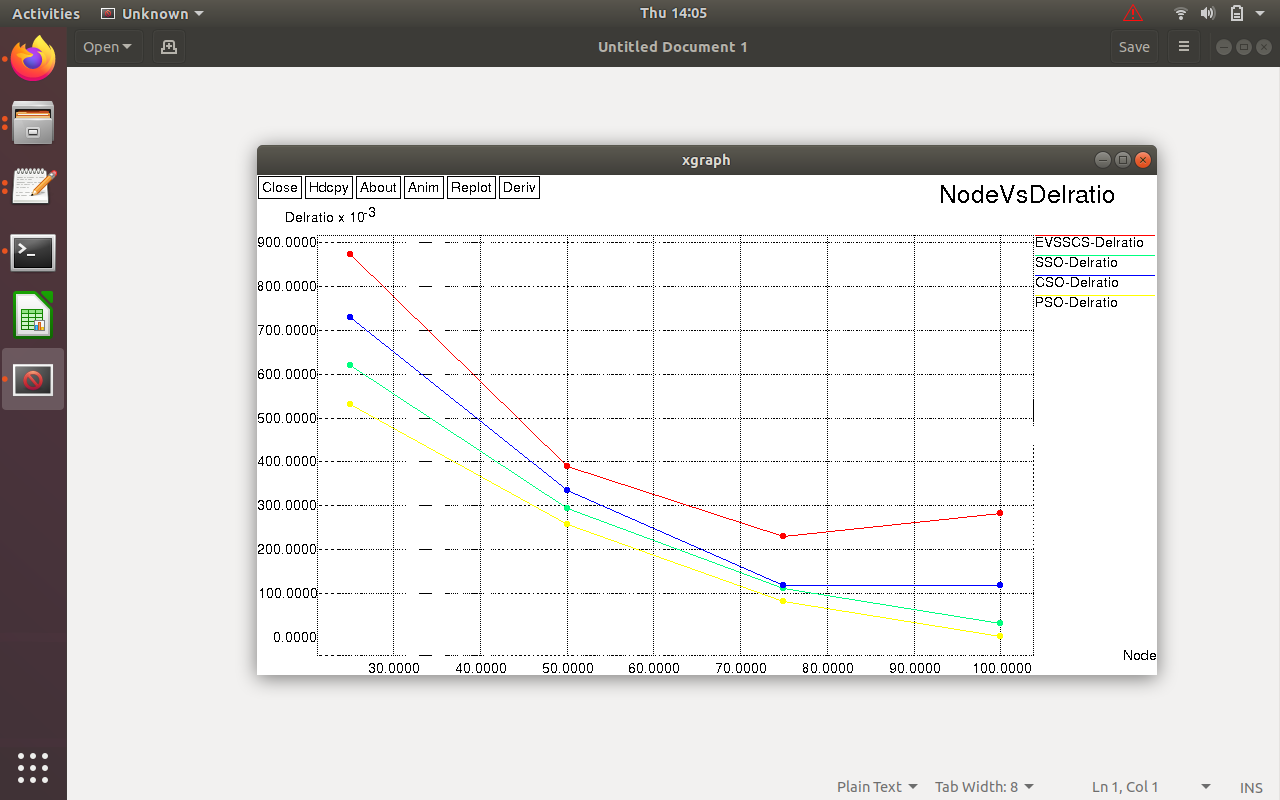
Figure 3: Node vs Delayratio
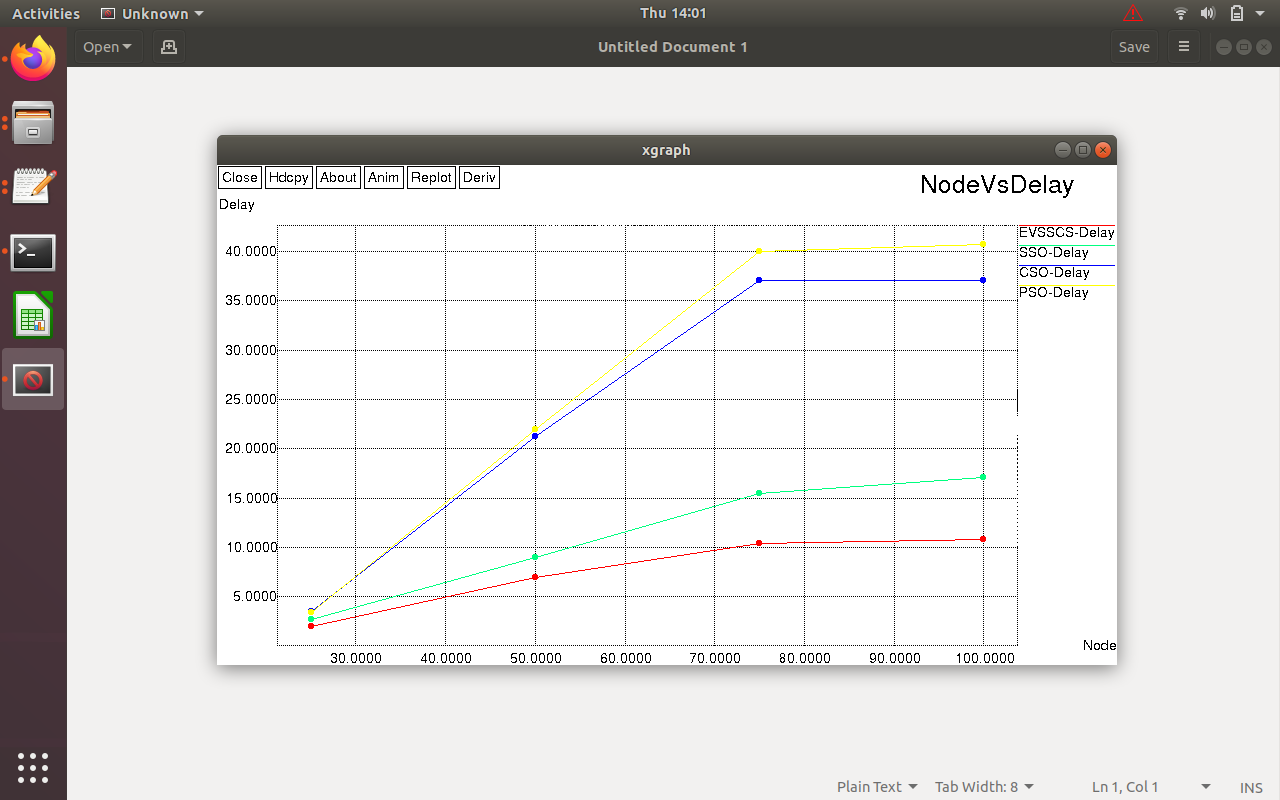
Figure 4: Node vs Delay
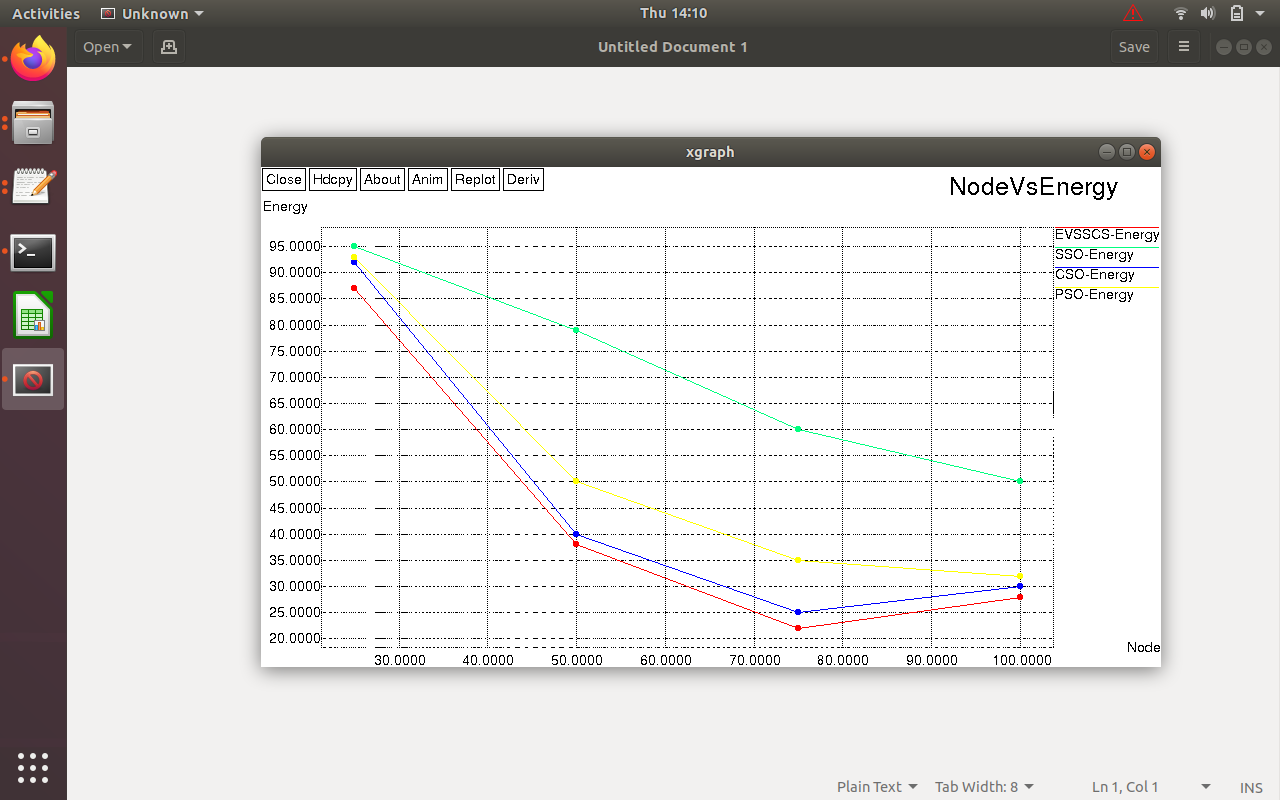
Figure 5: Node vs Energy
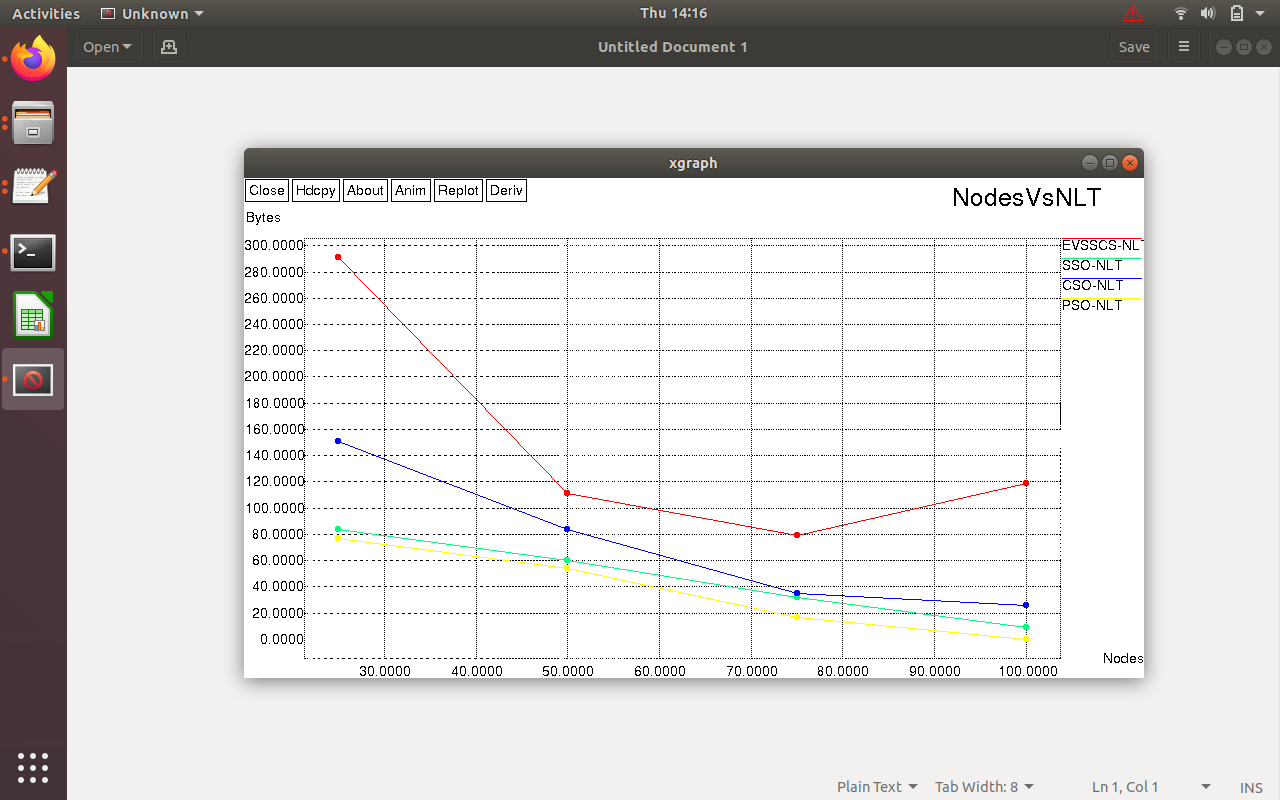
Figure 6: Node vs Network life time
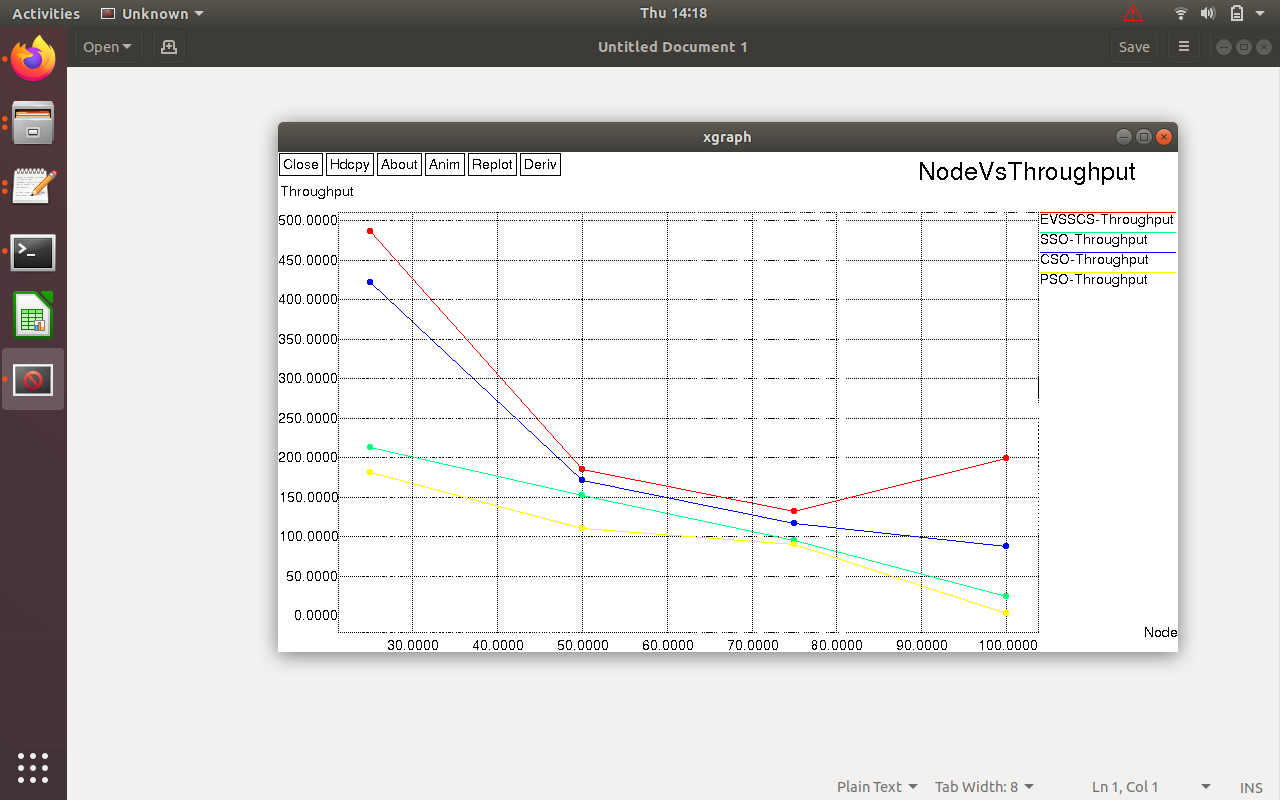
Figure 7: Node vs Throughput
(a)
(b)
(c)
(d)
(e)
(f)
(g)
(h)
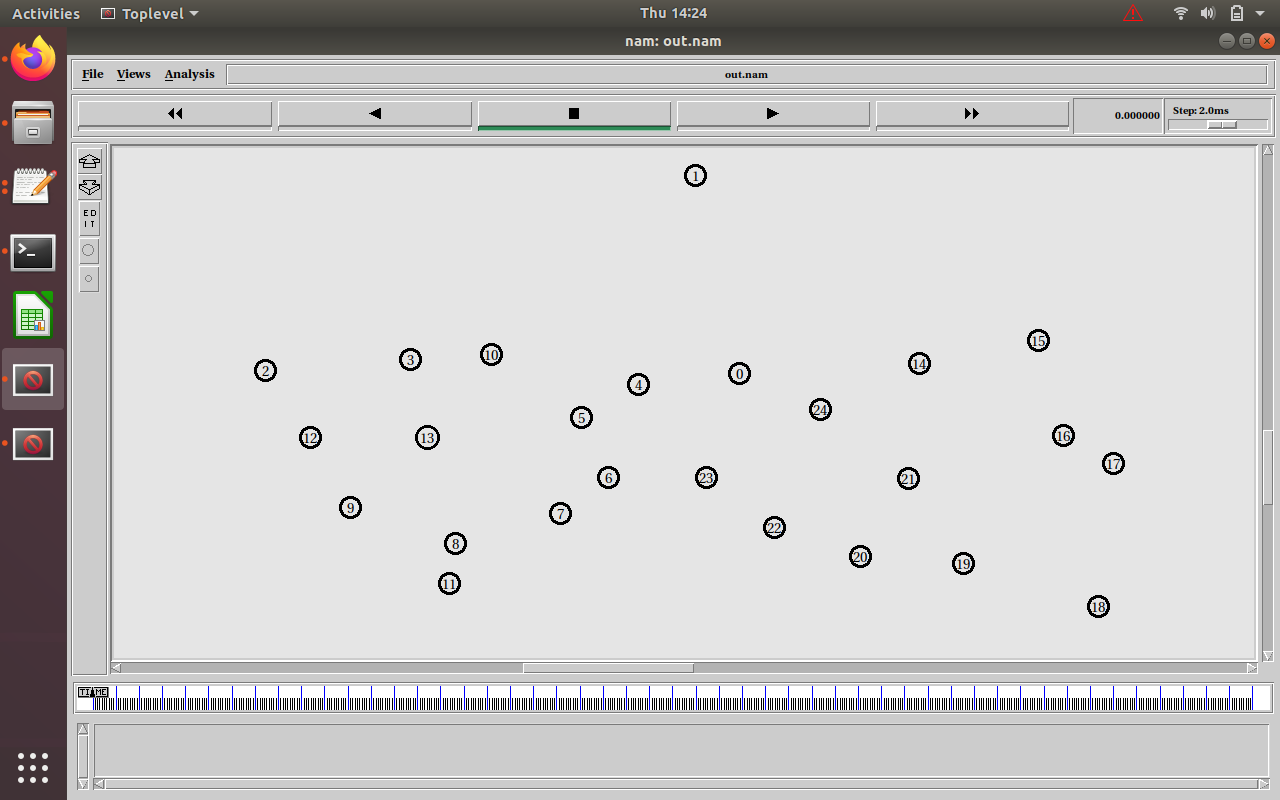
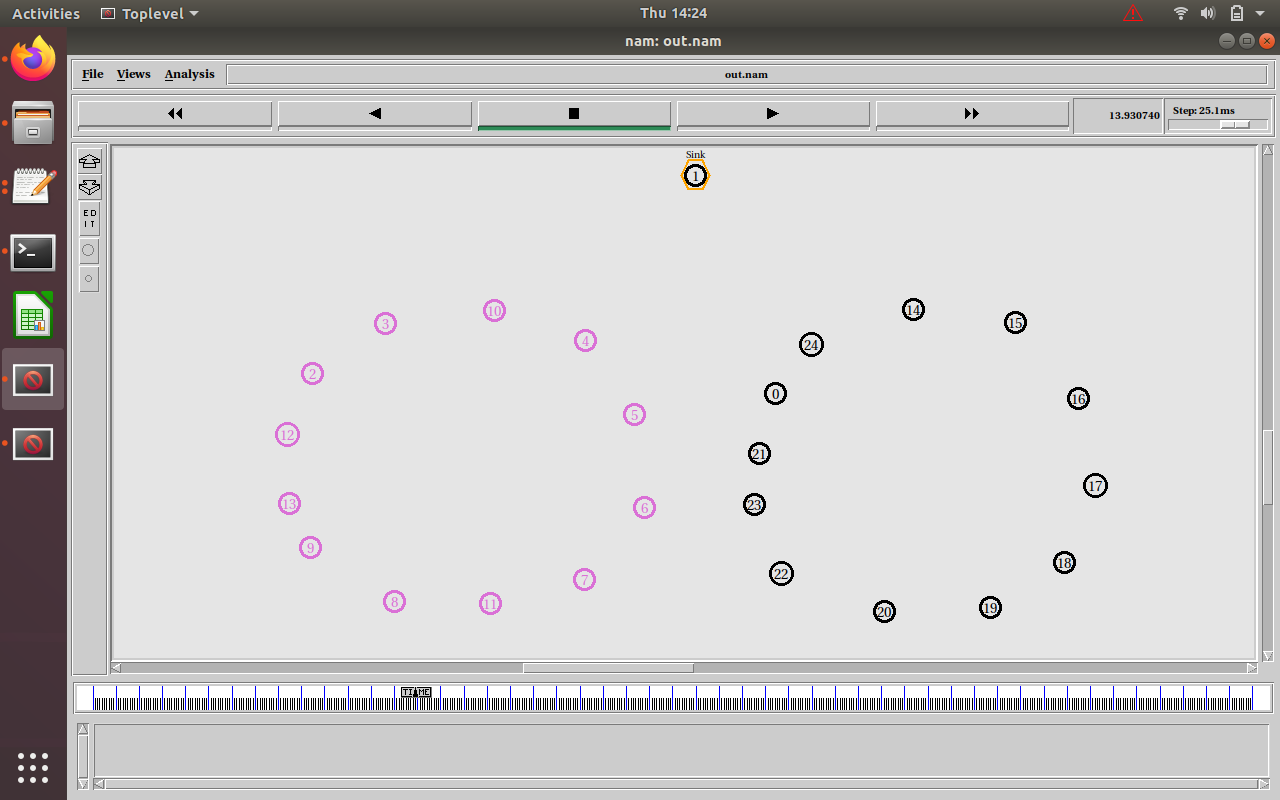
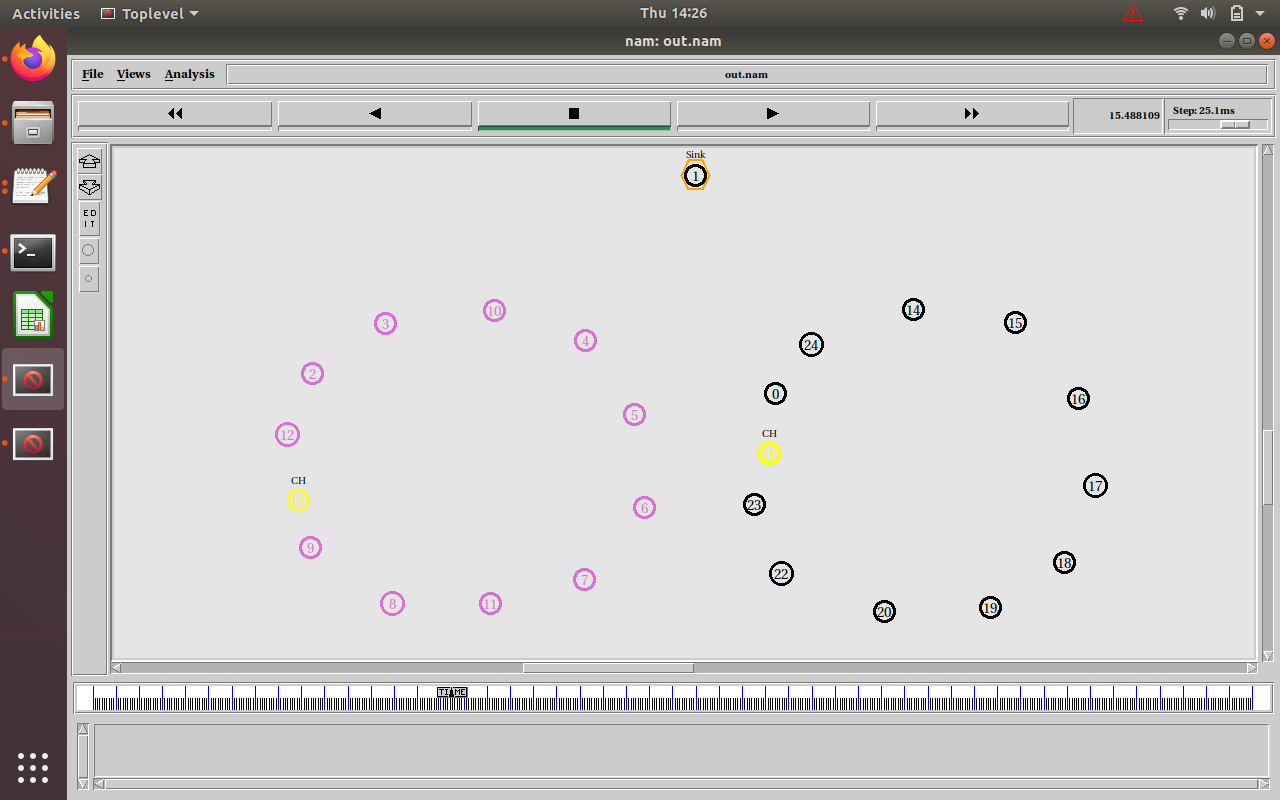
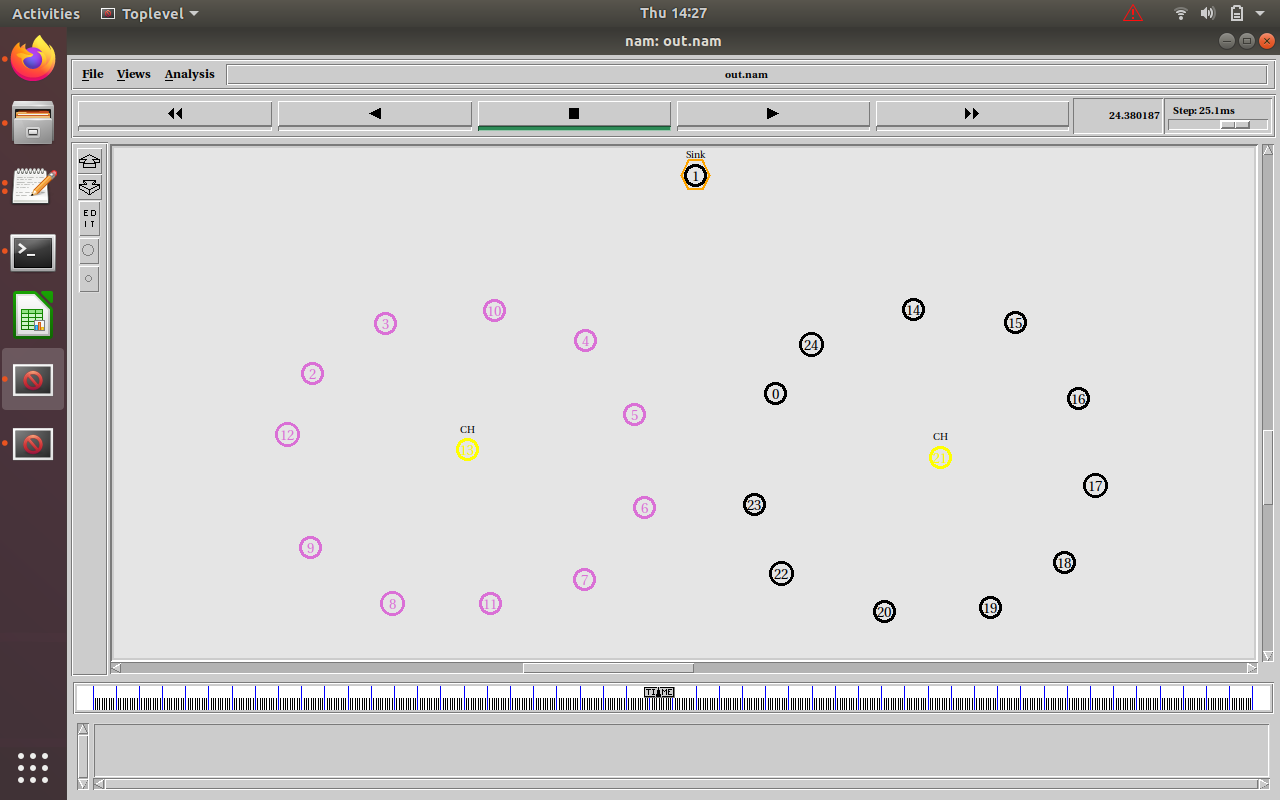
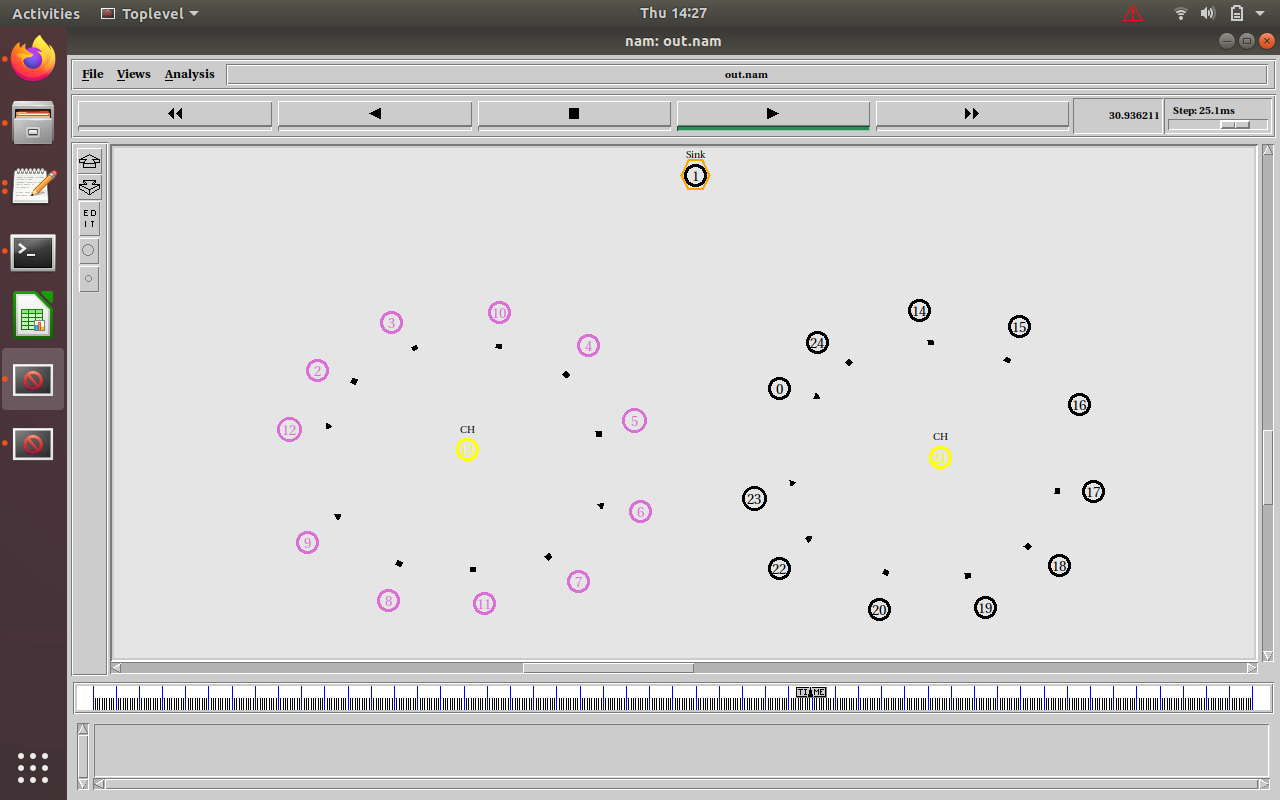
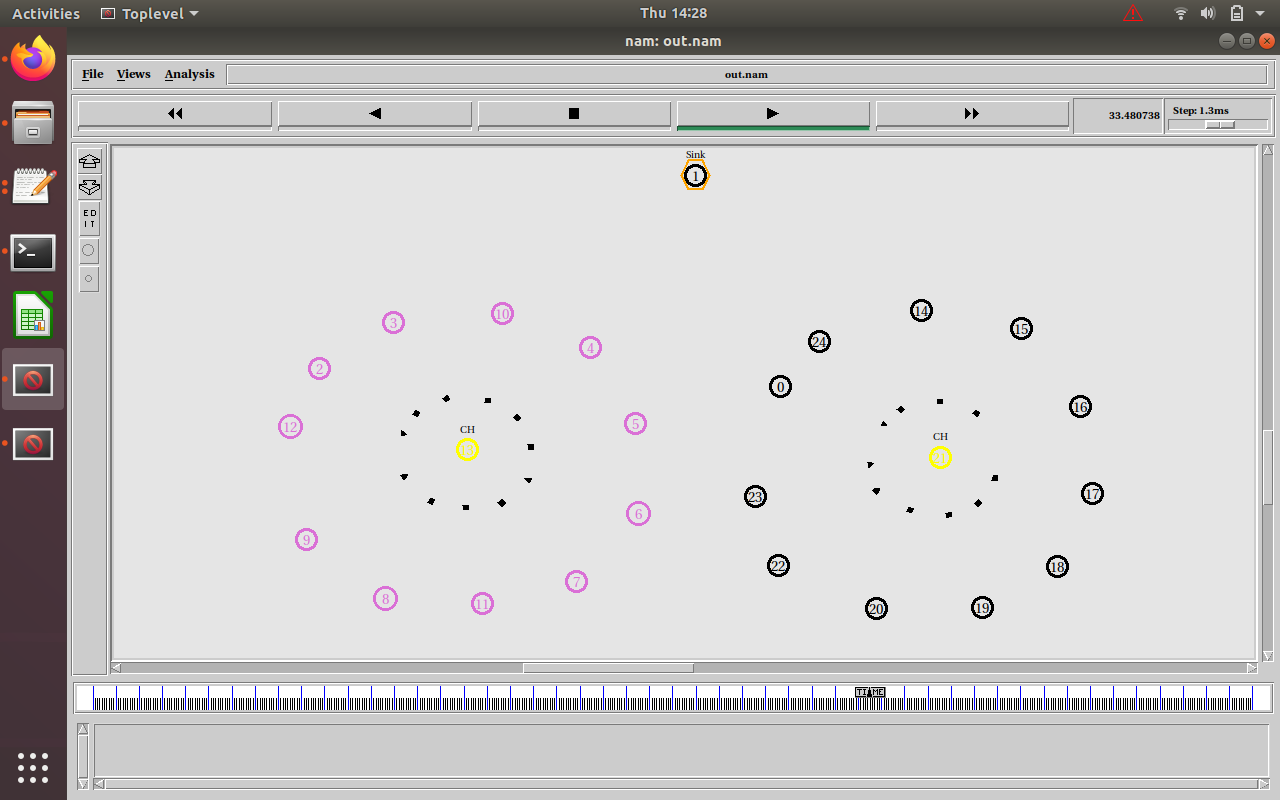
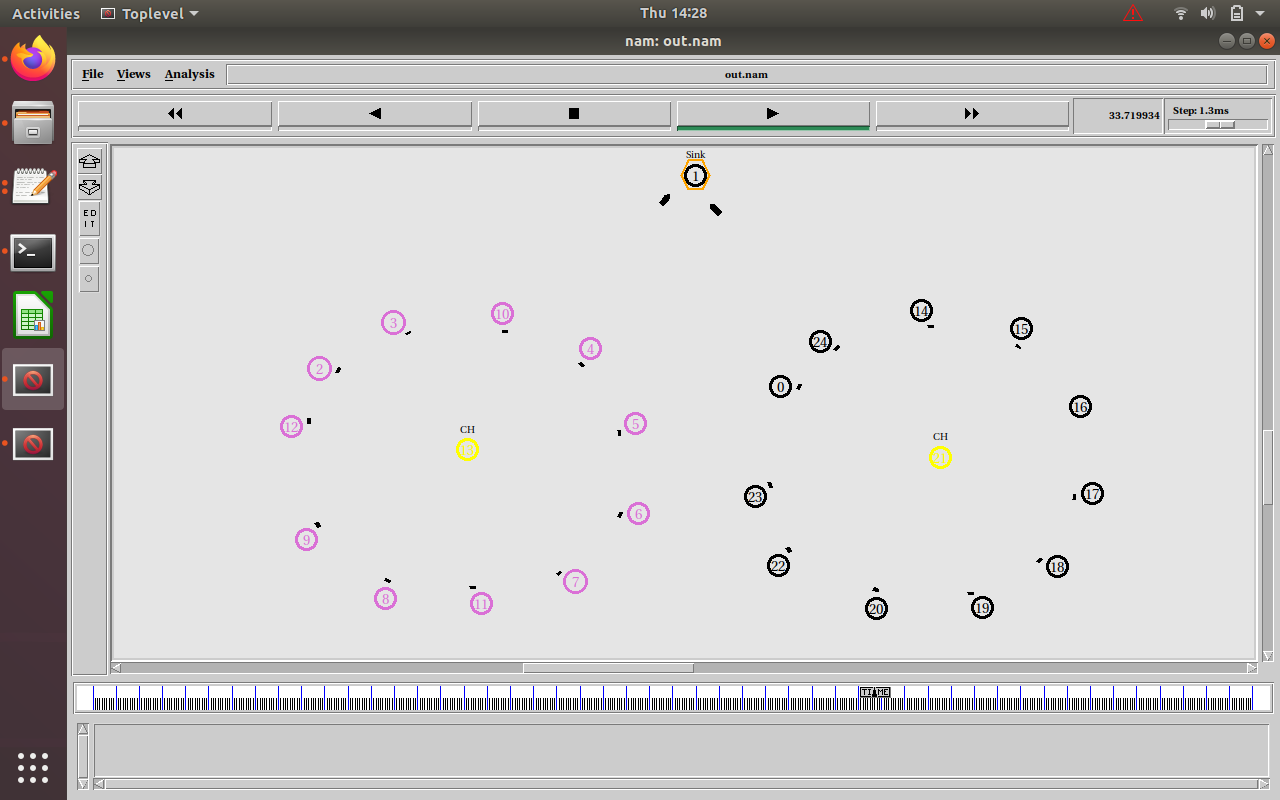
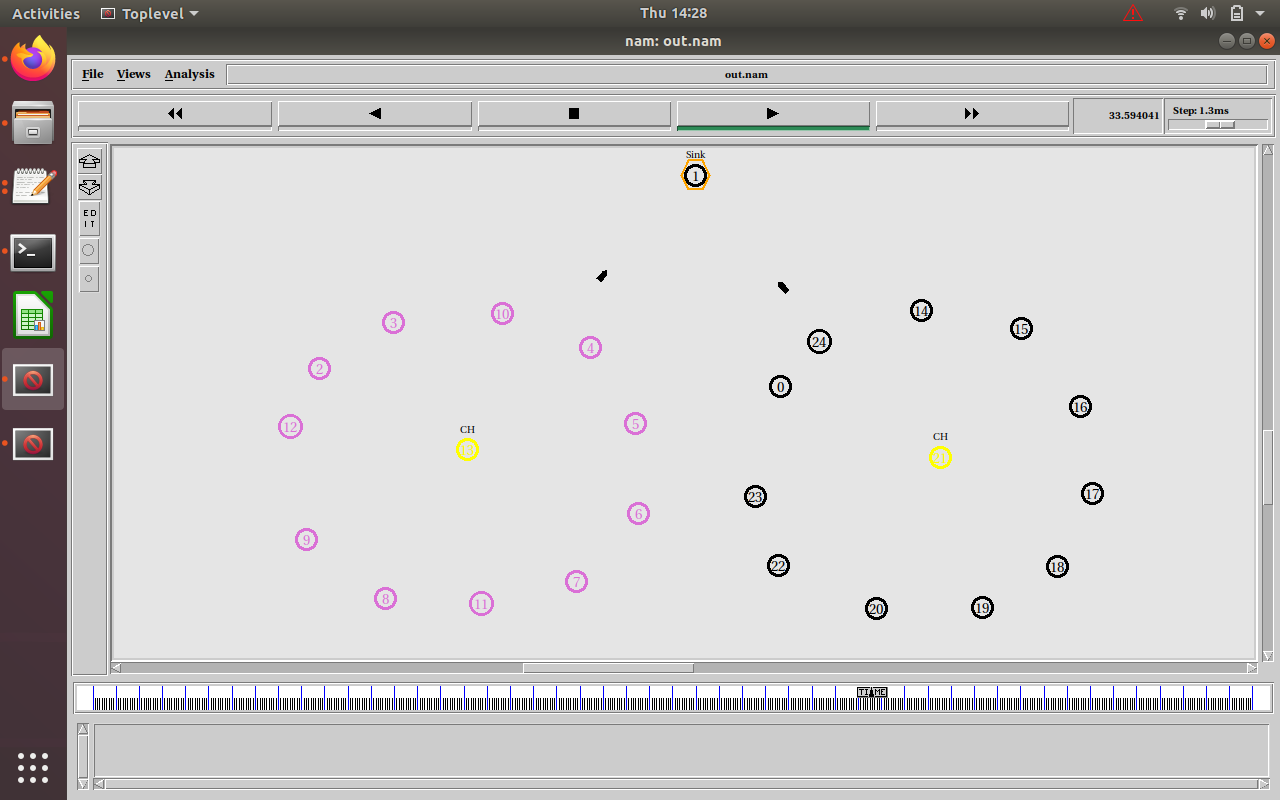
Figure 8: Path Selection for Energy-Efficient and Reliable Data Transmission for 25 nodes
Conclusion
For energy-efficient data routing, clustering was a common technique in WSN. This work improved the performance of wireless sensor networks by supplying nodes with knowledge regarding path selection optimisation, data loss mitigation, and energy efficiency. The comprehensive five-step method used cutting-edge methods and algorithms to optimise several areas of network performance. It included deployment, clustering, cluster head selection, determining the best path, and transmitting data inside a WSN environment. The deployment of a WSN, which consists of sensor nodes and a sink node to form the main infrastructure for data collecting and transmission, marked the start of the process. Clustering, a key method for grouping sensor nodes into logical groups, was then applied. To improve network efficiency and data handling, the proposed Multi-Metric Agglomerative Hierarchical Clustering Model made use of eight critical metrics, including Manhattan Distance, Energy, Delay, and others. Cluster Head Selection was a crucial task, and DRL was used to pick cluster heads automatically. To find the ideal data transmission path, multi-objective optimisation was used. This required formulating a problem with several objectives, including energy conservation and traffic avoidance. By combining SSO and CSO, the hybrid optimisation algorithm EVSSCS was able to find Pareto-optimal solutions that improved the set objectives. Lastly, data transmission took place along the chosen ideal path, successfully routing data packets to the sink node based on the outcomes of multi-objective optimisation.
References
Wang, A., Shen, J., Vijayakumar, P., Zhu, Y. and Tian, L., 2019. Secure big data communication for energy efficient intra-cluster in WSNs. Information Sciences, 505, pp.586-599.
Tamilarasi, N. and Santhi, S.G., 2020. Detection of wormhole attack and secure path selection in wireless sensor network. Wireless Personal Communications, 114, pp.329-345.
Xu, C., Xiong, Z., Zhao, G. and Yu, S., 2019. An energy-efficient region source routing protocol for lifetime maximization in WSN. IEEE Access, 7, pp.135277-135289.
Jain, A., Khari, M., Verdu, E., Omatsu, S. and Crespo, R.G., 2020. A route selection approach for variable data transmission in wireless sensor networks. Cluster Computing, 23, pp.1697-1709.
Moussa, N., Nurellari, E. and El Belrhiti El Alaoui, A., 2023. A novel energy-efficient and reliable ACO-based routing protocol for WSN-enabled forest fires detection. Journal of Ambient Intelligence and Humanized Computing, 14(9), pp.11639-11655.
Rathore, P.S., Chatterjee, J.M., Kumar, A. and Sujatha, R., 2021. Energy-efficient cluster head selection through relay approach for WSN. The Journal of Supercomputing, 77, pp.7649-7675.
Sujanthi, S. and Nithya Kalyani, S., 2020. SecDL: QoS-aware secure deep learning approach for dynamic cluster-based routing in WSN assisted IoT. Wireless Personal Communications, 114, pp.2135-2169.
Khan, Z.A., Awais, M., Alghamdi, T.A., Khalid, A., Fatima, A., Akbar, M. and Javaid, N., 2019. Region aware proactive routing approaches exploiting energy efficient paths for void hole avoidance in underwater WSNs. IEEE Access, 7, pp.140703-140722.
Sadek, R.A., Abd-alazeem, D.M. and Abbassy, M.M., 2021. A new energy-efficient multi-hop routing protocol for heterogeneous wireless sensor networks. International Journal of Advanced Computer Science and Applications, 12(11).
Faheem, M., Butt, R.A., Raza, B., Ashraf, M.W., Ngadi, M.A. and Gungor, V.C., 2019. Energy efficient and reliable data gathering using internet of software-defined mobile sinks for WSNs-based smart grid applications. Computer Standards & Interfaces, 66, p.103341.
Fang, W., Zhu, C., Yu, F.R., Wang, K. and Zhang, W., 2021. Towards energy-efficient and secure data transmission in AI-enabled software defined industrial networks. IEEE Transactions on Industrial Informatics, 18(6), pp.4265-4274.
Vanitha, C.N., Malathy, S., Dhanaraj, R.K. and Nayyar, A., 2022. Optimized pollard route deviation and route selection using Bayesian machine learning techniques in wireless sensor networks. Computer Networks, 216, p.109228.
Maurya, S., Jain, V.K. and Chowdhury, D.R., 2019. Delay aware energy efficient reliable routing for data transmission in heterogeneous mobile sink wireless sensor network. Journal of Network and Computer Applications, 144, pp.118-137.
Maheshwari, P., Sharma, A.K. and Verma, K., 2021. Energy efficient cluster-based routing protocol for WSN using butterfly optimization algorithm and ant colony optimization. Ad Hoc Networks, 110, p.102317.
Jaiswal, K. and Anand, V., 2020. EOMR: An energy-efficient optimal multi-path routing protocol to improve QoS in wireless sensor network for IoT applications. Wireless Personal Communications, 111, pp.2493-2515.
Jagan, G.C. and Jesu Jayarin, P., 2022. Wireless sensor network cluster head selection and short routing using energy efficient ElectroStatic discharge algorithm. Journal of Engineering, 2022, pp.1-10.
Narayan, V., Daniel, A.K. and Chaturvedi, P., 2023. E-FEERP: Enhanced Fuzzy based Energy Efficient Routing Protocol for Wireless Sensor Network. Wireless Personal Communications, pp.1-28.
Yun, W.K. and Yoo, S.J., 2021. Q-learning-based data-aggregation-aware energy-efficient routing protocol for wireless sensor networks. IEEE Access, 9, pp.10737-10750.
Moussa, N. and El Belrhiti El Alaoui, A., 2021. An energy-efficient cluster-based routing protocol using unequal clustering and improved ACO techniques for WSNs. Peer-to-Peer Networking and Applications, 14, pp.1334-1347.
Al-Kaseem, B.R., Taha, Z.K., Abdulmajeed, S.W. and Al-Raweshidy, H.S., 2021. Optimized energy–efficient path planning strategy in WSN with multiple Mobile sinks. IEEE Access, 9, pp.82833-82847.
Ragavan, P.S. and Ramasamy, K., 2019. Optimized routing in wireless sensor networks by establishing dynamic topologies based on genetic algorithm. Cluster Computing, 22(Suppl 5), pp.12119-12125.
SureshKumar, K. and Vimala, P., 2021. Energy efficient routing protocol using exponentially-ant lion whale optimization algorithm in wireless sensor networks. Computer Networks, 197, p.108250.
Tang, L., Lu, Z. and Fan, B., 2020. Energy efficient and reliable routing algorithm for wireless sensors networks. Applied Sciences, 10(5), p.1885.
Kumar, A., Webber, J.L., Haq, M.A., Gola, K.K., Singh, P., Karupusamy, S. and Alazzam, M.B., 2022. Optimal cluster head selection for energy efficient wireless sensor network using hybrid competitive swarm optimization and harmony search algorithm. Sustainable Energy Technologies and Assessments, 52, p.102243.
Babu, M.V., Alzubi, J.A., Sekaran, R., Patan, R., Ramachandran, M. and Gupta, D., 2021. An improved IDAF-FIT clustering based ASLPP-RR routing with secure data aggregation in wireless sensor network. Mobile Networks and Applications, 26, pp.1059-1067.
Abedinia, O. and Amjady, N., 2015. Short-term wind power prediction based on Hybrid Neural Network and chaotic shark smell optimization. International journal of precision engineering and manufacturing-green technology, 2, pp.245-254.
Bahrami, M., Bozorg-Haddad, O. and Chu, X., 2018. Cat swarm optimization (CSO) algorithm. Advanced optimization by nature-inspired algorithms, pp.9-18.
Wang, F., Zhang, H. and Zhou, A., 2021. A particle swarm optimization algorithm for mixed-variable optimization problems. Swarm and Evolutionary Computation, 60, p.100808.
Cite This Work
To export a reference to this article please select a referencing stye below:

Academic Master Education Team is a group of academic editors and subject specialists responsible for producing structured, research-backed essays across multiple disciplines. Each article is developed following Academic Master’s Editorial Policy and supported by credible academic references. The team ensures clarity, citation accuracy, and adherence to ethical academic writing standards
Content reviewed under Academic Master Editorial Policy.





