
 Cognitive studies
PsychologyTextbook
Introduction to Psychology
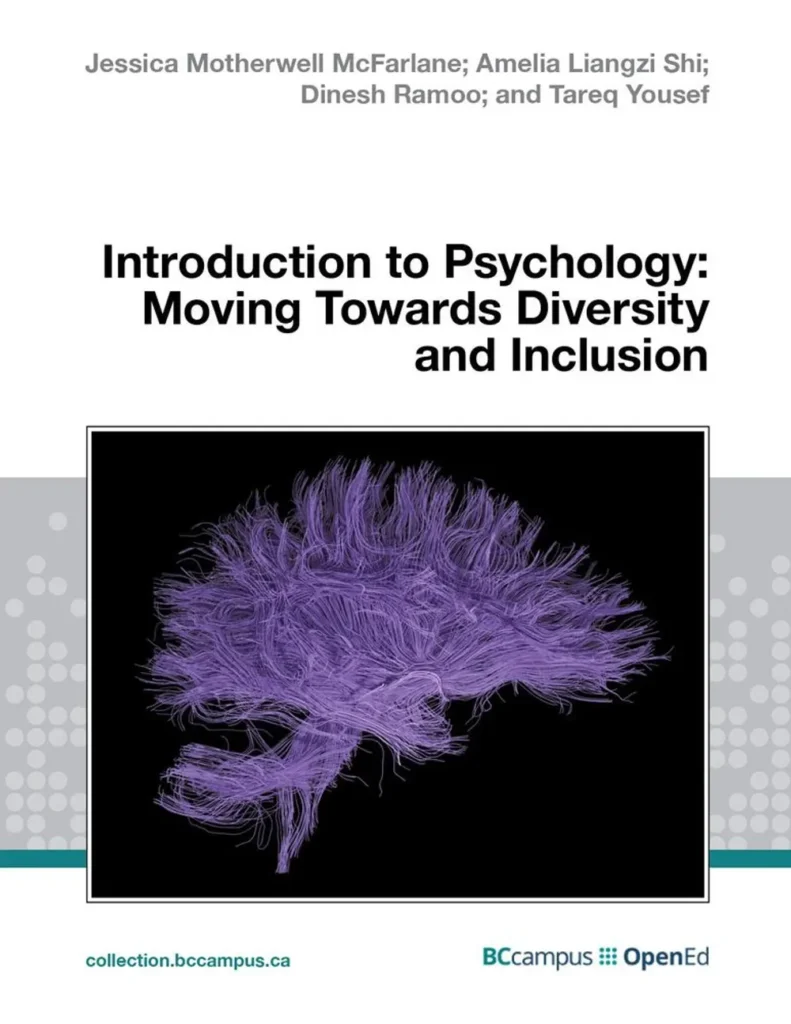
Not rated yetRate this bookIntroduction to Psychology: Moving Towards Diversity and Inclusion is the 2024 BCcampus adaptation by Jessica Motherwell McFarlane, Amelia Liangzi Shi, Dinesh Ramoo, and Tareq Yousef. Nineteen chapters connect psychological science with biology, experience, cognition, development, social life, identity, well-being, and mental health. This guide follows that adaptation’s actual order, including separate chapters on emotion, motivation, and gender and sexuality. Study tasks emphasize evidence, respectful interpretation, and the limits of applying a group-level finding to one person.
Free reading is available at the official source. Opens in a new tab.
 Free
About this book
Introduction to Psychology: Moving Towards Diversity and Inclusion is the 2024 BCcampus adaptation by Jessica Motherwell McFarlane, Amelia Liangzi Shi, Dinesh Ramoo, and Tareq Yousef. Nineteen chapters connect psychological science with biology, experience, cognition, development, social life, identity, well-being, and mental health. This guide follows that adaptation’s actual order, including separate chapters on emotion, motivation, and gender and sexuality. Study tasks emphasize evidence, respectful interpretation, and the limits of applying a group-level finding to one person.
Chapter-wise summaries and study tasks
Chapter 1. Introduction
The introduction defines psychology through behavior, mental processes, and the different questions its subdisciplines investigate. Biological, cognitive, developmental, clinical, and social approaches can illuminate the same event at different levels. Diversity and inclusion affect whose experiences are investigated and which assumptions are treated as normal.
A psychological explanation needs evidence beyond an intuitively appealing story. Distinguish a research question, a proposed mechanism, and a personal interpretation. The chapter establishes an approach that considers both scientific reasoning and the social position from which a claim is made, rather than using disciplinary labels as complete answers.
Study task. Describe one behavior through two subdisciplinary questions. Identify evidence each would collect and explain how including a previously overlooked population could change the study.
Chapter 2. History of Psychology
Psychology’s history contains competing approaches and recurring tensions about what should be studied and how. Rather than treating the discipline as a simple succession of discoveries, the chapter asks readers to examine the questions and assumptions guiding different traditions. Methods and institutions influence what becomes recognized as knowledge.
Historical theories should be assessed in context without assuming that familiar terminology establishes current validity. Ask whose experiences informed an account and what forms of evidence were excluded. Comparing traditions can reveal useful differences in explanatory level while also showing why claims require revision as methods and perspectives change.
Study task. Compare two historical approaches by question, method, assumptions, and limits. Explain one development that would require revising an earlier claim rather than merely adding a new label.
Chapter 3. Psychological Science
Psychological science connects questions, hypotheses, operational definitions, designs, observations, and interpretation. Experimental and nonexperimental methods permit different conclusions. Sampling and measurement affect whose behavior is represented and what a result means. Ethical research requires attention to consent, burden, privacy, and the power relationships involved. Critical thinking applies to both a striking finding and a familiar explanation.
Correlation is not a complete causal account, and statistical evidence does not repair a poorly matched design. Evaluate alternative explanations and the scope of generalization before presenting a conclusion. Research interpretation should remain traceable from the question through the actual observations.
Study task. Design a fictional study with defined variables, sample, ethical considerations, and a comparison. State the strongest conclusion it could support and an alternative explanation it would leave unresolved.
Chapter 4. Biological Basis of Behaviour
The biological basis of behavior begins with neurons and supporting cells, then connects signaling with nervous-system organization, brain regions, and the spinal cord. Electrical changes and chemical communication support coordinated activity, while central and peripheral pathways link sensation, processing, and action. Brain structure and function should be related without implying that a complex experience occupies one isolated spot.
Different measurements provide different kinds of evidence about activity or anatomy. A relationship between a brain measure and behavior does not by itself establish one simple causal story. Keep cellular mechanisms, networks, and whole-person experience distinct but connected.
Study task. Trace a sensory-to-motor pathway through cellular signaling and nervous-system divisions. Explain what an anatomical image and a functional measure could each reveal, including one limit on interpretation.
Chapter 5. Sensation and Perception
Sensation detects and transduces physical stimulation, while perception organizes and interprets information. Gestalt principles illustrate pattern organization, and psychophysics connects stimulus properties with detection or discrimination. Vision, hearing, and other senses use specialized receptors and pathways. Attention, context, and prior experience can influence what is perceived.
A perceptual effect is evidence that experience involves interpretation, not proof that every observation is arbitrary. Compare the physical input with the response under controlled conditions. Distinguish a threshold, a reported judgment, and an explanation of the underlying mechanism rather than treating them as the same measurement.
Study task. Analyze a perceptual demonstration by separating stimulus, context, report, and proposed explanation. Design a comparison that would test the role of context while keeping the relevant physical input controlled.
Chapter 6. States of Consciousness
Consciousness is examined through awareness, biological rhythms, sleep, drugs, and other altered states. Sleep has organized patterns and interacts with daily timing and functioning. Substance effects depend on mechanisms and context rather than a single general category of altered consciousness. The narrative material invites integration with earlier biological and perceptual ideas.
A self-report and a physiological measure answer different questions about a state. Avoid inferring a diagnosis or treatment from an everyday experience or a chapter example. For learning, compare the evidence supporting a proposed function with the effects of disrupting the process.
Study task. Create a concept map linking rhythms, sleep, awareness, and behavior. Compare subjective and physiological evidence in a fictional study, identifying what would be needed before attributing an observed difference to one cause.
Chapter 7. Memory
Memory includes processes and systems rather than one undifferentiated storage container. Encoding, retention, and retrieval help organize questions about what is remembered and under which conditions. Long-term categories and associations affect later access, while forgetting and reconstruction reveal why confident recall need not reproduce an event exactly.
Distinguish failure to encode from difficulty retrieving and from a changed reconstruction. Experimental tasks can illuminate a mechanism without fully capturing everyday autobiographical memory. Study practices should be evaluated through later retrieval rather than the immediate familiarity produced by rereading.
Study task. Compare recall after passive rereading and active retrieval in a small learning exercise. Explain possible encoding and retrieval differences, and identify why confidence alone would be an inadequate accuracy measure.
Chapter 8. Learning
Learning involves relatively durable changes related to experience, with classical conditioning, operant conditioning, and observation explaining different relationships. Classical conditioning connects stimuli and responses; operant approaches examine consequences of behavior; observational learning includes information gained through others. Reinforcement and punishment must be defined by their functional effects and direction of change.
Classify the relationship before applying a term. Negative reinforcement is not simply an unpleasant event, and observing a behavior does not guarantee reproducing it. Context, prior learning, and the actual outcome matter when evaluating a proposed explanation.
Study task. Describe one example for each learning approach and identify the relevant sequence. Distinguish removal of an aversive condition from punishment, then state how the explanation could be tested.
Chapter 9. Cognition
Cognition includes concepts, representations, problem solving, judgments, and decisions. Algorithms and heuristics offer different balances of systematic search and efficiency. Shortcuts can be useful while also creating predictable errors under particular conditions. The chapter examines inaccuracies without implying that all intuitive thinking is defective.
A judgment should be evaluated against the task, information, and comparison standard. Explain which cue the person used and why it can fail, rather than naming a bias after any incorrect answer. Connecting cognition with memory and attention helps show how an apparently reasonable response can arise.
Study task. Analyze a fictional decision with two plausible strategies. Identify the information each uses, its advantage, and a situation in which it could mislead; propose a comparison that distinguishes them.
Chapter 10. Intelligence and Language
Intelligence and language involve definitions, measurement, development, and individual differences. An assessment samples performance under particular conditions and requires evidence for the interpretation being made. Heredity, environment, opportunity, and culture interact, so a score cannot be treated as a complete description of a person or a simple explanation of group differences. Language provides a structured system for communication and thought whose development involves several processes.
Separate a measured difference from its cause and from a judgment about worth. Compare the population, task, and intended use of an assessment before generalizing. Language variation also requires context rather than automatic ranking against one preferred form.
Study task. Evaluate a fictional assessment claim for construct definition, sample, reliability, and validity. Compare language development or use in two contexts without treating difference alone as deficiency.
Chapter 11. Lifespan Development
Lifespan development considers continuity and change across physical, cognitive, emotional, and social domains. Broad models and focused perspectives offer different accounts of how development occurs. Ages, stages, and milestones provide organizing tools, but variation and context limit their use as rigid schedules for every individual. Cohort and historical conditions can influence apparent age differences.
Distinguish a cross-sectional comparison from change observed over time. A developmental explanation should identify the process and conditions, not merely attach an age label. Integrate relationships, culture, and opportunity with biological change rather than setting them up as mutually exclusive causes.
Study task. Compare cross-sectional and longitudinal approaches to one developmental question. Identify a possible cohort effect and explain why an average milestone should not be treated as a complete individual assessment.
Chapter 12. Emotion
Emotion combines experience, bodily processes, appraisal, expression, and social interpretation. Theories differ in how they explain the relationship and sequence among these components. Biological evidence and facial expressions add information without making a visible signal a perfect readout of an internal state. The chapter also questions broad gender claims about emotionality.
Identify what a study measures before accepting a general statement about emotion. Frequency of expression, intensity of feeling, interpretation, and physiological response are different outcomes. Context and expectations can affect both behavior and its observer’s judgment, making a single stereotyped explanation inadequate.
Study task. Compare two emotion theories using the same event and identify different predictions. Evaluate a claim about group emotional differences by specifying the measured component and a contextual alternative.
Chapter 13. Motivation
Motivation concerns the conditions directing and sustaining action. Drive reduction, arousal, needs, food-related behavior, and procrastination offer different entry points. The chapter’s comparison of Blackstock’s and Maslow’s approaches makes cultural assumptions and relationships important to evaluating models of need. No single framework explains every goal or situation.
Separate an internal state, an environmental cue, a social relationship, and the observed behavior. A model should explain a pattern under stated conditions rather than become a label for whatever someone does. Compare how the same action can serve different purposes and how an apparently similar need can be expressed differently.
Study task. Analyze a fictional goal through two motivation models, including their assumptions and limits. Explain how a relational or cultural perspective changes what information would be needed.
Chapter 14. Personality
Personality approaches connect patterns of experience and behavior with psychodynamic, humanistic, cognitive-behavioral, trait, and temperamental explanations. Heritability is a population-level concept under particular conditions, not a fixed allocation of one person’s characteristics to genes. Cultural context and assessment methods influence how traits are described and measured.
A stable pattern is not the same as an unchanging destiny across situations. Compare what each theory predicts, how it could be tested, and what the assessment actually samples. Avoid converting a questionnaire label into a complete explanation of a person’s choices or relationships.
Study task. Compare a trait and a learning-based account of the same fictional behavior. Identify evidence each would require and explain a limitation of using one assessment score as a full personality description.
Chapter 15. Psychology in Our Social Lives
Social psychology examines self-understanding, judgments about others, behavior in the presence of other people, and interaction. Attribution, social influence, group processes, and relationships reveal how situations and expectations shape experience. An individual’s action can be interpreted differently when observers overlook context or assume their own perspective is shared.
Connect a concept with a mechanism rather than assigning a bias label after the fact. A group result also needs cultural and situational boundaries. Earlier learning, cognition, and personality material can contribute to a social explanation without replacing the role of institutions and relationships.
Study task. Analyze a fictional group decision using social influence and attribution. Propose one change that could make disagreement easier and explain how you would assess its effect without assuming every group responds identically.
Chapter 16. Gender and Sexuality
Gender and sexuality are developed through distinct concepts, varied experiences, development, and social context. Biological characteristics, gender identity, expression, sexual orientation, attraction, behavior, and relationships should not be collapsed into one category. The chapter connects these distinctions with respectful communication and the limits of assumptions about another person.
Research interpretation requires attention to definitions, sampling, historical context, and how participants describe themselves. A pattern in a study does not authorize inference about a particular individual. Avoid treating one familiar experience as a universal developmental sequence or using difference alone as evidence of a problem.
Study task. Create a concept map distinguishing the chapter’s central terms without assigning them to real people. Evaluate a fictional research description for ambiguous definitions and explain how respectful, precise language improves the analysis.
Chapter 17. Well-being
Well-being connects happiness, stress, health, illness-related processes, and regulation. Stress responses depend on appraisal, circumstances, resources, and duration rather than one event category alone. Social support and wider conditions matter alongside individual processes. The relationship between psychological and physical experience should not be simplified into blame for illness.
A correlational finding about well-being does not establish that one behavior will produce the same effect for everyone. Compare measures, timeframe, context, and alternative explanations. The chapter supports understanding and research literacy; personal health concerns require assessment beyond a textbook example.
Study task. Compare two fictional well-being studies using measures, sample, timeframe, and design. Identify one causal overstatement and explain how a social or environmental factor could alter the interpretation.
Chapter 18. Psychological Disorders
Psychological disorders are examined through definitions, classification, explanatory perspectives, and diverse forms of experience. The inclusion of neurodiversity invites consideration of difference, impairment, context, support, and stigma. Discussions of mood, anxiety, obsessive-compulsive, trauma-related, dissociative, personality, psychotic, and neurodegenerative conditions require careful distinctions rather than diagnosis from a familiar symptom.
A classification system organizes communication but does not supply every causal explanation or describe a whole person. Assessment involves duration, context, impact, alternatives, and professional judgment. Historical and cultural influences also affect which experiences receive attention and how they are understood.
Study task. Compare two explanatory perspectives using a fictional case supplied by the source, without assigning a diagnosis. List missing contextual information and identify language that describes experience without reducing the person to a label.
Chapter 19. Treatment of Psychological Disorders
Treatment is introduced through its history, service arrangements, psychological approaches, and biological approaches. Different interventions address different processes and require evidence appropriate to the question, population, and outcome. A treatment label does not establish effectiveness for every person or condition, and short-term change is not the only relevant measure.
Compare aims, mechanisms, benefits, limitations, access, and ethical safeguards. Improvement in an uncontrolled example can have several explanations, while an average research result still requires thoughtful individual application by qualified professionals. The chapter completes the text by connecting evidence, care, and respectful understanding rather than offering a self-treatment protocol.
Study task. Evaluate a fictional treatment study for comparison, outcomes, follow-up, and potential bias. Explain what the findings support and what additional professional assessment would be needed before applying them to an individual.
How to study this book
- Turn each chapter’s objectives into questions and practice retrieving explanations with original examples.
- Separate the claim, supporting method, alternative explanation, and limits in research notes.
- Compare perspectives and consider whose experiences, cultural assumptions, and social conditions shape the account.
- Use the source’s cases and resources for analysis without diagnosing yourself or other people from examples.
- Revisit earlier biological, learning, and cognitive ideas when interpreting development, social life, well-being, and mental health.
Questions for reflection
- How can several levels of explanation contribute without one replacing all the others?
- What evidence would change a preferred interpretation?
- When does a generalization become an unsupported assumption about an individual?
Source edition and coverage
This guide covers all nineteen chapters of the 2024 BCcampus Moving Towards Diversity and Inclusion adaptation. Its order and emphases differ from the older University of Minnesota psychology text. Clinical material is educational and is not a substitute for individual assessment or current professional guidance. These are original study explanations and learning tasks. Read the complete book at the official source.
About access & copyright
This page provides book information and study material. Full-text access is provided by the original publisher or authorised source; a listing does not grant permission to republish the book.
Read our Library Access & Copyright policyExplore the contents
Check the chapters covered in this edition.
Visit the official source
See reading, preview or purchase options.
Save for later
Keep this textbook in your saved collection.
Reader ratings & reviews
Share your thoughts
Your review helps other students choose the right resources.
KEEP LEARNING
Your next great read
Cognitive studies Psychology
Research Methods in Psychology
View Research Methods in Psychology — book Psychology
Interpersonal Communication: A Mindful Approach to Relationships
View Interpersonal Communication: A Mindful Approach to Relationships — book Psychology
Introduction to Psychology (University of Minnesota, 2015 Edition)
View Introduction to Psychology (University of Minnesota, 2015 Edition) — book Psychology
Principles of Social Psychology (University of Minnesota, 2015 Edition)
View Principles of Social Psychology (University of Minnesota, 2015 Edition) — book Natural Sciences
Mind, Body, World: Foundations of Cognitive Science
View Mind, Body, World: Foundations of Cognitive Science — book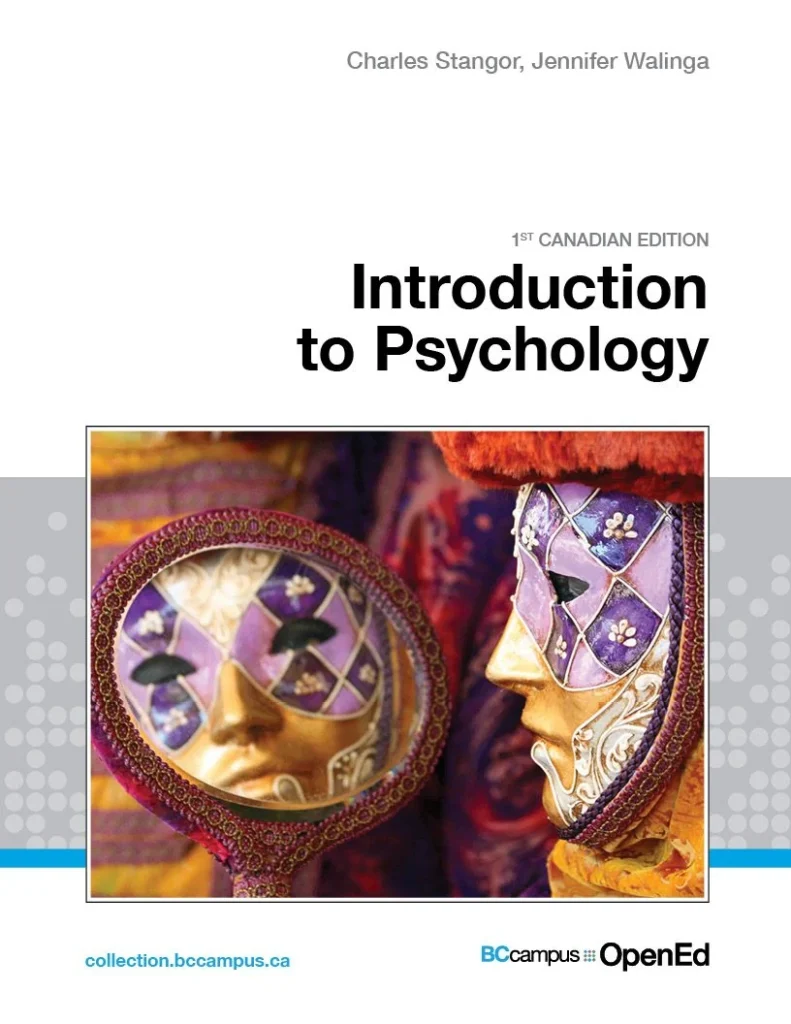 Psychology
Introduction to Psychology (First Canadian Edition)
View Introduction to Psychology (First Canadian Edition) — book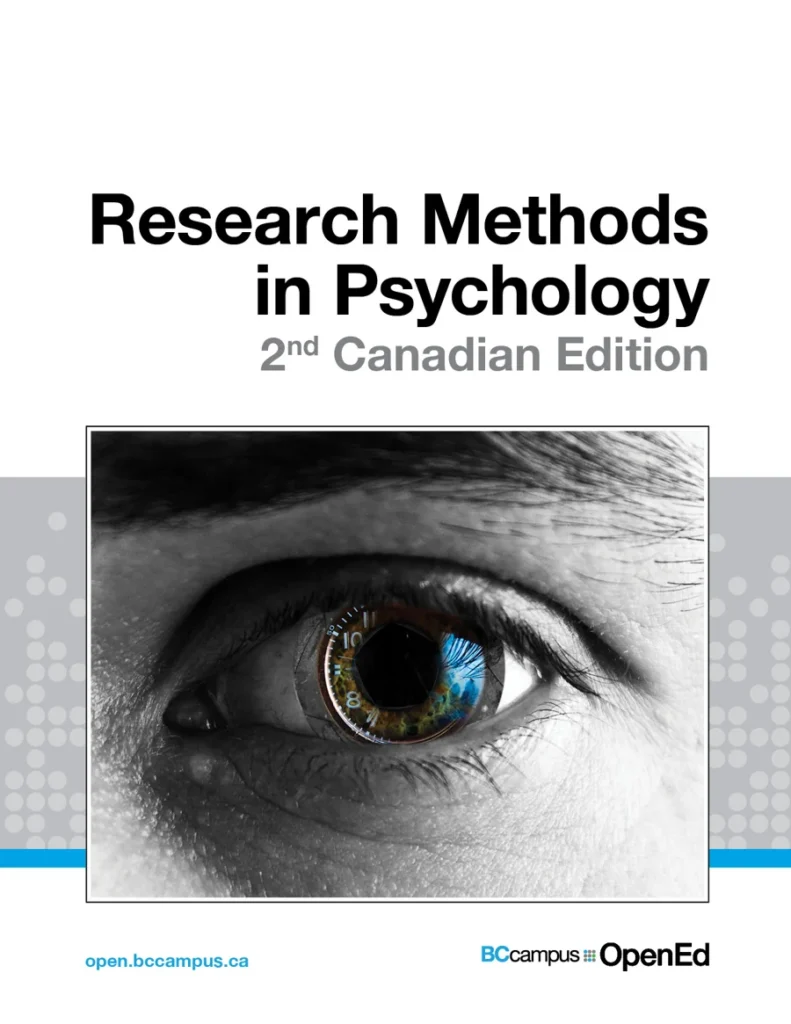 Psychology
Research Methods in Psychology
View Research Methods in Psychology — book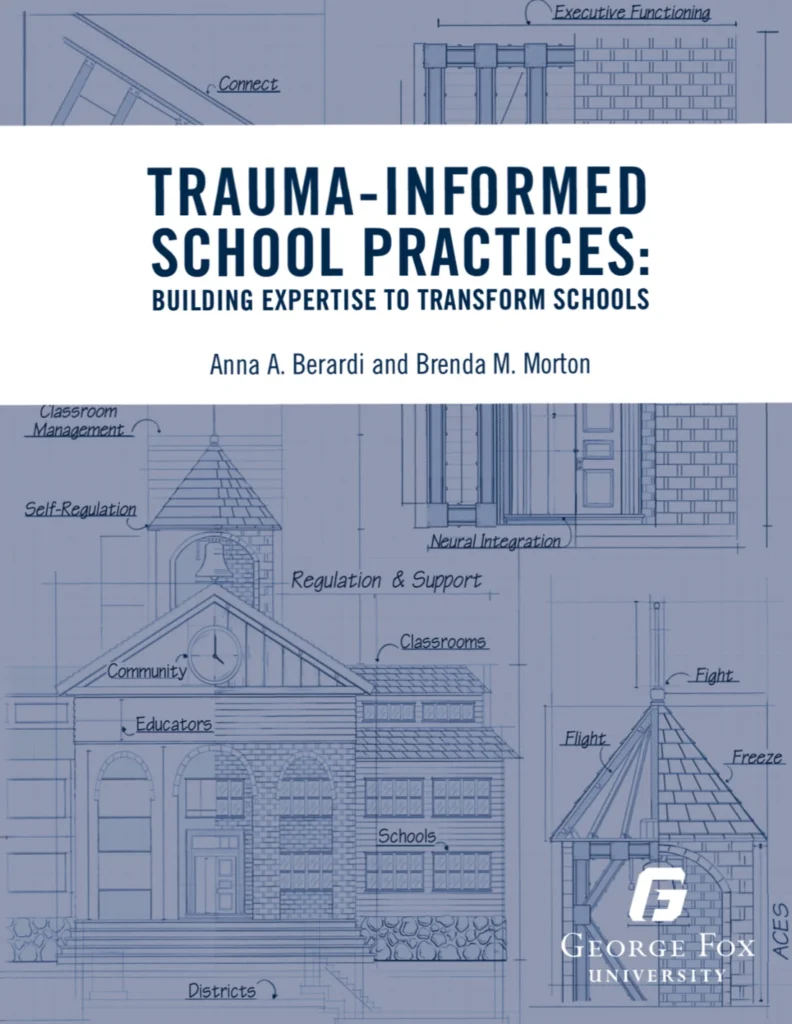 Education
Trauma-Informed School Practices: Building Expertise To Transform Schools
View Trauma-Informed School Practices: Building Expertise To Transform Schools — book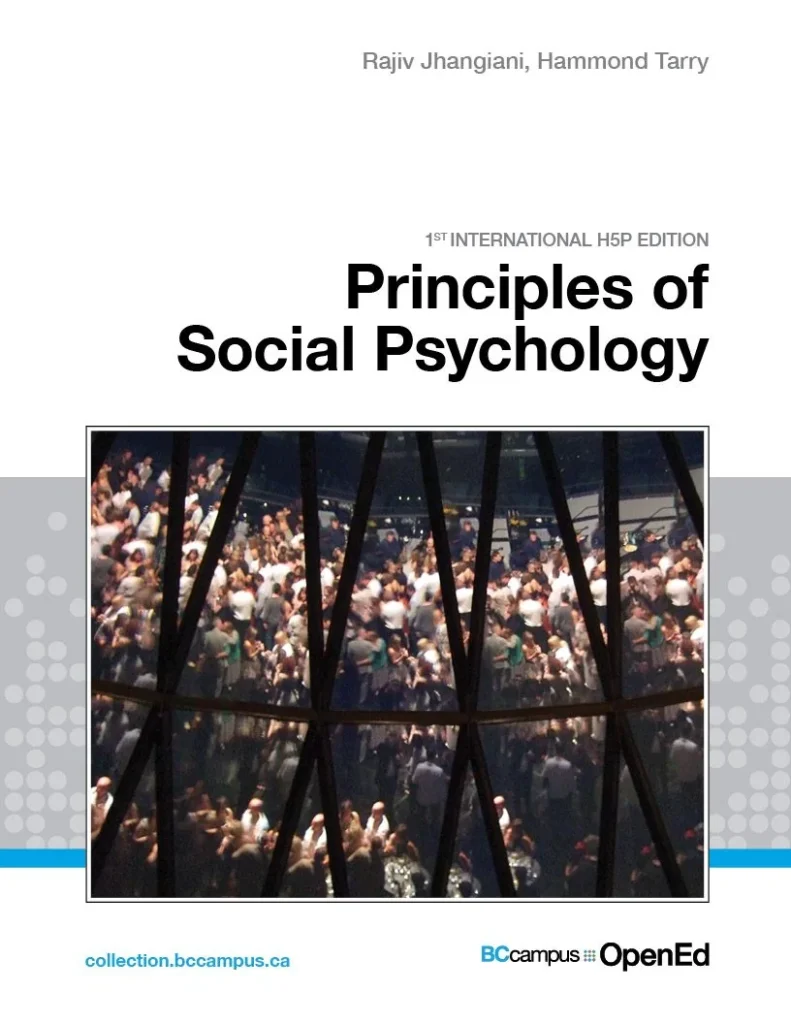 Psychology



