
 Humanities
Textbook
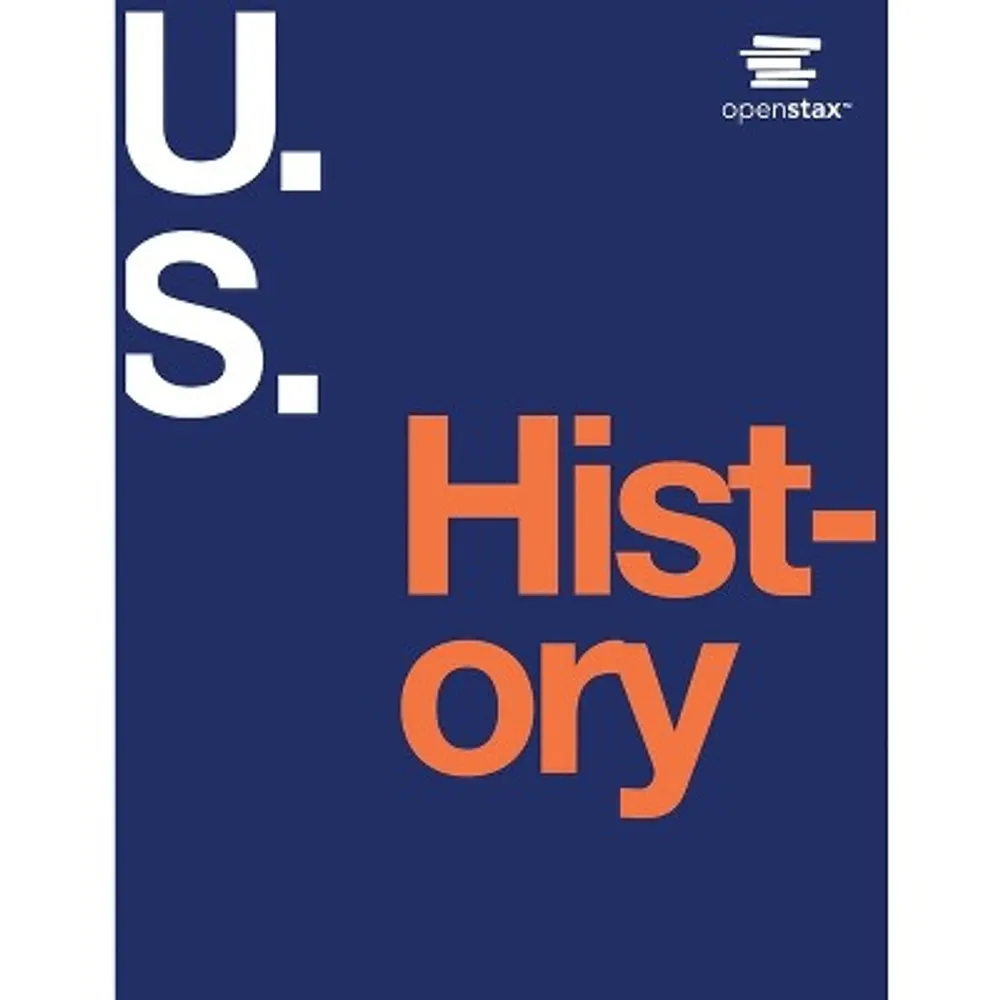
U.S. History
Not rated yetRate this bookU.S. History examines the people, institutions, and conflicts that shaped the United States, from societies before Atlantic contact to the early twenty-first century. This 32-chapter guide connects political decisions with economic change, social movements, slavery, Indigenous sovereignty, and contested citizenship. Use its summaries and evidence-based study tasks alongside the OpenStax text and its primary-source features.
Free reading is available at the official source. Opens in a new tab.
 Free
About this book
U.S. History examines the people, institutions, and conflicts that shaped the United States, from societies before Atlantic contact to the early twenty-first century. This 32-chapter guide connects political decisions with economic change, social movements, slavery, Indigenous sovereignty, and contested citizenship. Use its summaries and evidence-based study tasks alongside the OpenStax text and its primary-source features.
Chapter-wise summaries and study tasks
Chapter 1 The Americas, Europe, and Africa Before 1492
The opening chapter establishes that American history begins with diverse societies rather than European arrival. Indigenous communities developed different farming systems, settlements, trade networks, and political institutions across the Americas. European religious and political changes supplied part of the context for expansion, while West African kingdoms participated in regional and trans-Saharan commerce. Slavery existed in several settings, but its institutions and meanings differed from the hereditary racial slavery later consolidated in the Atlantic world. Comparing these societies supplies a baseline for understanding how contact transformed existing worlds.
Study task. Compare political organization and trade in one Indigenous society, one European kingdom, and one West African state; identify what your sources cannot establish.
Chapter 2 Early Globalization: The Atlantic World, 1492–1650
Atlantic exploration connected commercial ambition, royal competition, missionary activity, and advances in navigation. Portuguese maritime networks and Spanish conquest developed through different combinations of trade and territorial control. Conquest also depended on Indigenous alliances and rivalries, while introduced diseases caused devastating losses. The Reformation intensified imperial competition. The Columbian Exchange moved crops, animals, pathogens, and people between continents, producing unequal consequences. Colonial labor systems and the expanding slave trade reveal that growing economic connections rested on coercion as well as exchange.
Study task. Construct an exchange map with biological, economic, and human movements; explain why benefits and losses were distributed unequally.
Chapter 3 Creating New Social Orders: Colonial Societies, 1500–1700
Colonial societies emerged through distinct imperial strategies and encounters with Indigenous peoples. Spanish settlements linked extraction and conversion to hierarchical social arrangements; French and Dutch ventures often emphasized commerce and strategic alliances. English settlements varied between plantation economies and religious communities, and their survival depended on labor, land, and regional conditions. Colonization altered environments and political relationships rather than simply reproducing Europe overseas. Studying these contrasts helps explain why later British North America contained different economies and institutions instead of one uniform colonial experience.
Study task. Compare two colonies by founding purpose, labor system, relations with Indigenous neighbors, and government; support each comparison with chapter evidence.
Chapter 4 Rule Britannia! The English Empire, 1660–1763
The Restoration expanded English settlement, while the Glorious Revolution changed the relationship between monarchy, Parliament, and colonial authority. Atlantic slavery and colonial consumption connected households to an imperial economy built on unequal labor relations. Enlightenment reasoning and evangelical revival offered different approaches to knowledge and authority, sometimes challenging established institutions. Repeated imperial wars involved Indigenous nations pursuing their own interests. British victory in the struggle with France enlarged the empire but also created financial and administrative pressures that helped destabilize relations with its mainland colonies.
Study task. Trace one imperial war from its regional causes to its consequences for Britain, colonists, and an Indigenous nation.
Chapter 5 Imperial Reforms and Colonial Protests, 1763-1774
Britain sought revenue and tighter imperial management after the French and Indian War. Colonists contested measures such as the Stamp Act and Townshend duties through arguments about representation, organized boycotts, and public protest. Participation extended beyond formal political elites through consumer action and local associations. The destruction of tea and Parliament's coercive response widened the conflict. The First Continental Congress coordinated resistance without making independence inevitable. The central analytical problem is how disputes over particular policies developed into a broader challenge to imperial legitimacy.
Study task. Create a policy-and-response timeline from 1763 to 1774, distinguishing British intentions, colonial arguments, and unintended escalation.
Chapter 6 America's War for Independence, 1775-1783
The war for independence combined military campaigns with a struggle over allegiance and political identity. British efforts to restore order met organized resistance, while the Declaration articulated a claim to separate sovereignty. Continental survival depended on resources, leadership, diplomacy, and French assistance, not battlefield victories alone. Fighting in the South exposed civil conflict among neighbors. Enslaved people, women, and Indigenous nations pursued security and opportunity within constrained choices. Independence transformed sovereignty while leaving major inequalities unresolved, making the Revolution's consequences different for different groups.
Study task. Explain the importance of foreign assistance and the southern campaign, then compare the wartime choices available to two groups beyond Continental soldiers.
Chapter 7 Creating Republican Governments, 1776–1790
Independence required Americans to design republican governments and decide how much power ordinary citizens should exercise. State constitutions experimented with representation and executive authority, while the Articles of Confederation reflected concern about centralized rule. Financial pressures and unrest strengthened arguments for a different federal structure. The Constitutional Convention created a stronger national government through compromises over representation, power, and slavery. Ratification debates contrasted competing safeguards for liberty. The resulting system expanded some forms of political participation while preserving exclusions that shaped future constitutional struggles.
Study task. Compare a Federalist and an Anti-Federalist argument about power; explain how each understood the principal threat to liberty.
Chapter 8 Growing Pains: The New Republic, 1790–1820
The new republic faced disputes over finance, constitutional interpretation, diplomacy, and federal authority. Hamilton's program and Jefferson's competing vision helped produce durable political divisions. Foreign revolutions and European warfare intensified arguments about neutrality and national interest, while domestic resistance tested federal enforcement. The election of 1800 and subsequent territorial expansion revealed both the resilience and contradictions of republican government. The War of 1812 tested sovereignty and resources. Follow the relationship between party conflict and institution-building rather than treating early national politics as a settled constitutional consensus.
Study task. Connect one financial dispute and one foreign-policy dispute to competing interpretations of federal power, using specific decisions as evidence.
Chapter 9 Industrial Transformation in the North, 1800–1850
Industrialization in the Northeast reorganized work, investment, and everyday life. Mechanized production and factory discipline changed workers' control over time and skill, while canals, roads, and other transport improvements connected producers to wider markets. Commercial expansion offered opportunities but also exposed households to debt and instability. Class identities and expectations about gender developed alongside these changes. Factory workers and employers experienced the market revolution differently. The chapter connects technological change to social relationships, asking who controlled production and who absorbed the costs of growth.
Study task. Trace a manufactured product from financing and raw materials to labor and sale; identify two conflicts along that chain.
Chapter 10 Jacksonian Democracy, 1820–1840
Jacksonian politics expanded electoral participation for many white men and popularized party organization, rallies, and claims to represent the common citizen. That expansion coexisted with racial exclusion, restrictions on women, and the violent dispossession of Indigenous peoples. Nullification and the Bank War exposed disagreements about federal authority and executive power. Indian removal illustrates how democratic mandates could advance coercive policies against people denied meaningful representation. Assessing Jacksonian democracy therefore requires identifying both its beneficiaries and the institutions that enabled its exclusions.
Study task. Evaluate the phrase 'age of democracy' using voting participation, executive power, and Indian removal; state the limits of the label.
Chapter 11 A Nation on the Move: Westward Expansion, 1800–1860
Westward expansion joined exploration, migration, diplomacy, and war to disputes over slavery. Lewis and Clark's expedition depended on existing Indigenous knowledge and networks. The Missouri controversy demonstrated that territorial growth could unsettle the balance between slave and free states. Texas independence and annexation intensified conflict with Mexico, and the Mexican-American War transferred extensive territory to the United States. The resulting struggle over free or slave soil made national expansion a sectional crisis. Treat expansion as a contested process involving other sovereign peoples, not an automatic national destiny.
Study task. Map territorial changes and explain how the acquisition of one region changed debates about slavery, citizenship, and national power.
Chapter 12 Cotton is King: The Antebellum South, 1800–1860
Cotton tied the antebellum South to international markets and northern finance while increasing demand for enslaved labor and land. The domestic slave trade separated families and carried slavery into expanding plantation regions. Enslaved African Americans maintained community, religious life, and varied forms of resistance under coercive conditions. Southern wealth was unevenly distributed, although elites promoted a social order defending slavery. Attempts to acquire additional slaveholding territory connected domestic institutions to foreign ambitions. Economic profitability does not explain away the violence through which this system operated.
Study task. Diagram cotton's financial and labor connections, then use one example of enslaved people's agency without minimizing the constraints they faced.
Chapter 13 Antebellum Idealism and Reform Impulses, 1820–1860
Antebellum reform drew energy from religious revival, individual improvement, and experiments in community life. Temperance, health campaigns, communal settlements, abolition, and women's rights offered different answers to perceived social problems. Reform could challenge domination but could also impose restrictive standards on others. Antislavery activism contained disagreements about tactics, equality, and political participation. Women's experience within reform organizations contributed to demands for independent rights. Comparing movements reveals overlapping networks and sharp boundaries: participation in one reform cause did not necessarily imply support for equality in another.
Study task. Compare two reform movements by diagnosis, proposed remedy, intended audience, and excluded voices; examine one primary-source appeal.
Chapter 14 Troubled Times: the Tumultuous 1850s
During the 1850s, successive compromises failed to contain the conflict over slavery's future. The Compromise of 1850 and enforcement of the Fugitive Slave Act brought slavery's power into northern communities. Kansas-Nebraska reopened territorial questions through popular sovereignty and encouraged violent conflict. The Dred Scott decision strengthened slaveholders' constitutional claims while deepening sectional distrust. John Brown's raid and the election of 1860 intensified fears about political control. Analyze the interaction of laws, party realignment, court decisions, and violence instead of attributing disunion to a single incident.
Study task. Build a causal chain linking Kansas-Nebraska, party realignment, Dred Scott, and the election of 1860; distinguish underlying causes from immediate triggers.
Chapter 15 The Civil War, 1860–1865
Secession and the Civil War grew from the struggle over slavery and its place in the nation. Mobilization required governments to organize armies, finance warfare, and manage civilian economies. Military developments interacted with enslaved people's flight and demands for freedom, helping move emancipation toward the center of Union policy. Black military service further challenged the boundaries of citizenship. Campaigns, supply networks, and civilian hardship shaped the outcome alongside leadership decisions. Union victory preserved the nation and destroyed legal slavery, but the terms of freedom remained a political struggle.
Study task. Explain how emancipation changed military strategy and the war's political purpose; integrate African American actions with federal policy decisions.
Chapter 16 The Era of Reconstruction, 1865–1877
Reconstruction concerned the restoration of states, the rights of freedpeople, and the distribution of political and economic power after slavery. Presidential and congressional approaches differed over federal responsibility and the conditions of readmission. Constitutional amendments and Black political participation opened significant possibilities. Freedpeople built institutions and pursued education, family autonomy, land, and citizenship. White supremacist violence, economic dependency, political opposition, and declining northern commitment undermined these gains. Reconstruction's collapse was produced through organized choices and coercion; it was not evidence that equal citizenship was inherently unworkable.
Study task. Distinguish constitutional rights from the capacity to enforce them; explain how violence and labor arrangements limited freedom after emancipation.
Chapter 17 Go West Young Man! Westward Expansion, 1840-1900
Later nineteenth-century western expansion depended on federal land policy, transportation, capital, and migration. Homesteading could promise independence while exposing families to environmental hardship and debt. Mining and cattle economies generated boomtowns and conflicts over resources. Federal campaigns and assimilation policies attacked Indigenous sovereignty and cultural life. Chinese immigrants and Hispanic residents faced discriminatory laws, violence, and loss of economic power. The chapter replaces an uncomplicated frontier success story with a regional history of opportunity, dispossession, ecological constraints, and unequal access to citizenship and property.
Study task. Compare a homesteader, an Indigenous community, and a Chinese immigrant worker in terms of land access, state power, and economic risk.
Chapter 18 Industrialization and the Rise of Big Business, 1870-1900
Industrial growth combined invention with new forms of corporate organization, finance, and distribution. Large firms pursued integration and economies of scale, concentrating wealth and market power. Workers experienced dangerous conditions, limited bargaining power, and insecurity, prompting union organization and strikes. Employers and public authorities often resisted collective action. At the same time, advertising, department stores, and mass production reshaped consumption and aspirations. Assess industrialization through the connection between productive capacity and power: greater output did not automatically produce safer workplaces or a fair distribution of its gains.
Study task. Compare vertical integration with a labor union as responses to industrial competition; identify whose bargaining power each sought to increase.
Chapter 19 The Growing Pains of Urbanization, 1870-1900
Rapid urban growth created pressures on housing, sanitation, transport, and public services. Immigration and African American migration altered neighborhoods and labor markets, while discrimination shaped access to work and residence. Political machines, reform organizations, and settlement work offered different forms of assistance and control. Leisure spaces and mass culture helped residents navigate crowded city life. New writing and social thought responded to both opportunity and inequality. Urban problems therefore emerge as institutional questions about infrastructure, representation, and resources, rather than simply consequences of population size.
Study task. Analyze one urban problem through its causes, affected groups, available services, and proposed reforms; compare a resident's perspective with a reformer's.
Chapter 20 Politics in the Gilded Age, 1870-1900
Gilded Age politics revolved around patronage, tariffs, currency, and the power of organized economic interests. Close electoral competition did not prevent corruption or resolve deep social conflicts. Farmers facing debt and unfavorable market conditions developed cooperative and political responses, culminating in Populist demands. Labor struggles and the depression of the 1890s challenged claims that growth alone would bring stability. Debates over gold and silver concerned the distribution of credit and debt burdens. Understanding these conflicts requires connecting apparently technical policy choices to the livelihoods of particular constituencies.
Study task. Explain how a debtor farmer and a creditor might view currency policy differently; connect their positions to the Populist platform.
Chapter 21 Leading the Way: The Progressive Movement, 1890-1920
Progressivism brought diverse reformers together around concerns about industrial capitalism, corruption, public health, and democratic government. Investigative reporting and local organizing helped make social problems subjects of public action. Women's activism and African American organizing advanced claims that mainstream reform often neglected. National leaders pursued regulation through different combinations of executive power and legislation. Progressive achievements coexisted with paternalism, segregation, and exclusion. Evaluate particular reforms by their mechanisms and beneficiaries, rather than assuming a single unified movement or equating administrative efficiency with equality.
Study task. Choose a municipal reform and a federal reform; compare the problem identified, the policy mechanism, and the people left outside its benefits.
Chapter 22 Age of Empire: American Foreign Policy, 1890-1914
American overseas expansion drew on strategic arguments, commercial ambitions, racial ideologies, and claims about national destiny. The Spanish-American War and its aftermath brought new possessions and fierce debates over imperial rule. Resistance in the Philippines exposed contradictions between self-government rhetoric and colonial control. Open Door diplomacy expressed commercial aims in East Asia, while Roosevelt and Taft pursued influence through intervention and finance. These approaches differed in method but frequently limited other countries' autonomy. Include the perspectives of colonized peoples when evaluating the stated purposes and consequences of expansion.
Study task. Compare 'Big Stick' and 'Dollar Diplomacy' through one intervention each; assess official explanations against effects on local sovereignty.
Chapter 23 Americans and the Great War, 1914-1919
The United States moved from neutrality toward participation in the First World War amid disputes over trade, submarine warfare, and national security. Mobilization expanded federal coordination of industry, military recruitment, and public persuasion. Wartime patriotism also justified restrictions on dissent and pressure to conform. Women and African Americans encountered new opportunities alongside discrimination. Wilson's peace program faced conflicting allied priorities and domestic opposition. Demobilization brought labor unrest, racial violence, and political repression. The war's significance lies in these home-front transformations as well as its military and diplomatic results.
Study task. Compare a wartime appeal to democracy with a restriction on dissent; explain the tension using evidence from mobilization and the postwar settlement.
Chapter 24 The Jazz Age: Redefining the Nation, 1919-1929
The 1920s combined expanding consumer culture with deep conflicts over belonging and social authority. Automobiles, radio, film, advertising, and installment purchasing changed everyday life, although prosperity remained uneven. Migration and the Harlem Renaissance transformed cultural expression. Disputes over immigration, religion, race, gender, and Prohibition produced organized backlash as well as experimentation. Republican administrations promoted business-oriented policies amid political scandals. The chapter treats cultural liberation and exclusion as simultaneous developments, asking who gained greater visibility, who controlled institutions, and who remained economically vulnerable beneath the decade's image of abundance.
Study task. Contrast one example of cultural experimentation with one restrictive movement, then explain how both arose within the same decade.
Chapter 25 Brother, Can You Spare a Dime? The Great Depression, 1929-1932
The stock market crash marked a dramatic turning point, but the Depression developed through wider weaknesses in finance, production, purchasing power, and international connections. Bank failures and unemployment reinforced contraction, while hardship spread across communities. Hoover's preference for voluntary cooperation shaped early responses, and later federal measures failed to restore public confidence. Protests exposed the distance between official expectations and lived conditions. Distinguish the crash from the broader economic crisis, and examine how assumptions about government's proper role constrained policy before Roosevelt took office.
Study task. Create a feedback diagram linking bank failures, falling spending, business contraction, and unemployment; identify where Hoover's measures tried to intervene.
Chapter 26 Franklin Roosevelt and the New Deal, 1932-1941
Roosevelt's New Deal expanded federal responsibility through programs directed at relief, recovery, and reform. Emergency banking action sought to stabilize confidence, while public employment and agricultural measures addressed different parts of the crisis. Later initiatives strengthened labor rights and established Social Security. Policies faced legal challenges and criticism from different political directions. Their effects varied by race, gender, occupation, and region, with exclusions limiting coverage. The New Deal changed expectations of national government without fully ending the Depression or resolving the inequalities that shaped access to assistance.
Study task. Classify three programs by relief, recovery, or reform, explaining overlaps; assess one program's eligibility rules and their unequal consequences.
Chapter 27 Fighting the Good Fight in World War II, 1941-1945
The Second World War grew from aggression in Europe and Asia and brought the United States into a global military and industrial struggle. Home-front mobilization expanded production and altered employment, while rationing and propaganda organized civilian participation. Opportunities for women and African Americans coexisted with discrimination, and the incarceration of Japanese Americans violated civil liberties. European and Pacific campaigns required different strategies and immense resources. The atomic bomb decision raises questions about alternatives, evidence, and civilian suffering. Analyze victory alongside the domestic and international costs of total war.
Study task. Compare the demands of the European and Pacific theaters, then evaluate a home-front policy through both military objectives and civil liberties.
Chapter 28 Post-War Prosperity and Cold War Fears, 1945-1960
Postwar America combined economic expansion with Cold War insecurity. Demobilization, labor conflict, housing demand, and veterans' benefits shaped the transition to peace. Containment and the Korean War institutionalized a long geopolitical rivalry, while anticommunism affected domestic politics and freedom of expression. Suburban growth, consumer goods, television, and ideals of family life promoted a particular American dream with uneven access. Early civil rights victories challenged segregation through litigation and organized protest. Prosperity and conformity therefore need to be studied alongside racial barriers, dissent, and the costs of national security policy.
Study task. Compare access to postwar housing and education for two groups, explaining how policy implementation shaped the distribution of prosperity.
Chapter 29 Contesting Futures: America in the 1960s
The 1960s brought competing visions of reform, citizenship, and national purpose. Kennedy's initiatives and Johnson's Great Society expanded attention to poverty, health, education, and federal responsibility. Civil rights organizing combined courtroom strategies, direct action, voter registration, and local leadership, producing major legislation while revealing persistent inequality. Other movements challenged gender roles, cultural authority, and established institutions. Cold War commitments and Vietnam complicated domestic ambitions. Distinguish legislative achievement from implementation and trace how activists pressured political leaders rather than treating reform solely as a presidential project.
Study task. Connect one grassroots campaign to a federal law, then identify an inequality that legislation alone did not eliminate.
Chapter 30 Political Storms at Home and Abroad, 1968-1980
The period from 1968 to 1980 combined movements for recognition with economic instability and declining trust in government. Campaigns associated with race, gender, sexuality, and Indigenous rights challenged inherited institutions while provoking opposition. Environmental concerns and changing social expectations reshaped political agendas. Vietnam and its aftermath deepened disputes over executive authority, and Watergate exposed abuses of presidential power. Carter confronted inflation, energy difficulties, and foreign-policy crises. Rather than treating these years as simple national decline, examine how competing demands, structural economic pressures, and government decisions interacted.
Study task. Separate economic pressures from political scandals in a timeline, then explain how both affected public confidence and electoral choices.
Chapter 31 From Cold War to Culture Wars, 1980-2000
Reagan's presidency advanced tax reduction, deregulation, and conservative political priorities while contributing to disputes over spending, inequality, and federal responsibility. Religious and cultural mobilization reshaped party coalitions, and the AIDS crisis exposed conflicts over public health and social recognition. The Cold War's end transformed foreign-policy assumptions without ending international intervention or uncertainty. Under Clinton, technological change and economic expansion coincided with globalization, partisan confrontation, and debates about government. Evaluate this era through policy mechanisms and distributional outcomes rather than attributing complex economic or geopolitical changes to one leader alone.
Study task. Compare an economic policy of the Reagan years with one from the Clinton years; trace intended effects, observed trade-offs, and competing interpretations.
Chapter 32 The Challenges of the Twenty-First Century
The final chapter follows early twenty-first-century conflicts over security, economic management, social change, and political belonging. The September 11 attacks and subsequent wars expanded debates over intervention, surveillance, and civil liberties. Domestic policy disputes, the financial crisis, and responses to recession shaped competing expectations of government. Obama's election and reform agenda intersected with continuing racial and ideological divisions. Later political polarization and social movements extended arguments about inclusion and national identity. Read this chapter as the source edition's historical account, distinguishing its coverage from an automatically updated account of current events.
Study task. Choose a security debate and a social movement from the chapter; compare their constitutional arguments and identify the source edition's chronological limits.
How to study this book
- Read the chapter outline, then build a short chronology with causes and consequences rather than dates alone.
- Keep a source notebook recording author, audience, purpose, historical setting, and the limits of each document's evidence.
- Compare experiences across race, class, gender, and region; distinguish an official policy from how people experienced its implementation.
- Answer each study task using specific evidence and revisit explanations when a later chapter complicates them.
Questions for reflection
- How did the definition and practical exercise of citizenship change over time?
- When did federal power protect rights, and when did it enable exclusion or coercion?
- How did economic growth distribute opportunity, insecurity, and political influence?
- Which explanations distinguish long-term conditions from immediate triggers?
Source edition and coverage
This guide follows the 32 main chapters of the OpenStax U.S. History PDF linked by the source record. Chapters, section documents, maps, and review materials provide the basis for further study. The final chapter reflects the source edition's coverage; this guide does not present its historical account as current reporting. These are original study explanations and learning tasks. Read the complete book at the official source.
About access & copyright
This page provides book information and study material. Full-text access is provided by the original publisher or authorised source; a listing does not grant permission to republish the book.
Read our Library Access & Copyright policyExplore the contents
Check the chapters covered in this edition.
Visit the official source
See reading, preview or purchase options.
Save for later
Keep this textbook in your saved collection.
Reader ratings & reviews
Share your thoughts
Your review helps other students choose the right resources.
KEEP LEARNING
Your next great read
Humanities Humanities
World History, Volume 2: from 1400
View World History, Volume 2: from 1400 — book Humanities
World History, Volume 1: to 1500
View World History, Volume 1: to 1500 — book Humanities
Introduction to Philosophy
View Introduction to Philosophy — book Humanities
Writing for Success
View Writing for Success — book Humanities
Stand up, Speak out - The Practice and Ethics of Public Speaking
View Stand up, Speak out - The Practice and Ethics of Public Speaking — book Humanities
Yorùbá Yé Mi
View Yorùbá Yé Mi — book Humanities
The Process of Research Writing
View The Process of Research Writing — book Humanities
Modern Philosophy
View Modern Philosophy — book Humanities



