
Writing for Success
HumanitiesTextbook
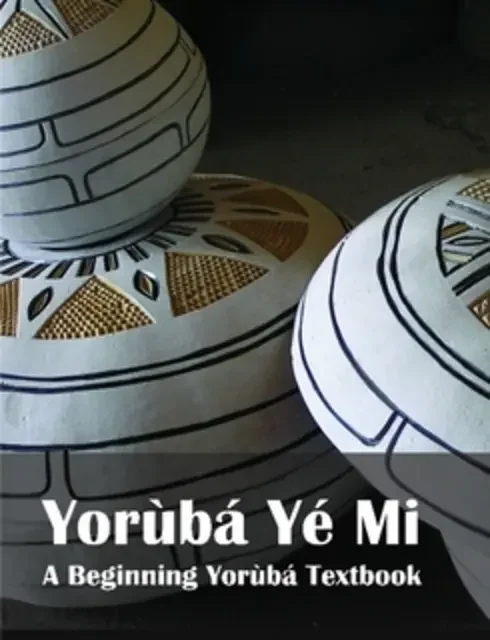
Yorùbá Yé Mi
Not rated yetRate this bookFehintola Mosadomi’s Yorùbá Yé Mi is a beginning Yorùbá course with English explanations and glosses, thematic lessons, and a multimedia learning design. The 2012 first edition contains an introduction, twelve chapters, and pronunciation and vocabulary resources. It is retained as an English-supported language textbook, with target-language material serving the learning purpose. This guide emphasizes listening, tone and spelling accuracy, meaningful exchanges, and the connection between language and cultural context.
Free reading is available at the official source. Opens in a new tab.
 Free
About this book
Fehintola Mosadomi’s Yorùbá Yé Mi is a beginning Yorùbá course with English explanations and glosses, thematic lessons, and a multimedia learning design. The 2012 first edition contains an introduction, twelve chapters, and pronunciation and vocabulary resources. It is retained as an English-supported language textbook, with target-language material serving the learning purpose. This guide emphasizes listening, tone and spelling accuracy, meaningful exchanges, and the connection between language and cultural context.
Book summary
About this book
Fehintola Mosadomi’s Yorùbá Yé Mi is a beginning Yorùbá course with English explanations and glosses, thematic lessons, and a multimedia learning design. The 2012 first edition contains an introduction, twelve chapters, and pronunciation and vocabulary resources. It is retained as an English-supported language textbook, with target-language material serving the learning purpose. This guide emphasizes listening, tone and spelling accuracy, meaningful exchanges, and the connection between language and cultural context.
Chapter and section guide
Introduction: Sounds, Names, and Classroom Communication
The introduction provides geographic orientation and develops the sound and writing system, including vowels, consonants, syllabic sounds, and tone. Names, titles, and classroom expressions connect pronunciation with social use. Students should not assume that familiar Roman letters have English sound values or that tone marks are optional decoration. Listening and careful repetition are needed alongside reading. The source’s maps and cultural framing locate the language without implying that every speaker has an identical experience.
Study application: Create a pronunciation notebook connecting a source word, its written marks, a listening model, and your own practice recording. State which distinction you are trying to hear or produce.
1. Greetings
Greetings introduce social interaction as well as vocabulary. The chapter develops verbs, subject pronouns, and introductory question forms through themed lessons. Students should learn when an expression is appropriate and how the exchange proceeds rather than memorize one isolated line. Pronunciation and tone remain part of meaning. The cultural setting helps explain why a greeting can involve attention to another person’s circumstances and relationship with the speaker.
Study application: Practice a short greeting exchange with a partner, changing roles and context. Check meaning, pronunciation, and appropriateness separately rather than treating fluent speed as the only goal.
2. My Classroom
Classroom objects and activities provide a setting for possessive forms, plural marking, and numbers. The chapter connects identifying objects with describing ownership and participating in classroom routines. Students should build complete expressions and check the relationship between a form and the noun or person it refers to. A vocabulary list becomes more useful when words are retrieved in a meaningful task instead of copied repeatedly without use.
Study application: Describe a small classroom arrangement using the chapter’s models. Change the possessor and number of objects, then check how the expressions change.
3. Mark the Date
Numbers, calendar vocabulary, and future reference support talking about dates and planned activity. Students should distinguish naming a date from expressing what will happen at that time. The chapter continues earlier number work while adding a communicative purpose. Calendar terms should be practiced in context, and learners should use source models rather than transfer English word order automatically. Accurate listening is important when nearby numerical expressions sound similar to a beginner.
Study application: Build an original weekly schedule using the chapter’s patterns and ask a partner for missing information. Verify the dates and intended activities after the exchange.
4. What Time Do We Meet?
Questions about quantity, clock time, age, and colors broaden everyday interaction. Similar numerical resources can serve different questions, so students should identify what is being requested before choosing a form. The chapter’s examples help connect a question with an appropriate answer rather than a word-for-word English translation. Learners should practice recognizing the prompt as well as producing a prepared response.
Study application: Conduct a short information-gap task involving meeting times and descriptions. Check whether the listener obtained the intended information and identify one pronunciation or form issue to revisit.
5. My Family Tree
Family vocabulary, identification, questions about people, and descriptions support talking about relationships. The chapter introduces grammatical distinctions through a familiar theme, but students should not assume every English expression using be maps to one Yorùbá form. Family examples also have cultural context that should be explained rather than reduced to vocabulary equivalence. Learners can use fictional profiles when they prefer not to share personal family information.
Study application: Create a fictional three-generation family and describe relationships using the chapter’s models. Ask identification questions and verify that the intended person can be recognized.
6. Shop with Me
Shopping brings together prices, quantities, vocabulary formation, and a bargaining context. The educational goal is to manage an exchange: ask, understand, clarify, and respond. Students should distinguish a cultural example in the source from a rule that every transaction or speaker follows. Number practice becomes meaningful when it changes the outcome of a conversation. Accuracy should be checked at the point where a misunderstanding could change quantity or price.
Study application: Role-play a fictional purchase with different price and quantity information for each participant. Include a clarification request and confirm the final agreement.
7. Let’s Find Something to Eat!
Food, preferences, meals, markets, and restaurant interactions connect vocabulary with practical choices. The chapter develops expressions of wanting and liking in their grammatical settings. Students should learn what an expression accomplishes in an exchange rather than assume all English preference verbs are interchangeable. Source descriptions of foods and meal practices provide cultural learning while leaving room for variation among people and places.
Study application: Plan a fictional meal order using only patterns you have checked in the source. Change one preference or requested item and explain the resulting change in the exchange.
8. Are You Feeling Good Today?
The chapter introduces body vocabulary, wellbeing and illness expressions, sports, and possessive constructions. Its purpose is language learning, not medical diagnosis or treatment. Students should practice communicating a simple state and understanding a response. Grammar and vocabulary need to remain connected so that a memorized body-part label can be used accurately. Learners should use fictional situations for practice and preserve the distinction between communicative competence and clinical knowledge.
Study application: Create a short fictional wellbeing dialogue with a follow-up question. Check that the expressions convey the intended meaning without adding health advice to the exercise.
9. My Workplace
Professions and work-related expressions provide a setting for describing roles and distinguishing completed from not-yet-completed activity. Negation must be learned through the chapter’s actual constructions rather than by inserting an English-style negative word into any sentence. Students should compare affirmative and negative models carefully and attend to how the relevant time interpretation changes. Occupational vocabulary is most useful when embedded in a description or exchange.
Study application: Describe a fictional person’s profession and current activity, then contrast an affirmative statement with a source-supported not-yet construction. Explain the intended difference in meaning.
10. Home Sweet Home!
Descriptions of a home combine spatial vocabulary, ordinal numbers, and additional grammatical and sound-pattern work. The chapter’s treatment of reflexive forms and vowel processes shows why spelling and pronunciation cannot always be learned as independent lists. Students should use the explanations and listening resources to connect the written form with what is heard. A meaningful description should allow another person to reconstruct the arrangement being discussed.
Study application: Describe a fictional home layout and ask a partner to sketch it. Compare the result with your intended arrangement and identify where the language needs clarification.
11. Nice Style!
Clothing, styles, questions, and associated verbs connect description with culturally situated choices. An English verb used broadly for wearing may correspond to more specific patterns in the target language. Students should learn the source’s combinations in context and avoid treating one word as a universal substitute. Seasonal clothing and cultural examples also offer opportunities to compare meaning without ranking one practice against another.
Study application: Prepare a fictional clothing description with checked source patterns. Change one item and verify whether the associated expression also needs to change.
12. Campus Life
The final chapter integrates school-system vocabulary, schedules, facilities, and everyday campus situations. Earlier work on numbers, time, descriptions, and questions becomes useful in a more connected task. Students should practice obtaining information they do not already know rather than reciting a fixed script from memory. The chapter also encourages attention to how educational institutions are described in context. A successful exchange ends with shared understanding, not merely completed turns.
Study application: Complete a fictional campus information task involving a class, meeting time, and facility. Confirm the information in a second form, such as a written schedule or map.
Appendix: Pronunciation, Tone, and Vocabulary
The appendix returns to the alphabet, sound distinctions, tone practice, pronunciation exercises, tongue twisters, and glossary work. These resources support repeated targeted practice rather than one final review session. Students should use a glossary to check a form and then return it to a sentence or exchange. A written answer can be grammatically organized yet need pronunciation work; a fluent-sounding response can still communicate the wrong meaning.
Study application: Select one sound or tone contrast for focused practice, record several short attempts, and compare them with a source model. State a specific improvement goal for the next session.
Study instructions
- Study sound, tone, spelling, and meaning together, preserving the source’s marks and distinctions.
- Use English explanations to understand a pattern, then practice it in a complete communicative task.
- Listen to the available models and compare short recordings of your own speech without prioritizing speed.
- Rotate roles and change information so practice requires understanding rather than script recall.
- Keep cultural examples attributed to their context and use fictional personal details when preferred.
Practice and review task
Create a short integrated role-play linking greetings, a schedule, a purchase or meal, and a campus question. Prepare a checked vocabulary list, perform both roles, and write a reflection identifying one pronunciation issue and one grammatical issue for further practice.
Questions for reflection
Why can accurate tone and spelling matter as much as vocabulary recall? How does an information-gap task reveal understanding that a memorized dialogue may conceal?
Sources and coverage
This original study guide follows First edition, University of Texas at Austin / COERLL, 2012. It draws on the source contents, chapter introductions, selected explanations and examples, and review material. It condenses the resource rather than replacing the full text; study applications are original exercises. The chapter summaries are in English. Yorùbá examples and cultural content belong to an English-supported language-learning resource, not a replacement of the guide with a non-English text.
About access & copyright
This page provides book information and study material. Full-text access is provided by the original publisher or authorised source; a listing does not grant permission to republish the book.
Read our Library Access & Copyright policyExplore the contents
Check the chapters covered in this edition.
Visit the official source
See reading, preview or purchase options.
Save for later
Keep this textbook in your saved collection.
Reader ratings & reviews
Share your thoughts
Your review helps other students choose the right resources.
KEEP LEARNING
Your next great read
Humanities
Stand up, Speak out – The Practice and Ethics of Public Speaking
Stand up, Speak out - The Practice and Ethics of Public Speaking
View Stand up, Speak out - The Practice and Ethics of Public Speaking — book Humanities
The Process of Research Writing
View The Process of Research Writing — book Humanities
Modern Philosophy
View Modern Philosophy — book Humanities
A Foundation Course in Reading German
View A Foundation Course in Reading German — book Humanities
Intermediate Biblical Greek Reader: Galatians and Related Texts
View Intermediate Biblical Greek Reader: Galatians and Related Texts — book Arts
Vocal Techniques for the Instrumentalist
View Vocal Techniques for the Instrumentalist — book Arts
Music on the Move
View Music on the Move — book Humanities
Advanced Community College ESL Composition: An Integrated Skills Approach
View Advanced Community College ESL Composition: An Integrated Skills Approach — book Humanities



