
 Humanities
Textbook
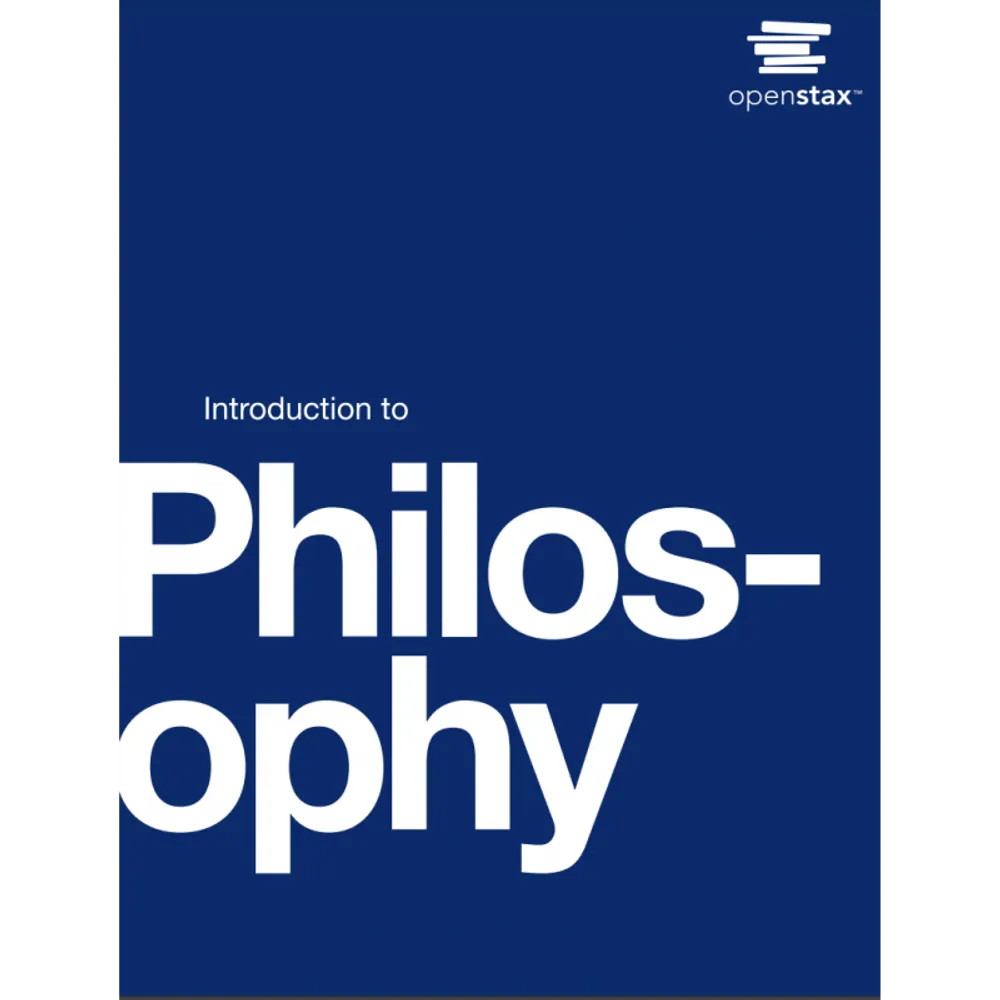
Introduction to Philosophy
Not rated yetRate this bookIntroduction to Philosophy develops tools for examining questions about knowledge, reality, value, morality, and political life. Its twelve chapters combine philosophical methods with traditions from different historical and cultural contexts. This guide emphasizes reconstructing arguments fairly, testing assumptions, and offering reasons for a position while remaining open to a stronger objection.
Free reading is available at the official source. Opens in a new tab.
 Free
About this book
Introduction to Philosophy develops tools for examining questions about knowledge, reality, value, morality, and political life. Its twelve chapters combine philosophical methods with traditions from different historical and cultural contexts. This guide emphasizes reconstructing arguments fairly, testing assumptions, and offering reasons for a position while remaining open to a stronger objection.
Chapter-wise summaries and reading tasks
Chapter 1 Introduction to Philosophy
Philosophy begins when familiar beliefs become questions requiring reasons. The first chapter introduces its aims, ways of pursuing truth, Socrates as a model of inquiry, and the range of contemporary philosophical work. Asking for a definition or justification can reveal assumptions hidden within ordinary language. Philosophical progress need not mean reaching immediate agreement; clarifying alternatives and recognizing a weak argument also improves understanding. Readers should distinguish an assertion from the reasoning offered in its support and avoid equating persistent disagreement with the absence of better and worse arguments. The chapter establishes inquiry as an active practice that connects abstract questions to how people understand and conduct their lives.
Study task. Choose an everyday claim about a good life. Identify its central terms, write a supporting argument, and formulate a question that would expose an unstated assumption.
Chapter 2 Critical Thinking, Research, Reading, and Writing
Critical thinking requires awareness of how people infer, judge, and sometimes protect existing beliefs. The chapter combines cognitive biases and habits of mind with practical research, source evaluation, philosophical reading, and writing. Intellectual humility does not mean treating all claims as equally credible; it means adjusting confidence to the quality of available reasons. Reading philosophy involves identifying a problem, reconstructing the argument, and locating objections rather than collecting memorable sentences. A philosophy paper should defend a manageable thesis and address a serious challenge. Sources provide evidence and interpretations that still require evaluation. Revision is part of reasoning because a clearer formulation often exposes a gap that fluent prose initially concealed.
Study task. Turn a short philosophical passage into numbered premises and a conclusion. Check its source, propose the strongest objection you can, and revise a paragraph to answer that objection.
Chapter 3 The Early History of Philosophy around the World
The early history chapter broadens philosophical inquiry through Indigenous, classical Indian, and classical Chinese traditions. It shows how questions about reality, knowledge, selfhood, conduct, and relationships emerge within different intellectual settings. Traditions contain internal debates and should not be reduced to a single teaching or treated as interchangeable expressions of a culture. Oral practices, community relationships, and different assumptions about the purpose of inquiry may also challenge a narrow account of what counts as philosophy. Readers should attend to historical context and the way concepts are translated. Comparison is most productive when it identifies a shared question while preserving meaningful differences in methods, commitments, and purposes.
Study task. Compare two treatments of the self or ethical conduct from the chapter. Explain the shared question, each approach’s context, and one difference that a superficial comparison would erase.
Chapter 4 The Emergence of Classical Philosophy
Classical philosophy is presented through both philosophical arguments and questions about how intellectual history is written. The chapter considers classical developments and the interaction of Jewish, Christian, and Islamic traditions with philosophical inquiry. Transmission, translation, interpretation, and debate help explain why ideas change rather than simply pass unchanged between periods. Historiography asks whose work enters a standard account and what assumptions shape that selection. Readers should examine how a thinker relates reason, experience, and religious commitment without presuming the same relationship across traditions. A historical argument deserves reconstruction in its own setting before being evaluated from a contemporary standpoint.
Study task. Trace one philosophical problem through two thinkers or traditions discussed in the chapter. Identify what was preserved, what was transformed, and what historical context helps explain the change.
Chapter 5 Logic and Reasoning
Logic studies the relationship between claims and the conclusions drawn from them. This chapter introduces philosophical methods, logical statements, arguments, kinds of inference, and informal fallacies. A deductive argument can be valid even when its premises are false; soundness requires both valid structure and true premises. Inductive reasoning supports conclusions with degrees of strength rather than guaranteeing them in the same way. Identifying a fallacy requires explaining the defect in reasoning, not merely attaching a label to an opposing view. Readers should separate the emotional force of a presentation from its inferential structure. Clear reconstruction makes it possible to test whether a conclusion follows and where disagreement actually lies.
Study task. Construct a valid argument with a false premise and a strong but nonconclusive inductive argument. Explain the different standards used to evaluate them and repair one informal reasoning error.
Chapter 6 Metaphysics
Metaphysics investigates what exists and how fundamental features of reality fit together. The chapter examines substance, personal identity, cosmological questions and arguments about God, and free will. Questions about persistence ask how something remains the same despite change, while debates about freedom connect agency to causation and responsibility. Different positions may disagree over concepts as well as evidence, so readers should define the problem before selecting a side. Thought experiments can reveal implications of a view, but an intuitive reaction still needs examination. The aim is to understand what a position commits its defender to and whether those commitments form a coherent account of reality.
Study task. Choose a personal-identity thought experiment and compare two criteria for remaining the same person. State what each criterion explains and one difficult case it must address.
Chapter 7 Epistemology
Epistemology asks what knowledge is, how beliefs can be justified, and where confidence should meet skepticism. The chapter distinguishes knowledge from merely holding a true belief and examines competing accounts of justification. Skeptical challenges test whether familiar sources of belief provide what we assume they do. Applied epistemology extends these issues to testimony, expertise, social practices, and the conditions under which information is shared. A belief’s usefulness or popularity does not alone establish its truth. Readers should distinguish the source of a belief from the reasons that support it and consider how new evidence might require revision. The social distribution of credibility also affects whose knowledge is recognized.
Study task. Evaluate a claim learned from testimony. Identify your reasons for trusting the source, possible defeaters, and the additional evidence that would justify increasing or reducing confidence.
Chapter 8 Value Theory
Value theory examines what is good, worthwhile, beautiful, or conducive to well-being. The chapter introduces the fact-value distinction, basic value questions, metaethics, theories of welfare, and aesthetics. Describing what people prefer does not automatically establish what they have reason to value. Metaethical questions concern the meaning and status of moral claims, while first-order evaluation asks which actions or outcomes are good. Accounts of well-being can emphasize pleasure, fulfilled desires, or other goods, with different implications for assessing a life. Aesthetic judgment similarly raises questions about experience, standards, and interpretation. Readers should identify which kind of evaluative question is being asked before proposing an answer.
Study task. Compare pleasure-based and desire-based assessments of a fictional life. Explain where they diverge, then distinguish this evaluative disagreement from a metaethical question about value claims.
Chapter 9 Normative Moral Theory
Normative moral theories offer organized ways to evaluate conduct and character. The chapter compares consequentialism, deontology, virtue ethics, Daoist approaches, and feminist ethical theories. These frameworks differ in what they emphasize: outcomes, duties, cultivated dispositions, appropriate responsiveness, or relationships and structures of power. A fair comparison should use each view’s strongest reasoning rather than a simplified slogan. Different theories may agree on an action while offering different explanations, or conflict when important considerations pull in opposing directions. Readers should examine both decision guidance and the conception of moral life behind it. Difficult cases help reveal a theory’s strengths, limits, and assumptions about persons and their relationships.
Study task. Analyze one moral dilemma through three frameworks. Identify the decisive consideration in each and present a serious objection without assuming that a single example settles the entire theory.
Chapter 10 Applied Ethics
Applied ethics brings moral reasoning to bioethics, environmental questions, business, and emerging technology. The chapter shows that practical judgment requires both an ethical framework and a careful understanding of relevant facts. Disagreements can arise from different values, uncertain consequences, or competing accounts of whose interests matter. Questions involving autonomy, harm, responsibility, and fairness often cut across professional boundaries. A consistent analysis should consider affected parties and explain how conflicting claims are weighed. Readers should resist solving complex cases by naming a principle without showing how it applies. Revising an initial judgment in light of a strong objection is part of responsible ethical inquiry.
Study task. Choose a fictional technology or environmental decision. Map affected parties, uncertain facts, competing principles, and two possible actions; defend one while acknowledging its strongest ethical cost.
Chapter 11 Political Philosophy
Political philosophy investigates government, legitimacy, obligation, and the organization of shared life. The chapter combines historical perspectives with forms of government and political ideologies. Having the power to enforce a rule is different from having a justified right to rule, and a person’s legal obligation can be distinguished from a moral duty. Arguments about freedom, equality, authority, and consent lead to different views of institutions. Readers should ask how a proposed political order treats dissenters and people with less power, not only how it serves an ideal citizen. Comparing theories requires attention to the assumptions each makes about human cooperation and the purposes of political association.
Study task. Develop an argument for political obligation and a serious objection to it. Explain whether your argument applies equally to a just institution and one that systematically violates rights.
Chapter 12 Contemporary Philosophies and Social Theories
Contemporary social theories examine modernity, reason, economic organization, and the forces shaping experience. The chapter moves through Enlightenment social theory, Marx, continental challenges, the Frankfurt School, and postmodernism. These approaches often question whether institutions presented as neutral or universal conceal particular interests or historical assumptions. Critique can investigate ideology, domination, alienation, and the authority of accepted narratives. Readers should distinguish a challenge to a specific account of rationality from a rejection of every possible reasoned claim. Historical context matters because theories respond to particular transformations and failures. The chapter encourages evaluating how a framework illuminates social experience while also asking what evidence or argument could challenge its own premises.
Study task. Use two approaches from the chapter to interpret a familiar institution such as work, education, or mass media. Compare what each reveals, what it overlooks, and how its claims could be assessed.
How to study this book
- For each reading, record its question, main conclusion, supporting premises, and strongest objection. Keep your evaluation separate from the author’s position.
- Practice charitable reconstruction: improve an argument where the wording permits before criticizing it. Define key terms and identify any change in their meaning.
- Write short arguments regularly, then revise them in response to objections. Use historical and cultural context to improve interpretation without treating context as a substitute for reasoning.
Questions for reflection
- What distinguishes a justified belief from a strongly held opinion?
- Can different ethical theories agree on a decision for incompatible reasons?
- How can comparison across traditions preserve differences while enabling dialogue?
Source edition and coverage
This guide follows all twelve numbered chapters of the OpenStax textbook. It offers original explanations and study prompts, not substitutes for the source arguments, primary readings, references, and review questions. This original study guide explains the source in new wording and adds learning activities. Read the publisher’s book and complete exercises.
About access & copyright
This page provides book information and study material. Full-text access is provided by the original publisher or authorised source; a listing does not grant permission to republish the book.
Read our Library Access & Copyright policyExplore the contents
Check the chapters covered in this edition.
Visit the official source
See reading, preview or purchase options.
Save for later
Keep this textbook in your saved collection.
Reader ratings & reviews
Share your thoughts
Your review helps other students choose the right resources.
KEEP LEARNING
Your next great read
Humanities Humanities
World History, Volume 2: from 1400
View World History, Volume 2: from 1400 — book Humanities
World History, Volume 1: to 1500
View World History, Volume 1: to 1500 — book Humanities
U.S. History
View U.S. History — book Humanities
Writing for Success
View Writing for Success — book Humanities
Stand up, Speak out - The Practice and Ethics of Public Speaking
View Stand up, Speak out - The Practice and Ethics of Public Speaking — book Humanities
Yorùbá Yé Mi
View Yorùbá Yé Mi — book Humanities
The Process of Research Writing
View The Process of Research Writing — book Humanities
Modern Philosophy
View Modern Philosophy — book Humanities



