
Beyond Race: Cultural Influences on Human Social Life
AnthropologyTextbook
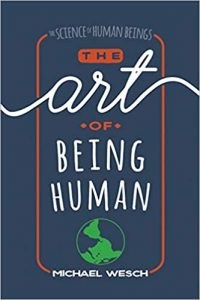
The Art of Being Human: A Textbook for Cultural Anthropology
Not rated yetRate this bookAbout this book Michael Wesch’s The Art of Being Human uses cultural anthropology to make familiar assumptions visible and invite inquiry into other ways of living. Ten lessons connect fieldwork,…
Read on the publisher’s website. Opens in a new tab.
 Free
About this book
About this book
Michael Wesch’s The Art of Being Human uses cultural anthropology to make familiar assumptions visible and invite inquiry into other ways of living. Ten lessons connect fieldwork, culture, evolution, language, technology, social organization, morality, globalization, and meaning. Each lesson includes a practical challenge designed to connect reading with reflection. The guide follows the 2018 first edition available from the author’s ANTH101 website. Its stories are situated examples, not claims that every member of a society shares one experience or that understanding a practice automatically settles its ethical evaluation.
Use the chapter guide and study instructions below alongside the complete source text. Read each assigned chapter, attempt its activities independently, and use the reflection questions to identify topics to revisit.
Cover: original author or publisher artwork, reproduced for book identification. Source and book details.
Book summary
Chapter-by-chapter study guide
Lesson 1: Fieldwork
Anthropological inquiry begins with asking questions, making connections, and trying unfamiliar experiences. Fieldwork requires listening and observing rather than immediately fitting another person's life into a familiar category. The lesson presents curiosity as a disciplined practice that can reveal the limits of one's initial explanation. Its talking-to-strangers challenge is best approached respectfully, with attention to consent and boundaries. A short encounter can prompt a question; it cannot establish a complete account of a community.
Lesson 2: Culture
Culture shapes what people notice, expect, and take for granted. The lesson uses the unfamiliar presentation of familiar practices to help readers examine their own perspective. Seeing one's own assumptions makes comparison more thoughtful, but it does not mean all members of a society think alike. The fieldwork-of-the-familiar challenge asks readers to observe an ordinary setting with fresh questions. Separate a description of what occurred from an interpretation of what it means and what further evidence would be needed.
Lesson 3: Evolution
Human evolution connects biological capacities with environments, behavior, and cultural change. The lesson considers human origins and the relationship between modern lives and evolved bodies. An evolutionary explanation needs evidence and should not be reduced to a convenient story about why a behavior must be natural. The associated extended challenge invites reflection on habits and embodied experience rather than a universal health prescription. The larger aim is to see humans as biological and cultural beings whose conditions and practices influence one another.
Lesson 4: Language
Language enables communication, relationships, shared categories, and complex meaning. The lesson examines how language can influence experience without treating speakers as trapped within one way of thinking. Stories about acquiring or using language make its social importance visible. The word-weaving challenge asks readers to attend to their own communicative choices and effects. A useful response identifies a specific interaction and how wording, context, or relationship changes its meaning, rather than claiming one word has the same impact everywhere.
Lesson 5: Infrastructure
Tools, media, and material arrangements shape possibilities for action and interaction. The lesson asks readers to examine not only what humans do with technologies but how technologies alter routines, relationships, and attention. A tool's effect depends on the setting in which it is used. The UnThing experiment encourages reflection on dependence and habits by reconsidering an ordinary object or practice. Its value is analytical: identify what changes, what remains, and which social arrangements were previously hidden by convenience.
Lesson 6: Social Structure
Relationships, institutions, and categories organize social life. The lesson explores examples involving love, gender, and race to show how apparently natural arrangements have histories and cultural dimensions. Recognizing construction does not mean consequences are unreal; categories can shape opportunities, treatment, and identity powerfully. The associated challenge invites engagement with discomfort as a source of questions, not as permission to intrude on others. Good analysis compares specific practices and conditions without assuming that one story represents every person in a society.
Lesson 7: Superstructure
The lesson examines morality, religion, worldview, and the ideas through which people interpret their lives. Understanding another perspective involves investigating its relationships and assumptions rather than dismissing it immediately or endorsing it uncritically. Differences within traditions matter alongside differences between them. The encounter challenge encourages listening and reflection on how one's own commitments influence interpretation. A thoughtful response distinguishes what another person said, the context in which it was said, and the reader's ethical evaluation of it.
Lesson 8: Globalization
Globalization connects everyday lives through production, consumption, labor, institutions, and unequal access to resources. The lesson asks readers to trace connections rather than imagine distant suffering as unrelated to familiar routines. An individual object can reveal a wider chain, but the chain still requires evidence rather than speculation about its origin. The global-connections challenge develops this habit of inquiry. The lesson also encourages distinguishing personal intention from structural consequence: someone can participate in a system without controlling every condition through which it operates.
Lesson 9: The Good Life
Ideas about a good life vary and can be shaped by relationships, work, possessions, status, meaning, and the stories people tell. The lesson connects cultural comparison with reflection on the reader's own goals. It does not offer one universal formula for happiness. Storytelling can make experience coherent while also selecting which details are emphasized or omitted. The meaning-making challenge asks readers to examine those choices and the values they express. A strong reflection recognizes both personal agency and the conditions that make some possibilities more accessible than others.
Lesson 10: The Art of Being Human
The final lesson uses the story of Paul Farmer and wider questions about responsibility and action to connect understanding with engagement. Structural explanations can reveal that a problem is larger than one person without making all individual action meaningless. The lesson invites readers to consider what their knowledge commits them to and how to act without assuming they already know what others need. The manifesto challenge synthesizes the course through an explicit statement of values, questions, and intended practices rather than a claim to have completed the work of understanding humanity.
Study instructions
Read the introduction and one lesson at a time, keeping a field notebook with three separate columns: observation, interpretation, and questions. Complete challenges in ways that respect privacy, consent, and the right of others not to participate. Relate each experience to a particular concept rather than write a diary entry disconnected from the reading. When comparing practices, identify the setting and evidence and look for variation within a group. Revisit an earlier assumption after each lesson and explain whether it changed, became more qualified, or remains unresolved. For globalization, trace a concrete connection through credible sources rather than guess from a label. End with a short manifesto that names both a commitment and a practice for continuing to learn. The challenge summaries are study guidance, not substitutes for the author’s complete activities.
Questions for reflection
- Which part of my explanation comes from an unexamined assumption?
- What evidence supports the comparison, and whose perspective is missing?
- How can understanding a structural problem inform responsible action?
Sources and coverage
Coverage follows the ten lessons of the 2018 first edition and their associated challenges. This is an AI-assisted original, condensed study guide based on the source contents, chapter introductions, and selected explanations, examples, and review material. It is not a page-by-page substitute for the book, and no human or expert review is claimed.
About access & copyright
This page provides book information and study material. Full-text access is provided by the original publisher or authorised source; a listing does not grant permission to republish the book.
Read our Library Access & Copyright policyExplore the contents
Check the chapters covered in this edition.
Visit the official source
See reading, preview or purchase options.
Save for later
Keep this textbook in your saved collection.
Reader ratings & reviews
Share your thoughts
Your review helps other students choose the right resources.
KEEP LEARNING
Your next great read
Cultural & Ethnic Studies
 Political Science
A Quick Guide to Quantitative Research in the Social Sciences
View A Quick Guide to Quantitative Research in the Social Sciences — book Anthropology
Explorations: An Open Invitation To Biological Anthropology
View Explorations: An Open Invitation To Biological Anthropology — book Curriculum & Instruction
Using Open Educational Resources to Promote Social Justice
View Using Open Educational Resources to Promote Social Justice — bookResearch Methods in Psychology
Research Methods in Psychology
View Research Methods in Psychology — bookWetlands Law: A Course Source
Wetlands Law: A Course Source
View Wetlands Law: A Course Source — bookJava with BlueJ Part 2
Java with BlueJ Part 2
View Java with BlueJ Part 2 — bookJava with BlueJ
Java with BlueJ
View Java with BlueJ — bookHealth and Safety in Canadian Workplaces
Health and Safety in Canadian Workplaces
View Health and Safety in Canadian Workplaces — bookInternational Relations



