
Beginning Spanish ¡Empecemos por aquí!
ArtsTextbook
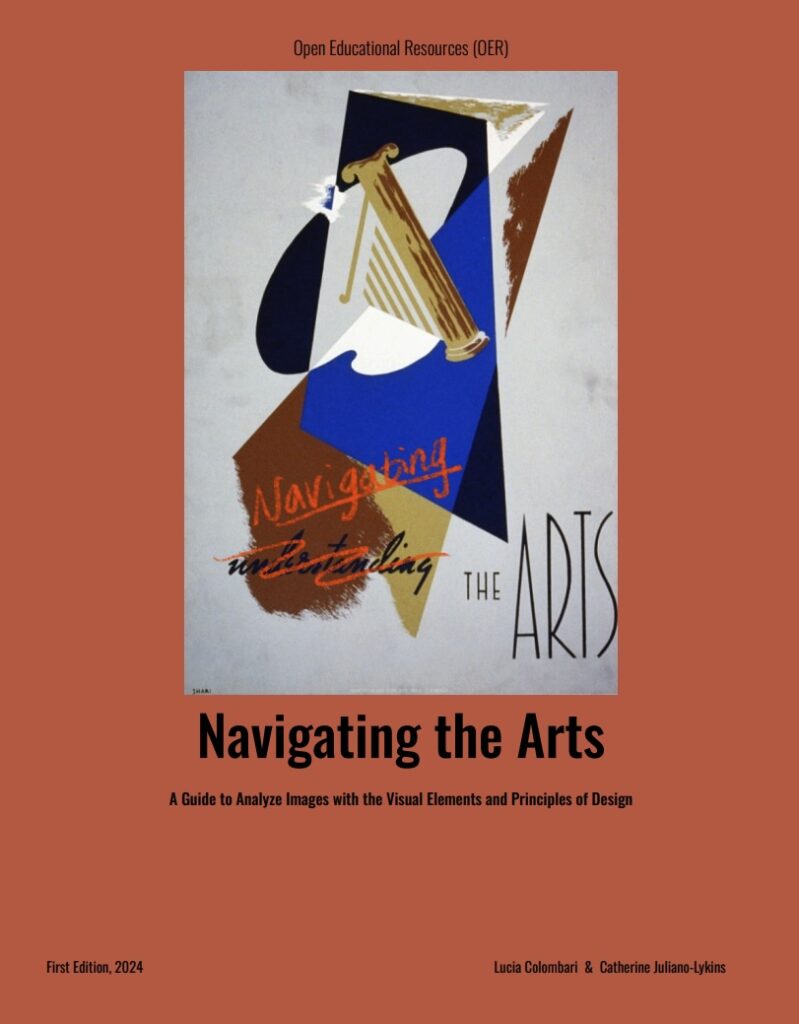
Navigating the Arts
Not rated yetRate this bookA visual literacy journal by Lucia Colombari and Catherine Juliano-Lykins that introduces image analysis through visual elements, principles of design, and short practice activities.
Free reading is available at the official source. Opens in a new tab.
 Free
About this book
About this book
A visual literacy journal by Lucia Colombari and Catherine Juliano-Lykins that introduces image analysis through visual elements, principles of design, and short practice activities.
This page introduces the source edition and offers a focused reading route. Use the linked original resource for the complete text, references, activities, and the author’s full explanation. The overview below is limited to the sections identified in the coverage note.
Contents and further reading
Consult the official book or repository page for the resource’s contents and publication information. Open the source PDF to read the complete available edition.
Sources and coverage
This original overview is based on How to Use This Journal and publication acknowledgements (PDF sheets 2–3). It is not a whole-book review. The verified source PDF contains 100 PDF sheets, including preliminary or repository pages; this may differ from its printed pagination. The source retains its own authorship, rights notices, and any separately credited third-party material.
Book summary
Study overview
The reviewed opening explains that the resource can support learners within and beyond art and art history courses. It is organised as individual sheets associated with key terms and accompanied by images and short assignments. Its two main areas distinguish the elements used in a visual work from the principles through which those elements are organised. The introduction connects this vocabulary with the ability to interpret images rather than merely identify attractive features. It also extends the value of visual literacy beyond conventionally defined artworks to the wider images encountered in daily life. The resource was developed at the University of Oklahoma with library grant support. This page describes its opening instructions; the individual image analyses and activities were not reviewed in full.
How to study this book
Choose an image and record what you can directly observe before offering an interpretation. Select a visual term from your assigned sheet and point to evidence for its use. Then explain how the arrangement of elements guides attention or creates a relationship. Keep observation, interpretation, and contextual information in separate notes so that each can be checked. Compare your analysis with another reader’s and identify the visual evidence behind any disagreement. Cite the image and its source, and check its individual rights before reusing it in a presentation or publication.
These study suggestions and the questions below are independent Academic Master editorial guidance.
Questions for reflection
- What can you observe before making an interpretive claim?
- How does the organisation of elements direct attention?
- Which visual detail supports the explanation you prefer?
About access & copyright
This page provides book information and study material. Full-text access is provided by the original publisher or authorised source; a listing does not grant permission to republish the book.
Read our Library Access & Copyright policyVisual vocabulary
Connect a term with identifiable evidence in an image.
Composition
Examine relationships among visual elements.
Interpretation
Distinguish observation from explanation.
Practice
Build visual literacy through short, focused analyses.
Reader ratings & reviews
Share your thoughts
Your review helps other students choose the right resources.
KEEP LEARNING
Your next great read
Humanities
Theological Questions
Theological Questions
View Theological Questions — bookAmerican Encounters: Art, History, and Cultural Identity
American Encounters: Art, History, and Cultural Identity
View American Encounters: Art, History, and Cultural Identity — book Humanities
Reading Social Science Methods
View Reading Social Science Methods — book Humanities
Creative Translation for Real-World Contexts: English ↔ Spanish
View Creative Translation for Real-World Contexts: English ↔ Spanish — book Humanities
French OER 1
View French OER 1 — book Humanities
French OER 2
View French OER 2 — book Humanities
Elementary Swahili: Lugha na Utamaduni
View Elementary Swahili: Lugha na Utamaduni — book Humanities
(Re)Writing Communities and Identities
View (Re)Writing Communities and Identities — book Humanities



