
Beginning Spanish ¡Empecemos por aquí!
HumanitiesTextbook
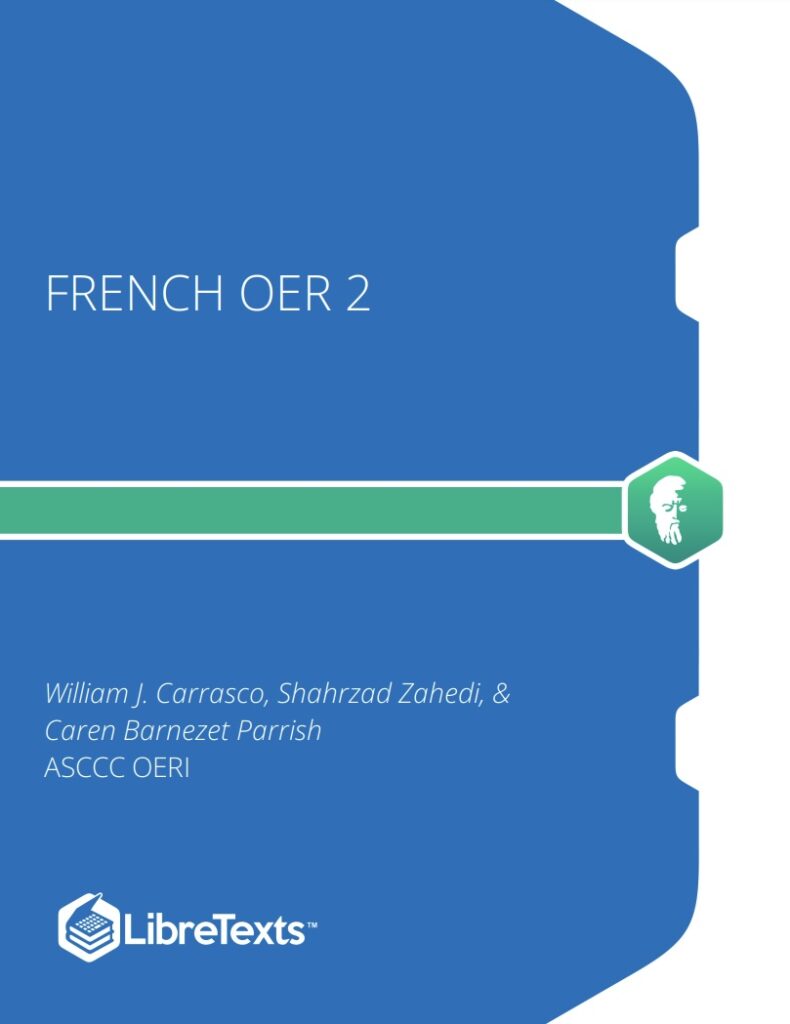
French OER 2
Not rated yetRate this bookFrench OER 2 continues elementary French through English-supported instruction and thematic communicative activities. Learners extend their vocabulary, listening, and conversation beyond the first-semester foundations.
Free reading is available at the official source. Opens in a new tab.
 Free
About this book
About this book
This second-semester resource by Carrasco, Zahedi, and Parrish combines classroom instruction with independent practice. Units 7–12 cover food, past events, childhood, the planet, education and careers, and travel.
The reviewed food unit begins with names for foods and quantities, pronunciation support, and exchanges suitable for shopping. Its activities connect vocabulary to a practical communicative task rather than treating lists of words as an endpoint.
Book summary
Chapter-by-chapter summaries
Unit 7 — À table!
Food gives the opening second-semester unit a set of related tasks: buying ingredients, discussing meals, preparing food, and communicating in a restaurant. Vocabulary is organized through food and drink categories, quantities, and expressions used in transactions. The unit connects these terms with comparison, questions, affirmation and negation, and pronouns that avoid unnecessary repetition. Listening examples and interactive activities require learners to recognize requests as well as make them. The emphasis is on using language to accomplish something with another person. A successful exchange depends on identifying an item, an amount, a preference, or a question clearly enough for the other speaker to respond.
Unit 8 — Qu’est-ce qui s’est passé?
This unit develops accounts of past experiences through personal events, historical figures, legends, and encounters. Narration requires more than a list of past-tense forms: speakers must identify participants and relate events in a comprehensible order. Direct-object pronouns and agreement issues help manage those relationships, while reflexive verbs in the past extend the range of experiences that can be described. Expressions of duration and time connect past events with the present. The unit also continues pronunciation work, including written letters that are not fully sounded. Its communicative goal is a clearer account of what happened, to whom, and within what time frame.
Unit 9 — L’enfance et la jeunesse
Childhood and youth introduce the distinction between background circumstances, repeated past activities, and completed events. The imperfect and passé composé provide different ways of organizing those meanings. Storytelling activities require learners to decide how an event is framed, not merely choose a tense from a memorized list. Relative pronouns and connectors help join information into longer accounts, while additional verbs extend description and reporting. The unit develops a more textured narrative voice: a speaker can describe the setting of an experience and then explain what changed within it. Cultural material supplies contexts for comparing memories, stories, and representations of earlier life.
Unit 10 — Notre planète
The planet unit supplies language for geography, landscapes, climate, animals, and environmental concerns. It connects description of the natural world with discussion of ecological issues and places within France and the Francophone context. Location expressions and geographical prepositions support accuracy, while selected verb and pronoun structures extend the ways a learner can discuss a place or respond to a concern. The unit moves from personal surroundings toward wider shared environments. Its activities require identifying features and relationships rather than simply naming a country or animal. The result is a foundation for describing a setting and participating in an elementary conversation about its conditions.
Unit 11 — Education, Careers, and the Future
Education and work provide a context for discussing training, occupations, plans, and preferred careers. The unit develops both the future and the conditional, allowing learners to distinguish an anticipated action from an imagined or ideal situation. Infinitive constructions and pronoun combinations support more connected statements. Cultural material places employment and education within wider social practices, including aspects of business language and collective action. The practical progression is from identifying a course or job to explaining a trajectory: what a person studies, what they hope to do, and under what circumstances they would choose a particular path.
Unit 12 — Les voyages
Travel brings together planning, transactions, movement, accommodation, and accounts of a stay. Learners prepare for departure, navigate an airport, compare places to remain, and discuss means of transport and activities. The unit also introduces constructions for hypothetical situations and the subjunctive in expressions involving wishes, emotions, doubt, and impersonal judgments. These forms extend a conversation beyond factual statements toward what someone wants, needs, or is uncertain about. The communicative tasks integrate the course’s earlier work on time, place, questions, and narration. By its conclusion, learners have a framework for managing several connected stages of a trip rather than one isolated exchange.
Study instructions
- Build a short shopping list using foods you actually buy. Include a suitable quantity or measure instead of writing isolated nouns.
- Use the linked audio to rehearse the items, then listen again without the written list. Mark words you recognize in print but miss in speech.
- Role-play a market exchange in which one person requests an item and the other asks a follow-up question. Swap roles and change at least two details.
- Review the conversation afterward for communicative success: could the listener identify the item and amount? Use the grammar activities within the original lesson to repair specific difficulties.
Questions for reflection
- What information does a quantity phrase contribute that a food name alone cannot?
- Which differences emerge between recognizing vocabulary and using it in a conversation?
Sources and coverage
These original summaries draw on chapter introductions, selected explanatory passages, examples, and concluding material across the chapters or units listed above. They are a condensed study guide, rather than a page-by-page account of the complete text. Supplementary sections are identified separately.
About access & copyright
This page provides book information and study material. Full-text access is provided by the original publisher or authorised source; a listing does not grant permission to republish the book.
Read our Library Access & Copyright policyFunctional vocabulary
Combine food terms with quantities and purposes.
Listening development
Test recognition without a written prompt.
Interactive use
Adapt a familiar exchange when its details change.
Reader ratings & reviews
Share your thoughts
Your review helps other students choose the right resources.
KEEP LEARNING
Your next great read
Humanities
Theological Questions
Theological Questions
View Theological Questions — bookAmerican Encounters: Art, History, and Cultural Identity
American Encounters: Art, History, and Cultural Identity
View American Encounters: Art, History, and Cultural Identity — book Humanities
Reading Social Science Methods
View Reading Social Science Methods — book Humanities
Creative Translation for Real-World Contexts: English ↔ Spanish
View Creative Translation for Real-World Contexts: English ↔ Spanish — book Humanities
French OER 1
View French OER 1 — book Languages
Beginning Korean 1
View Beginning Korean 1 — book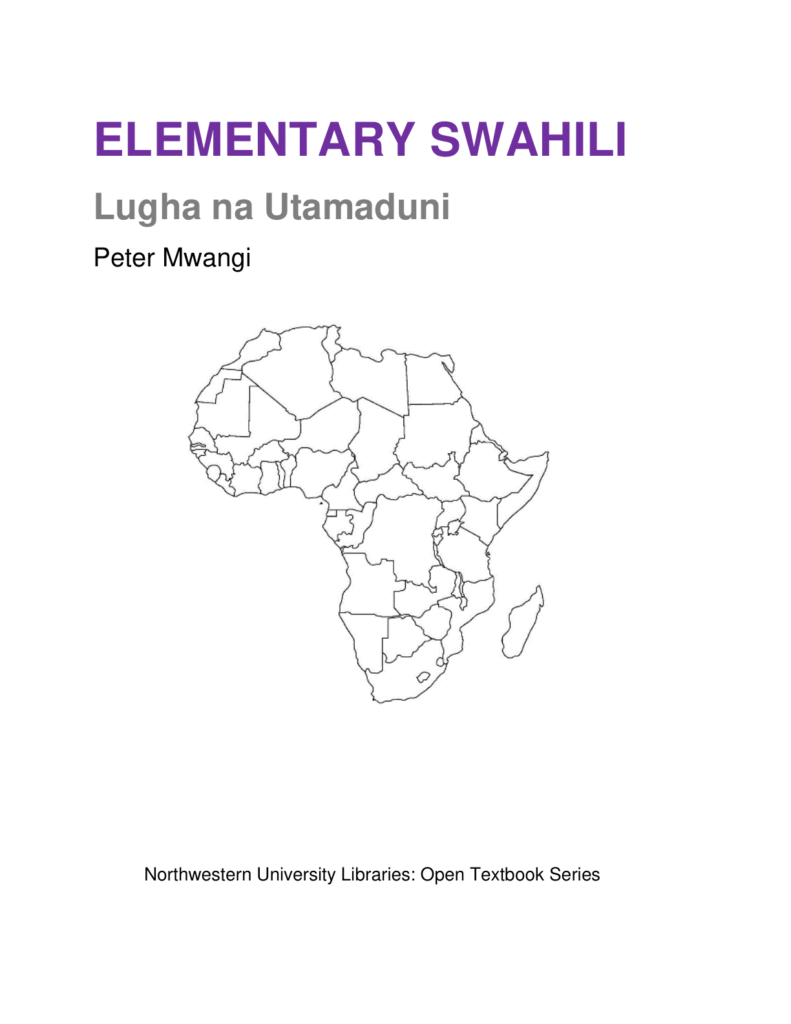 Humanities
Elementary Swahili: Lugha na Utamaduni
View Elementary Swahili: Lugha na Utamaduni — book Humanities
(Re)Writing Communities and Identities
View (Re)Writing Communities and Identities — book Humanities



