
Communication, Affect, & Learning in the Classroom
Journalism, Media Studies & CommunicationsTextbook
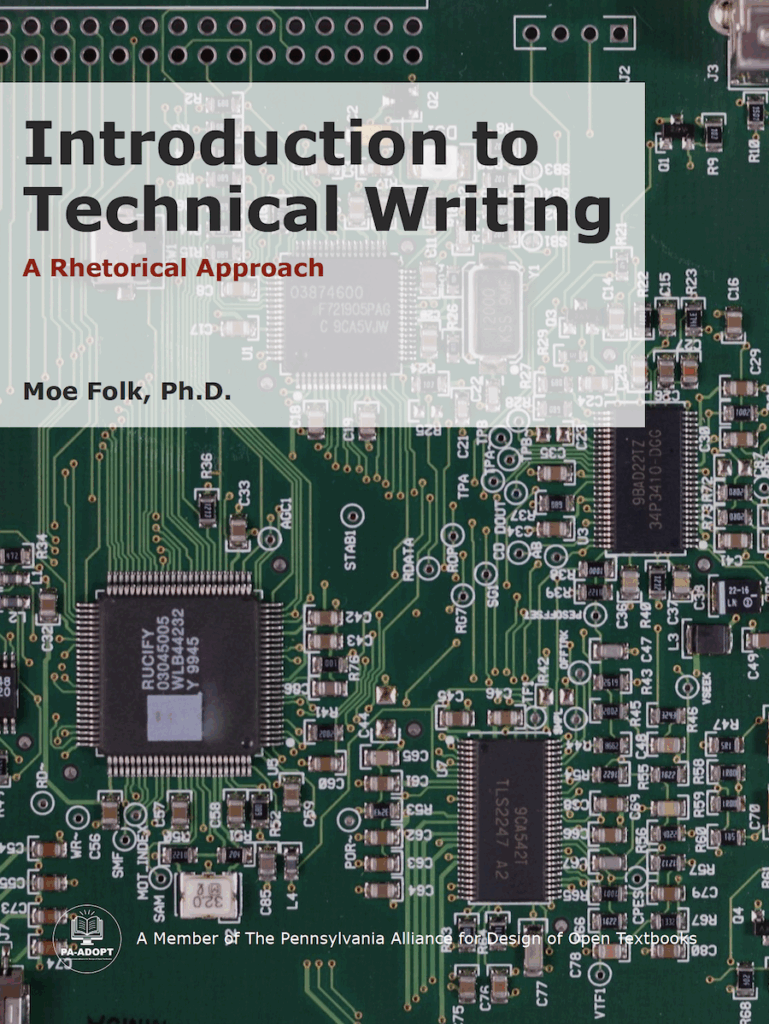
Introduction to Technical Writing: A Rhetorical Approach
Not rated yetRate this bookAn introduction to technical writing that connects useful communication with audience, purpose, format, and the situations in which people need information.
Free reading is available at the official source. Opens in a new tab.
 Free
About this book
About this book
An introduction to technical writing that connects useful communication with audience, purpose, format, and the situations in which people need information.
This page introduces the source edition and offers a focused reading route. Use the linked original resource for the complete text, references, activities, and the author’s full explanation. The overview below is limited to the sections identified in the coverage note.
Contents and further reading
Consult the official book or repository page for the resource’s contents and publication information. Open the source PDF to read the complete available edition.
Sources and coverage
This original overview is based on the opening discussion of technical writing and communication (PDF sheets 9–11), with front matter and contents checked. It is not a whole-book review. The verified source PDF contains 138 PDF sheets, including preliminary or repository pages; this may differ from its printed pagination. The source retains its own authorship, rights notices, and any separately credited third-party material.
Book summary
Study overview
The reviewed opening begins with the ordinary presence of technical communication in daily life. Its focus is practical: a document should help someone understand information or complete a task. That perspective makes the reader’s situation central to decisions about what to include and how to arrange it. The opening also distinguishes written text from the wider field of communication, where images, audio, video, and visual organisation can contribute to meaning. Even a conventional manual may depend on diagrams and page design. Technical writing consequently asks students to reconsider habits learned from essays and to choose forms that serve a particular user. The contents indicate later work on specialised documents, including warnings, patents, and recommendation reports; those later sections are not summarised here.
How to study this book
Choose a small task you already understand and identify a specific reader who needs help completing it. List what that reader knows, what they need, and where confusion could arise. Draft a short explanation, then review the order of information before polishing individual sentences. Consider whether a labelled image would communicate something more clearly than another paragraph. Ask a reader to describe the action your document enables. Revise around the points at which their interpretation differs from your intention, and retain a brief explanation of your design choices.
These study suggestions and the questions below are independent Academic Master editorial guidance.
Questions for reflection
- What would make your chosen document useful to a first-time reader?
- Which information belongs in a visual rather than a sentence?
- How does the intended user change your choice of format?
About access & copyright
This page provides book information and study material. Full-text access is provided by the original publisher or authorised source; a listing does not grant permission to republish the book.
Read our Library Access & Copyright policyAudience
Begin with the reader’s needs and existing knowledge.
Purpose
Judge a document by the task or understanding it supports.
Multimodal communication
Words and visual design can work together.
Rhetorical choice
Select a form that fits the communication situation.
Reader ratings & reviews
Share your thoughts
Your review helps other students choose the right resources.
KEEP LEARNING
Your next great read
Journalism, Media Studies & Communications
Arguing Using Critical Thinking
Arguing Using Critical Thinking
View Arguing Using Critical Thinking — bookWriting Fabulous Features
Writing Fabulous Features
View Writing Fabulous Features — book Journalism, Media Studies & Communications
Preparing to Publish
View Preparing to Publish — book Journalism, Media Studies & Communications
Workplace Writing: A Handbook for Common Workplace Genres and Professional Writing
View Workplace Writing: A Handbook for Common Workplace Genres and Professional Writing — book Journalism, Media Studies & Communications
Intro to Journalism Handbook: An Open Educational Resource for Journalism Students
View Intro to Journalism Handbook: An Open Educational Resource for Journalism Students — book Humanities
A Guide to Composition
View A Guide to Composition — book Journalism, Media Studies & Communications
Surviving Research Publication: A Guide for New Scholars
View Surviving Research Publication: A Guide for New Scholars — book Journalism, Media Studies & Communications
Communication for College, Career, and Civic Life
View Communication for College, Career, and Civic Life — book Journalism, Media Studies & Communications



