
Communication, Affect, & Learning in the Classroom
Journalism, Media Studies & CommunicationsTextbook
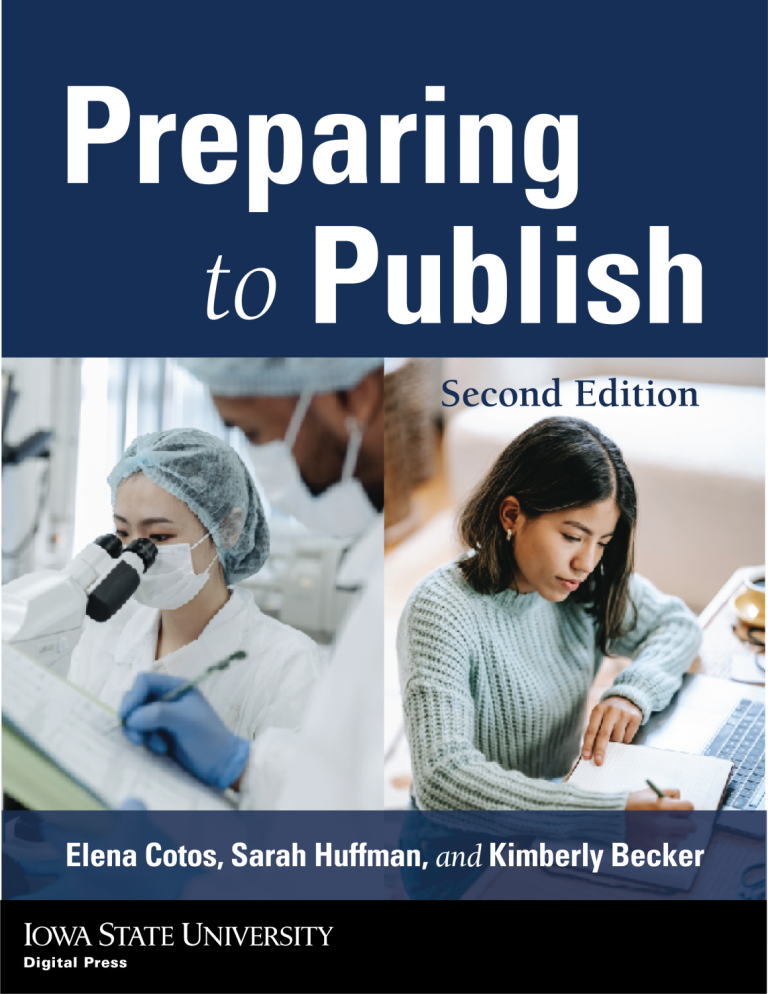
Preparing to Publish
Not rated yetRate this bookPreparing to Publish supports graduate writers developing research articles and related academic manuscripts. The verified second-edition description presents research writing as the construction of an argument through the parts of an empirical article.
Read on the publisher’s website. Opens in a new tab.
 Free
About this book
About this book
Preparing to Publish, second edition (2026), explains research writing through communicative goals rather than rigid sentence templates. Huffman, Cotos, and Becker connect the sections of an empirical article into an argument that establishes a problem, reports a study, and explains its contribution. Seven chapters develop article structure, introductions, methods, results, discussion, abstracts, and the publication process. The guide follows the verified second edition, including its new final publishing chapter, and keeps disciplinary variation in view: a useful model of a section does not mean every field or journal organizes evidence identically.
The detailed guide below follows the book’s chapter, unit, or section structure. Read it alongside the study instructions and the complete official text.
Book summary
Chapter-by-chapter summaries
Chapter 1: Goals and Strategies of a Research Article
A research article is a persuasive scholarly argument grounded in evidence, not simply a chronological account of what the researcher did. The chapter distinguishes research activity from the communicative task of explaining its significance to a disciplinary audience. Sections have recognizable functions, but those functions interact across the manuscript. The introduction establishes why the inquiry matters; methods explain how it was conducted; results present what was found; discussion interprets the contribution. Genre knowledge helps writers notice patterns in published work while avoiding the assumption that every article follows one universal layout. The chapter encourages analysis of authentic examples from the writer's field, asking what each passage accomplishes and which language choices help it accomplish that purpose.
Chapter 2: Writing the Introduction
The introduction moves from a knowledge territory to a niche and then to the study's response. Establishing the territory situates the topic, reviews relevant knowledge, and demonstrates importance. Identifying a niche explains an unresolved issue, limitation, inconsistency, or opportunity that makes further work worthwhile. Addressing the niche introduces the present research and its purpose or contribution. These are rhetorical goals, not necessarily three fixed paragraphs. The chapter demonstrates multiple strategies and language choices, including appropriate levels of certainty and ways of connecting earlier studies. Its drafting activities help writers test whether a reader can follow the reason for the study. A gap should be meaningful to the argument, not merely a claim that nobody has used the exact same combination of variables before. One revision strategy is to label the purpose of each paragraph, then check whether the niche is supported by the preceding literature and answered by the stated study. This can reveal a logical gap even when all the expected section headings are present.
Chapter 3: Writing the Methods
Methods writing makes the study understandable and evaluable by contextualizing the approach, describing the study, and explaining analysis. Readers need to know the setting, materials or participants, variables, procedures, and relevant analytical choices, but the detail and organization depend on the discipline. Merely naming a method leaves important decisions unexplained. The chapter's examples show how writers justify choices, sequence information, and connect procedures with the question. Tense, voice, and sentence structure help distinguish general principles from actions performed in the study. The drafting process should reveal missing information or mismatches between the claimed design and what was actually done. Transparent reporting supports scrutiny; it does not require pretending that every practical decision was perfectly predetermined.
Chapter 4: Writing the Results
Results writing guides readers through findings rather than leaving them alone with tables and figures. The chapter organizes its discussion around approaching, occupying, construing, and expanding the niche. Writers prepare the reader for relevant results, present the evidence, help interpret patterns, and connect those patterns with the research purpose where disciplinary conventions permit. Describing a figure is different from repeating every value within it. Selection and sequencing should reflect the argument without concealing inconvenient findings. Hedging calibrates claims to the strength of evidence, especially when moving from observation toward interpretation. The chapter's examples and drafting activities emphasize an important boundary: conclusions must remain traceable to actual results, and numerical precision does not justify a broader claim than the design can support.
Chapter 5: Writing the Discussion/Conclusion
The discussion reconnects the specific study with the broader scholarly territory. Its four goals are to re-establish that territory, frame principal findings, reshape understanding, and establish additional territory for future work. Writers explain what the results mean, compare them with relevant research, consider mechanisms or explanations, and identify implications. Limitations are most useful when they clarify the scope of the claims and motivate particular next steps. The chapter also examines hedging and emphasis as ways to calibrate interpretation rather than make every sentence sound either absolute or uncertain. A conclusion should articulate the contribution without inflating novelty. The reader should leave knowing what has changed in understanding, what remains unresolved, and why the study matters within its field.
Chapter 6: Writing the Abstract
An abstract is a compact, independently readable account designed for a particular purpose, such as a completed article, conference proposal, or work in progress. The chapter considers its goals, length, vocabulary, grammar, and relationship to the larger manuscript. A useful abstract identifies the problem or context, purpose, approach, main findings where available, and contribution in a proportion suited to the venue. Compression requires selection rather than removing the words that make a claim interpretable. The abstract should be consistent with the manuscript's actual evidence and level of certainty. Disciplinary variation affects pronouns, tense, organization, and emphasis, so published examples and venue instructions are better guides than a single universal formula.
Chapter 7: Preparing to Publish
The new final chapter takes a completed draft into the submission and review process. Choosing a target journal involves scope, audience, article types, credibility, practical requirements, and the fit of the contribution. Preparing to submit includes checking the manuscript and supporting information against the journal's instructions rather than assuming that a good argument excuses missing requirements. The chapter introduces editorial assessment and peer review, helping writers understand possible decisions and respond professionally. A revision response should explain what changed and address comments clearly, including reasoned disagreement where needed. Publication is not guaranteed by following a checklist, and rejection can provide information for improving the work or choosing a better-fitting venue. The chapter treats the process as another form of scholarly communication. A useful response to reviewers is specific and traceable: identify the comment, explain the revision or reasoned response, and indicate where the manuscript changed. A courteous tone supports communication, but it cannot replace addressing the substantive concern. Check that revisions made in one section remain consistent with the rest of the article.
Supplementary synthesis: Checking the argument across sections
Read the purpose statement in the introduction beside the central results and the contribution claimed in the discussion. They should address the same inquiry at a compatible level of scope. Then check whether the methods could produce the evidence used for those claims and whether the abstract accurately represents the completed article. This cross-section check can reveal drift that sentence-level editing misses. For example, an exploratory association study should not become a definitive causal claim in the conclusion simply because the result is interesting. A useful revision plan first repairs these relationships, then improves paragraph flow, citations, and language. This is an additional study exercise, separate from the seven chapters.
Supplementary synthesis: Learning from published examples
Select several credible articles from the target field and annotate the function of each paragraph rather than collecting impressive phrases alone. Notice how writers establish importance, characterize prior work, justify a method, introduce a figure, qualify an interpretation, and state a contribution. Compare differences across examples to identify choices rather than invent a rigid rule from one paper. Use those observations to make decisions about the current manuscript, retaining the writer's own evidence and voice. This approach reflects the book's goal-and-strategy model and makes its examples transferable without copying another author's wording.
Study instructions
Begin with a map connecting your research question, method, evidence, and principal claim. Write one sentence explaining how each part supports the next. A gap in that map can reveal a reasoning problem before you begin sentence-level revision.
Choose suitable published articles in your own discipline and examine the purpose of each section. Compare audience, evidence, and argumentative structure before imitating a surface feature such as heading style. Keep notes identifying what a passage accomplishes for its reader.
For revision, separate work on the argument from checks of citations, formatting, and language. Follow your supervisor’s, institution’s, and target journal’s requirements. These suggestions are general editorial guidance; they are not attributed to an unread chapter of the second edition.
Questions for reflection
- What claim does the evidence support, and how directly?
- What does each manuscript section need to help the reader understand?
- Which writing conventions depend on the intended journal or discipline?
The study suggestions and questions are independent Academic Master editorial material.
Sources and coverage
This guide follows the verified 2026 second edition, not the differently numbered earlier Pressbooks edition. These original summaries draw on the source text, including chapter or section introductions and selected explanations, examples, exercises, and review material. They are condensed study guides, not a page-by-page account or a replacement for the complete resource. Additional synthesis sections are identified separately.
About access & copyright
This page provides book information and study material. Full-text access is provided by the original publisher or authorised source; a listing does not grant permission to republish the book.
Read our Library Access & Copyright policyArgument
Connect questions, evidence, and claims.
Audience
Examine the needs of the intended readers.
Structure
Identify the work each section performs.
Revision
Address reasoning and presentation deliberately.
Reader ratings & reviews
Share your thoughts
Your review helps other students choose the right resources.
KEEP LEARNING
Your next great read
Journalism, Media Studies & Communications
Arguing Using Critical Thinking
Arguing Using Critical Thinking
View Arguing Using Critical Thinking — bookWriting Fabulous Features
Writing Fabulous Features
View Writing Fabulous Features — book Journalism, Media Studies & Communications
Workplace Writing: A Handbook for Common Workplace Genres and Professional Writing
View Workplace Writing: A Handbook for Common Workplace Genres and Professional Writing — book Journalism, Media Studies & Communications
Intro to Journalism Handbook: An Open Educational Resource for Journalism Students
View Intro to Journalism Handbook: An Open Educational Resource for Journalism Students — book Humanities
A Guide to Composition
View A Guide to Composition — book Journalism, Media Studies & Communications
Introduction to Technical Writing: A Rhetorical Approach
View Introduction to Technical Writing: A Rhetorical Approach — book Journalism, Media Studies & Communications
Surviving Research Publication: A Guide for New Scholars
View Surviving Research Publication: A Guide for New Scholars — book Journalism, Media Studies & Communications
Communication for College, Career, and Civic Life
View Communication for College, Career, and Civic Life — book Journalism, Media Studies & Communications



