
 English Literature
Plays
Troilus and Cressida
William Shakespeare; complete source text.
Not rated yetRate this bookTroilus and Cressida places courtship beside a war whose values are already being questioned. This guide covers the Prologue and first two scenes, examining Troilus’s divided attention, Pandarus’s management of praise, and Cressida’s distinction between the feelings she acknowledges privately and the responses she shows others.
 Free
About this book
Troilus and Cressida is a play set in the Trojan War, bringing stories of heroic reputation into contact with desire, bargaining and sceptical wit. The Prologue in this Project Gutenberg text announces that the action begins in the middle of the conflict rather than retelling its whole origin. The opening scenes then move between Troilus’s account of his love and Cressida’s conversation with Pandarus as warriors pass by. Military names, family relationships and reports of battle are repeatedly turned into competing estimates of personal value. Students can use the sequence to examine how praise tries to direct attention and how a listener can answer that pressure. The text’s scene divisions should be used when referencing the hosted version. This guide distinguishes the Prologue’s theatrical frame, the characters’ claims and Academic Master’s editorial interpretation. Later encounters between the lovers and the Greek camp remain outside the reviewed coverage.
The hosted PDF is Academic Master’s 2026 formatting of Project Gutenberg eBook #1528, first released in 1998. It contains the complete source text and Gutenberg notices. Its displayed 138-page count refers to PDF sheets, including front matter and notices, rather than the pagination of an early printed edition.
Academic relevance. Folger Shakespeare Library supplies the text, scholarly resources and teaching materials for this work. This establishes academic relevance rather than evidence that a particular course assigns this PDF. View the institutional source
Editorial suitability: undergraduate English literature and drama students practising close reading, with guidance where unfamiliar language requires it. This is Academic Master’s assessment, rather than a level stated by the author.
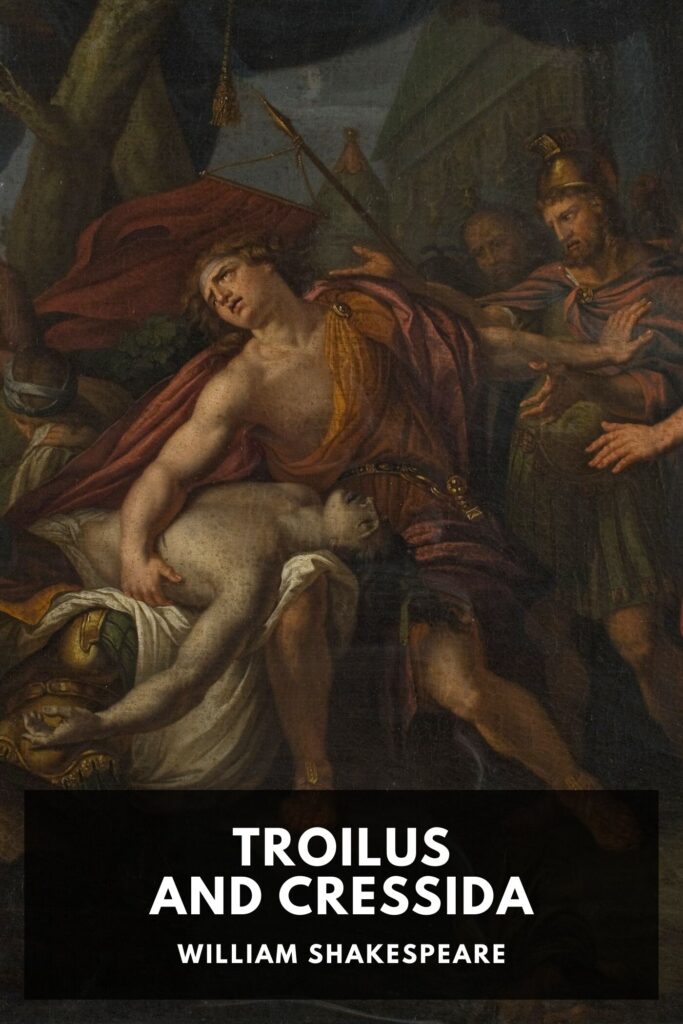
Cover image: Standard Ebooks edition. The hosted PDF remains the edition described above.
Source licence: Full Project Gutenberg License. Required source notices and licence terms are retained in the downloadable files.
Book summary
Study overview of reviewed passages
Coverage: The Prologue and Act I, Scenes I–II of Project Gutenberg #1528 were reviewed in full. The remaining scenes and ending are not yet summarised. Spoilers: events and conclusions within the stated coverage are discussed.
The armed Prologue describes the quarrel surrounding Helen and the preparations of Greeks and Trojans. It announces a selective theatrical account beginning midway through the war and leaves the audience free to judge it. The first scene immediately complicates heroic expectation: Troilus wants to unarm because his inward struggle over Cressida exceeds his attention to the field. Pandarus answers the demand for progress with a sequence of practical delays, comparing courtship to making a cake.
Troilus depends on Pandarus as an intermediary, but finds the repeated description of Cressida’s beauty painful rather than consoling. When Pandarus withdraws, the sound of fighting prompts Troilus to question the value of the cause for which men shed blood. He nevertheless goes to the field with Aeneas. The movement allows students to compare his dismissive account of public war with the force that his private desire still exercises over him.
In the second scene, Alexander’s description of Ajax mixes strengths and faults. Pandarus then tries to rank Troilus above Hector and the other men passing from battle. Cressida repeatedly redirects or undercuts his praise, keeping command of the conversation through literal answers and jokes. Her closing private speech reveals that her resistance is not simply lack of attraction. She values Troilus more than the uncle’s praise conveys, yet believes that winning an object of desire changes the power of the lover. She resolves to conceal her feelings.
Scene summaries
The Prologue
An armed speaker outlines the war’s premise, announces a beginning in the middle and acknowledges the limits of what a play can contain. The invitation to like or fault the performance resists an uncomplicated promise of heroic certainty. It supplies a frame for the shifting estimates of love and martial value in the opening dialogue.
Act I, Scene I — Troy. Before Priam’s palace
Troilus describes his desire as an internal battle, while Pandarus delays and advertises the hoped-for relationship. Their exchange exposes a dependence upon an intermediary whose praise cannot satisfy the lover. Troilus also questions the public cause represented by Helen, before accompanying Aeneas to the field. The scene sets private longing beside a military enterprise whose value is contested in speech.
Act I, Scene II — Troy. A street
Cressida hears a mixed account of Ajax and then watches warriors with Pandarus. He attempts to govern her attention through rankings and extravagant praise of Troilus; her replies keep the argument unsettled. Once alone, she distinguishes her affection from what she will display. The private conclusion changes how students should interpret the witty resistance they have just heard.
Close-reading guidance
The following interpretations and study prompts are Academic Master’s editorial material.
- Academic Master’s editorial reading treats Pandarus’s praise as an intervention with a purpose, not a transparent measurement of the men.
- Compare the images of battle, trade and preparation used for courtship. They give desire a language of effort and expected return.
- Avoid using Cressida’s opening account to predetermine every later action. The guide establishes her stated reasoning at this point in the play.
Questions for discussion
- Why does the Prologue stress that the action begins in the middle?
- What makes praise painful for Troilus but resistible for Cressida?
- How does Cressida’s final private speech change the preceding conversation?
Sources and coverage
The Prologue and Act I, Scenes I–II of Project Gutenberg #1528 were reviewed in full. The remaining scenes and ending are not yet summarised. Contents were checked against the same edition. A full contents list does not imply that all scenes have been summarised.
Project Gutenberg edition details · Source HTML text · Academic context
About access & copyright
Check this edition’s source and licence before reusing its files or content. A library listing does not grant additional rights.
Read our Library Access & Copyright policyMediation
Analyse Pandarus’s role in managing the courtship.
Contested reputation
Compare rival estimates of heroic and personal worth.
Public and private speech
Distinguish Cressida’s displayed resistance from her admitted affection.
Theatrical framing
Explain the Prologue’s selective account of war.
Reader ratings & reviews
Share your thoughts
Your review helps other students choose the right resources.
KEEP LEARNING
Your next great read
English Literature English Literature
Thomas Lord Cromwell
View Thomas Lord Cromwell — book English Literature
Sir John Oldcastle
View Sir John Oldcastle — book English Literature
The Merry Devil of Edmonton
View The Merry Devil of Edmonton — book English Literature
The Puritan Widow
View The Puritan Widow — book English Literature
The London Prodigal
View The London Prodigal — book English Literature
King Edward III
View King Edward III — book English Literature
Fair Em
View Fair Em — book English Literature
Arden of Feversham
View Arden of Feversham — book English Literature



